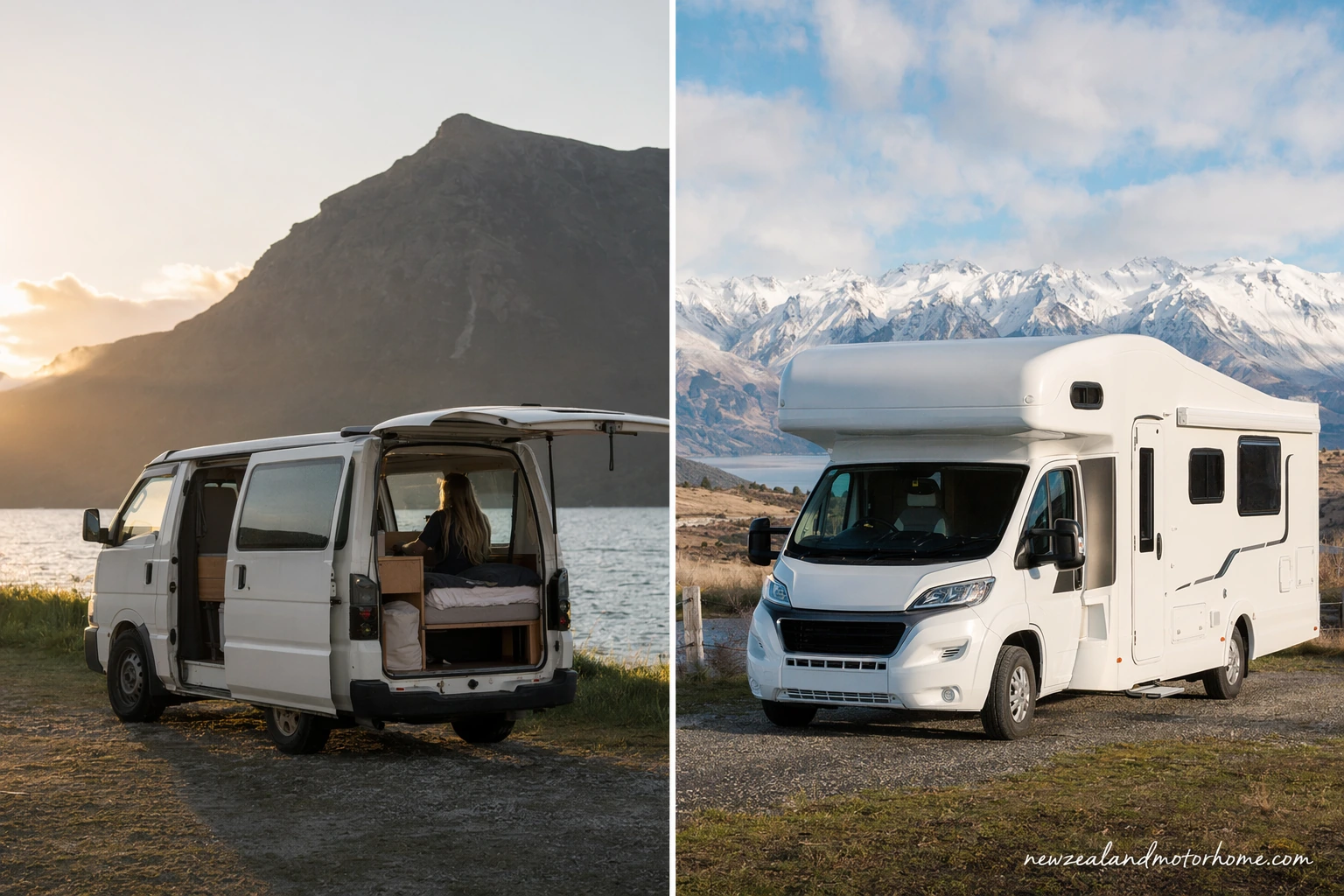
- Best choice depends on route and season
- Check self-containment before planning freedom camping
- Premium vans need more parking space
- Powered sites matter more in cold weather
- Budget vans suit lighter, holiday-park trips
Choosing between a budget and premium campervan in New Zealand is not just about the nightly hire rate. It changes where you can park the van, how often you need a powered site, whether freedom camping is realistic, and how comfortable you feel after a wet West Coast afternoon with all your gear inside.
This guide is written for self-drive travellers sleeping in their hired van. We’ll compare the real trade-offs: site access, self-containment, dump stations, LPG and water stops, road handling, storage, heating, and who each style of campervan tends to suit best.
The short answer: what you really pay for
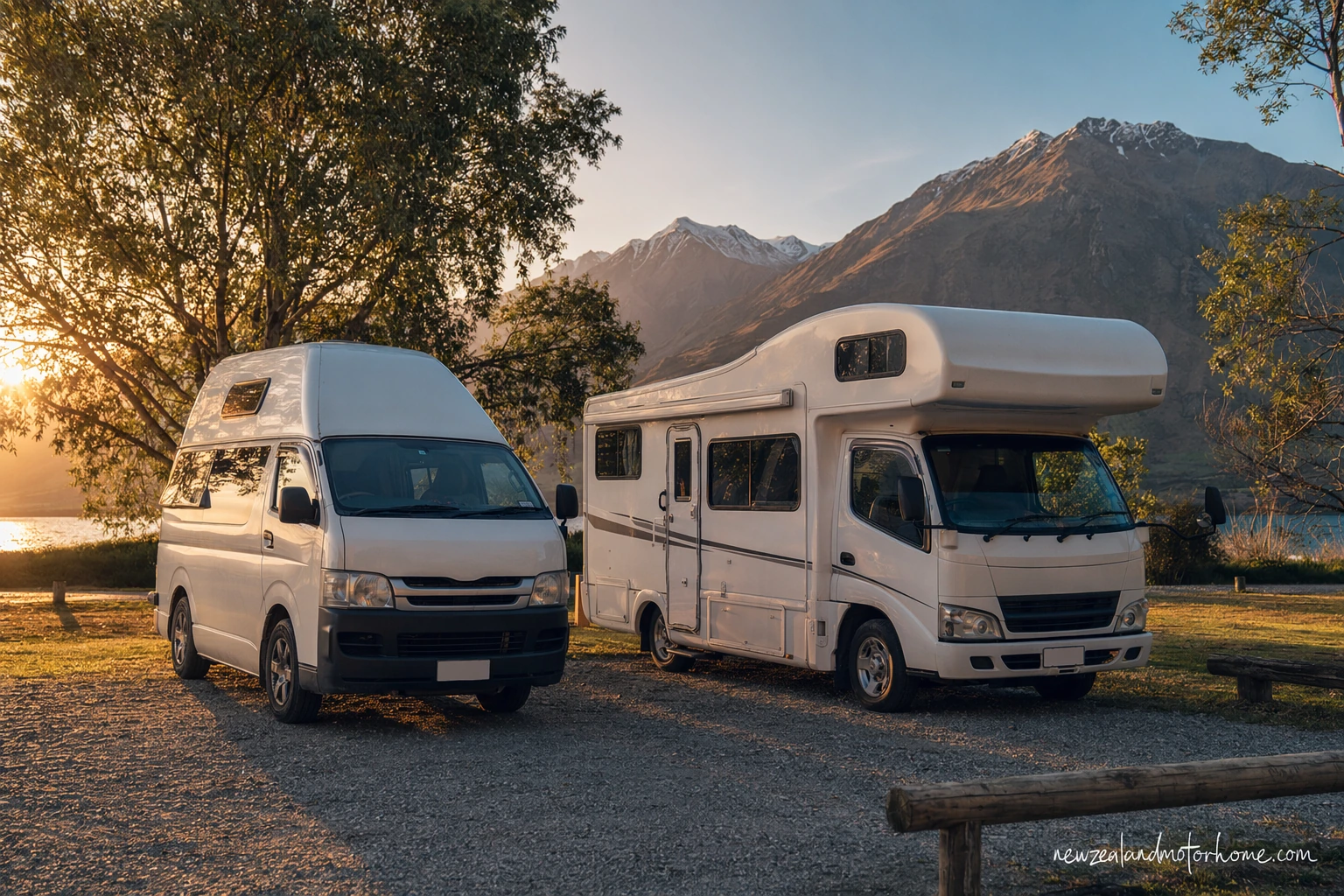
A budget campervan usually gives you the basics: a bed, compact cooking set-up, small fridge or chilly bin, and enough storage if you pack lightly. A premium motorhome or campervan tends to add a fixed toilet, shower, better heating, more standing room, larger water tanks, and a living area that still works when the weather turns.
The important difference is how those features affect your route. In a smaller budget van, you may rely more on holiday parks, public toilets, campground kitchens and regular fresh-water stops. In a premium van, you are more self-contained day to day, but you also need to think harder about vehicle length, height, turning space and where you can park overnight.
- Budget suits: warmer-season trips, shorter loops, travellers happy using campground facilities, and people who prefer a smaller van on narrow roads.
- Premium suits: longer itineraries, shoulder-season travel, families, travellers wanting onboard toilet and shower facilities, and anyone spending several nights away from full-service holiday parks.
- Neither is automatically better: the right choice depends on your driving confidence, overnight style, route, season and how much time you will actually spend inside the van.
Parking, size and road feel
Budget campervans are often easier to park in town, at supermarket car parks, beach reserves and visitor centre parking areas. That matters in places like Queenstown, Nelson, Wanaka and central Rotorua, where tight spaces and height barriers can quickly shape your day. A smaller van also feels less stressful on winding roads, one-lane bridges and narrow campground access tracks.
Premium motorhomes give you more space once parked, but they ask more from the driver. Check the vehicle length and height before you book ferry crossings, covered parking, tree-lined campgrounds or scenic side roads. Some DOC access roads and gravel sections may be unsuitable or excluded by hire conditions, especially after rain.
Whichever van you choose, treat New Zealand distances with respect. A 250 kilometre day can feel long when you are climbing alpine passes, slowing for roadworks, stopping for groceries, then arriving early enough to level the van and plug into power before dark.
Campsites, freedom camping and self-containment
Premium campervans are more likely to be certified self-contained, but never assume. Freedom camping eligibility depends on a valid self-containment certificate and the local council or DOC rules for that exact place. Some areas allow certified self-contained vehicles only; others ban overnight camping altogether, even if your van has a toilet.
Budget vans vary widely. Some are certified self-contained, while others are better matched to holiday parks and established campgrounds where toilets, showers and kitchens are provided. If you are planning to use low-cost DOC sites or freedom camping areas, confirm the van’s certification, toilet set-up, waste-water capacity and how you are expected to manage grey water.
- Holiday parks: easiest with any van, especially if you want powered sites, showers, laundry, kitchens and a dump station.
- DOC campsites: often unpowered and more rustic; check access road conditions and whether larger motorhomes can turn around.
- Freedom camping: only where permitted, usually with certified self-contained vehicles, and always with careful waste and toilet management.
- Urban overnight stops: read signs closely; many town car parks are day parking only, and enforcement can be strict.
Running costs beyond the hire rate
The cheapest van on paper is not always the cheapest trip. A budget campervan may use less fuel and be easier to manoeuvre, but if it lacks heating, a toilet or reliable cooking space, you may spend more nights in powered holiday park sites or eat out more often. A premium motorhome may cost more to hire and use more fuel, yet it can make unpowered nights more comfortable if it has good battery capacity, gas cooking and larger tanks.
Think about the rhythm of the trip rather than a single daily cost. You will need to refill fresh water, empty grey water, use dump stations correctly, top up LPG if the van uses gas, and possibly pay for powered sites when batteries need a proper recharge. Diesel vans may also involve Road User Charges, so check how your hire agreement handles them before you leave the depot.
In winter and early spring, power becomes more valuable. Heating, damp clothes, shorter daylight and condensation all make a warm powered site feel less like a luxury and more like sensible trip planning.
Comfort, weather and living inside the van
New Zealand weather changes quickly, and that is where premium vans earn their keep. Being able to stand up, make tea inside, use the toilet at night and dry jackets without turning the bed into a laundry rack can make a big difference on the West Coast, in Fiordland or during a cold Canterbury nor’wester.
Budget vans can still be excellent if you travel light and use campground facilities well. They are often nimble, simple and easy to keep tidy. The trade-off is that cooking, changing clothes and packing away bedding may happen in the same small space, so wet days require patience and a good storage routine.
- Bed set-up: check whether the bed stays made up or must be converted from seats each night.
- Toilet access: useful for freedom camping, night stops and remote roads, but it also means responsible cassette emptying at dump stations.
- Heating: important outside summer, especially in the South Island and higher country.
- Storage: more important than it looks; soft bags work better than hard suitcases in most campervans.
How to choose for your itinerary
If your plan is a short summer loop with mostly holiday parks, a budget campervan can be the smarter, easier choice. You will have toilets, showers and kitchens at night, and the smaller van will be handy for beach car parks, short walks and town stops. Just check whether you need a powered site for the fridge, house battery or any medical devices.
If your route includes remote overnight stops, several unpowered campsites, cooler weather or long stretches between towns, a premium campervan may reduce daily friction. Larger water and waste tanks, onboard bathroom facilities and better insulation make it easier to settle in without hunting for facilities after every drive.
Before booking, map a few real overnight stops rather than just drawing a line between airports. If you want a second pair of eyes on whether your route suits a budget or premium van, use the talk-to-us step and we’ll help you shape the trip around how you actually want to camp.
Common questions
Can I freedom camp in a budget campervan in New Zealand?
Only if the vehicle is certified self-contained and the local rules allow overnight camping in that specific place. Many budget vans are better suited to holiday parks or campgrounds, so confirm the certification, toilet set-up and waste-water capacity before you plan freedom camping nights.
Is a premium motorhome harder to drive on New Zealand roads?
It can be, mainly because of length, width and height rather than power. Premium motorhomes are comfortable once parked, but you need more care on narrow rural roads, tight supermarket car parks, low branches, ferry decks and small campground turning areas.
Do I need powered sites with a budget campervan?
Not every night, but you may need them more often than in a premium van. Smaller house batteries, basic heating and limited fridge capacity can make powered sites useful, especially in cooler weather or when you are staying in one place for more than a night.
Are premium campervans always certified self-contained?
No. Many are, but you should still check the current self-containment certificate and what onboard toilet system is fitted. Certification is vehicle-specific, and local bylaws still decide where you may stay overnight.
Which is better for a South Island winter trip?
A premium campervan is usually more comfortable in winter because of heating, insulation, indoor living space and onboard bathroom facilities. A budget van can work if you use powered holiday park sites regularly and pack for cold, damp conditions.
What should I check before choosing either van type?
Check vehicle height and length, bed layout, self-containment status, fresh and grey-water tank sizes, LPG requirements, dump station access, heating type, tyre chains policy for alpine routes, and whether gravel roads are allowed under the hire agreement.
Have a planner shape this for your dates
Send a short outline — your dates, party size, and the kind of trip you want. A planner replies with a vehicle recommendation, a paced route, and the realistic budget.