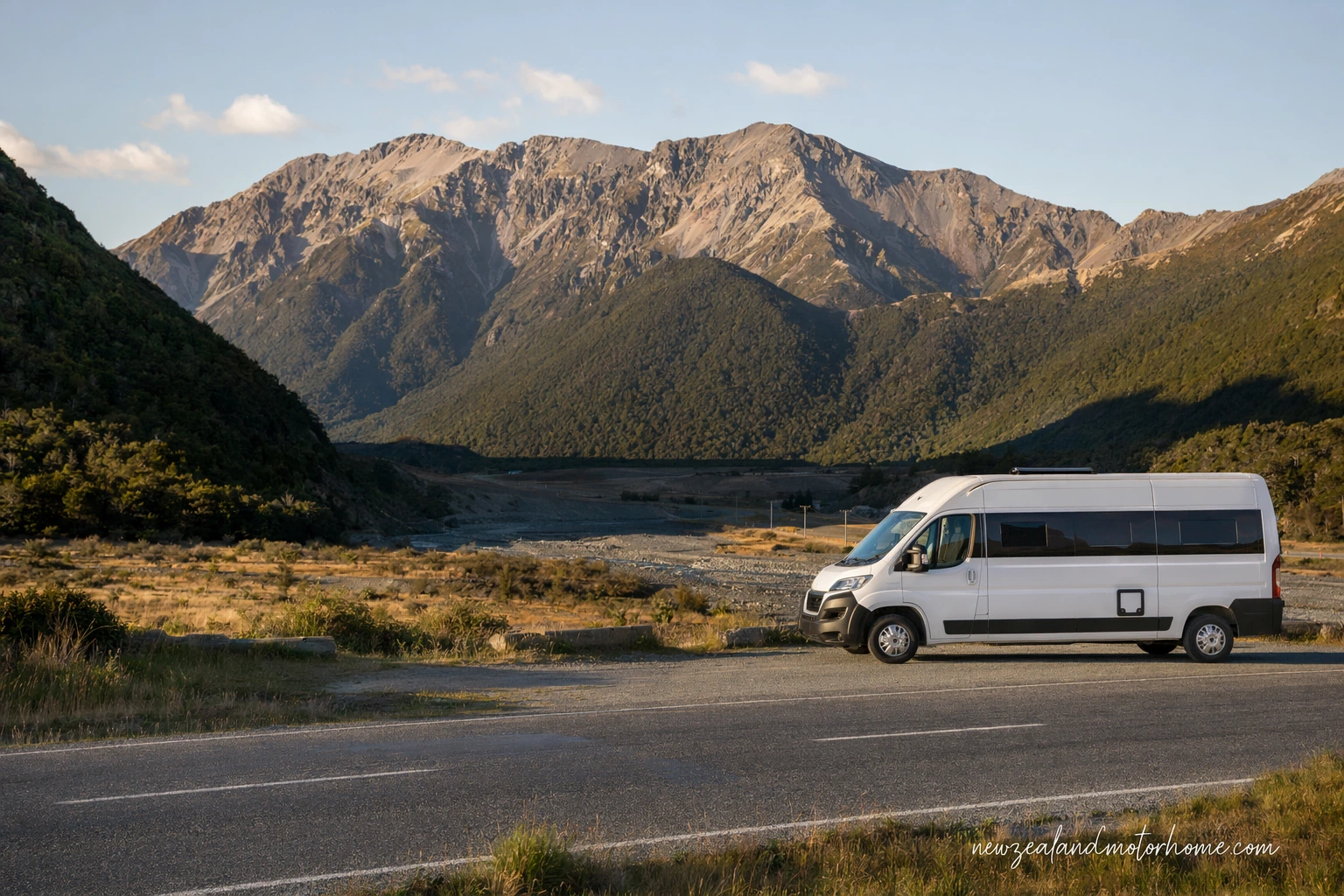
- Best as a 1–2 night alpine stop
- Mostly unpowered camping nearby
- Steep SH73 grades and winter ice risk
- Top up fuel, water and LPG before the pass
- Self-contained rules still need local compliance
Arthur's Pass is one of the South Island's great self-drive crossings: a proper alpine road between Canterbury's wide river plains and the wet green edge of the West Coast. In a campervan, it is not a place to rush. The best bits come when you park the van, let the brakes cool, and walk into beech forest, waterfalls and kea country.
This Arthurs Pass campervan guide is written for travellers sleeping in their hired van, not just passing through by car. You'll find practical notes on SH73, where to park a motorhome in Arthur's Pass village, what to expect from camping near Arthur's Pass, and how to fit the pass into a wider Christchurch, West Coast or South Island loop.
Getting to Arthur's Pass by campervan
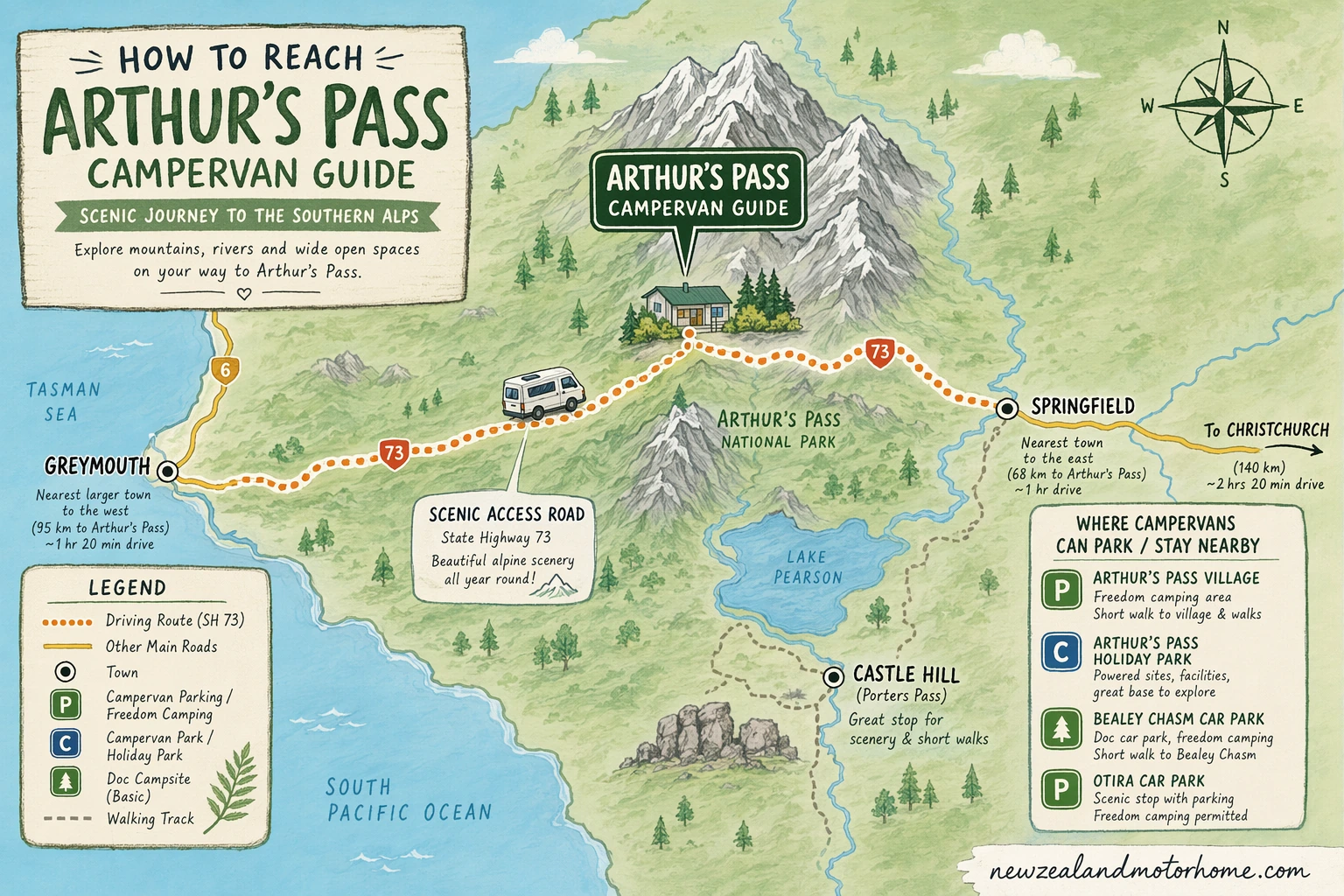
Most campervan arthurs pass trips follow State Highway 73 between Christchurch and the West Coast. From the Canterbury side the road climbs through Springfield, Castle Hill, Craigieburn and the Waimakariri valley before reaching Arthur's Pass village. Westbound, the drop from the village through the Otira Gorge is steeper, tighter and more exposed, so take your time and use the lower gears rather than riding the brakes.
For a motorhome Arthur's Pass crossing, it pays to treat the pass as an alpine drive rather than a quick transfer. Weather can change quickly, and in winter or after a cold front you may meet ice, snow, grit trucks or chain requirements. If your hire van is high-sided, be especially alert for gusts around open river flats and viaduct approaches.
- Top up fuel before the mountains; do not rely on finding full services in the village.
- Refill fresh water, empty the grey tank and sort LPG in larger towns such as Christchurch, Darfield, Greymouth or Hokitika.
- Check your rental agreement for snow-chain rules before travelling in winter.
- Allow extra time for slow vehicles, photo stops, kea delays and weather.
Parking the van in the village and at trailheads
Arthur's Pass village is small, with most services and walking tracks clustered near the visitor centre, railway station and main road. In a compact campervan you can usually manage the main marked parking areas, but longer motorhomes should avoid squeezing into tight roadside spaces where overhang blocks traffic or footpaths.
The Devils Punchbowl walking track car park is popular and can fill early in fine weather. If you are in a longer van, it is often easier to park in the village day-parking area and walk from there, rather than attempting a tight turn once the trailhead is busy. Always lock up, tuck food out of sight and do not leave rubbery items exposed: kea are clever, curious and very fond of wipers, seals and mirror trim.
- Use marked day parking only; do not treat visitor car parks as informal overnight spots.
- Keep clear of bus bays, access gates and turning circles used by emergency and road crews.
- At lookouts, pull fully off the live lane before opening doors or taking photos.
- On narrow roads, let faster traffic pass at signed pull-outs rather than holding a queue.
Where to stay overnight near Arthur's Pass
Camping near Arthur's Pass is mostly about basic, mountain-style overnight stops rather than resort facilities. The village has limited places for campervans, and nearby DOC-style campsites are generally unpowered with simple toilets and a more exposed alpine feel. In busy summer weeks, school holidays or a poor-weather forecast, check current availability and restrictions before committing to a late arrival.
Avalanche Creek in the village area suits travellers who want to walk to short tracks and services, while Klondyke Corner, east of the village, gives more space beside the river flats. Lake Pearson/Moana Rua and other stops further east can work well if you want to break the drive before or after the pass. Facilities vary, so arrive with your house battery charged, water topped up and waste tanks managed.
- Expect mostly unpowered sites; powered options are limited and should be checked ahead.
- Freedom camping rules vary by council area and land status; self-containment certification does not override local bans.
- Inside national park areas, overnight in designated campsites only unless signs clearly say otherwise.
- Carry warm bedding even in summer, as alpine nights can drop quickly.
Dump stations, water, LPG and van services
Arthur's Pass is not the place to discover your grey tank is full. The village is small, and campervan service points are limited compared with Christchurch, Greymouth or Hokitika. Plan your dump-station stop either side of the pass and keep enough fresh water for cooking, handwashing and an unplanned extra night if weather closes in.
If you are travelling with a toilet and shower onboard, be conservative with water through this section. Unpowered alpine camps can be brilliant, but only if your battery, gas bottle and waste tanks are ready for them. Before leaving the coast or Canterbury, check whether your LPG bottle is comfortably topped up, especially in colder months when heating and hot drinks get more use.
- Empty toilet cassettes only at approved dump stations.
- Do not drain grey water at campsites, lay-bys or beside riverbeds.
- Use potable water taps only where clearly marked for drinking water.
- Keep rubbish in the van until you reach a proper bin or transfer station.
Walks and stops that work well with a van
The best Arthur's Pass day is usually a simple one: one short waterfall walk, one open-valley wander, one good lunch stop, and no pressure to cover too many kilometres. Devils Punchbowl is the classic first walk, with a steady climb to a high waterfall. Bealey Valley and the village nature walks are gentler choices when the weather is unsettled or you want to stay close to the van.
On the Canterbury approach, Castle Hill/Kura Tāwhiti and Cave Stream are worthwhile stops, but both need careful van parking and weather awareness. On the West Coast side, the Otira Viaduct lookout is a good pause if conditions are clear, though it is not a place for lingering in strong wind or poor visibility.
- Pack a day bag before leaving the campsite so you are not opening every locker in a busy car park.
- Take wet-weather gear even for short walks; the divide catches cloud fast.
- Keep food inside the van and supervise open doors around kea.
- Do not leave the van straddling gravel edges; soft shoulders can drop away sharply.
How Arthur's Pass fits a wider motorhome route
Arthur's Pass works beautifully as the mountain link between Christchurch and the West Coast. A comfortable campervan plan is to leave Christchurch or the Selwyn district with tanks sorted, spend a night near the pass, then drop to Greymouth, Hokitika or further south once the weather window is good. Trying to drive from Christchurch deep into the West Coast in one hit can make the pass feel like a chore instead of a highlight.
For a loop, many travellers cross Arthur's Pass one way and return by Lewis Pass, or combine it with the West Coast glaciers, Punakaiki, Hanmer Springs or Kaikōura depending on the season. If you are unsure how many nights to give the mountains versus the coast, you can sketch your dates with us via /talk-to-us/ and we will help shape a route that suits van travel rather than just dots on a map.
- Allow at least one overnight near the pass if the forecast is changeable.
- Build in daylight for the Otira Gorge; it is not a relaxed first-time night drive in a hire motorhome.
- Use the pass as a scenery day, not just a transfer day.
- Keep a spare night in your itinerary during winter and shoulder seasons.
Keep planning
Common questions
Can I freedom camp in Arthur's Pass in a self-contained campervan?
Do not assume you can freedom camp just because your van is certified self-contained. Much of the area is national park or controlled by local rules, so overnight only where camping is specifically permitted and follow signs on the ground.
Is the Arthur's Pass road suitable for a large motorhome?
Yes, SH73 is a state highway used by larger vehicles, but it is still an alpine road with steep grades, tight bends and fast-changing weather. Drive slowly, use lower gears on descents, and avoid the Otira section in darkness or severe weather if you are not confident.
Are there powered campsites near Arthur's Pass?
Powered sites are limited in and around the village, and many camping options are unpowered DOC-style sites. If you need mains power for heating, charging or medical equipment, confirm your overnight stop before you head into the pass.
Where should I empty my toilet cassette before Arthur's Pass?
Use an approved dump station in a larger town before entering the alpine section, such as on the Canterbury side or the West Coast side. Do not rely on finding full campervan servicing in Arthur's Pass village, and never empty waste into toilets, drains or bush areas.
How long should I allow for a campervan stop at Arthur's Pass?
One night is enough for a basic crossing with a couple of short walks, but two nights gives you a better chance of catching clear weather. In winter, build in flexibility in case snow, ice or chain requirements slow the road.
Have a planner shape this for your dates
Send a short outline — your dates, party size, and the kind of trip you want. A planner replies with a vehicle recommendation, a paced route, and the realistic budget.