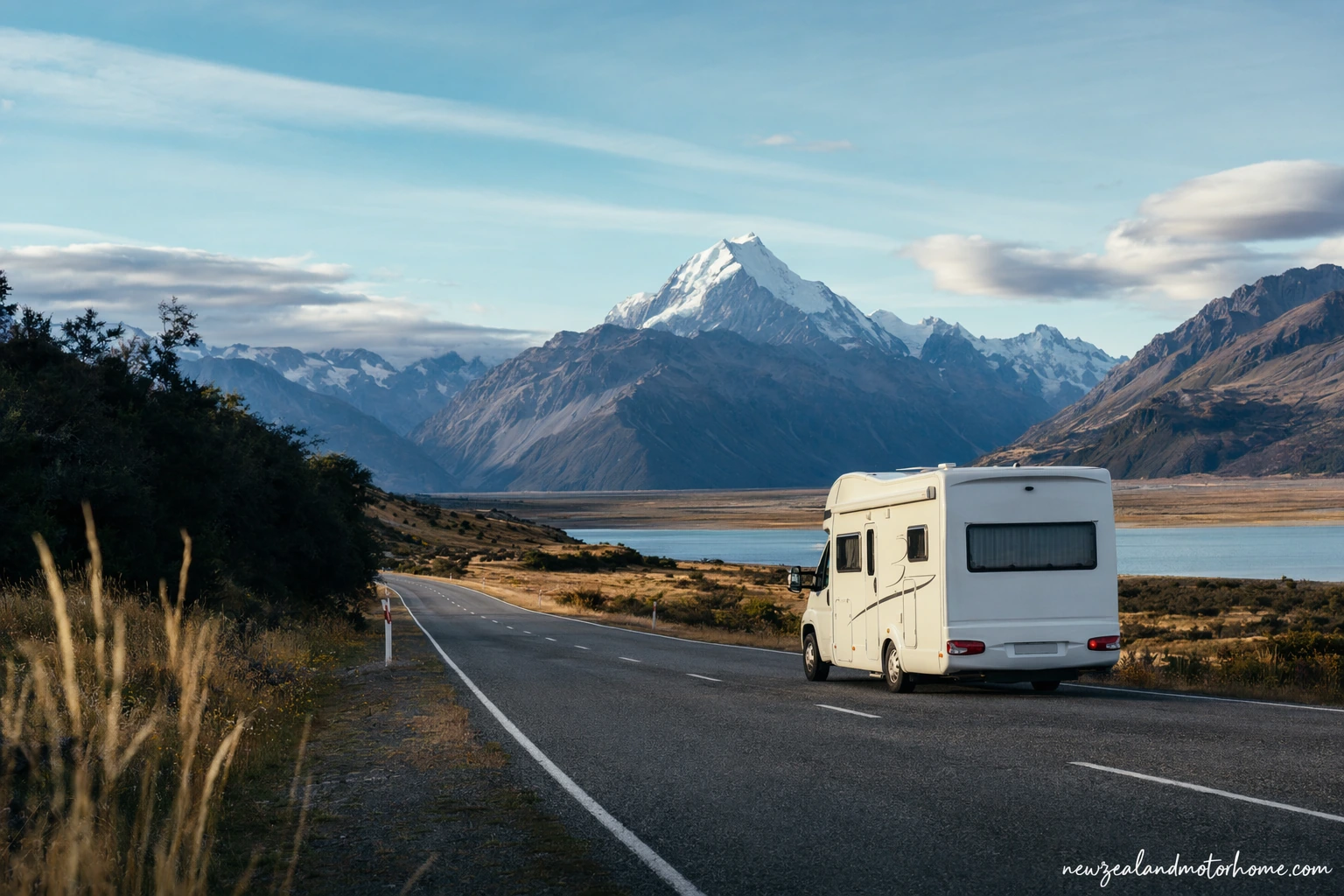
- Best as a 1-2 night stop
- Remote SH6 driving conditions
- Powered sites limited
- Self-contained rules apply
- Plan fuel, water and waste early
Haast is not a place to rush through in a campervan. It sits where the West Coast forest, river flats and Tasman Sea all meet, with long gaps between towns, sudden weather shifts and a proper sense of being on the edge of things.
This haast campervan guide is written for self-drive travellers sleeping in their own hired van or motorhome. You’ll find practical notes on arriving via SH6, where to park the van, camping near Haast, how to manage water, LPG and waste, and how to slot Haast into a wider West Coast or Wānaka route.
Getting to Haast by campervan on SH6
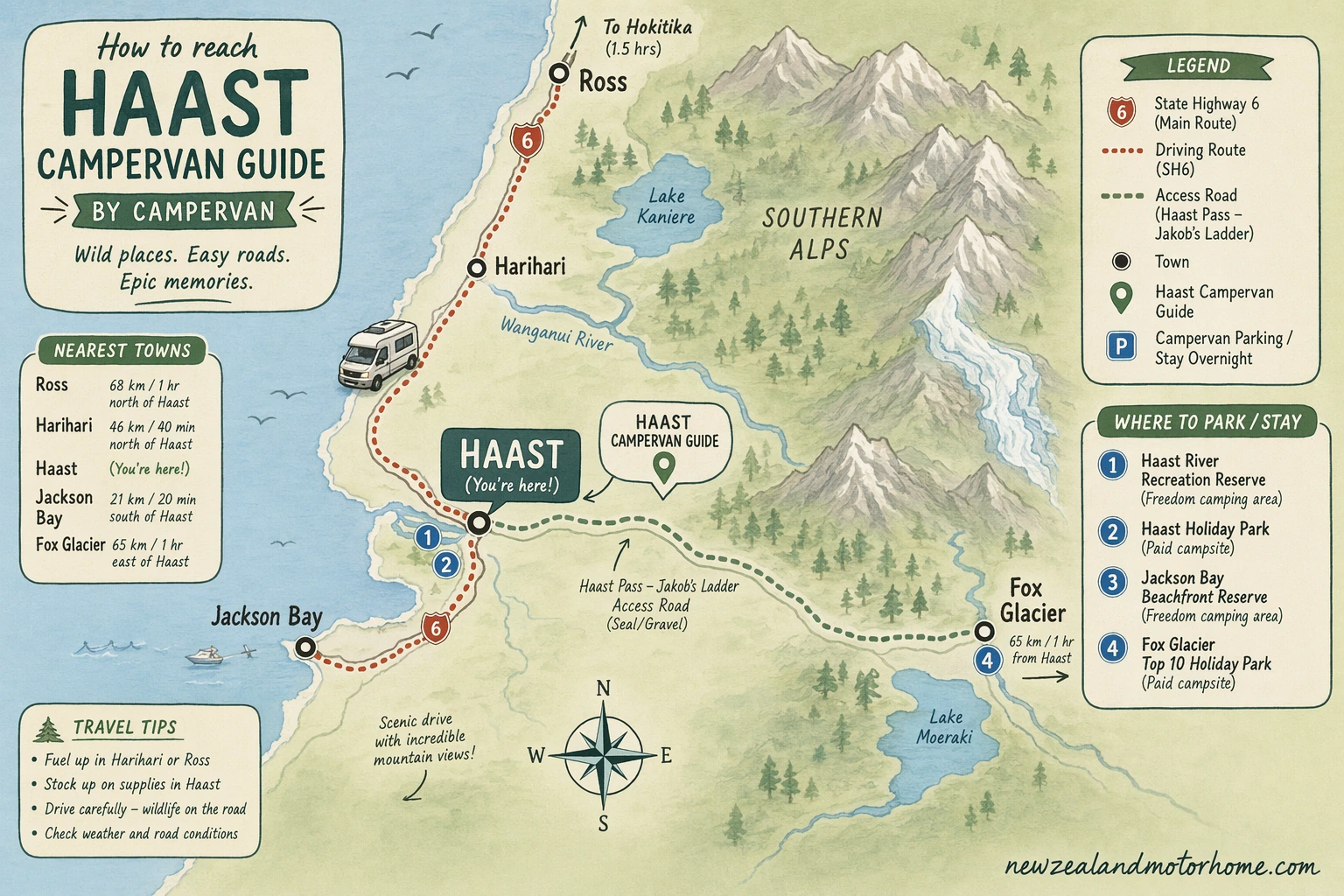
Most campervan travellers reach Haast on State Highway 6, either south from Fox Glacier and the West Coast beaches, or west over Haast Pass from Wānaka and Makarora. Both approaches are scenic, but they are not quick motorway-style drives: expect one-lane bridges, shaded corners, wet road surfaces after rain and sections where a large motorhome needs a patient, steady pace.
The Haast Pass side is particularly memorable in a van, with river gorges, waterfalls and forest close to the road. Use slow-vehicle bays when traffic gathers behind you, and avoid stopping on bridge approaches or blind bends for photos. Fuel and supplies are spaced well apart, so treat Haast as a remote stop rather than a full-service town.
- Fill fuel before the long run if coming from Fox Glacier, Wānaka or Makarora.
- Allow extra time for one-lane bridges and weather-related delays.
- Keep headlights on in heavy rain or low cloud through the pass.
- Large motorhomes should take corners gently; some bends tighten quickly.
Parking the van around Haast and the coast
Haast township is small and spread out, so parking is usually about being tidy and considerate rather than hunting for a big urban car park. Look for signed public parking near toilets, visitor information points, short walk starts and local shops, and keep your campervan within marked bays where they exist.
Out towards Haast Beach, Okuru and Jackson Bay, parking areas can be gravel, exposed to wind, or soft at the edges after rain. Before you nose a heavy motorhome towards a view, check that you have room to turn around without reversing into traffic or vegetation. Do not block boat ramps, access tracks, farm gates or residents’ driveways, even for a quick lunch stop.
- Use formed parking areas rather than roadside verges where the ground looks soft.
- Fold mirrors in at narrow stops and give turning room to locals towing boats.
- At beach and river-mouth stops, watch for sand, puddles and low-hanging branches.
- If a sign says no camping or no overnight parking, treat it as applying to your self-contained van too.
Where to stay overnight near Haast
For a motorhome Haast night with the easiest reset, choose a local holiday park or motor camp with powered and unpowered sites. Powered sites are useful after wet West Coast days when you want to dry gear, charge devices and run the heater without worrying about your house battery. Book ahead in peak summer and during school holidays, because choices are limited compared with bigger West Coast towns.
If you prefer a simpler bush setting, camping near Haast includes DOC-style camps in the wider area, such as river and lake stops on the SH6 approaches. These are generally unpowered and more basic, so arrive with fresh water, an empty cassette and enough battery. Freedom camping rules can change by district and site, so only stay where overnight parking is clearly permitted for certified self-contained vehicles.
- Best for comfort: a holiday park or motor camp with powered sites and facilities.
- Best for a quieter feel: permitted conservation-style camps on the approach roads.
- Best practice: display current self-containment certification and follow all local signs.
- Avoid relying on late arrivals; remote sites may have no lighting, no staff and limited turning room.
Water, dump stations, LPG and supplies
Haast is a place to manage your campervan systems early, not when the grey-water tank is already full. Use official dump stations shown by council or national camping maps, and confirm access before you commit to a remote overnight. If you are moving between Fox Glacier and Wānaka, think of your waste, fresh water and fuel as part of the same planning job.
Fresh-water fills may be available at campgrounds, signed public taps or service points, but do not assume every tap is potable unless it is clearly marked. LPG bottle swaps or fills and mechanical help can be limited, especially outside standard hours, so top up before you enter the long West Coast or Haast Pass stretch if your van relies on gas for cooking, hot water or heating.
- Empty toilet cassettes only at an authorised dump station.
- Never drain grey water onto gravel, grass or roadside ditches.
- Carry enough drinking water for an extra night in case weather slows the drive.
- Check LPG and fuel before leaving Fox Glacier, Wānaka or another larger service stop.
Things to do from a campervan base in Haast
Haast is made for short, weather-flexible stops rather than a packed list of attractions. Park the van, make a hot drink, and choose walks or viewpoints based on the day’s rain, wind and river levels. The forest is lush for a reason, and tracks can be muddy after heavy weather.
Popular campervan-friendly outings include coastal drives towards Jackson Bay, river and beach viewpoints, forest walks near the highway, and waterfall stops on the Haast Pass side. Always check current track and road conditions before detouring, especially after storms. Sandflies are part of the local experience, so keep repellent handy and close the van’s insect screens before dusk.
- Jackson Bay makes a good out-and-back drive if the weather is settled and you have time.
- Haast Pass waterfall stops are easiest when you park fully off the road and avoid peak traffic bunches.
- Beach stops are better for lunch than for overnighting unless camping is clearly permitted.
- Keep boots and wet jackets contained so the van does not become a damp gear locker.
How Haast fits into a wider motorhome route
Haast works well as a pause between the glaciers and Wānaka, or as a slower two-night base if you want time for the coast, the pass and a proper systems reset. Driving straight through is possible, but in a campervan it can make the day feel tight, especially if you stop often for bridges, waterfalls, photos and food.
A relaxed west-to-east plan might run Fox Glacier or Lake Paringa to Haast, then over Haast Pass to Makarora or Wānaka the next day. Going the other way, Wānaka to Haast gives you time to cross the pass in daylight and wake up near the West Coast before heading north. If you want a route checked for van size, overnight spacing and dump-station timing, you can send us your rough dates through /talk-to-us/ and we’ll help shape it without overloading the day.
- Allow one night if Haast is a practical stop between bigger bases.
- Allow two nights if you want Jackson Bay, short walks and a slower West Coast feel.
- Avoid planning the pass late in the day after a long glacier or Wānaka departure.
- Build in weather slack; slips, flooding and road works can affect SH6.
Keep planning
Common questions
Is Haast worth stopping at in a campervan?
Can I freedom camp in Haast with a self-contained van?
Are there powered campervan sites near Haast?
Where should I empty my toilet cassette around Haast?
Is the Haast Pass suitable for a large motorhome?
Have a planner shape this for your dates
Send a short outline — your dates, party size, and the kind of trip you want. A planner replies with a vehicle recommendation, a paced route, and the realistic budget.