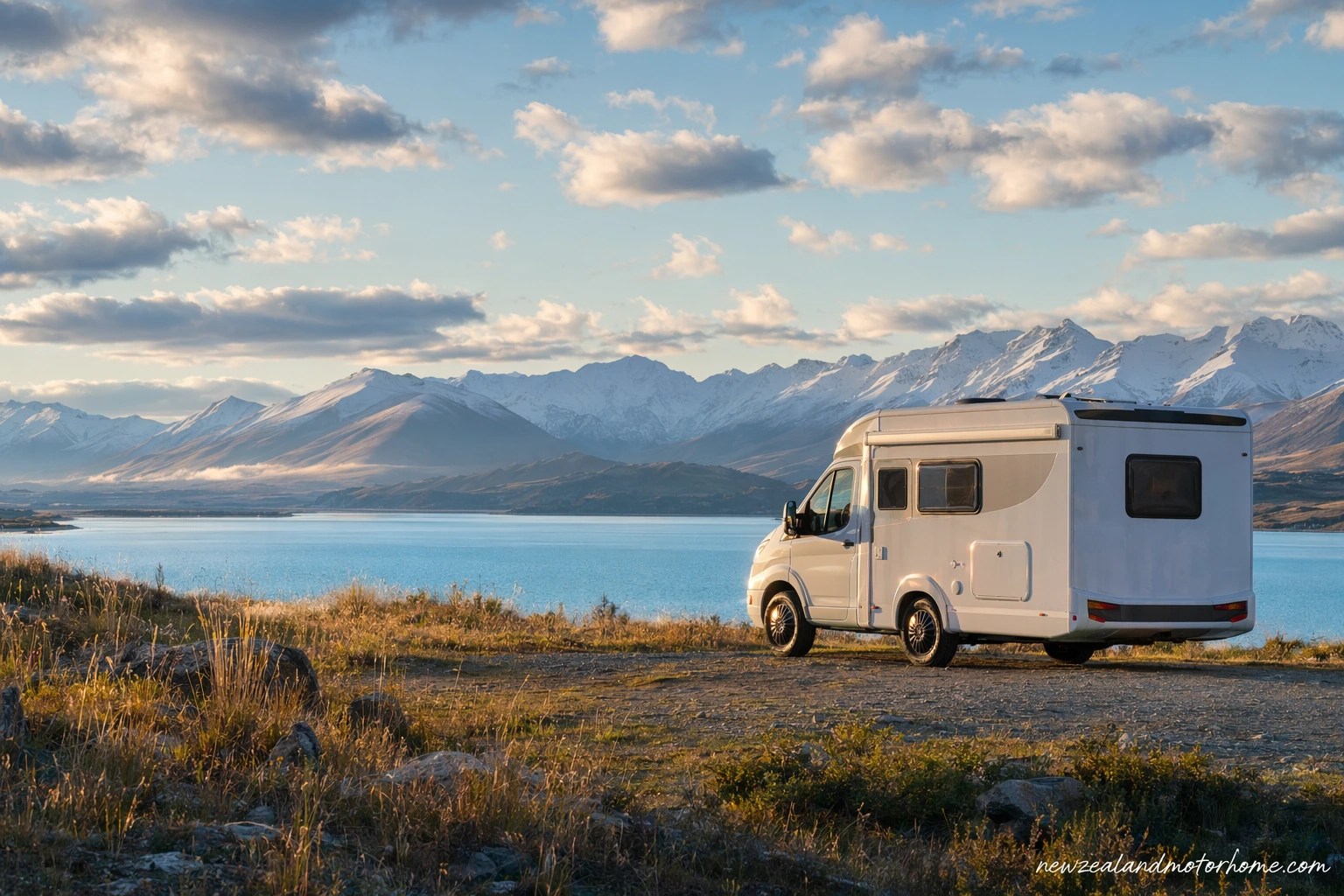
- Best as a 1–2 night stop
- Powered and unpowered sites available
- Freedom camping is signposted and restricted
- Watch wind, ice and high-sided van handling
- Handy base for Aoraki/Mount Cook routes
Lake Tekapo is one of those places where the van door opens to a big, blue Mackenzie Basin view: pale tussock, snow-bright peaks when the weather is clear, and a shoreline that changes colour by the hour. For campervan and motorhome travellers, it is also a useful pause between Christchurch, Aoraki/Mount Cook, Wānaka and Queenstown.
This lake tekapo campervan guide focuses on the practical bits that matter when you are driving and sleeping in your hired van: where to park without blocking tight village streets, what to expect from powered and unpowered sites, how freedom camping works here, and where services such as dump stations, fresh water, fuel and LPG fit into your day.
Getting to Lake Tekapo by campervan
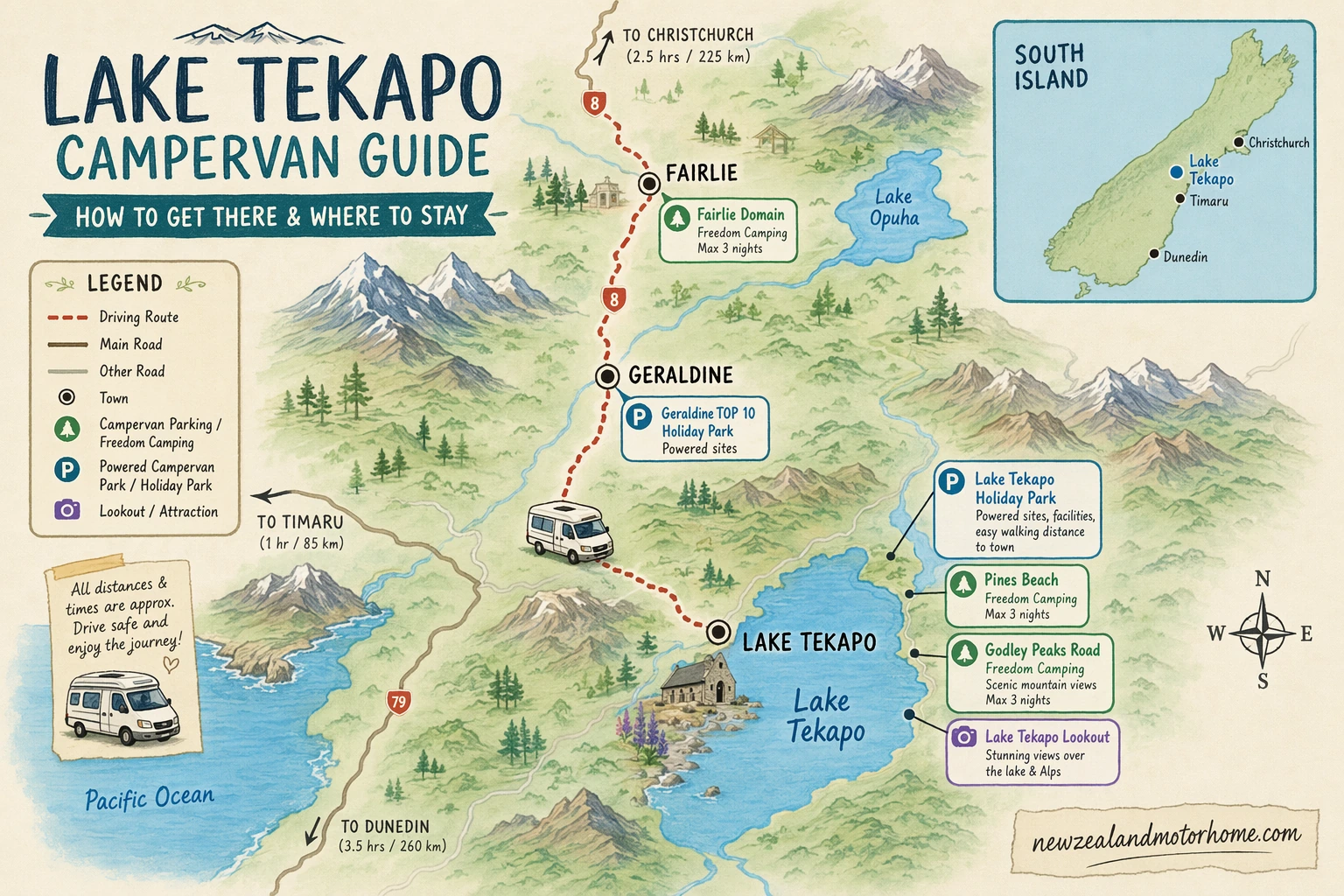
Most campervan Lake Tekapo routes arrive on State Highway 8. From Christchurch, the drive rolls through the Canterbury Plains, Geraldine, Fairlie and Burkes Pass before the country opens into the Mackenzie Basin. From the south, SH8 links Tekapo with Twizel, Omarama and the Lindis Pass route towards Wānaka and Queenstown.
The highway is sealed and suitable for standard hire campervans and larger motorhomes, but it is not a road to rush. Wind can push at high-sided vehicles across open basin sections, and winter mornings can bring ice, snow showers and low sun. Leave extra stopping distance, especially if you are still getting used to the weight and length of the van.
- Fuel: top up before remote stretches, especially if you are continuing to Aoraki/Mount Cook or over the Lindis Pass.
- Weather: check road conditions in winter and after strong wind warnings; the scenery is wide open but the weather can move quickly.
- Driving rhythm: use slow-vehicle bays and pull-outs to let faster traffic pass safely.
- Arrival timing: aim to arrive before dark if you need to find your overnight site, fill water or locate the dump station.
Parking the van around the lake and village
Tekapo village is compact, and the easiest campervan approach is to park once, then walk the lakefront, shops and Church of the Good Shepherd area. In busy months, standard car parks fill quickly and long motorhomes can overhang into traffic lanes, so look for signed larger-vehicle spaces and avoid squeezing into short angled parks.
The Church of the Good Shepherd and lakeside viewpoints are very popular. Treat these as short-stay sightseeing stops, not rest areas for making lunch across several bays. If you are driving a longer motorhome Lake Tekapo is much calmer when you visit early in the morning or later in the afternoon.
- Do: fold mirrors where needed, keep access clear for buses and emergency vehicles, and use formed parks only.
- Do not: stop on yellow lines, grass verges, private driveways or narrow shoulders for photos.
- Good habit: make a quick walk from the van before committing to a tight car park; turning space can be limited.
For lakefront walks, take valuables with you and close curtains or blinds if the van is loaded with bags. Tekapo is generally relaxed, but busy visitor areas always reward tidy, low-key parking.
Where to stay overnight in and near Tekapo
If you want the simplest overnight, choose a recognised camping ground or holiday park in Tekapo. These usually suit travellers who need powered sites for heating or battery charging, showers, laundry, kitchen space, drinking-water fills and a legal place to sleep close to the lake. Book ahead during summer, school holidays and clear-sky winter weekends.
Unpowered sites can work well if your van has a good house battery, solar, gas cooking and enough fresh water for the night. In colder months, a powered site is often worth it if your hire van relies on mains power for some heating or charging needs. Check your rental handbook so you know exactly what runs from LPG, 12V and 240V.
Freedom camping around Lake Tekapo is controlled, and the rules can change by bylaw or season. Only stay where overnight parking is clearly permitted, follow all signs, and make sure your vehicle meets current self-containment certification requirements if a site is restricted to self-contained vehicles.
- Close to town: best for powered sites, facilities and walking to the lakefront.
- Camping near Lake Tekapo: nearby lakes and basic camp areas may offer a quieter feel, but check access roads, toilet facilities, water availability and current overnight rules before driving out.
- Do not assume: a scenic lakeside pull-off is a legal overnight stop; many are day-use only.
- Leave no trace: carry rubbish out, use dump stations for grey and black water, and never drain onto the ground.
Dump stations, fresh water, LPG and supplies
Tekapo is a small alpine village, so plan your van chores rather than leaving them until late in the evening. There are campervan services in and around town, but capacity can be stretched when several motorhomes arrive at once after the same long drive.
Use an approved dump station for both grey water and toilet cassettes, and take your time if the bay is shared with larger vehicles. Rinse only where the facility allows it, and keep drinking-water hoses separate from cassette-rinsing points. If in doubt, ask at your campground or check the local council information before filling.
- Fresh water: refill before heading to more basic overnight spots or towards Aoraki/Mount Cook.
- LPG: check whether your hire van uses a swappable bottle or fixed refill bottle, and do not wait until the heater or hob fails on a cold night.
- Rubbish and recycling: use official bins or campground facilities; do not leave bags beside full public bins.
- Groceries: stock up for simple van meals, especially if your next stop is remote or you are arriving late.
A good Tekapo routine is: park, confirm your overnight site, empty waste if needed, refill fresh water, then head out for the lakefront. It keeps the evening relaxed and avoids searching for services after dark.
Things to do without moving the van all day
One of the best parts of staying in Tekapo by campervan is being able to slow down. Once the van is parked legally for the night, you can walk the lake edge, visit the Church of the Good Shepherd, watch the light change over the water, and return to your own kettle and warm layers when the wind comes up.
Lake Tekapo sits within the Aoraki Mackenzie International Dark Sky Reserve, so clear nights are a highlight. If you are going out after dark, take a torch, wear warm clothing and avoid driving tired on unfamiliar roads. Keep van lights and noise low in campgrounds so others can enjoy the sky too.
- Lakefront walking: easy from the village and ideal if you want a break from driving.
- Hot pools and short activities: useful on windy or cold days when exposed tracks are less inviting.
- Mount John area: roads and parking can be narrower than the highway; if your motorhome is long, consider whether walking or an organised option is easier.
- Photos: use proper car parks and walk back to viewpoints rather than stopping on road edges.
If you plan to explore gravel side roads to smaller lakes or trailheads, check your hire agreement first. Some campervan contracts restrict unsealed roads, and roadside assistance may not cover you if you ignore those conditions.
How Tekapo fits a wider South Island route
Lake Tekapo works beautifully as a one or two-night stop rather than a quick photo pause. It breaks the Christchurch to Queenstown or Wānaka drive, gives you access to the Mackenzie Basin, and leaves room for a detour to Lake Pukaki and Aoraki/Mount Cook without turning the day into a slog.
For a relaxed motorhome Lake Tekapo plan, arrive from Geraldine or Fairlie, stay overnight, then continue to Twizel, Aoraki/Mount Cook, Omarama or the Lindis Pass depending on your route. If the weather is clear, build in spare time; if it closes in, Tekapo still has enough close-to-van options to make the stop worthwhile.
- One night: enough for the lakefront, dinner in the van and a clear-night sky watch.
- Two nights: better if you want a no-driving day, laundry, hot pools or a slower Mackenzie Basin loop.
- Before Tekapo: Geraldine and Fairlie are handy for supplies and a driving break.
- After Tekapo: Twizel is useful for services before Aoraki/Mount Cook or the Waitaki route.
If you would like help fitting Tekapo into a sensible campervan itinerary, use our talk-to-us planning step and tell us your van size, travel month and whether you prefer powered holiday parks or quieter unpowered nights.
Common questions
Can I freedom camp at Lake Tekapo in a campervan?
Only stay overnight where signs and current local rules allow it. Many scenic pull-offs near the lake are day-use areas, and some permitted sites may require a certified self-contained vehicle. Check the latest Mackenzie District camping information before settling in for the night.
Do I need a powered site in Tekapo?
Not always, but a powered site is helpful in winter or if your hire van needs mains power for heating, charging or longer stays. If you are relying on an unpowered site, make sure you understand your house battery, LPG level, fresh-water capacity and toilet cassette range.
Is Lake Tekapo suitable for a large motorhome?
Yes, the main highway access is suitable for larger motorhomes, but parking in the village can be tight at peak times. Use signed larger-vehicle spaces, avoid overhanging into lanes, and be cautious with narrow side roads or gravel access tracks.
Where can I empty grey water and the toilet cassette?
Use an approved dump station in the Tekapo area or at your campground if available. Do not empty grey water on the ground or into roadside drains, and keep drinking-water filling gear separate from cassette-rinsing equipment.
How many nights should I allow for camping near Lake Tekapo?
One night works if Tekapo is a route break between Christchurch and the southern lakes. Two nights is better if you want a slower day, a powered-site reset, lake walks, dark-sky viewing or time to continue towards Lake Pukaki and Aoraki/Mount Cook without rushing.
Have a planner shape this for your dates
Send a short outline — your dates, party size, and the kind of trip you want. A planner replies with a vehicle recommendation, a paced route, and the realistic budget.