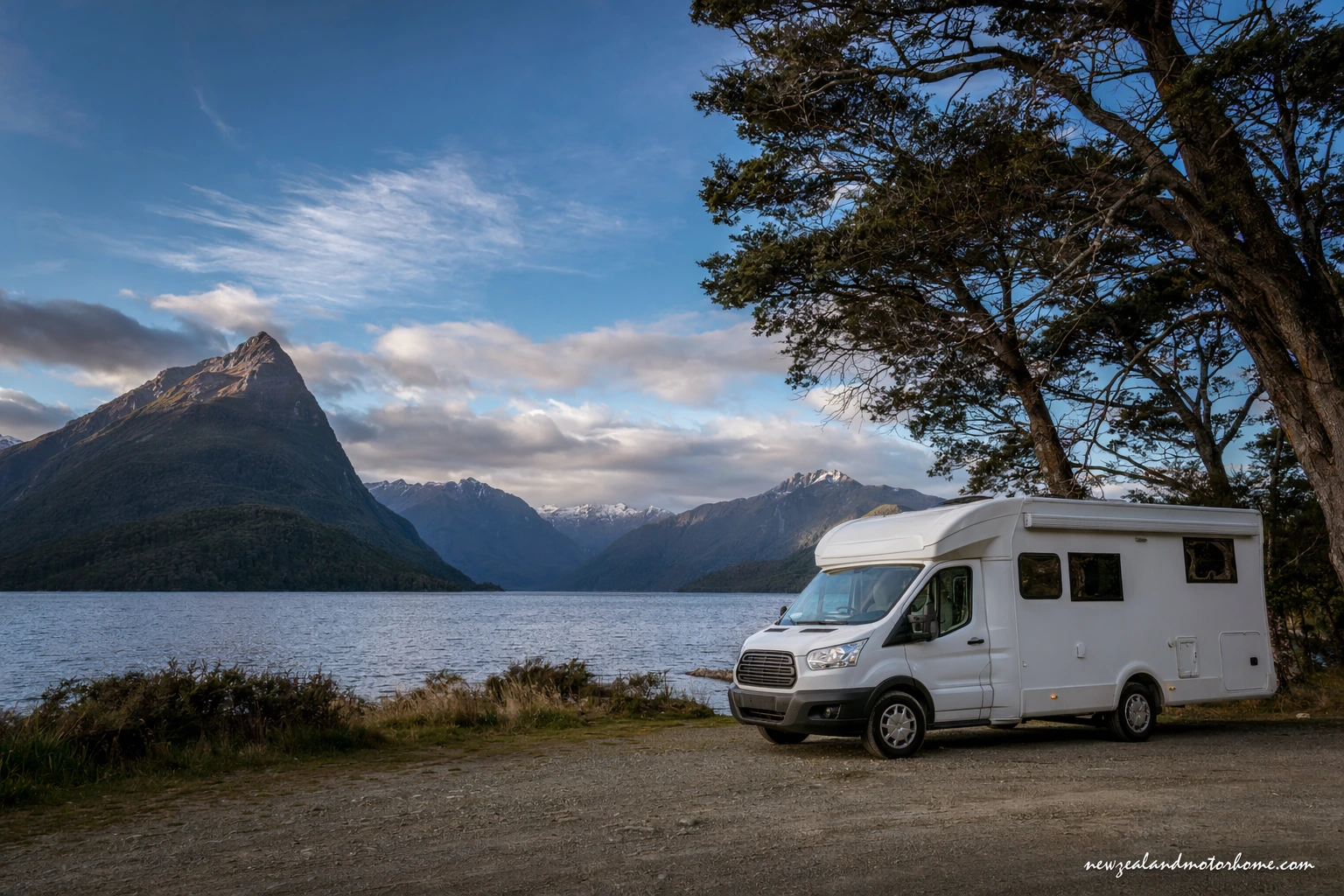
- Best as a 2–3 night base
- Fuel before Milford Road
- Powered and unpowered sites nearby
- Self-containment rules enforced
- Allow for wet Fiordland weather
Te Anau is one of those places where travelling by campervan makes complete sense: lake at your door, mountains on the horizon, and enough practical services to reset the van before heading deeper into Fiordland. It is the natural base for Milford Sound, Doubtful Sound, the Kepler Track and quieter lake-edge days when you do not want to drive far.
This te anau campervan guide is written for self-drive travellers sleeping in their own hired van or motorhome. You will find road notes, where to park without annoying the town, what to expect from powered and unpowered sites, and how to fit Te Anau into a wider South Island route.
Getting to Te Anau by campervan or motorhome
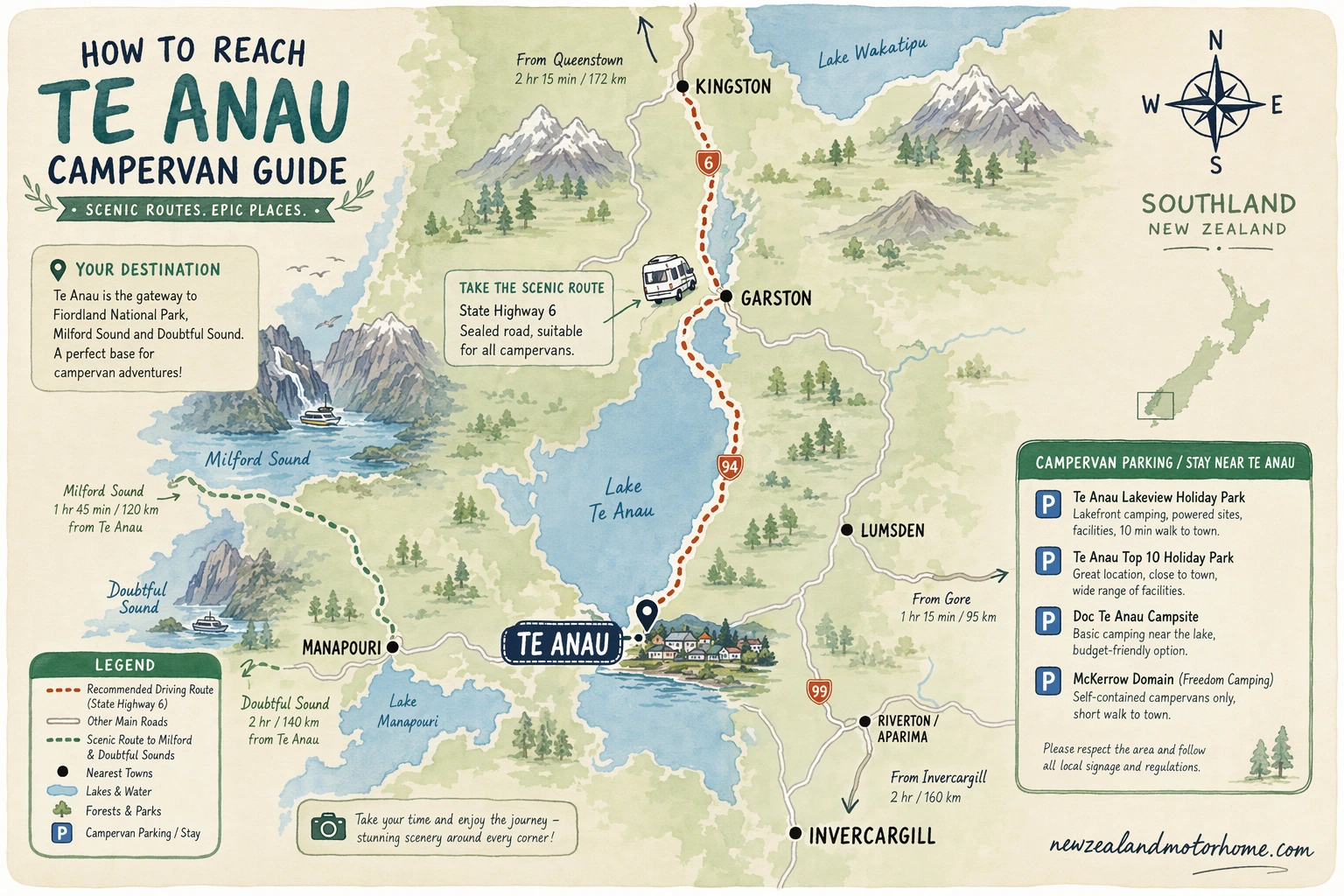
Most campervan Te Anau trips arrive from Queenstown via SH6 and SH94, a straightforward drive through Lumsden and Mossburn before the land opens out towards the lake. Allow more time than the map suggests if you are in a larger motorhome, as the last stretch is easy but exposed in strong wind and you will likely want a slow coffee or photo stop.
From Invercargill, the route north-west through rural Southland is less dramatic but useful if you are linking the Catlins or Southern Scenic Route with Fiordland. There are fuel stops before Te Anau, but it is still sensible to arrive with a comfortable tank, especially if Milford Sound is next.
- Queenstown to Te Anau: around half a day at relaxed van pace, with food and fuel options on the way.
- Invercargill to Te Anau: a good linking drive for those coming from the south coast.
- Milford Sound from Te Anau: a separate long day, not a quick side road; start early and fuel up first.
- Winter note: check road conditions for SH94, especially past Te Anau towards Homer Tunnel.
Parking the van in town and by the lake
Te Anau is campervan-friendly compared with many lake towns, but it still works best when you park deliberately. The lakefront is lovely for a wander, not a place to sprawl across several short car spaces with chairs out. If your van is long or has a rear bike rack, look for signed larger vehicle parking or choose the edge of a car park where you can fit fully within the lines.
The town centre is compact, so you can often park once and walk to the supermarket, lakefront, information centre and departure points. In busy summer weeks, arrive early for lake activities and avoid circling narrow streets in a high-roof motorhome when pedestrians and boat trailers are moving about.
- Do not treat daytime lakefront parking as an overnight stop unless signs specifically allow it.
- Check height clearance before turning into smaller private car parks or motel-style courtyards.
- Keep access clear for boat ramps, tour check-ins, rubbish trucks and emergency vehicles.
- Use your mirrors carefully around the town centre; rental vans and pedestrians are everywhere in peak season.
Where to stay overnight: powered sites, DOC camps and freedom camping
For a first night in motorhome Te Anau, a holiday park in or close to town is the easiest choice. You get powered sites, showers, laundry, fresh-water fills and usually a dump station or clear directions to one. It is also handy if you are charging devices, drying wet gear after a Fiordland walk, or topping up before a Milford Road day.
If you prefer a quieter unpowered night, there are DOC-style camping areas around the wider lake and along the Milford Road corridor, with more basic facilities and a stronger need to be self-contained. These are beautiful but not all are suitable for every vehicle length in bad weather, so check current access, site rules and whether bookings are required before you leave town coverage.
Freedom camping near Te Anau is tightly managed and can change with council rules, seasonal pressure and conservation requirements. If you are relying on it, your vehicle must meet current self-containment requirements and you should only stay where signs or official maps permit overnight camping. If you want help matching your van size, travel month and preferred site style, our /talk-to-us/ step is there for a simple route check.
Dump stations, water, fuel and LPG before Fiordland roads
Te Anau is your practical reset point before the more remote parts of Fiordland. Fill fresh water, empty grey and black water at an approved dump station, sort rubbish properly, and check LPG before you point the van towards Milford Sound or a basic campsite. Do not assume you can deal with waste or gas once you are inside the national park corridor.
Most travellers can sort groceries and fuel in town, but range matters in a motorhome because the Milford Road is there-and-back driving with stops, idling at viewpoints, and possible delays near Homer Tunnel. If the weather looks cold, wet or unsettled, keep extra drinking water and a little spare food in the van rather than running everything down to the last day.
- Use dump stations only for cassette toilets and grey water; never drain into gutters or bush.
- Top up potable water before leaving town for DOC camps or Milford Sound.
- Check LPG bottle levels if you plan to cook and heat off-grid.
- Refuel in Te Anau before the Milford Road; there are limited services beyond town.
What to do from Te Anau without moving camp every night
One of the best things about camping near Te Anau is that you can stay put for two or three nights and let the van rest. Walk the lakefront, visit the bird sanctuary area, do a short section of the Kepler Track from the control gates, or book a lake activity without needing to repack your bedding and kitchen every morning.
For Milford Sound, many self-drive campervan travellers use Te Anau as the sensible launch point. The drive is spectacular but demanding, with narrow sections, avalanche areas in winter, tourist traffic, and plenty of tempting pull-offs. Leave early, keep to your lane, use slow vehicle bays where safe, and remember you still need to drive the same road back unless you have booked an overnight option.
Manapouri is another easy day trip by van if Doubtful Sound is on your list. Parking around departure areas can fill, so allow time and do not rely on finding a perfect long space at the last minute. If your camper is especially long, ask ahead about suitable parking when you confirm your activity.
How Te Anau fits a wider South Island campervan route
Te Anau works well as a hinge point between the alpine busyness of Queenstown and the slower, wilder feel of Fiordland. A relaxed route might run Queenstown to Te Anau, spend two nights, drive Milford Sound as a day trip, then continue south towards Invercargill, the Catlins or back inland via Lumsden. That keeps driving days manageable and gives you space for bad weather.
If you are travelling in a larger motorhome, avoid planning Te Anau as a one-night blur between Queenstown and Milford Sound. You will spend more time packing down, fuelling, dumping and driving than actually enjoying the lake. Two nights is the practical minimum; three is better if you want a weather buffer or a proper rest day.
- Short route: Queenstown → Te Anau → Milford Sound day trip → Queenstown or Wanaka.
- Southern loop: Queenstown → Te Anau → Invercargill → Catlins → Dunedin.
- Slower Fiordland base: Te Anau for three nights with one big drive day and one no-drive day.
Keep planning
Common questions
Can I freedom camp in Te Anau in a campervan?
Only in places where current council or official signage allows it, and only if your van meets the required self-containment standard. Te Anau is monitored because of heavy visitor pressure, so do not assume a quiet lakefront pull-in is legal for overnighting.
Is Te Anau a good base for driving a campervan to Milford Sound?
Yes. Te Anau is the most practical base for a self-drive Milford Sound day because you can fuel up, dump waste, fill water and start the Milford Road early. Treat it as a full driving day, especially in a larger motorhome or in winter conditions.
Do I need a powered site in Te Anau?
Not always, but a powered site is useful after a few off-grid nights or before heading into Fiordland. It lets you recharge devices, run appliances comfortably, dry damp gear and reset the van before more basic camping.
Are there dump stations and fresh-water fills in Te Anau?
Yes, Te Anau has the practical campervan services you need, including approved waste disposal options and places to fill fresh water. Holiday parks often provide these for guests, and public facilities should be used according to the posted instructions.
How many nights should I spend camping near Te Anau?
Two nights is a sensible minimum if Milford Sound is part of your plan. Three nights gives you a better weather buffer and a calmer pace, with time for the lakefront, Kepler Track walks or a Manapouri day trip.
Have a planner shape this for your dates
Send a short outline — your dates, party size, and the kind of trip you want. A planner replies with a vehicle recommendation, a paced route, and the realistic budget.