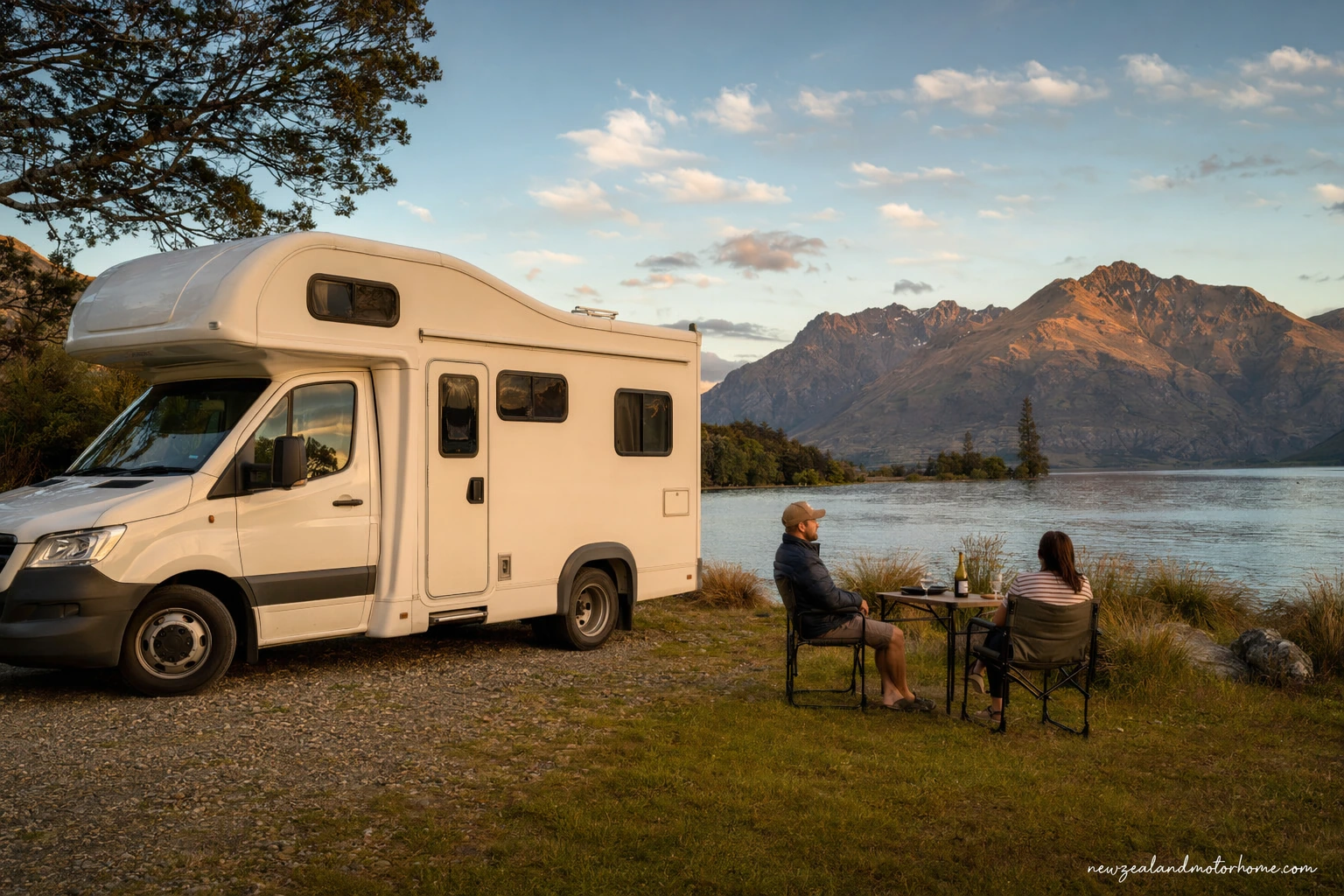
How much does it cost to hire a campervan in NZ for a self-drive trip?
- Costs vary most by season and van size
- Powered sites help reset batteries and tanks
- Self-containment rules affect overnight choices
- Allow for fuel, ferries, LPG and dump stations
- Plan by driving time, not just kilometres
There is no single honest answer to how much does it cost to hire a campervan in NZ, because the total depends on when you travel, the van you choose, how you sleep overnight, and how often you plug in, fill up, empty out, or take the longer scenic road.
This guide is written for travellers driving and sleeping in their own hired campervan or motorhome. It walks through the real cost drivers: the hire itself, campground choices, fuel, ferries, insurance settings, dump stations, fresh-water fills, LPG, and the practical bits that can quietly change your budget once you are on the road.
The van hire cost is only the starting point
Your daily campervan hire rate is usually the most visible line in the quote, but it is not the whole trip cost. A compact two-berth van, a larger motorhome with an internal shower and toilet, and a family layout with fixed beds all sit in different cost bands, and their running costs can feel different once you start driving New Zealand roads.
Season matters a lot. Summer school holidays, Christmas and New Year, and the main South Island touring months are usually in strongest demand. Shoulder seasons can be gentler on both campground availability and your route planning, especially if you are flexible about weather and do not need to be parked beside the beach every night.
- Van size: bigger motorhomes often use more fuel and need larger sites.
- Transmission and layout: availability can affect the quote, especially for popular berth sizes.
- Pick-up and drop-off: one-way travel, depot location, and timing can change the total.
- Included kilometres: check whether your route distance suits the hire terms.
Powered sites, unpowered sites and freedom camping all change the budget
Where you sleep in the van each night has a big effect on the final cost. Holiday parks generally cost more than basic camping areas, but they also give you hot showers, kitchens, laundry, powered sites, fresh-water taps, dump stations, and an easy place to reset the van after a few days off-grid.
Powered sites are useful when you want to top up house batteries, run mains appliances where permitted, or warm the van in colder parts of the South Island. Unpowered sites are usually simpler and can suit travellers with good battery capacity, solar, and modest electricity use, but you still need to manage water, toilet cassette capacity, rubbish, and grey-water storage.
Freedom camping is not a free-for-all in New Zealand. You need a properly certified self-contained vehicle where required, and local council rules vary by district, street, reserve, and season. Always check signs on arrival, park only where your van is allowed, and leave enough room for other vehicles to pass safely.
- Holiday park night: best for showers, laundry, powered hook-up, and water top-ups.
- DOC or council campsite: often simpler, with fewer services and sometimes no dump point.
- Freedom camping: only where permitted and suitable for your self-contained van.
Fuel, ferries and road distance are easy to underestimate
New Zealand does not look large on a map, but campervan driving days can be slow. Mountain passes, narrow coastal roads, one-lane bridges, roadworks, and photo stops all add time. A larger motorhome also needs more care in high winds and on tight parking approaches, particularly around alpine roads, harbour towns, and older holiday park lanes.
Fuel spend depends on your van, driving style, load, wind, terrain, and how much zig-zagging you do. A route that looks tidy on paper can become more expensive if you double back for weather, chase distant freedom camping spots, or cross between islands without planning the ferry well ahead.
- Allow slower days: plan by driving time, not just kilometres.
- Check height and length: some car parks, city parking buildings, and tight scenic stops are awkward for motorhomes.
- Think about the ferry early: Cook Strait sailings affect both cost and timing if you are touring both islands.
- Park before dark: finding a legal overnight stop is easier in daylight.
The quiet costs: insurance settings, LPG, water and dump stations
Before you compare campervan hire quotes, look closely at what is included. Insurance excess options, windscreen and tyre cover, extra drivers, child restraints, bedding, outdoor chairs, snow chains, and after-hours pick-up rules can all sit outside the base hire figure. None are automatically bad; you just want to know what you are choosing.
On the road, the practical van systems also shape your budget and your daily rhythm. You will need fresh water, places to empty grey water and the toilet cassette, rubbish disposal, and sometimes LPG for cooking, hot water, or heating. Many full-service holiday parks make this easy, while remote areas may require you to plan the next dump station before the cassette is urgent.
Build a simple reset routine into your itinerary: fill fresh water when available, empty waste responsibly, top up LPG before heading into quieter regions, and keep an eye on battery levels if you are staying unpowered for several nights.
How to plan a realistic campervan budget
A useful way to estimate your trip is to build it night by night rather than asking for one grand number. Start with the van hire quote, then add likely campground nights, fuel, ferry crossings if needed, paid activities, supermarket stops, laundry, and a buffer for weather changes or a slower scenic detour.
Mixing overnight styles can work well. For example, you might book powered sites in busier places or before long driving days, use simpler unpowered sites in settled weather, and only freedom camp where the rules are clear and your self-containment, battery, water, and toilet capacity genuinely suit the stop.
If you want help matching your budget to a route that will actually drive well in a campervan, use the talk to us step and tell us your dates, berth size, comfort level, and whether you prefer holiday parks or more off-grid nights.
- Base quote: van hire, pick-up and drop-off, inclusions, and insurance choice.
- Night costs: powered sites, unpowered sites, basic campsites, and legal freedom camping.
- Road costs: fuel, ferries, tolls where relevant, and extra kilometres if applicable.
- Van living: LPG, laundry, showers, dump stations, fresh water, and paid parking in towns.
Common questions
Is campervan hire cheaper than using motels in New Zealand?
Sometimes, but not always. A campervan combines transport and accommodation, yet you still pay for fuel, campsites, insurance choices, and van services such as LPG and dump stations. The value is often in flexibility and sleeping close to the places you want to explore, not just the lowest nightly cost.
Do I need to pay for powered sites every night?
No, many travellers mix powered and unpowered nights. Powered sites are useful for recharging, heating, laundry stops, and a full reset, while unpowered nights can work if your battery, solar, water, and toilet capacity suit your travel style.
Can I rely on freedom camping to keep costs down?
Do not build your whole budget around freedom camping unless you are very comfortable checking local rules and managing the van off-grid. You need the right self-containment certification where required, and many popular towns restrict where campervans can stay overnight.
What hidden campervan costs should I check before booking?
Check insurance excess options, tyre and windscreen cover, extra driver fees, bedding or kitchen inclusions, child seats, snow chains, one-way hire rules, ferry timing, and after-hours pick-up or drop-off conditions. Also allow for fuel, LPG, paid parking, laundry, and occasional holiday park nights.
Does a bigger motorhome cost more to travel in?
Usually it can, even beyond the hire quote. Larger motorhomes may use more fuel, need longer campsites, feel slower on winding roads, and be harder to park in town centres or small scenic car parks. The trade-off is more interior space, storage, and often better onboard facilities.
Have a planner shape this for your dates
Send a short outline — your dates, party size, and the kind of trip you want. A planner replies with a vehicle recommendation, a paced route, and the realistic budget.