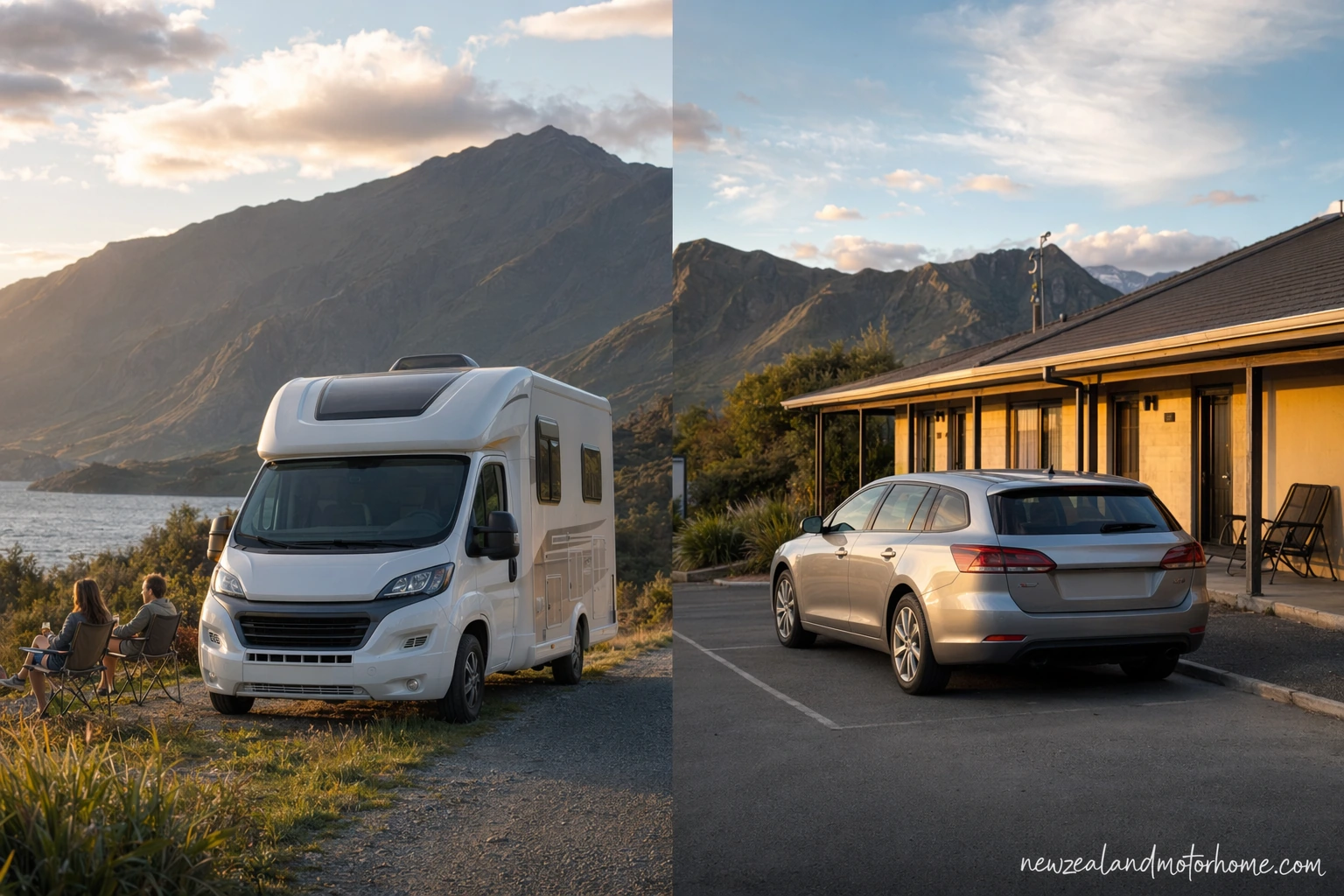
Campervan vs car and motel New Zealand: which trip fits your van style?
- Best for flexible self-drive loops
- Powered sites useful every few nights
- Self-containment does not guarantee freedom camping
- Van size affects parking and road choices
- Plan water, LPG and dump stops
Choosing between a campervan and a car-and-motel trip in Aotearoa is not just a question of where you sleep. It changes how you move through the day: where you park for lunch, whether you need powered sites, how often you refill fresh water, and whether freedom camping is even an option on the road you are taking.
This campervan vs car and motel New Zealand comparison is written for travellers who are seriously considering a self-drive van holiday. We will look at the real trade-offs: campsite access, parking, dump stations, comfort, road handling, food, weather, and the kinds of travellers each style suits best.
The biggest difference: your overnight options
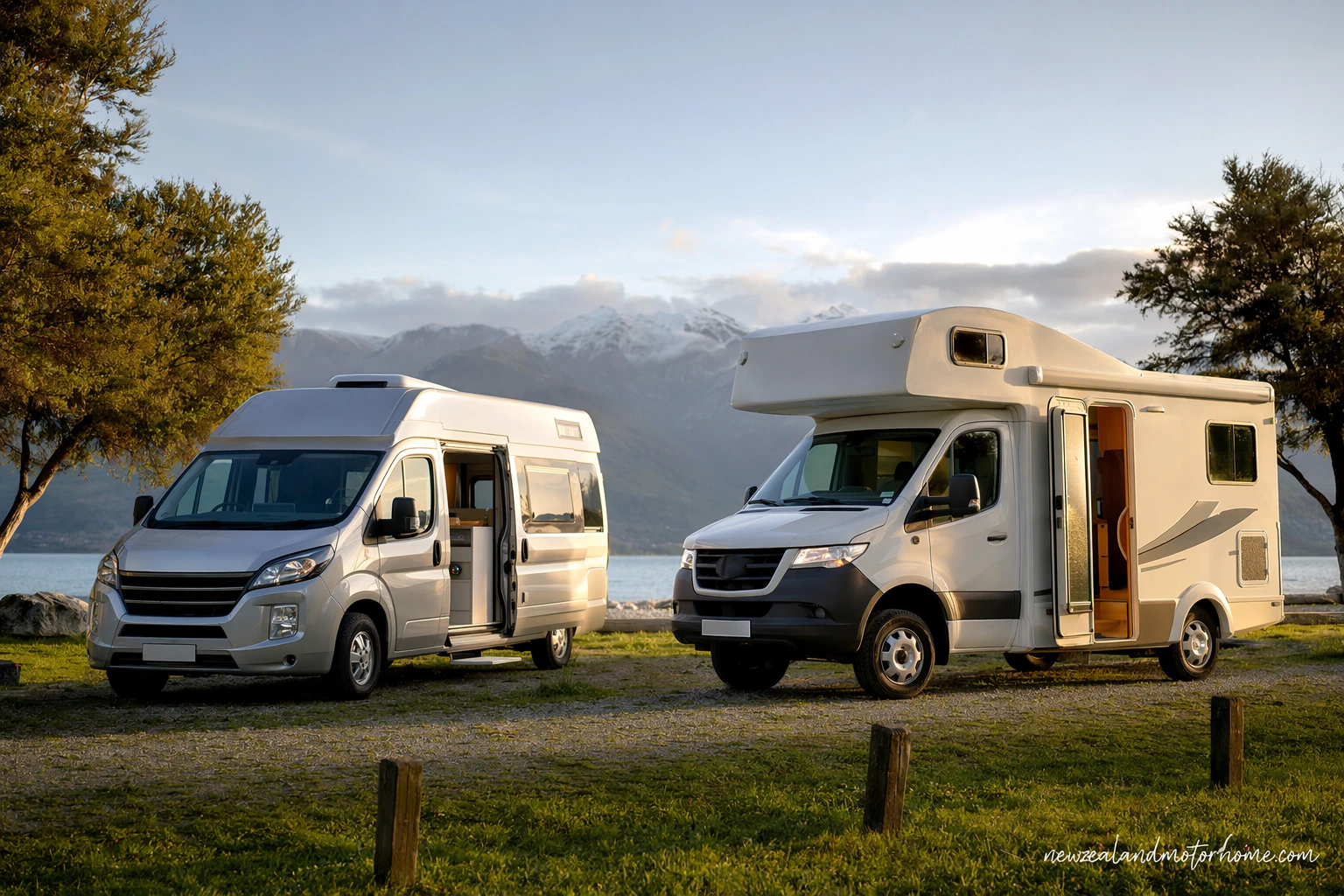
With a campervan or motorhome, your night is part of the route. You can choose holiday parks with powered sites, basic DOC-style campgrounds, private farm-style stays, and in some districts, freedom camping areas. A car-and-motel trip is simpler in one sense: you book a room, park outside if there is space, and skip the evening set-up. But you also give up the ability to sleep close to many lakes, beaches, trailheads and small-town reserves where self-contained vans are welcome.
The important catch is that freedom camping in New Zealand is never a free-for-all. Councils and DOC sites set their own rules, and many legal overnight spots require a certified self-contained vehicle. A self-containment certificate helps, but it does not override local signs, time limits, vehicle-type restrictions or seasonal closures.
- Campervan: more varied overnight stops, but you must check self-containment, signage and local bylaws.
- Car and motel: easier check-in and private bathroom, but less flexibility in remote or high-demand areas.
- Powered site: useful for heating, charging devices, running appliances and a comfortable reset night.
- Unpowered site: often quieter and simpler, but you rely on battery, gas and sensible water use.
Parking the van during the day
Day parking is where many first-time van travellers feel the difference. A campervan needs more room for turning, opening doors and sitting level if you are making lunch inside. In small places such as Akaroa, Russell, Arrowtown or lakeside settlements in summer, you may need to arrive early, use edge-of-town parking, or walk a few extra minutes rather than trying to squeeze into tight main-street spaces.
A car-and-motel trip can be easier for café stops and supermarket car parks, especially in busy urban centres. The trade-off is that the car is just transport. In a van, the kettle, raincoats, spare layers, fridge and picnic gear are already with you, so a windy lay-by or beach reserve can become a proper lunch stop if parking is legal and considerate.
- Check height bars before entering town car parks, beach access lanes and covered supermarket areas.
- Use long-vehicle bays where provided; do not overhang footpaths or block turning circles.
- On narrow roads, avoid stopping on blind bends for photos, especially on the West Coast, Coromandel and alpine passes.
- Plan supermarket stops for larger towns where the car parks are less cramped and fresh-water taps may be easier to find nearby.
Costs: not just fuel versus a room
The cost comparison depends heavily on season, van size, how often you use powered sites, and how you like to eat. A campervan usually brings higher fuel use than a small car, and holiday park sites still cost money, especially in popular summer towns. But the van also gives you a kitchen, fridge and the option to mix paid campgrounds with simpler legal stops, which can smooth the budget over a longer trip.
With a car-and-motel plan, fuel may be lower and the driving feels lighter, but nightly accommodation is less flexible. In peak season, motel availability can force longer days or early bookings. Eating out more often can also creep into the total, particularly in smaller settlements where late food options are limited.
- Budget for campervans: fuel, powered and unpowered sites, laundry, dump station access where charged, LPG refills and occasional paid showers.
- Budget for car and motel: room nights, parking where charged, meals out, and less ability to change route if accommodation is full.
- Best value pattern: many van travellers use a mix of powered reset nights, low-key campgrounds and a few freedom camping stops where legal.
If you want help testing a route against your travel pace, van size and comfort level, you can talk to us before you lock in the overnights.
Comfort, weather and the nightly routine
A motel room wins on floor space, long showers and not having to think about grey water. After a wet walk or a cold southerly, that can be attractive. A campervan asks for a bit more routine: turning seats, making the bed, managing condensation, charging devices, checking gas, and keeping the living area tidy when the weather pushes everything indoors.
Where the van shines is continuity. You unpack once, keep your food cold, carry your walking gear, and make tea without hunting for an open café. On changeable New Zealand days, especially in Fiordland, the Catlins, the Mackenzie Basin or the central North Island, having your dry clothes, snacks and shelter with you can make the day feel easier.
- Use powered sites every few nights if you want reliable heating, battery charging and easier appliance use.
- Ventilate at night to reduce condensation, even when it is cold.
- Refill fresh water before remote stretches rather than waiting until the tank is low.
- Empty grey water and toilet cassette only at approved dump stations; never into roadside drains or bushes.
Roads, vehicle size and driving pace
New Zealand distances can look short on a map but drive slowly in a motorhome. Hills, roadworks, one-lane bridges, gravel access roads and winding coastal sections all affect the day. A car-and-motel trip may cover ground faster, but a campervan route works best when you build in shorter driving days, longer lunch stops and realistic arrival times before dark.
Van length and height matter. Some scenic roads and campground access tracks are fine for compact campervans but awkward for larger motorhomes, particularly after rain. Always check whether your overnight stop accepts your vehicle length, whether sites are level, and whether the approach road suits your confidence.
- Allow extra time on roads such as the Milford Road, Tākaka Hill, the Coromandel coast and West Coast glacier approaches.
- Know your vehicle height before driving near covered parking, low trees or older holiday park entrances.
- Choose pull-outs that let you rejoin traffic safely; do not rush when faster vehicles build up behind you.
- Book or identify an overnight stop before late afternoon in peak season, especially around national parks and lake towns.
Who suits which style?
A campervan suits travellers who enjoy flexibility, simple meals, outdoor evenings and a slower rhythm. It is ideal if the journey matters as much as the destination: coffee beside a harbour, lunch with the side door open, and sleeping close to the walk you want to do in the morning. It does require respect for rules, tidy water management and a willingness to drive a larger vehicle calmly.
A car-and-motel trip suits travellers who want fixed beds, private bathrooms every night, easy town parking and less responsibility around tanks, LPG and campsite etiquette. It can also suit very short itineraries where you do not have time to settle into van routines.
- Choose a campervan if: you want flexible overnights, self-contained cooking, scenic campgrounds and a slower self-drive loop.
- Choose car and motel if: you value space, daily showers, compact parking and pre-booked certainty.
- Think carefully before hiring a large motorhome: bigger living space can mean fewer easy parking choices and more planning on narrow roads.
- For many couples and small families: a certified self-contained campervan with a sensible site mix offers the best balance.
Common questions
Is a campervan cheaper than a car and motel in New Zealand?
Not automatically. A campervan can save on eating out and gives you flexible site choices, but fuel use, holiday park nights, LPG and occasional paid facilities still add up. The best comparison is your full route cost, not just the daily hire or room rate.
Can I freedom camp anywhere if my campervan is self-contained?
No. Self-containment certification is often required, but local council and DOC rules still decide where you can stay. Always check signs, maps and time limits before settling in for the night.
Do I need powered sites every night in a campervan?
Usually not, but powered sites are useful reset nights. They help with battery charging, heating, appliances, laundry and a more comfortable stay in cold or wet weather.
Is parking a motorhome difficult in New Zealand towns?
It depends on the town and vehicle size. Compact campervans are easier, while larger motorhomes need long-vehicle spaces, edge-of-town parking and more care around height barriers, tight streets and busy summer waterfronts.
What van facilities matter most compared with motel travel?
Fresh-water capacity, grey-water storage, a usable toilet, fridge size, heating, battery set-up and a practical bed layout matter most. These affect how long you can stay off powered sites and how comfortable the van feels in bad weather.
Is a campervan better for first-time New Zealand visitors?
It can be, if you like a slower trip and are happy to learn campsite routines. First-timers should choose a realistic route, avoid overlong driving days, and plan dump stations, water fills and legal overnight stops before remote sections.
Have a planner shape this for your dates
Send a short outline — your dates, party size, and the kind of trip you want. A planner replies with a vehicle recommendation, a paced route, and the realistic budget.