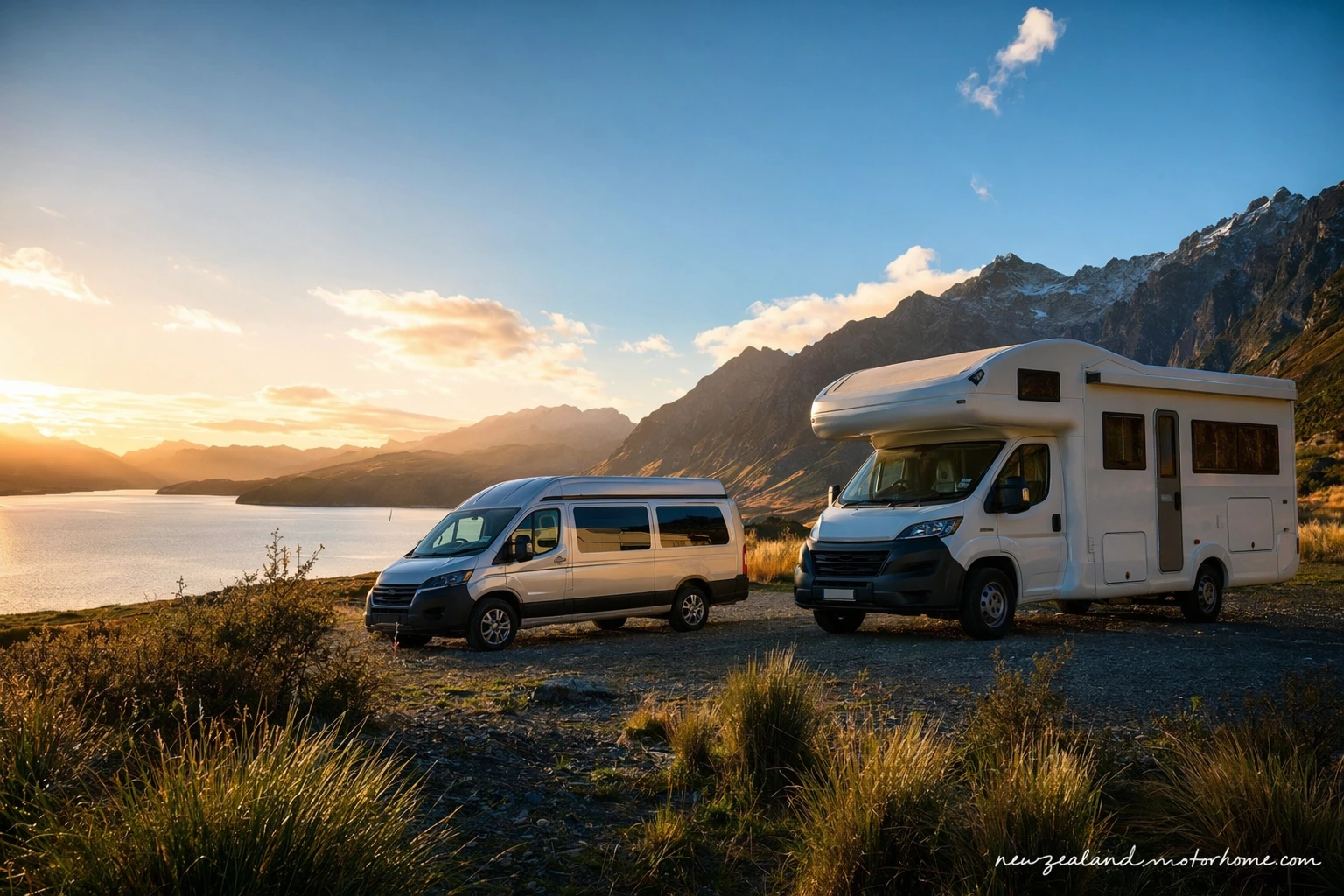
Campervan vs motorhome New Zealand: which rig suits your trip?
- Best choice depends on route
- Check current self-containment
- Powered and unpowered mix works well
- Know vehicle height and length
- Plan dump, water and LPG stops
Choosing between a campervan and a motorhome in New Zealand is less about the label on the booking page and more about how you want to drive, sleep, cook, park and manage the little chores that keep a van trip comfortable.
This campervan vs motorhome New Zealand guide is written for self-drive travellers hiring a vehicle they will also sleep in. It covers the practical differences: bed layout, toilet and shower, powered sites, freedom camping rules, dump stations, fresh-water fills, LPG, parking and what a larger vehicle feels like on narrow NZ roads.
Use it as a reality check before you choose a van size or sketch an itinerary. The right vehicle is the one that fits your route, your overnight style and your tolerance for packing up the bed each morning.
What the terms usually mean in a NZ hire fleet
In New Zealand, the words are not always used consistently. One operator may call a compact high-roof van a campervan, while another calls a similar vehicle a small motorhome. For trip planning, think in terms of size, facilities and self-containment rather than the name alone.
A campervan is often a two-berth vehicle with a simpler interior: a convertible bed, small kitchenette, fridge, storage and sometimes a portable or fixed toilet. A motorhome usually has more standing room, a fixed bed or separate dinette, a bathroom, larger water tanks and more house batteries.
- Compact campervan: easier to park in town, often cheaper to fuel, but may have limited indoor living space.
- High-roof campervan: better for rainy-day cooking and changing clothes, still relatively nimble on roads.
- Motorhome: more comfortable for longer trips, families or winter travel, but longer and wider at campsites and supermarket car parks.
- Self-containment: check that the vehicle has current certification and the right onboard toilet setup for where you plan to stay.
When comparing listings, look past the hero photo. Check vehicle length and height, bed dimensions, fresh and grey-water tank size, heating, power outlets, solar, LPG bottle access and whether bedding and cooking gear are included.
Comfort, beds and living space when the weather turns
New Zealand rewards flexible van travel, but it also throws four seasons at you, especially in the South Island, alpine areas and coastal regions. A smaller campervan feels wonderfully simple on sunny days when you are cooking outside and swimming after the drive. It can feel tight when rain arrives and every jacket, towel and pair of hiking shoes needs somewhere to dry.
Motorhomes generally give you more separation between sleeping, sitting and cooking. That matters if one person wakes early, if you are travelling with children, or if you want to stop for lunch without rebuilding the bed. Larger vans also tend to have better indoor heating and more room around the kitchen.
- Choose smaller if you travel light, move often, use holiday park kitchens and want easy parking.
- Choose larger if you want a fixed bed, indoor bathroom, extra storage or a more settled base at each overnight stop.
- Think about height if you are tall; being able to stand up changes the feel of a wet morning.
- Check bed setup before booking; some compact vans require cushions and tables to be rearranged every night.
For couples on a short summer loop, a compact campervan can be plenty. For two weeks through Fiordland, the West Coast or shoulder-season Otago, the extra living room of a motorhome can make the trip calmer and less cluttered.
Overnight stops, powered sites and self-containment
Your vehicle choice affects where you can sleep legally and comfortably. Holiday parks suit both campervans and motorhomes, with powered sites, shared bathrooms, laundries, kitchens and usually fresh-water and dump station access. Unpowered sites are cheaper in facilities rather than necessarily in price, but you need to manage battery use, fridge time and heating.
Freedom camping is not a free-for-all. Rules vary by council, and some areas allow only certified self-contained vehicles in marked overnight spots. A larger motorhome with a fixed toilet, grey-water tank and proper certification is often simpler for this style of travel, but you still need to read local signage every time you park up.
- Powered holiday park site: best for recharging house batteries, using plug-in appliances and taking long showers.
- Unpowered campsite: works well with solar, conservative lighting and careful fridge use.
- Freedom camping area: check the sign, the council map and your self-containment paperwork before settling in.
- Conservation-style campsite: often scenic and simple; facilities may be basic and turning space may be tight for long motorhomes.
A practical rhythm is to mix site types: a night or two off-grid, then a powered site to reset batteries, do laundry, top up water and empty the grey and toilet waste at an approved dump station.
Driving and parking: what changes as the van gets bigger
NZ roads can be narrow, winding and slower than the map suggests. A compact campervan is easier in older town centres, ferry queues, beach settlements and supermarket car parks. A larger motorhome is still very manageable, but it asks for more planning: wider turns, longer stopping distances and more patience on hill roads.
Before you drive away, know the vehicle height, length and width. Height matters for motel-style porticos, covered parking, low tree branches and some fuel station canopies. Length matters at scenic pull-offs, one-way campground loops and when reversing into a powered site with the power bollard on the wrong side.
- Use the edge of large car parks rather than squeezing near shop entrances.
- Pull over at safe bays to let faster traffic pass, especially on alpine and coastal roads.
- Avoid unsealed shortcuts unless your hire agreement clearly allows them.
- Watch for one-lane bridges and give yourself space before committing.
- Reverse slowly at campsites and use a spotter if trees, taps or picnic tables are close.
In a motorhome, plan fewer kilometres per day than you would in a car. The day feels better when you are not arriving after dark and trying to level the van, connect power and find the amenities block by torchlight.
Water, LPG, toilets and the small chores of van life
The bigger the vehicle, the more self-sufficient it usually is. Larger fresh-water and grey-water tanks mean you can stay longer between service stops. A proper onboard bathroom is useful in remote areas, bad weather and late-night campsites, but it also means you need to empty the toilet cassette or black-water system responsibly.
Compact campervans often have smaller tanks and less storage for rubbish, wet gear and groceries. That is fine on routes with frequent holiday parks and towns, but it takes discipline if you want quiet unpowered stops. You will be watching battery levels, topping up water more often and keeping the interior tidy.
- Fresh water: fill only from marked potable taps, usually at holiday parks, service areas or approved public facilities.
- Grey water: empty at designated dump stations, never into drains, grass or waterways.
- Toilet waste: use approved dump points and keep the cassette secured while driving.
- LPG: check how the bottle is refilled or swapped, and confirm what runs on gas: hob, hot water, heating or fridge.
- Rubbish: carry it until you find a proper bin or transfer station; many scenic stops have none.
These chores are not a downside, but they should shape your route. If you want several nights away from holiday parks, hire a van with enough battery, water capacity and certified facilities to match that plan.
How to choose the right rig for your New Zealand route
Start with the trip, then choose the vehicle. A short Northland beach loop in summer might suit a nimble campervan with good ventilation and simple cooking gear. A South Island trip through Aoraki/Mount Cook, the West Coast and Fiordland may be easier in a warm motorhome with a fixed bed, bathroom and more indoor space.
Also think about your overnights. If you want holiday parks most nights, you can rely more on shared facilities. If you want remote unpowered stops, prioritise self-containment certification, tank capacity, heating, solar and an easy-to-use toilet.
- Travelling as a couple: choose comfort based on trip length and weather, not just berth number.
- Travelling with children: check legal seatbelts, child-seat compatibility and where everyone sleeps without dismantling the whole van.
- Travelling in winter: favour insulation, heating, indoor cooking space and powered-site access.
- Travelling one way: allow time for slower roads, ferry logistics if crossing islands and a proper final dump and clean-out.
If you already have a rough route, you can talk to us before locking in the van size. A quick planning check can save you from hiring too much vehicle for town-heavy travel, or too little vehicle for a long, wet, off-grid itinerary.
Common questions
Is a campervan or motorhome better for first-time NZ drivers?
A compact or high-roof campervan is usually easier for first-time drivers because it parks more like a large van and feels less wide on narrow roads. If you are nervous about size but want comfort, look for a smaller motorhome with good standing room, a bathroom and clear reversing visibility.
Do I need a certified self-contained vehicle in New Zealand?
You need current self-containment certification if you want to use many freedom camping areas. Rules vary by council, so always check local signage and maps. Even with certification, you must use approved dump stations and respect any no-camping areas.
Are motorhomes hard to park at supermarkets and attractions?
They are manageable, but you need to choose your spaces carefully. Park at the outer edge of larger car parks, avoid low canopies and allow extra room for turning. In small towns, it is often easier to park a street or two back and walk in.
Should I book powered sites every night?
Not necessarily. Many travellers mix powered and unpowered nights, depending on battery capacity, heating needs and how often they need laundry or showers. A powered site every few nights is a useful reset for charging, water, dump station access and general van sorting.
Can a smaller campervan freedom camp comfortably?
It can, if it is properly certified self-contained and you are happy with limited space and smaller tanks. You will need to be more careful with water, toilet use, battery levels and rubbish. For longer off-grid stretches, a larger motorhome is usually more forgiving.
What vehicle size suits the South Island best?
Both can work. A smaller campervan is easier on winding roads and in busy scenic car parks, while a motorhome gives more comfort for colder, wetter regions such as Fiordland and the West Coast. The best choice depends on season, trip length and how often you want powered sites.
Have a planner shape this for your dates
Send a short outline — your dates, party size, and the kind of trip you want. A planner replies with a vehicle recommendation, a paced route, and the realistic budget.