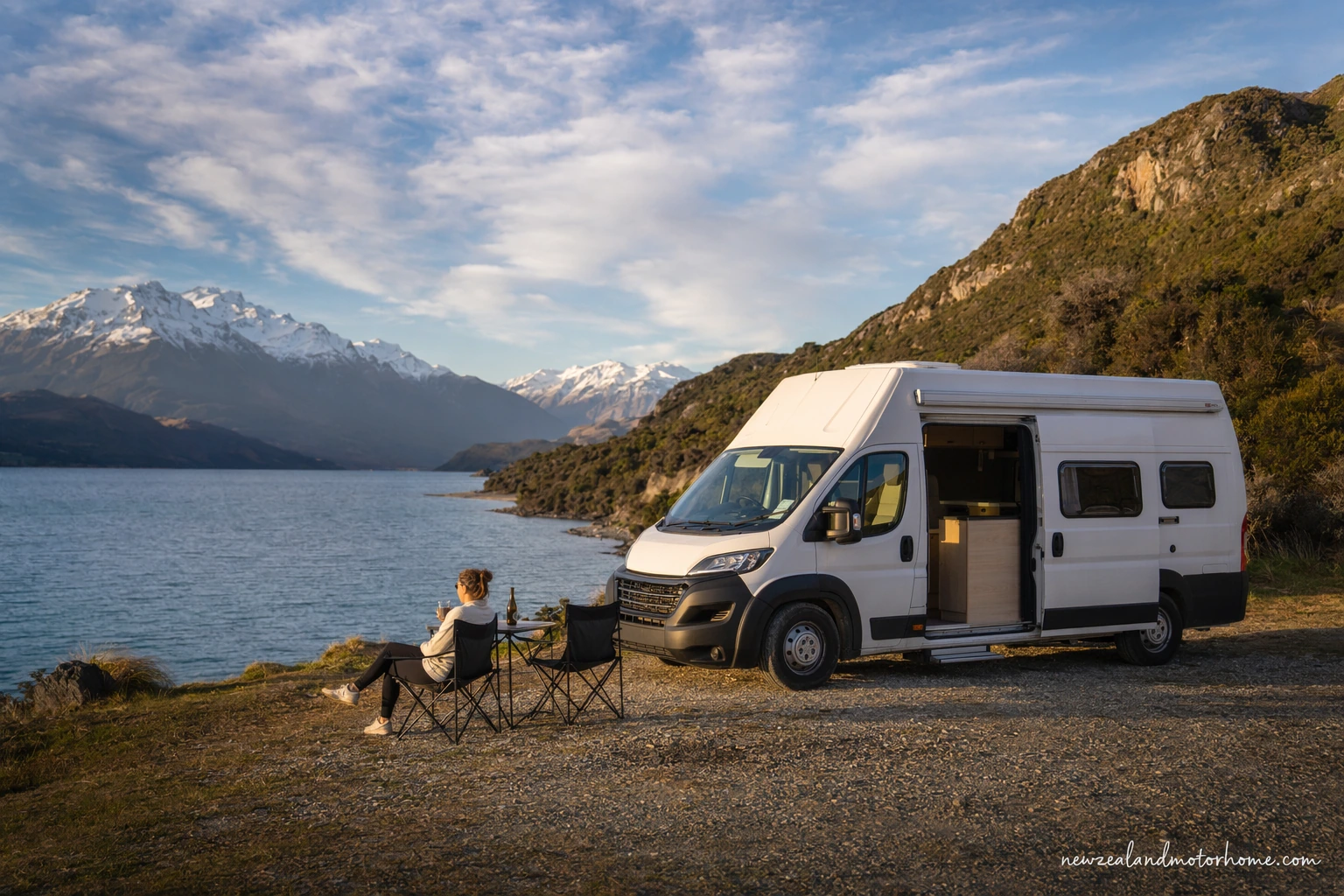
- Best value in shoulder seasons
- Compact vans are easier to park
- Certified self-contained helps
- Mix powered and unpowered sites
- Plan dump stations and water fills
Cheap campervan hire NZ is not just about finding the lowest daily rate. The real value comes from choosing a van you can comfortably sleep in, park legally, keep powered, empty properly, and drive without turning every kilometre into a fuel bill you did not expect.
This page is for self-drive travellers hiring a campervan or motorhome and living out of it as they tour Aotearoa. We will look at the van choices, overnight stops, freedom camping rules, powered versus unpowered sites, dump stations, water fills, LPG, and the small planning decisions that keep a budget trip enjoyable rather than bare-bones.
What “cheap” really means when the van is your bedroom
The cheapest-looking campervan can become less cheap once you add the things that make it workable: insurance excess reduction, bedding, kitchen gear, extra drivers, child restraints, ferry costs, campground nights, diesel charges, and fuel. Before you book, compare the whole driving-and-sleeping setup, not just the daily hire rate on the first screen.
A low-cost van is usually smaller, older, or simpler. That can be perfectly fine for two travellers who pack light and are happy using campground showers. It is less fine if you need standing height, a fixed toilet, reliable winter heating, or enough battery to free camp without running everything flat by breakfast.
- Check what is included: bedding, towels, cooking gear, outdoor table and chairs, snow chains if travelling alpine roads in winter.
- Ask about road-user and fuel costs: diesel vans may have road-user charges handled separately, while petrol vans can be simpler but not always cheaper to run.
- Look at the power setup: house battery size, solar, USB points, 240V sockets and whether you need a powered site to charge devices.
- Confirm the toilet situation: a certified self-contained van gives you more legal overnight options than a basic sleeper with no fixed toilet.
Pick a budget van that fits New Zealand roads
New Zealand distances look small on a map, but many roads are winding, narrow, hilly, or busy with trucks and other campervans. A compact 2-berth camper is usually easier to park in town, squeeze into scenic lookouts, and drive through places with tight corners. A larger motorhome gives more comfort, but you will feel the length when turning into supermarkets, dump stations, and holiday park sites.
Height matters too. Some budget campervans fit under more car-park barriers; high-roof vans and motorhomes often do not. If you plan to spend time in city centres, choose overnight stops where you can leave the van safely and walk, bike, or use public transport instead of hunting for a height-friendly car park all afternoon.
Do not assume gravel roads are allowed. Some rental agreements restrict unsealed roads, beaches, ski-field access roads, and certain remote routes. If your dream budget trip includes hot pools down a gravel side road or a remote DOC campsite, check the hire conditions before building the route around it.
Save money on overnight stops without risking fines
A smart budget trip mixes different site types. Use powered holiday park sites when you need showers, laundry, Wi-Fi, a full recharge, and a proper reset. Use unpowered sites when your battery and weather make it practical. Add DOC, council, or basic campgrounds where they suit your route, and only freedom camp where it is clearly permitted for your vehicle.
Freedom camping in New Zealand is local and rule-based, not a free-for-all. You will generally need a certified self-contained vehicle, and some councils allow overnight parking only in marked areas, with stay limits and arrival rules. Read the signs at the actual car park, not just an old app listing, and never empty grey water or toilet waste anywhere except a dump station.
- Plan dump stations: empty the toilet cassette and grey-water tank before they are urgent, especially before remote stretches.
- Refill fresh water: top up at holiday parks, dump stations with potable taps, or designated refill points; do not rely on every picnic area having safe water.
- Manage LPG: if your van uses LPG for cooking, hot water, or heating, check whether it has a swap bottle or refillable bottle and where you can service it.
- Arrive before dark: it is easier to judge slope, access, neighbours, signage, and turning room while you can still see the site properly.
Build a slower route and spend less on fuel
The easiest way to make cheap campervan hire NZ work is to drive fewer kilometres and stay longer in each place. A loop from one pick-up city is often cheaper and calmer than a one-way sprint with long driving days. Auckland, Christchurch, and Queenstown all have popular campervan routes nearby, but the best base depends on your season, flight times, and how much mountain driving you actually want.
Fuel disappears quickly when you chase every famous viewpoint. In a campervan, it often pays to choose one region well: Northland beaches and harbours, the central North Island geothermal belt, the top of the South, the West Coast, or a Canterbury and Mackenzie loop. You will still see plenty, and you will spend less time trying to find late-night parking in a town you only reached because the itinerary was too ambitious.
On the road, allow extra time for hills, wind, single-lane bridges, roadworks, and scenic stops where a longer vehicle needs a proper turning space. Use supermarket car parks on the edge of town when they are suitable for long vehicles, then walk in for groceries. In smaller places, avoid taking up several short car parks on a main street if there is a larger signed parking area a block or two away.
Where to trim costs, and where not to
There are good places to save: travelling outside peak school-holiday periods, booking a smaller van, cooking your own meals, choosing unpowered sites when conditions suit, and avoiding one-way routes unless they genuinely save time. There are also places where saving can backfire. Skipping insurance cover, choosing a van too small for winter, or relying entirely on freedom camping can make the trip more stressful and sometimes more expensive.
If you are travelling in cooler months, check the heating carefully. A cheap van with poor insulation, weak batteries, and no practical overnight heating can be uncomfortable in the South Island, on the Central Plateau, or anywhere inland after a clear day. Powered sites may become part of the budget simply because you need heat, dry gear, and a decent battery charge.
If you want a second set of eyes on the balance between van type, route, and overnight stops, use the talk-to-us trip-planning step once you have rough dates and a budget range. A realistic plan can save more than chasing a bargain van that does not suit the roads or the way you want to camp.
Common questions
Is the cheapest campervan always the best choice for a budget NZ trip?
Not always. A very cheap van may have limited power, no fixed toilet, less storage, or higher running costs. Compare the full trip cost, including campsites, fuel, insurance options, bedding, kitchen gear, and how often you will need powered sites.
Can I freedom camp to make my campervan holiday cheaper?
Sometimes, but only where local rules allow it and your vehicle meets the requirements for that place. A certified self-contained campervan gives you more options, but signage and council bylaws still matter. Budget for some paid nights so you can shower, do laundry, recharge, fill water, and empty waste properly.
Do I need a powered site every night in a cheap campervan?
No, but it depends on the van’s battery, weather, fridge, heating, and how you use devices. Many travellers mix powered and unpowered nights. In winter or after several cloudy days, a powered site can be the difference between a comfortable night and a flat-house-battery morning.
What size campervan is cheapest to run in New Zealand?
A compact 2-berth camper is often easier on fuel and simpler to park than a large motorhome. However, the cheapest size is the one that still lets you sleep well, store luggage safely, and meet self-containment needs. If you need a fixed toilet or winter comfort, a slightly larger van may be better value.
How can I avoid surprise costs when hiring a campervan in NZ?
Read the hire inclusions before booking and ask about insurance excess, diesel charges, one-way fees, ferry rules, after-hours pick-up, extra drivers, road restrictions, and bedding or kitchen extras. Also plan where you will dump waste, refill fresh water, and buy LPG if your van uses it.
Have a planner shape this for your dates
Send a short outline — your dates, party size, and the kind of trip you want. A planner replies with a vehicle recommendation, a paced route, and the realistic budget.