- Best timing: weekend mornings
- Useful for: fresh food and town errands
- Van note: check height barriers
- Overnight: use legal sites nearby
- Plan with: water, LPG and fridge space
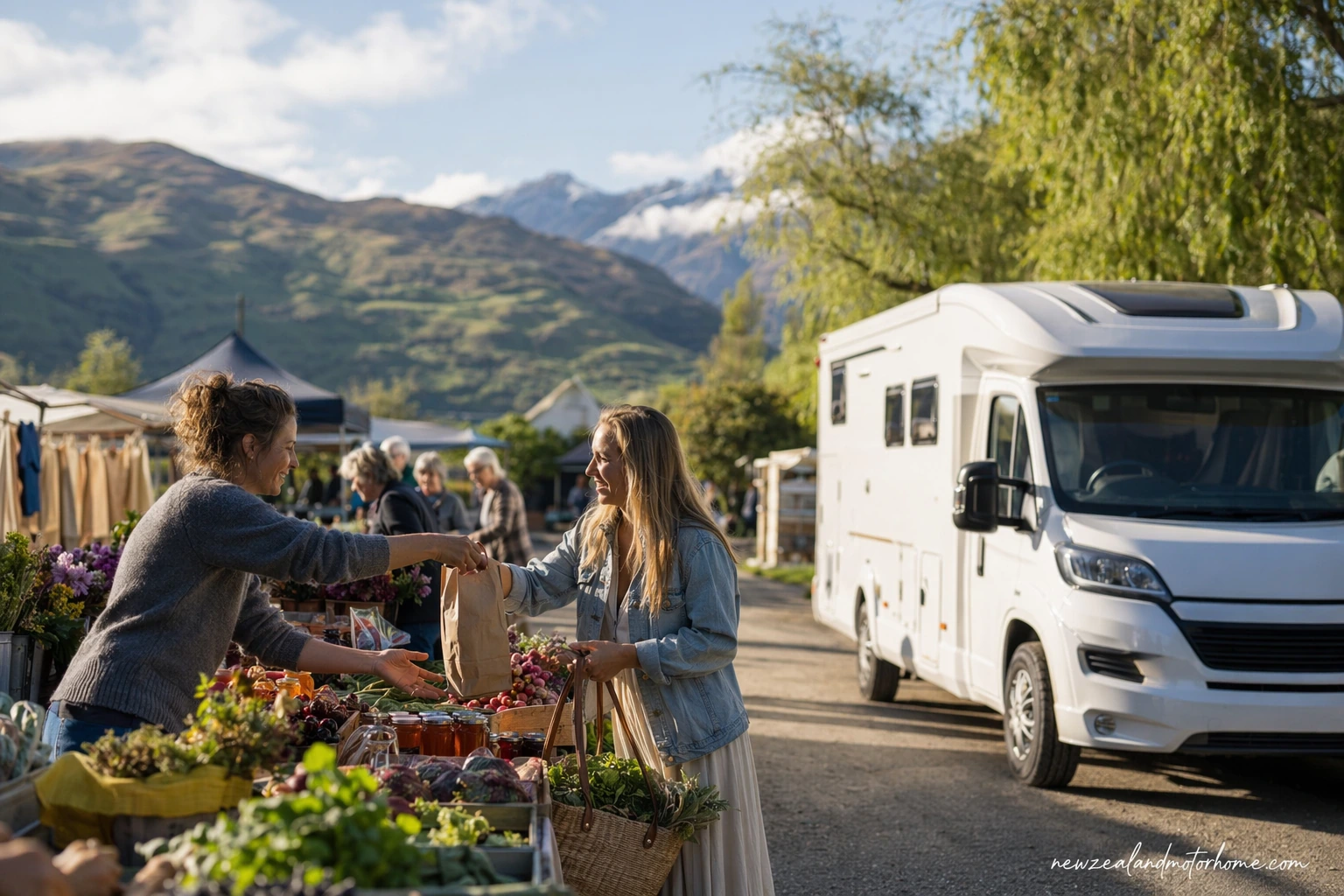
Farmers markets New Zealand-wide are some of the best little logistics stops you can build into a campervan trip: fresh bread for lunch, berries for the fridge, local cheese for a lakeside platter, and a chance to talk to the growers before you carry on down the road.
The trick is that most markets are built around town-centre mornings, not motorhome manoeuvring. This guide covers how to time your stops, where to park the van, how to store market food safely, and how to combine market mornings with dump stations, fresh-water fills, LPG top-ups and legal overnight stays.
Time your market stop like a van day, not a city errand
Most New Zealand farmers markets run on weekend mornings, with a few midweek or evening exceptions in larger towns. For campervan travellers, that means treating the market as the anchor for the day: wake nearby, pack up early, park before the town centre fills, then make your breakfast or lunch from what you buy.
Do not plan on a farmers market as your only food source for a late arrival. Stalls can sell out, weather can thin out the line-up, and public-holiday weekends may change hours. Check the market's current page or local visitor information before you aim a long motorhome day around it.
- Arrive early: easier parking for longer vehicles and the best produce selection.
- Shop with the fridge in mind: buy chilled items last, then get them straight into the van.
- Use markets before remote stretches: stock up before the Catlins, the West Coast, East Cape, Mackenzie Country or long inland drives.
- Keep one supermarket backup: especially if you need nappies, pet food, gluten-free staples or late-night supplies.
Parking a campervan near a farmers market
The easiest market stop is often not the closest car park. A 6 to 7.5 metre motorhome needs room to turn, and some town-centre parking has low trees, tight angled bays, loading zones or height barriers. Look for edge-of-centre streets, council car parks without height restrictions, sports grounds used for event parking, or a signed motorhome parking area if the town provides one.
Never assume you can pull into the market footprint itself. Stallholders need access, and many markets sit on grass reserves, school grounds or compact town squares where a heavy van can be awkward. Park a little further out, lock the van, and carry a backpack or foldable crate.
- Check signs before leaving the van: time limits, loading zones, residents-only streets and no-overnight rules are common.
- Avoid overhanging your bay: if the rear of the van blocks a footpath or traffic lane, move on.
- Watch height barriers: beachside and supermarket car parks may have them, even in small towns.
- Use a spotter if reversing: market mornings mean children, dogs, bikes and people carrying coffee.
Keeping market food fresh in a motorhome
A good market haul can turn into a problem if your van fridge is already full or the house battery is struggling. Before you shop, make space, chill the fridge properly, and think about what will travel well on winding roads. Tomatoes, eggs, glass jars and leafy greens all need a calmer home than the top of the bench.
If you are staying on a powered site that night, it is a good time to buy yoghurt, meat, fish, cheese or frozen berries because the fridge can recover more easily. On an unpowered site or freedom camping night, favour fruit, vegetables, bread, preserves and quick-cook items unless your battery and fridge set-up are coping well.
- Fresh water: fill before a big cook-up so you can rinse produce and wash dishes without rationing every litre.
- Grey water: plan a dump station after messy meals, especially if you are peeling vegetables or doing extra washing-up.
- LPG: check your bottle before buying ingredients that need long simmering or baking.
- Storage: use lidded tubs or a crate so produce does not roll around on corrugated or twisty roads.
Where farmers markets fit best on New Zealand routes
Markets work especially well when you are looping through growing regions and medium-sized towns, rather than rushing point-to-point. Northland and Auckland can set you up with citrus, greens and bread before coastal nights. Waikato, Bay of Plenty and Hawke's Bay are strong for orchard fruit, vegetables and pantry bits. Nelson, Marlborough, Canterbury and Central Otago are excellent places to restock between national parks, alpine passes and longer rural drives.
Build the stop into your route rather than doubling back for it. A Saturday morning in a market town can pair neatly with laundry, a dump station visit, fresh-water fill, fuel, groceries and a powered site if your van needs a reset.
- North Island idea: coastal campsite Friday night, market Saturday morning, then a slow drive to a freedom camping area if allowed.
- South Island idea: powered site near town, early market stop, then carry fresh food into a national park gateway town.
- Bad-weather idea: choose a larger town market near services rather than a tiny rural stop with limited shelter.
- Long-vehicle note: if your motorhome is over 7 metres, scout parking on a map before committing to tight heritage-town streets.
Overnighting legally before or after market morning
A market car park is usually a daytime stop, not an overnight site. Unless signage clearly allows overnight stays, plan to sleep at a holiday park, DOC campsite, council-approved freedom camping area or another legal stop nearby. Your self-containment certification matters where freedom camping is restricted to certified self-contained vehicles.
Powered sites are useful before a big market shop because you can charge devices, cool the fridge, do laundry and refill water. Unpowered sites and freedom camping work well after a lighter shop, provided your batteries, fresh water and grey-water capacity are in good shape.
- Before the market: stay close enough that you are not driving into town at the busiest time.
- After the market: choose a lunch spot with legal parking where you can cook without blocking access.
- Dump before remote camping: do not carry a full grey-water tank into a no-facilities area.
- Respect local rules: some councils have street-by-street freedom camping restrictions that change by season.
A simple market-day routine for campervan travellers
The smoothest market days feel relaxed because the logistics were handled first. Empty the rubbish, check the toilet cassette, fill fresh water if needed, then park the van once and walk. It is much less stressful than trying to squeeze a motorhome into a second car park just because you forgot milk or coffee.
Take reusable bags, a small chilly bag, a keep cup, and a note of what is already in your van cupboards. If you are planning a bigger food-led route through several regions, you can also send us your dates and van size through /talk-to-us/ and we will help shape the stops around realistic driving days and legal overnights.
- Buy heavy items first: potatoes, pumpkins, juice and jars can go at the bottom of the crate.
- Buy fragile items last: berries, greens, herbs and eggs need the gentlest ride.
- Cook the same day: market bread, fish, greens and soft fruit are best enjoyed before a long hot drive.
- Leave no trace: use public bins only where appropriate and take packaging back to the van if bins are full.
Common questions
Can I park a campervan at farmers markets in New Zealand?
Often yes, but not always right beside the stalls. Look for council car parks, edge-of-centre streets or signed motorhome parking, and avoid height barriers, loading zones and small angled bays that leave your van overhanging the road.
Can I freedom camp in a market car park overnight?
Usually no unless local signage specifically allows it. Treat the market as a daytime stop and book or choose a legal overnight option nearby, especially if the council restricts freedom camping to certified self-contained vehicles.
What should I buy at a farmers market when travelling by motorhome?
Choose food that suits your fridge space, cooking gear and next overnight stop. Fruit, vegetables, bread, eggs, cheese, honey, preserves and ready-to-eat baking travel well; chilled meat or fish is best when you have good fridge power and will cook it soon.
Do farmers markets take card, or should I carry cash?
Many stalls take card, but small rural markets can still be patchy for reception or payments. Carry a little cash, especially if you are travelling through smaller towns or want to avoid hunting for an ATM in a long motorhome.
How do I keep produce fresh while freedom camping?
Pre-chill the fridge, pack produce in tubs, keep the van shaded where possible, and open the fridge only when needed. If you are unpowered for several nights, buy smaller amounts more often rather than filling every gap with chilled food.
Are dogs allowed at New Zealand farmers markets?
Rules vary by market and venue. If you travel with a dog, check the market rules first, never leave a dog in a hot campervan, and be aware that some food areas, school grounds and indoor halls may not allow pets.
Have a planner shape this for your dates
Send a short outline — your dates, party size, and the kind of trip you want. A planner replies with a vehicle recommendation, a paced route, and the realistic budget.