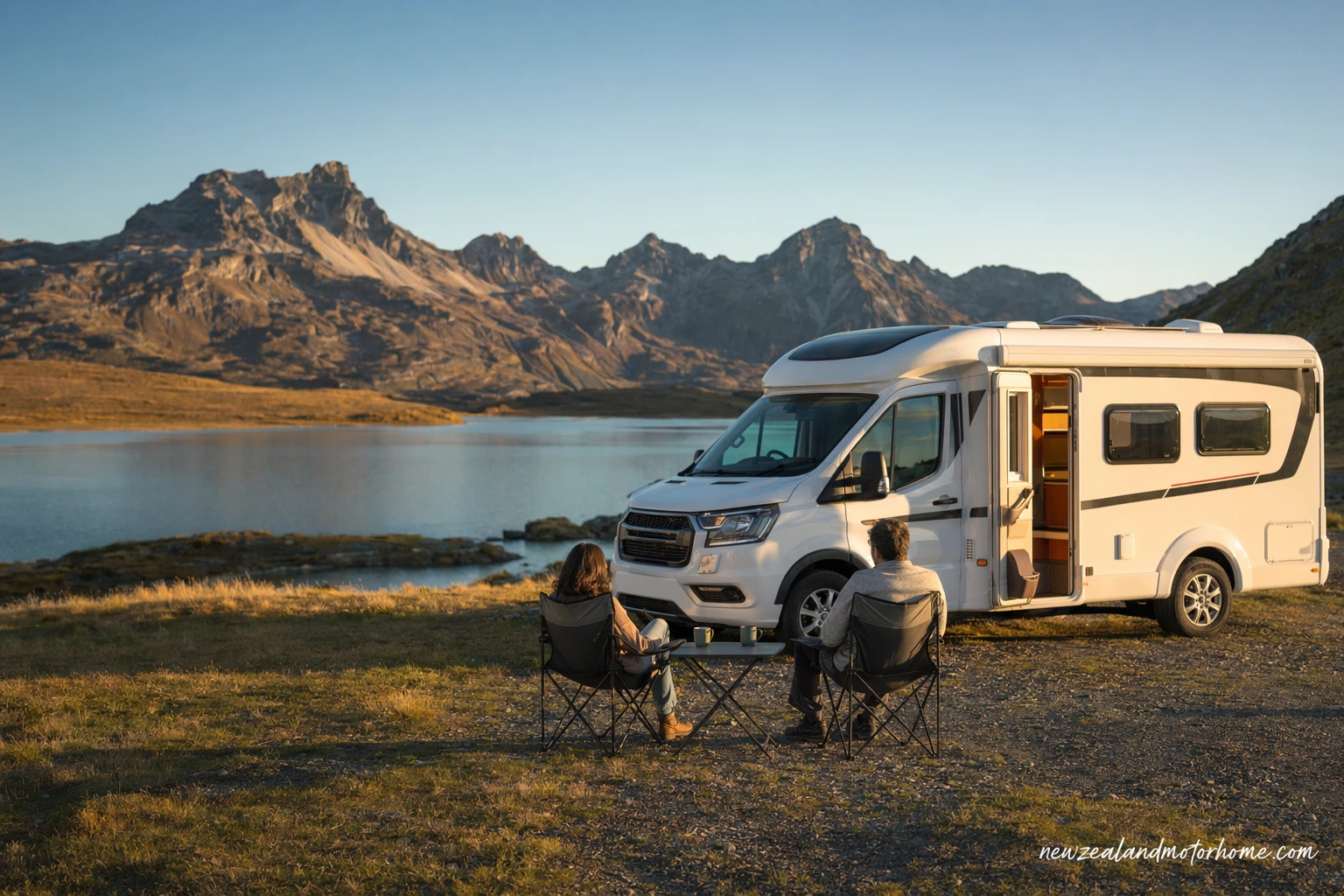
Hire vs buy a motorhome New Zealand: what self-drive travellers should weigh up
- Best for: comparing long trip options
- Allow extra days if buying or selling
- Check self-containment before freedom camping
- Powered sites help reset batteries and laundry
- Van size affects parking and road comfort
Thinking through whether to hire or buy a motorhome in New Zealand is really a question about how you want to travel, how long you will be on the road, and how much van-admin you are willing to carry. For a two-week South Island loop, hiring often keeps things simple. For a long, slow lap with no fixed end date, buying can start to make sense — but only if you are comfortable with ownership jobs along the way.
This guide is written for self-drive travellers who will be sleeping in the van, not just using it as transport. We will look at the practical side: certified self-containment, freedom camping rules, powered versus unpowered sites, dump stations, LPG refills, vehicle size, road handling, maintenance, insurance, and what happens when something goes wrong far from a city.
The big difference: holiday simplicity versus ownership responsibility
Hiring a campervan or motorhome is usually the tidier option if your New Zealand trip has clear dates. You collect a road-ready van, check the self-containment details, load your food and bedding, and start planning overnight stops around campgrounds, DOC-style sites, or freedom camping where permitted.
Buying a motorhome gives you more control, but it also makes you the person responsible for everything: tyres, WOF or COF checks, registration, road user charges if applicable, insurance, repairs, resale, and keeping the fresh-water, grey-water and toilet systems working properly. That can be fine on a longer trip, but it is not always relaxing if you only have a few weeks.
- Hire: best for fixed-date holidays, first-time NZ road trips, and travellers who want support if the van has an issue.
- Buy: more suited to multi-month travel, flexible plans, and people comfortable inspecting, maintaining and later selling a vehicle.
- Either way: check the van is certified self-contained if you plan to use freedom camping areas.
How long you are travelling matters more than the route
For a short North Island or South Island itinerary, hiring keeps the focus on the places you came to see: lakefront stops, alpine passes, coastal roads and quiet campgrounds. You are not spending your first week looking at private-sale vans, organising insurance, or wondering whether a rattle near the rear wheel is normal.
Buying can suit travellers with time to absorb the slower parts of ownership. You may need several days to find a van, arrange paperwork, fit missing gear, test the fridge and water pump, and do a short shakedown trip before driving into more remote country. At the end, allow time to sell — ideally not in a rush on the final weekend before your flight.
A useful way to decide is to count the non-travel days. If buying and selling would eat into the days you hoped to spend parked beside a lake, walking from a campsite, or taking the long road through the Catlins, hiring may feel better even before you compare money.
Campsites, freedom camping and self-containment checks
Whether you hire or buy, the overnight rules are the same. You need to know where your van is legally allowed to stay, and you need to respect local council restrictions. Many freedom camping spots require a certified self-contained vehicle, and some are limited by length, time of arrival, or number of nights.
With a hired van, self-containment certification should be clear before you leave the depot. With a bought van, you need to check the certificate, expiry, toilet setup, fresh-water capacity, grey-water tank and waste hose yourself. Do not assume a listing is accurate just because it says “freedom camping ready”.
- Powered holiday park sites are useful every few nights for charging, laundry, hot showers and a proper reset.
- Unpowered sites suit vans with good house batteries, solar, LPG cooking and efficient fridge use.
- Dump stations are part of normal van life; plan them into the route before grey water or toilet cassette capacity becomes urgent.
- Fresh-water fills are not always at the same place as dump stations, so check both before remote stretches.
Roads, van size and where you can actually park
New Zealand roads can be narrow, winding and exposed, especially in hill country, on alpine passes and around coastal headlands. A large motorhome gives you more living space but can be harder to manoeuvre in supermarket car parks, small town streets, older holiday parks and gravel access roads to basic campsites.
If you hire, choose the smallest van that still gives you the sleeping, bathroom and weather comfort you need. If you buy, be honest about how confident you are driving and parking a longer vehicle every day. A high roof is lovely when it is raining, but check height restrictions at car parks, covered fuel stations and ferry decks if your route includes a Cook Strait crossing.
For either option, plan arrival times. Pulling into a campground in daylight makes it much easier to level the van, connect to power, find the amenities block, and avoid reversing into a tight site in the dark. In busy summer places, book ahead rather than assuming you can roll in late and find a suitable bay.
Costs you notice on the road, not just at booking time
The hire-versus-buy decision is not only about the headline rental cost or the purchase price. Self-drive motorhome travel has everyday running costs: fuel, campsite nights, LPG refills, laundry, ferry crossings, tolls on a few roads, dump station access where charged, and occasional gear such as a hose fitting or levelling chocks.
With a hired campervan, many ownership costs are bundled or handled for you, though you still need to understand excess, insurance options, roadside assistance conditions and what is not covered. With a bought motorhome, you carry the risk of mechanical surprises: a flat battery, worn tyres, a leaking roof vent, a tired water pump or a fridge that does not like hot days.
- Hiring gives certainty: easier budgeting, clear travel dates and less end-of-trip administration.
- Buying may reduce daily cost: but only if the van is sound, repairs are modest and resale goes well.
- Campground mix matters: frequent powered sites cost more than basic unpowered stays, but they make long trips more comfortable.
A practical way to choose before you commit
Start by sketching your real itinerary rather than a perfect one. Mark the nights you will likely want a powered site, the remote sections where you need full water and empty waste tanks, and the towns where you can refill LPG, buy groceries and use dump stations. This quickly shows whether you are planning a holiday or taking on a mobile household.
If you are new to motorhome travel in New Zealand, hiring first can be a sensible test. You will learn how much space you actually use, how often you need to empty grey water, whether you prefer a fixed bed, and how comfortable you feel driving a larger van on winding roads.
If you would like help shaping the route around van size, campsite style and realistic driving days, you can use the talk-to-us step and share what you are considering. A little planning before you choose hire or buy can save a lot of awkward nights looking for legal parking.
Common questions
Is it cheaper to hire or buy a motorhome in New Zealand?
It depends mainly on trip length, vehicle condition and resale. Hiring is usually simpler for short holidays, while buying may work for longer travel if you have time to inspect, maintain and sell the van without rushing.
Do I need a certified self-contained motorhome?
If you want to use many freedom camping areas, yes, you should plan around certified self-containment. Holiday parks and many campgrounds may accept non-self-contained vans, but freedom camping rules vary by council and location.
What should I check if I buy a used campervan?
Check the WOF or COF, registration, tyres, service history, leaks, battery setup, LPG appliances, fridge, water pump, fresh-water and grey-water tanks, toilet, and self-containment certificate. Take a short test drive and make sure you can park and reverse it comfortably.
Can I freedom camp in a hired motorhome?
Often, but only where local rules allow it and if the vehicle meets the required self-containment standard. Even in a compliant van, you still need to follow signs, stay limits and waste rules.
Is a big motorhome better than a smaller campervan?
A bigger motorhome gives more space, a bathroom and better wet-weather comfort, but it can be harder to park and less relaxed on narrow roads. A smaller campervan is easier around towns and scenic pull-offs, but you may use powered holiday park sites more often for showers and facilities.
Have a planner shape this for your dates
Send a short outline — your dates, party size, and the kind of trip you want. A planner replies with a vehicle recommendation, a paced route, and the realistic budget.