- Best with 4–6+ weeks
- Book key holiday-park nights
- Check self-containment status
- Plan dump, water and LPG stops
- Allow for ferry buffers
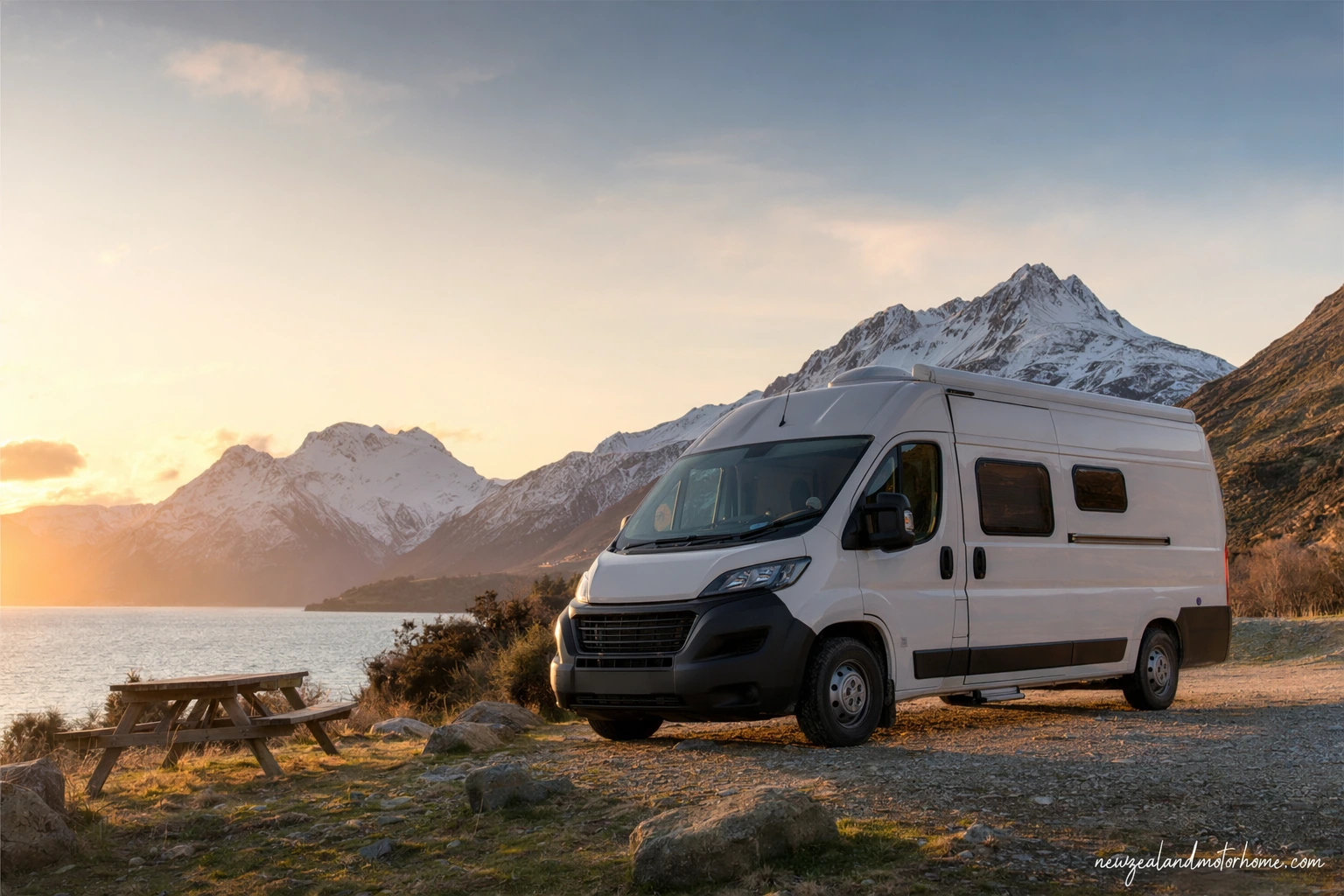
Long term campervan hire NZ suits travellers who want more than a quick lap of the highlights. With three, four, six or more weeks in the van, you can sit out rough weather, stay an extra night by a lake, take the coastal road instead of the direct highway, and keep the driving days sensible.
This page is written for self-drive campervan and motorhome travellers: people sleeping in the vehicle they hire, carrying their own water, managing their own power, and planning where the van will legally stay each night. We’ll cover the practical side of longer trips, from powered sites and dump stations to van size, route pacing, ferry planning and freedom camping rules.
What changes when you hire a campervan for longer
A short campervan holiday often runs on momentum: drive, sightsee, park up, repeat. A long hire works better when you treat the van as a small travelling home. That means building in laundry stops, grocery days, slower mornings, battery top-ups, rubbish runs and the occasional powered campsite just to reset everything.
The biggest advantage is flexibility. If rain closes in on the West Coast, you can pause at a holiday park with a powered site and a drying room. If the forecast clears over Aoraki/Mount Cook, you can shuffle the route and head inland when the mountains are actually visible.
- Power: mix freedom camping or DOC-style basic sites with powered holiday park nights, especially after several cloudy days.
- Water: plan fresh-water fills before remote stretches such as the Catlins, East Cape or parts of the West Coast.
- Waste: use dump stations regularly rather than waiting until the cassette or grey-water tank is urgent.
- LPG: check bottle levels before colder regions where heating and hot water get more use.
How many weeks to allow for New Zealand by campervan
Two weeks can work for one island if you keep the route tight. For a proper long-term campervan trip, many travellers are happier with four to six weeks, particularly if they want both islands without rushing. New Zealand looks compact on a map, but narrow roads, mountain passes, roadworks and photo stops all slow the day down.
As a rough planning rhythm, avoid stringing together too many 300-kilometre days. In a motorhome, a 200-kilometre day with a supermarket stop, a walk and an afternoon check-in can already feel full. Longer vehicles also need more care in small town parking areas, at one-lane bridges, and on winding roads such as the Crown Range, Arthur’s Pass or the road to Milford Sound.
Longer hire lets you group the country into loops: Northland and the Coromandel, Rotorua and the central plateau, Wellington and the ferry, then the South Island broken into Tasman, the West Coast, Canterbury high country, Otago and Southland. It is easier on the driver, easier on the van, and usually better for the trip.
Choosing the right van for a long hire
For a weekend, almost any layout can be made to work. For several weeks, the details matter: where wet jackets hang, whether the bed stays made up, how much bench space you have, and whether you can stand comfortably inside on a rainy cooking night. A compact camper is easier to park in town; a larger motorhome gives more storage, a proper bathroom and more living space.
If you plan to freedom camp, check that the vehicle has valid self-containment certification and understand what that allows in each district. Certification does not mean you can park anywhere; it means the van meets the standard required where freedom camping is permitted. Local signs, council bylaws and campsite rules still apply.
- 2-berth campervan: easier for city parking, ferries and tight scenic roads, but storage can be limited on a long trip.
- 4-berth motorhome: more space for gear and bad-weather living, but needs more thought around height, length and turning room.
- Onboard toilet and shower: useful for remote areas, but you must plan dump stations and fresh-water fills.
- Heating and insulation: worth prioritising for shoulder-season or alpine routes.
Planning overnight stops without locking every night in
Long term campervan hire NZ is at its best when the route has structure but the overnights have breathing room. Book key nights where supply is limited or demand is high: Queenstown, Wānaka, Tekapo, Aoraki/Mount Cook, Abel Tasman gateways, the Coromandel in summer, and anywhere near a major event. Around those anchors, leave space for weather and discoveries.
A practical pattern is two or three flexible nights followed by one reset night at a well-equipped campground. That reset night is when you plug into power, fill water, dump waste, wash clothes, charge devices and repack the lockers. It also helps keep the van comfortable rather than cluttered.
When you are comparing overnight options, look beyond the view. Check whether the site takes your vehicle length, whether there is safe late-afternoon access, whether generators are restricted, and whether the ground can handle rain. Grassy unpowered sites are lovely in settled weather, but a firm-surface powered site can be a relief after a wet drive.
North and South Island route notes for longer trips
A long hire gives you time to choose routes for the season. In the North Island, summer coastal loops can be busy, so it helps to travel midweek where possible and arrive at campgrounds earlier in the day. Geothermal areas around Rotorua and Taupō are easy to work into a campervan itinerary because there are good supply stops and plenty of places to reset the van.
In the South Island, distances can feel more remote. The West Coast has long wet spells, so powered nights and drying facilities are worth planning. The Mackenzie Basin and Central Otago can bring cold nights even outside winter, while exposed roads around lakes and passes need respect in high wind. Always check weather and road conditions before alpine drives.
If your route crosses Cook Strait, book the ferry with the correct vehicle length and height, including any bike racks or roof gear. Give yourself a buffer night on either side if you are travelling in winter or have an international flight connection. Ferry delays happen, and a long trip should not unravel because one crossing day was planned too tightly.
A sensible planning process before you book
Start with duration, season and the kind of driving you actually enjoy. Then choose the van size, not the other way around. A couple carrying bikes and walking gear for six weeks will need a different setup from two travellers doing a mainly summer beach-and-town loop.
Once the van and broad route make sense, map the practical points: supermarkets, dump stations, LPG refill options, fresh-water taps, laundries, ferry days and the campsites you should book ahead. This is especially useful if you are travelling over Christmas, school holidays, Easter or the main ski season.
If you want help turning the idea into a realistic self-drive route, use the talk-to-us step and tell us your dates, preferred van style, must-see regions and how long you like to drive in a day. The aim is not to pack the calendar; it is to make the trip work in the real world, with legal overnights and enough time to enjoy the places between them.
Common questions
Is long term campervan hire in NZ better for one island or both?
If you have three weeks or less, one island usually feels better in a campervan. With four to six weeks, both islands become much more comfortable, especially if you keep driving days moderate and allow for the Cook Strait ferry.
Do I need a self-contained campervan for a long trip?
It is strongly recommended if you want freedom camping options, but it still does not let you stay anywhere you like. Your van must meet the current self-containment requirements, and you still need to follow local signs, council rules and site conditions.
How often should I book powered sites on a long campervan hire?
Many travellers do well with a powered site every few nights, more often in cold, wet or cloudy weather. Powered nights are also useful for laundry, device charging, topping up house batteries and giving the van a full reset.
Can I freedom camp for most of a long NZ campervan trip?
You can include freedom camping where it is legal and suitable, but relying on it every night is not realistic. You will still need dump stations, fresh water, rubbish disposal, showers, laundry and the occasional powered site.
What size motorhome is best for several weeks in New Zealand?
The best size depends on your comfort needs and confidence on narrow roads. A compact campervan is easier to park and manoeuvre, while a larger motorhome gives more storage and living space for bad-weather days.
Should I plan rest days into a long campervan itinerary?
Yes. Rest days stop the trip feeling like a constant relocation exercise and give you time for walks, laundry, weather delays and van admin. They are especially useful before and after ferry crossings or big alpine driving days.
Have a planner shape this for your dates
Send a short outline — your dates, party size, and the kind of trip you want. A planner replies with a vehicle recommendation, a paced route, and the realistic budget.