- Best with 10+ days
- Powered sites recommended
- Check length and height
- Self-containment rules apply
- Plan LPG and dump stops
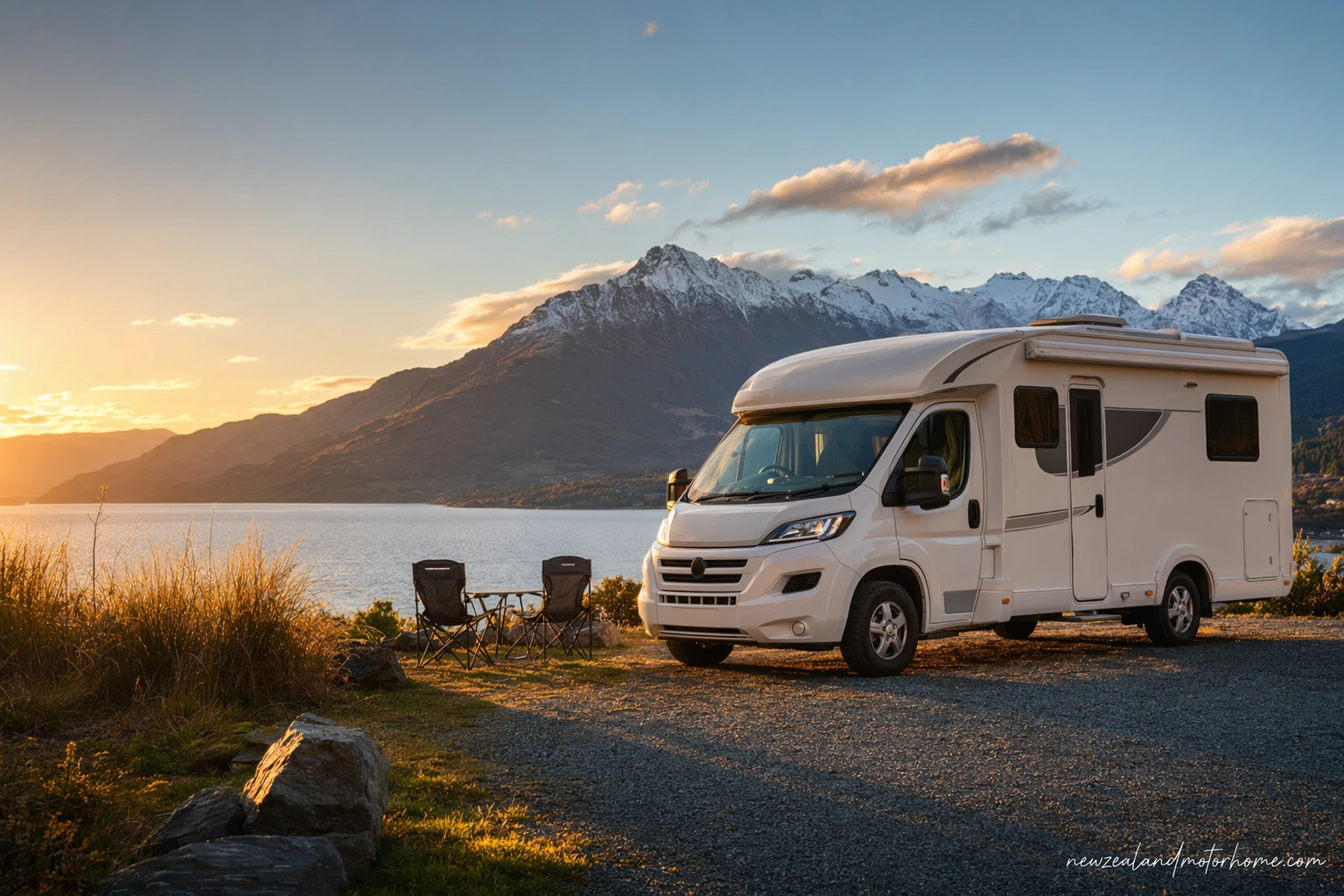
Luxury motorhome hire NZ is less about rushing between big-ticket sights and more about having a calm, well-set-up base on wheels: a proper bed, a warm living space, good storage, a usable bathroom, and enough power and water to make the day feel easy.
This page is for travellers hiring and sleeping in their own premium campervan or motorhome. We’ll look at how the van side works, how to choose overnight stops, what to check before you collect, and how to build a route that suits a larger, more comfortable vehicle on New Zealand roads.
What makes a motorhome feel genuinely premium
A luxury motorhome in New Zealand should make the practical jobs simpler, not just look tidy in the photos. For a self-drive trip, pay close attention to the living layout, heating, bathroom access at night, battery capacity, fridge size, and whether the bed stays made up or needs converting every evening.
Premium vans are often longer and heavier than compact campers, so the comfort trade-off is worth thinking through. A roomy rear lounge or island bed is lovely at a powered site beside a lake; it can feel less lovely if you are squeezing into a small supermarket bay or reversing on a wet gravel track.
- Look for a current self-containment certificate if you plan to use approved freedom camping areas.
- Check whether the van has diesel or gas heating, and how the hot water is powered.
- Ask about house-battery capacity, solar, and how long the fridge can run away from mains power.
- Confirm the exact length, width, and height before booking ferry crossings, campsites, or covered parking.
Planning a route around a larger, more comfortable van
New Zealand rewards slow travel in a motorhome, especially in a premium van where you can cook properly, sit out a weather change, and stay two nights in places that deserve it. Instead of planning every day around distance, plan around driving effort: winding roads, one-lane bridges, alpine passes, and how easy it will be to park when you arrive.
Routes such as Christchurch to Aoraki Mount Cook, Queenstown to Wānaka via the Crown Range, or Te Anau to Milford Sound are all memorable in a motorhome, but they are not the same as open motorway driving. Allow extra time, use low gears on descents, and pull over only where there is a safe, signed bay big enough for the whole vehicle.
- For longer vans, book holiday park sites early in Queenstown, Wānaka, Nelson, Rotorua, and near national parks.
- Check campsite notes for maximum vehicle length, tree cover, tight turns, and whether sites are level.
- Avoid planning a late-afternoon arrival on remote roads if you still need to fill water or empty the toilet cassette.
- Build in rest days where the van stays parked and you walk, cycle, cruise, or use a local shuttle.
If you’d like help matching a premium van to a route that actually suits it, you can share your rough dates through our plan-your-trip step and we’ll shape the driving days around the vehicle, not just the map.
Powered sites, unpowered nights, and where to park well
With luxury motorhome hire NZ travellers often expect to use a mix of holiday parks, scenic campgrounds, and carefully chosen freedom camping spots. That can work beautifully, but the premium experience usually comes from choosing the right overnight rhythm: powered sites every few nights, an easy dump station plan, and enough daylight to settle the van properly.
Powered sites are useful for topping up batteries, running appliances without watching the gauge, drying towels, and using electric heating where supplied. Unpowered sites can be quieter and more scenic, but you will rely on the van’s battery, LPG, fresh water tank, and your own water-saving habits.
- At holiday parks, request a site suitable for your motorhome length rather than assuming all powered sites are the same.
- Park with the fridge side shaded if you can, and keep slide-outs or awnings within your marked site.
- On gravel or grass, check the ground before driving in; heavy motorhomes dislike soft shoulders after rain.
- Use levelling ramps if supplied, especially for sleeping comfort and fridge performance.
The servicing routine that keeps a premium trip easy
The most relaxed motorhome holidays have a simple servicing routine. Even a high-spec van still needs fresh water, grey-water emptying, toilet cassette stops, rubbish disposal, and LPG checks. The difference is that a well-planned route keeps these jobs quick and predictable.
Many holiday parks have dump stations and fresh-water taps, and some towns provide public dump stations suitable for certified self-contained vehicles. Use only signed dump points for grey water and toilet waste, and never assume a scenic roadside tap is safe drinking water unless it is marked as potable.
- Top up fresh water before remote stretches such as the West Coast, the Mackenzie Basin, or Northland peninsulas.
- Empty grey water and the toilet cassette before a two-night unpowered stay.
- Know whether your van uses swap bottles or refillable LPG, and where the next practical LPG stop sits on your route.
- Keep the power lead, water hose, and toilet chemicals in their dedicated lockers so the living area stays clean.
A premium van makes these chores more comfortable, but it does not remove them. Treat servicing like part of the day’s rhythm: fill, empty, refuel, then settle somewhere good before dark.
Season, weather, and comfort features that matter
New Zealand weather can change quickly, and a luxury motorhome earns its keep when the wind turns cold or rain sits over a valley. Double glazing, strong heating, a drying space, good ventilation, and a bed you can reach without climbing over each other all make a real difference on a longer self-drive trip.
Summer gives long evenings and easier campground access, but popular powered sites can book out around school holidays and peak regions. Autumn is often excellent for calm driving days and clear light, while winter trips need more care around alpine roads, frost, condensation, and campsite availability.
- For winter or shoulder-season travel, check whether snow chains are supplied or required on your route.
- Ask how the van’s heating works when you are not plugged into mains power.
- Carry a soft bag rather than hard suitcases if storage lockers are shaped around the bed or rear garage.
- Plan laundry and towel-drying stops after wet walks, beach days, or glacier-country weather.
Freedom camping and responsible overnight choices
Freedom camping can be part of a premium motorhome trip, but it should be treated as a planned overnight choice, not a fallback because the day ran long. Rules vary by district, and some areas allow only certified self-contained vehicles in specific signed places. Others prohibit overnight stays altogether.
Before you rely on a free or low-cost overnight spot, check the local council rules, the sign at the site, and whether the place is suitable for your vehicle size. A luxury motorhome needs more space to turn, level parking, and safe access back onto the road in the morning.
- Arrive early enough to read signs, position the van, and leave if the site is full or unsuitable.
- Keep all grey water and toilet waste contained until a proper dump station.
- Do not put chairs, awnings, or cooking gear outside where camping behaviour is not allowed.
- Leave room for other vans and never block boat ramps, farm gates, beach access, or emergency turning areas.
Common questions
Is luxury motorhome hire in NZ worth it for a self-drive trip?
It can be, especially if you value a fixed bed, a proper bathroom, good heating, and space to relax when the weather changes. The best value comes when your route allows slower stays rather than using the van only for long driving days.
Can a large premium motorhome drive everywhere in New Zealand?
No. Main touring routes are generally manageable with care, but some access roads are narrow, steep, gravel, or unsuitable for longer vehicles. Always check rental conditions, road closures, bridge limits, and campsite vehicle-length notes before committing.
Do I need powered sites every night?
Not usually, but powered sites make a premium trip easier. They recharge house batteries, support heating and appliances, and often give you convenient access to showers, laundry, fresh water, and dump facilities.
Can I freedom camp in a luxury motorhome?
Only where local rules allow it, and generally only if the vehicle has current self-containment certification. Check the signage and council rules for each location, because permission can change between districts and even between nearby parking areas.
What should I check when collecting the motorhome?
Ask for a full handover of the heating, hot water, toilet cassette, grey-water valve, LPG, power lead, water fill, and battery display. Also confirm the vehicle height and length, tyre pressures, breakdown process, and where the first practical dump station sits on your route.
Have a planner shape this for your dates
Send a short outline — your dates, party size, and the kind of trip you want. A planner replies with a vehicle recommendation, a paced route, and the realistic budget.