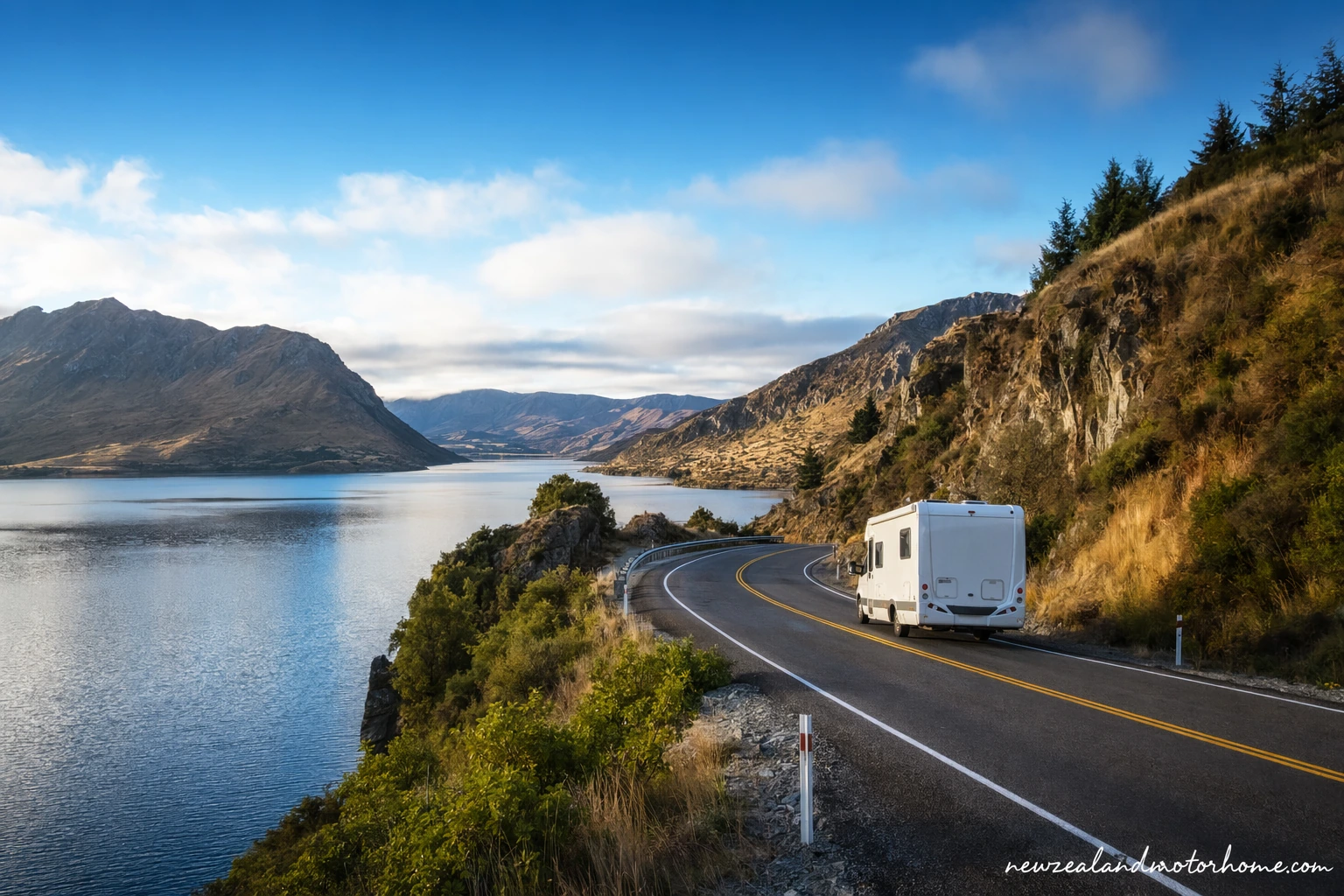
Nelson to Hamilton campervan route: ferry, stops and road notes
- Allow 5 days for comfort
- Cook Strait ferry required
- Main route suits larger vans
- Powered reset in Picton or Taupō
- Check freedom camping bylaws
The nelson to hamilton campervan route is a proper two-island trip: Tasman Bay in the rear-view mirror, the Marlborough hills to cross, a Cook Strait ferry with your van booked on, then a long northbound run through the lower North Island, the Central Plateau and into the Waikato.
This guide is written for people sleeping in the van, not just driving through. You’ll find sensible legs, where to think about powered versus unpowered nights, how to handle water, LPG and dump stations, plus road notes for a comfortable Nelson to Hamilton drive in a larger camper or motorhome.
How long to allow for the Nelson to Hamilton motorhome road trip
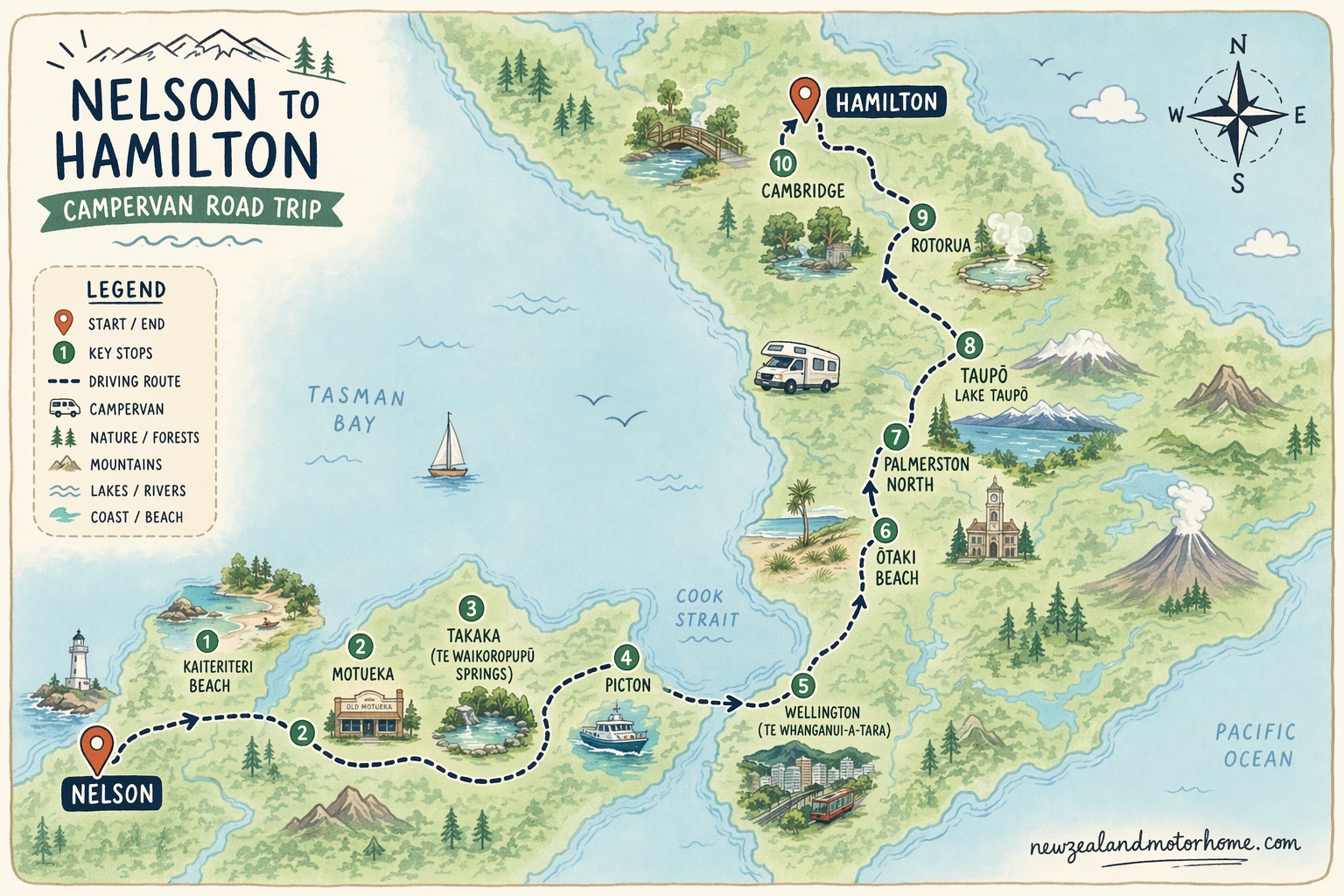
You can make the Nelson to Hamilton motorhome road trip in three big travel days if your ferry timing is kind, but it is much nicer over five to seven days. The road distance is roughly 660 kilometres, not including the Cook Strait sailing, and the ferry day always takes more time than it looks on paper.
A steady plan is Nelson to Picton, ferry to Wellington, then north via Kāpiti, the Rangitīkei, Taupō and the Waikato. That keeps the driving in manageable blocks and gives you room for a laundry night, a powered site for charging, and a proper water and waste reset before reaching Hamilton.
- Fastest sensible pace: 3 days, with long driving days and limited sightseeing.
- Comfortable pace: 5 days, with one night near Picton or Wellington and one near Taupō.
- Slow touring pace: 6–7 days, adding Kāpiti Coast, Tongariro or Cambridge.
- Ferry note: book your van by actual length and height, and allow check-in time before sailing.
Leg 1: Nelson to Picton — hills, Sounds scenery and ferry prep
From Nelson, most vans take SH6 through Rai Valley and on to Blenheim or Picton. It is sealed and commonly used by motorhomes, but the Rai Saddle and Whangamoa sections are bendy, so let faster traffic past when you find a safe pull-off. If your van is long or high, this is a day for relaxed speed rather than trying to keep up with locals.
Queen Charlotte Drive between Havelock and Picton is scenic but narrow, twisting and slower in a big vehicle. Confident drivers in smaller campervans may enjoy it in settled weather; larger motorhomes are usually better staying on the main road via Blenheim unless you specifically want that winding coastal drive.
- Overnight before the ferry: choose a Picton holiday park or campground if you want an easy morning check-in and a powered site.
- Nelson/Richmond reset: top up groceries, LPG and fresh water before leaving the region, and use a dump station if your tanks are already part-full.
- Picton parking: arrive early if you plan to walk the foreshore; standard car parks can be tight for long vans, so look for marked larger-vehicle areas and avoid overhanging footpaths.
- Ferry prep: turn LPG off as instructed, secure cupboards, and keep warm layers or medication with you once you leave the vehicle deck.
Crossing Cook Strait with a campervan
The ferry is the piece that makes the Nelson to Hamilton drive different from a normal road trip. When booking, measure the full vehicle length including bike racks, tow bars or rear storage boxes, and be honest about height. Being remeasured at the terminal is no fun when sailings are full.
On the day, arrive with tanks sensibly managed: not overflowing grey water, not nearly empty on fresh water if you are heading straight north after docking, and with your fridge prepared for time without gas. Wellington’s motorway network is straightforward once you are off the ferry, but avoid diving into the central city in a large motorhome unless you have checked parking first.
- Before boarding: empty the toilet cassette if needed, close roof vents, secure loose gear and switch gas off.
- After arriving: consider overnighting around Wellington, Lower Hutt, Porirua or the Kāpiti Coast rather than pushing on tired.
- Powered night idea: a holiday park after the ferry is useful for charging house batteries, running heaters or dehumidifying in damp weather.
- Freedom camping: only use legal sites that match your self-containment certification and the local council bylaw.
Leg 2: Wellington to Taupō — coast, Rangitīkei and the Central Plateau
From Wellington, follow SH1 north through the Kāpiti Coast, Levin, Bulls and Taihape. This is a long but varied leg, with beach stops early on and bigger hill country as you approach the centre of the island. In a campervan, break the day before you feel boxed in by traffic; towns such as Levin, Foxton, Bulls and Taihape are handy for fuel, groceries and a leg-stretch.
The Desert Road section near Tongariro is one of the memorable parts of this route, with open views to the volcanoes when the weather plays nicely. It can also be windy, icy or temporarily closed in winter, so check road conditions before committing, especially in a high-sided motorhome.
- Good overnight zones: Kāpiti Coast for a sea-level stop, Rangitīkei/Taihape for a halfway break, or Tūrangi/Taupō if you want to push closer to the Waikato.
- Dump stations: plan around main service towns such as Levin/Foxton, Taupō and holiday parks; do not rely on finding one late at night.
- Water and LPG: fill during business hours where possible, as water taps and LPG bottle swaps are not always available at remote stops.
- Road note: keep extra following distance on SH1; logging trucks, passing lanes and sudden weather changes are part of this stretch.
Leg 3: Taupō to Hamilton — geothermal country to the Waikato
The Taupō to Hamilton leg is much shorter than the previous day, so it is worth starting with a lakeside walk or coffee stop before you point the van north-west. The common route via SH1 and the Waikato Expressway is efficient and van-suitable, with broad lanes compared with the hillier South Island sections.
Cambridge is a useful final stop before Hamilton if you want a quieter overnight, a dump station check, or an easier place to park and wander. Hamilton itself has city traffic and more restrictive overnight parking rules, so arrive with a confirmed legal place to sleep rather than assuming you can tuck into a riverside car park.
- Taupō reset: use the town for groceries, laundry, fuel, fresh water and waste before the final run.
- Cambridge option: good for a calmer last night and an easy morning drive into Hamilton.
- Hamilton arrival: look for holiday parks or designated overnight options that accept your vehicle length.
- Need help stitching it together? If you want ferry timing, daily kilometres and overnights matched to your van size, you can start with our plan-your-trip chat.
Where to sleep: powered sites, unpowered sites and freedom camping
For this route, mix your nights. A powered site in Picton or Wellington makes the ferry section easier, an unpowered DOC-style or simple campground can work well on the way north, and a powered night around Taupō or Cambridge is handy before returning or continuing your hire.
Freedom camping rules vary sharply between districts on this trip. Being certified self-contained does not mean you can sleep anywhere; it means you may be eligible to use approved sites where the local bylaw allows it. Always check signs on arrival, park fully within marked spaces, and keep awnings, chairs and cooking gear for places where camping behaviour is permitted.
- Best powered nights: Picton/Wellington after ferry logistics, or Taupō/Cambridge for a full systems reset.
- Best unpowered nights: rural campgrounds, DOC-style sites and holiday park non-powered bays where access suits your van length.
- Freedom camping caution: city fringes, lakefronts and beach reserves often have strict limits or no-overnight signs.
- Leave-no-trace basics: use dump stations only, never drain grey water roadside, and refill fresh water from marked potable taps.
Common questions
Can I drive from Nelson to Hamilton in a campervan without taking a ferry?
No. A Nelson to Hamilton campervan trip crosses from the South Island to the North Island, so you need a Cook Strait ferry between Picton and Wellington. Book by vehicle length and height, and allow time for check-in and unloading.
How many days should I allow for the Nelson to Hamilton drive?
Three days is the practical minimum for most campervan travellers, but five days feels much better. That gives you one day to reach Picton, a ferry day, and two or three North Island legs with time for water, waste and proper overnight stops.
Is the route suitable for a large motorhome?
Yes, the main route via SH6, the ferry, SH1 and the Waikato Expressway is suitable for large motorhomes. Take care on the winding Nelson to Marlborough sections, avoid narrow scenic detours if you are not confident, and use passing bays to let traffic through.
Where should I empty grey water and toilet waste on this route?
Use official dump stations in main towns, holiday parks and some service areas along the route. Good planning points are Nelson/Richmond, Picton, the Wellington region, Kāpiti or Horowhenua towns, Taupō, Cambridge and Hamilton. Never empty grey water or a cassette into stormwater drains or roadside areas.
Can I freedom camp between Nelson and Hamilton?
Sometimes, but only where local rules allow it and only if your vehicle meets the required self-containment certification. Check each district’s signs and bylaws on the day, because rules differ between Nelson Tasman, Marlborough, Wellington, Taupō and Waikato areas.
What is the best season for this campervan route?
Late spring to early autumn gives the easiest driving and more daylight for ferry logistics. Winter is still possible, but the Desert Road and higher Central Plateau sections can bring ice, snow warnings or closures, so keep your itinerary flexible.
Have a planner shape this for your dates
Send a short outline — your dates, party size, and the kind of trip you want. A planner replies with a vehicle recommendation, a paced route, and the realistic budget.