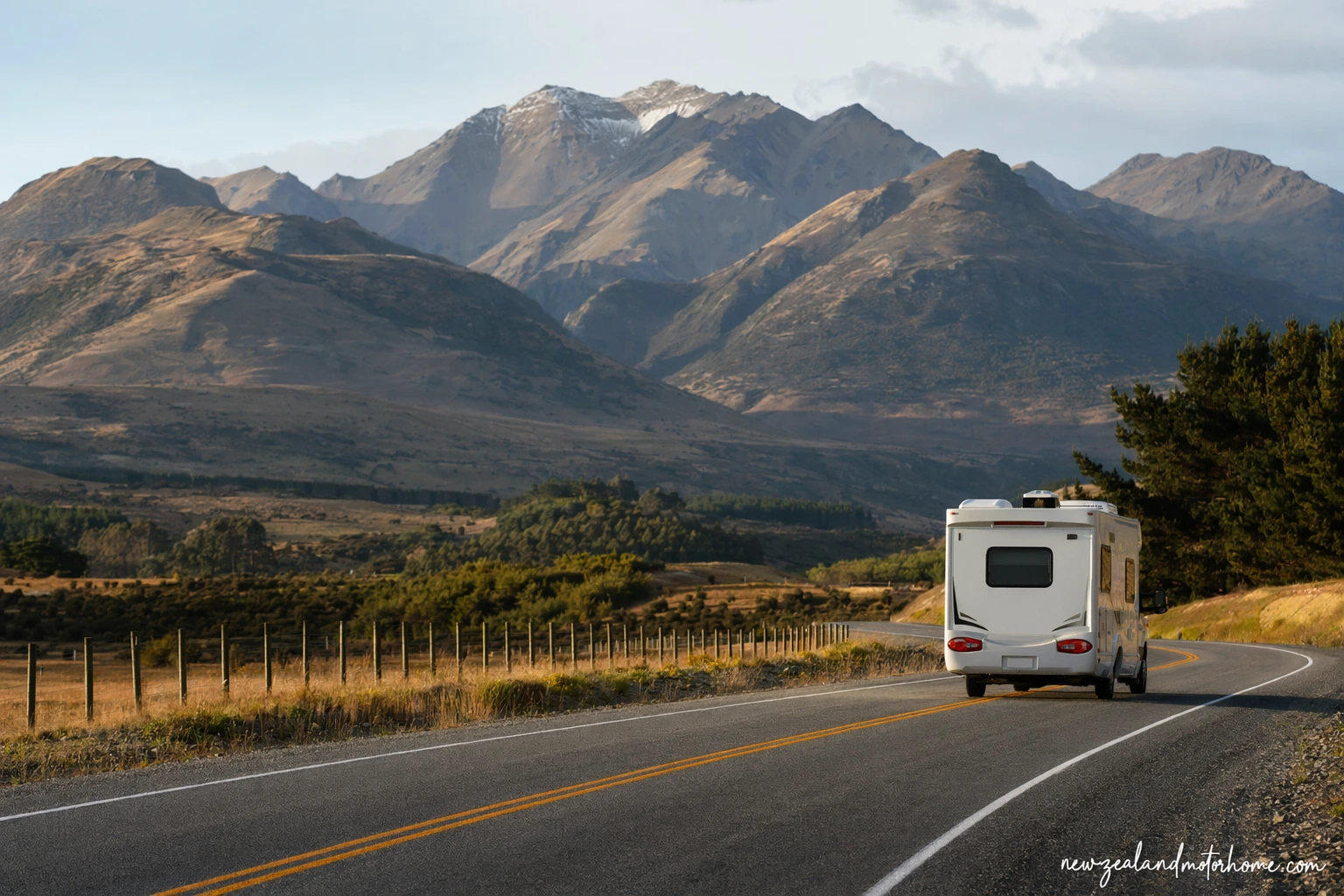
Nelson to Invercargill campervan route: the van-friendly way south
- Best pace: 7–10 days
- Main route: SH6 plus Southland roads
- Certified self-contained for freedom camping
- Book powered sites in Wānaka and Queenstown
- Large vans: avoid tight informal pull-offs
A Nelson to Invercargill campervan trip is a proper top-to-bottom South Island crossing: sheltered Tasman Bay, the Buller Gorge, wet West Coast rainforest, glacier country, Haast Pass, big-lake Otago and the wide southern roads into Southland. It is not the quickest way between two dots, but it is one of the most rewarding ways to move your home-on-wheels south.
This guide is written for travellers driving and sleeping in their hired van. You will find sensible daily legs, where to aim for powered or unpowered sites, when freedom camping gets tricky, and the road notes that matter in a motorhome: one-lane bridges, tight coast sections, fresh-water fills, LPG, dump stations and winter driving calls.
How many days to allow, and the best overall route
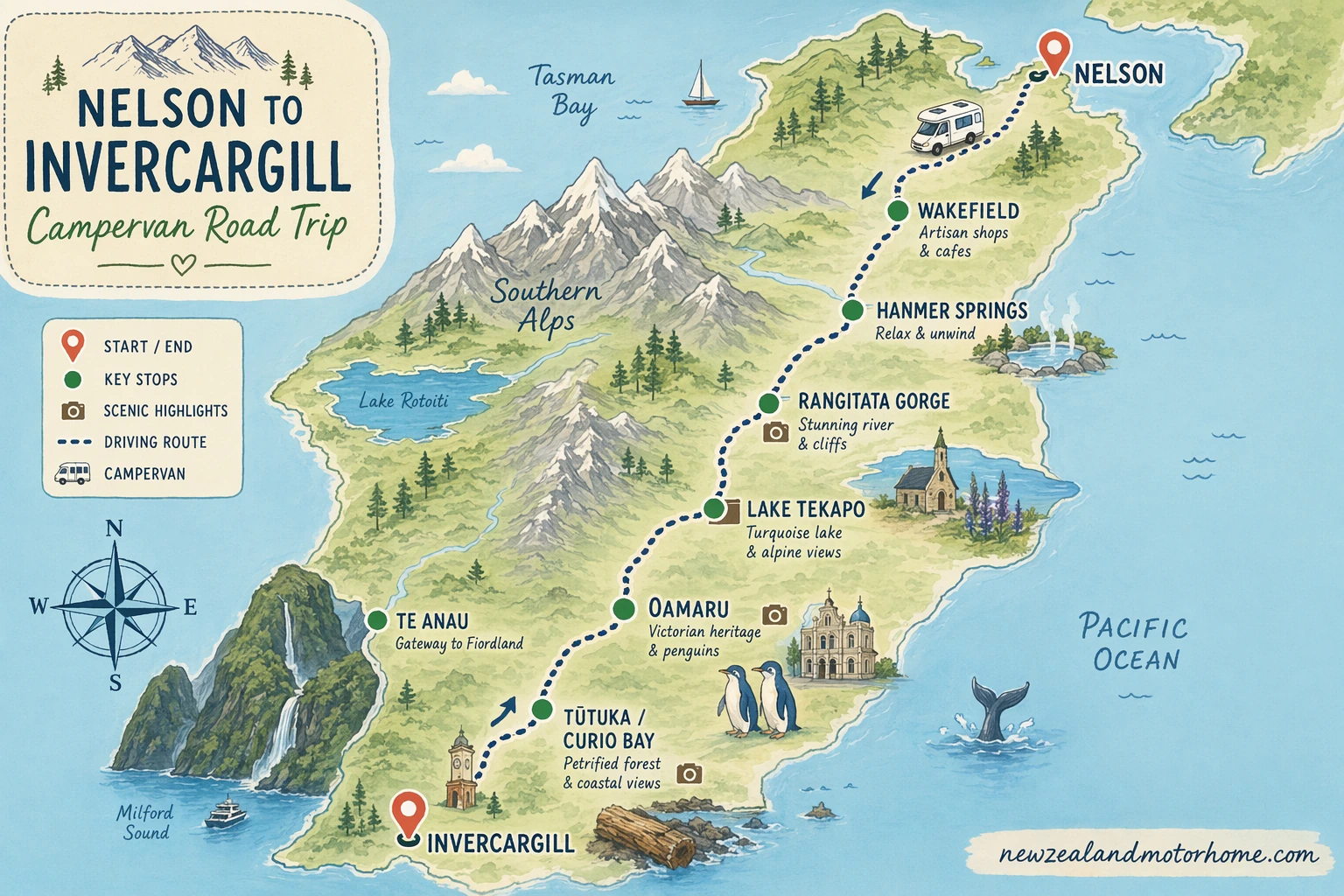
The most satisfying Nelson to Invercargill drive follows State Highway 6 for much of the way: Nelson to Murchison, through the Buller Gorge to the West Coast, down past Hokitika and the glaciers, over Haast Pass, then via Wānaka, Cromwell or Queenstown, and on through Southland. In a campervan, this is best treated as a 7 to 10 day route, with 12 to 14 days giving you room for weather, short walks and a steadier pace.
You can do it faster, but long days in a high-sided van are tiring, especially on the West Coast where rain, roadworks, one-lane bridges and photo stops all slow the rhythm. If you are travelling in winter or in a larger motorhome, build in a spare day around Haast Pass and the inland routes beyond Wānaka.
- Fast but still sane: 6 to 7 days, mostly driving with short stops.
- Comfortable campervan pace: 8 to 10 days, with powered-site resets and laundry days.
- Slow road-trip pace: 12+ days, adding Milford Sound, Te Anau, Bluff or the Catlins.
- Best season: late spring to early autumn for longer daylight and fewer ice concerns; winter is possible with careful weather checks.
Leg 1: Nelson to Murchison or Westport
Leave Nelson with a full fresh-water tank, groceries on board and your grey-water emptied if you have been parked up a few nights. Nelson and Richmond are the easiest places on this route to sort supermarket shopping, LPG swaps or refills, laundries and dump station admin before the road narrows into the Upper Buller.
The drive to Murchison is a relaxed first leg for most vans, with rolling country and river views rather than demanding mountain driving. Murchison works well as an overnight stop if you have collected the campervan late, want a powered site to get organised, or prefer not to push straight through the Buller Gorge in fading light.
Continuing to Westport gives you a bigger first day and puts you on the coast for the morning after. The Buller Gorge is sealed and suitable for campervans, but keep your speed modest, use pull-outs if traffic stacks behind you, and expect bends, rock walls and shaded damp patches after rain.
- Overnight style: Murchison holiday parks for powered and unpowered sites; Westport for more services and easier coastal access.
- Van admin: dump stations and fresh-water points are easier in Nelson/Richmond and Westport than in the smaller gorge settlements.
- Road note: do not rely on mobile coverage through every part of the gorge; download maps before leaving Nelson.
Leg 2: West Coast stops from Punakaiki to glacier country
From Westport, the coast road towards Punakaiki is one of the scenic highlights of a Nelson to Invercargill motorhome road trip. It is also a road where a wide van needs patience. There are tight coastal bends, short straights, campervan-heavy traffic in summer and plenty of places where you will want to stop rather than try to admire the view while driving.
Use proper car parks for Pancake Rocks and coastal walks, and avoid nosing a long motorhome into small informal pull-offs if you are not sure you can turn around. Punakaiki has limited space compared with Greymouth or Hokitika, so it pays to book a campsite in busy periods if you need power.
Greymouth and Hokitika are practical reset towns: fuel, groceries, laundries, dump stations, fresh water and a choice of holiday parks. From there, continue to Franz Josef or Fox Glacier for another night, but remember glacier village parking is compact and weather can change quickly. Arrive before dark if you want a calm park-up and a sensible walk to reception or facilities.
- Good overnight rhythm: Westport or Punakaiki, then Hokitika or Franz Josef/Fox Glacier.
- Powered-site tip: choose power here if you have had several damp days; it helps dry gear and recharge house batteries.
- Freedom camping: only where permitted and only if your van is certified self-contained; West Coast rules vary by district and site.
Leg 3: Glaciers to Haast, Wānaka and the inland lakes
The glacier-to-Haast section is remote, green and beautiful, with long stretches between services. Top up fuel before you need it, keep drinking water on board, and check road conditions if heavy rain is forecast. Slips, surface water and temporary traffic management are normal West Coast realities, not rare surprises.
Haast is a useful pause before the pass, especially if the weather has been rough or you are driving a larger motorhome. Haast Pass is sealed and used by campervans every day, but it has tight bends, climbs, descents and sections where you will be slower than cars. Use low gears on descents, take the signed pull-outs for waterfalls and viewpoints, and do not stop on the road shoulder for photos.
Wānaka is a natural two-night stop if you want lake time, walking tracks and a powered-site recharge. Freedom camping around Wānaka and Queenstown Lakes is tightly controlled, so assume you need a booked campground or clearly designated self-contained site unless you have checked the current bylaw. If this is the part of the route you are most unsure about, you can talk to us before locking in your overnight stops.
- Van admin: plan fuel and groceries before leaving glacier country; do not arrive in Haast nearly empty.
- Driving note: Haast Pass can be affected by snow, ice or closures in winter.
- Overnight options: Haast for a quiet practical stop, Wānaka for powered sites and a longer reset.
Leg 4: Wānaka to Invercargill via Central Otago and Southland
From Wānaka you have two main van-friendly ways south. The steadier option is via Cromwell, Alexandra, Roxburgh and Gore, which suits longer motorhomes and anyone wanting to avoid the busier Queenstown corridor. It has broad landscapes, easier town stops and a more relaxed driving feel.
The more scenic and busier option runs through Queenstown and on towards Te Anau before turning across Southland. This works well if you are adding Milford Sound, but Queenstown parking is tight for large vans and overnight freedom camping is heavily restricted. For longer vehicles, plan your campground before arriving and use bus, walking or organised transfers locally rather than trying to park in the centre.
As you approach Invercargill, the roads generally feel wider and easier, though wind can be a real factor for high-sided campervans. Invercargill is a good final-service town with supermarkets, fuel, LPG options, dump stations and holiday parks. If you continue to Bluff, take only what you need for the day and check where longer vehicles can park before heading down small side streets near viewpoints.
- Easier big-van line: Wānaka to Cromwell, Alexandra, Gore and Invercargill.
- Scenic add-on line: Wānaka to Queenstown, Te Anau, then Southland and Invercargill.
- Service stop: Invercargill is the place to empty waste, refill water and tidy the van before the next leg or return.
Campervan road notes, site planning and daily habits
This route is fully achievable in a standard hired campervan or motorhome, but it rewards tidy routines. Start each day with a rough overnight target, keep an eye on grey-water capacity, and do not leave dump station stops until the monitor is flashing. West Coast rain can make you spend more time inside the van than expected, so power, laundry and drying space matter.
For freedom camping, the key point is simple: your van must be certified self-contained, and you still need to be in a place where overnight camping is allowed. Local rules change between Tasman, Buller, Westland, Queenstown Lakes and Southland, so read the signs at the actual site. If a car park says no camping, being tired or self-contained does not make it okay.
- Fresh water: refill in service towns rather than assuming small settlements have public taps suitable for vans.
- Dump stations: use them in Nelson/Richmond, Westport/Greymouth/Hokitika, glacier towns where available, Wānaka/Cromwell and Invercargill.
- LPG: sort bottles in larger towns; remote West Coast stretches are not where you want to discover an empty gas bottle.
- Vehicle size: know your height and length before entering supermarket car parks, motel-style driveways or tight beach access roads.
- Weather: check MetService and road conditions before Haast Pass, alpine highways and any winter travel through Central Otago.
Keep planning
Common questions
Can I drive from Nelson to Invercargill in a campervan in one or two days?
It is technically possible to cover the distance quickly, but it is not a good campervan pace. The roads include gorge driving, West Coast bends, one-lane bridges and mountain sections, so 7 to 10 days is far more comfortable.
Is the West Coast route suitable for a large motorhome?
Yes, the main highways are sealed and regularly used by motorhomes. Drive conservatively, use pull-outs, avoid small unsealed side roads unless you know you can turn around, and take extra care on the Buller Gorge, coast road and Haast Pass.
Where should I book powered sites on this route?
Good places for powered-site resets are Murchison or Westport, Hokitika or Greymouth, Franz Josef or Fox Glacier, Wānaka, and Invercargill. Booking is wise in summer, school holidays and anywhere near Queenstown or Wānaka.
Can I freedom camp between Nelson and Invercargill?
Sometimes, but only with a certified self-contained van and only in places where overnight camping is permitted. Rules vary by council area, and popular places such as Wānaka, Queenstown and some coastal car parks are closely controlled.
Should I go through Queenstown or take the Central Otago route?
For easier driving in a longer motorhome, the Central Otago route via Cromwell, Alexandra and Gore is usually calmer. Go through Queenstown if you specifically want that stop, but plan parking and a campground before you arrive.
What is the biggest weather issue on this trip?
Heavy rain on the West Coast and snow or ice around Haast Pass and inland Otago are the main concerns. Wind can also be tiring in Southland for high-sided campervans, so check forecasts and avoid pushing on when conditions are poor.
Have a planner shape this for your dates
Send a short outline — your dates, party size, and the kind of trip you want. A planner replies with a vehicle recommendation, a paced route, and the realistic budget.