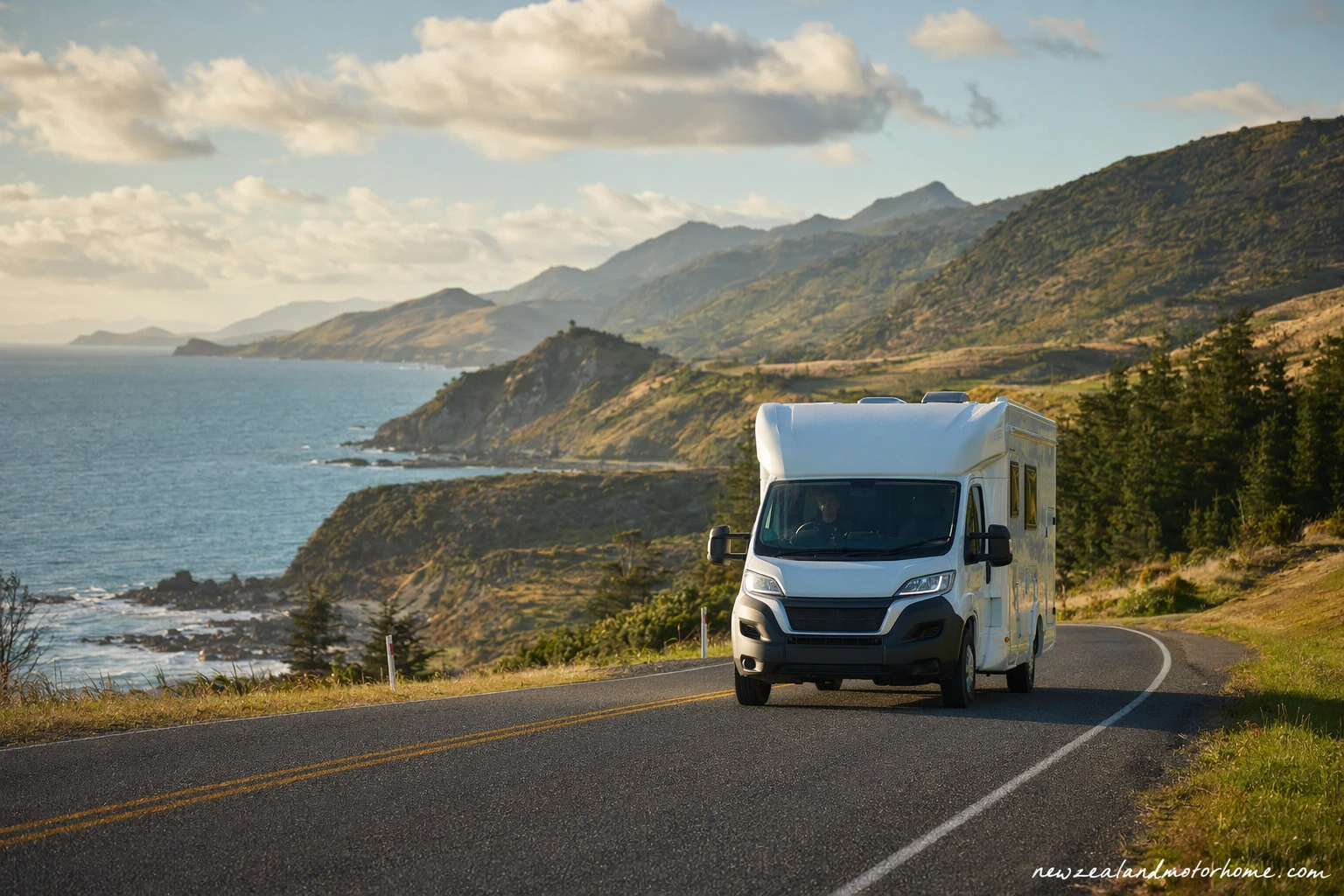
- Allow 5–7 days
- Cook Strait ferry required
- Best with booked powered sites
- Large vans: avoid tight scenic shortcuts
- Self-containment needed for freedom camping
A Nelson to Whangarei campervan route is a proper top-of-the-country relocation: Tasman hills, the Cook Strait ferry, a long North Island push, Auckland motorways, then the greener, tighter roads into Northland. It is not a one-day dash unless you enjoy arriving tired with an empty water tank and nowhere sensible to park.
This guide is written for self-drive campervan and motorhome travellers sleeping in the van. You will find a practical leg-by-leg plan, where to break the nelson to whangarei drive, what to watch on van-sized roads, and how to keep on top of dump stations, fresh water, LPG, powered sites and freedom camping rules along the way.
How many days to allow for the route
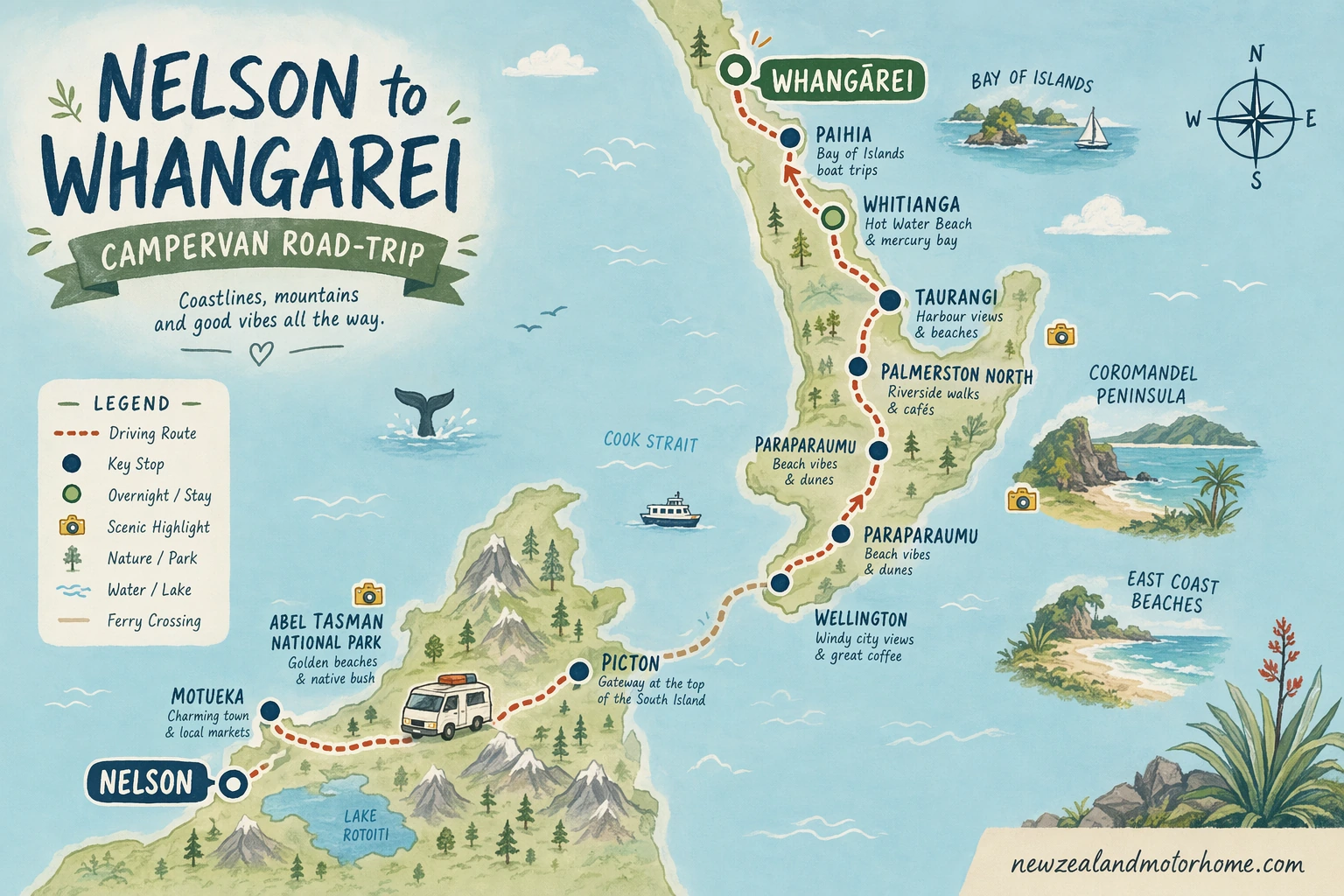
The direct driving line from Nelson to Whangārei is long, and the Cook Strait ferry splits the trip in the middle. In a campervan, the comfortable pace is usually 5 to 7 days, allowing time for ferry loading, supermarket stops, dump stations, and the slower average speed that comes with a taller, heavier vehicle.
If you are relocating a hire van, you can do the nelson to whangarei motorhome road trip in fewer nights, but it becomes a transport job rather than a holiday. A nicer rhythm is one night near Picton before or after the ferry, one night around Wellington or the Kāpiti Coast, one or two nights in the central North Island, then a final night north of Auckland before Whangārei.
- Quick but workable: 4 nights, with early starts and pre-booked campsites.
- Balanced: 6 nights, with room for weather, ferry timing and a rest afternoon.
- Relaxed: 8 nights or more, adding Marlborough, Taupō, the Waikato or a Northland coast detour.
Leg 1: Nelson to Picton and the Cook Strait ferry
From Nelson, you have two main choices for reaching Picton. The scenic line via Havelock and Queen Charlotte Drive is beautiful but narrow, twisty and slow, with sections that feel tight in a long motorhome. If your van is large, you are new to driving on the left, or the weather is wet, the easier option is usually Nelson to Blenheim, then north to Picton on the main highway.
Before boarding the ferry, tidy the van properly: latch cupboards, close roof vents, secure the fridge, turn off LPG at the bottle if instructed, and check your ticket matches the vehicle length and height. Ferry staff are used to campervans, but they will load you by size, not by how late you are for coffee.
- Good overnight pattern: Nelson or Picton holiday park the night before sailing, ideally on a powered site if you need batteries topped up.
- Dump and water: use Nelson or Picton facilities before crossing so you are not carrying full waste tanks onto the ferry.
- Parking the van: Picton’s waterfront parking can be busy and tight; use signed longer-vehicle areas and avoid blocking car bays with an overhang.
Leg 2: Wellington to the central North Island
After the ferry rolls into Wellington, avoid planning a rushed exit if you are in a big van. City traffic, one-way lanes and tight parking around the waterfront can be stressful, especially straight after disembarking. Many campervan travellers either stay at a holiday park in the Wellington, Lower Hutt or Porirua area, or continue north to the Kāpiti Coast for a quieter first night on the North Island.
The main northbound route follows SH1 through Kāpiti, Levin, Taihape and over the central plateau toward Taupō. It is a sensible van route, but it is not flat: expect exposed wind, long descents, passing lanes, and winter weather around the Desert Road. If snow, ice or high wind is forecast, sit tight on a powered site rather than trying to beat the conditions.
- Van-friendly breaks: Kāpiti Coast, Levin, Taihape, Turangi and Taupō all make useful stops for groceries, fuel and a leg stretch.
- Overnight options: powered and unpowered holiday-park sites are the least complicated; freedom camping rules vary sharply by district.
- Driver note: use lower gears on long descents and let faster traffic pass where it is safe.
Leg 3: Taupō, Waikato, Auckland and on to Whangārei
From Taupō, the straightforward route continues north through the Waikato toward Hamilton and Auckland. This is where the trip changes character: less open road, more merging, more motorway signage, and more places where a high-roof campervan needs deliberate lane choice. Fill fresh water and empty waste before you get tangled in the Auckland run, because stopping casually with a long vehicle is harder in the city.
For many vans, the easiest strategy is to overnight either south of Auckland or north of the city, then cross the motorway network outside peak commuting hours. North of Auckland, SH1 leads through Warkworth and Wellsford before the final approach to Whangārei. Check current road conditions for the Brynderwyn Hills and nearby works, as closures or detours can add time and are more tiring in a motorhome than they look on a map.
- Auckland timing: aim for mid-morning or early afternoon rather than weekday peak periods.
- Tolls: the northern motorway toll section may apply; check how your hire operator handles toll payments.
- Final services: Warkworth, Wellsford and Whangārei are practical places for fuel, groceries, LPG swaps, dump stations or fresh-water top-ups.
Where to sleep: powered sites, unpowered sites and freedom camping
Because this route crosses multiple council areas, freedom camping rules change often. A certified self-contained vehicle is essential if you want any freedom camping flexibility, but certification alone does not mean you can stop anywhere. Look for local signs, use current council information, and avoid scenic car parks that prohibit overnight stays.
Powered sites are worth using at least every second or third night on this trip, especially if you are running a fridge, heater, lights and device charging in cooler weather. Unpowered sites are fine when your house battery is healthy, but long driving days can hide weak charging systems until you stop for the evening.
- Most reliable pattern: holiday park in Picton, Wellington or Kāpiti, Taupō or Hamilton, then Whangārei.
- Freedom camping caution: Northland, Auckland and Tasman districts can be strict; read the bylaw sign at the actual car park.
- Dump rhythm: dump before the ferry, again around the central North Island, then before or on arrival in Whangārei.
If you want the route shaped around your ferry time, van size and preferred overnight style, use our talk to us step and we can help line up the legs without turning the trip into a race.
Road notes for larger campervans and motorhomes
This is a route where vehicle size matters. A compact 2-berth camper will feel very different from a 6-berth motorhome on Queen Charlotte Drive, central plateau wind, Auckland lane changes and Northland hills. Know your vehicle height, length and turning circle before you leave Nelson, and write the height somewhere visible in the cab for service stations, car parks and low canopies.
In wet weather, give yourself more braking distance than you would in a car, particularly on downhill corners between Nelson and Marlborough and on the hill country north of Auckland. Keep the fresh-water tank sensibly filled rather than brimmed for every leg; carrying unnecessary weight makes the van slower, thirstier and less settled in crosswinds.
- Best habit: park nose-out where possible so leaving is easier in busy towns.
- Fuel planning: do not run low before the Desert Road or late at night north of Auckland.
- LPG: top up or swap before remote nights; heaters and hot-water systems use more than many first-time hirers expect.
Common questions
Can I drive from Nelson to Whangārei in a campervan without booking campsites?
You can, but it is not the calmest plan. Ferry timing, busy holiday periods and local freedom camping bylaws can leave you hunting for a legal overnight spot late in the day, so book key powered sites at Picton, Wellington/Kāpiti, Taupō or Whangārei.
Is Queen Charlotte Drive suitable for a motorhome?
It is suitable for confident drivers in smaller vans, but it is narrow, winding and slow. Larger motorhomes often have an easier time going via Blenheim and SH1 to Picton, even though it adds distance.
Do I need a certified self-contained campervan for this route?
Yes, if you want any realistic freedom camping options. Even with certification, you must follow the local signs and council rules in each district; some car parks and reserves still prohibit overnight stays.
Where should I dump waste tanks on the Nelson to Whangārei drive?
Plan to dump before the Cook Strait ferry, again in the central North Island, and once more near Whangārei if needed. Larger towns such as Nelson, Picton, Levin, Taupō, Hamilton, Warkworth and Whangārei are the most practical places to look for public or holiday-park dump facilities.
What is the hardest part of the nelson to whangarei campervan route?
For most drivers it is the combination of ferry logistics, Auckland motorway traffic and fatigue from long distances. Break the trip into shorter legs, avoid peak traffic, and do not schedule the ferry and a huge North Island drive on the same day unless you have to.
Can I take LPG gas bottles on the Cook Strait ferry?
Campervans commonly travel with onboard LPG, but you must follow the ferry operator’s instructions. Usually that means declaring LPG where required and turning it off at the bottle before loading.
Have a planner shape this for your dates
Send a short outline — your dates, party size, and the kind of trip you want. A planner replies with a vehicle recommendation, a paced route, and the realistic budget.