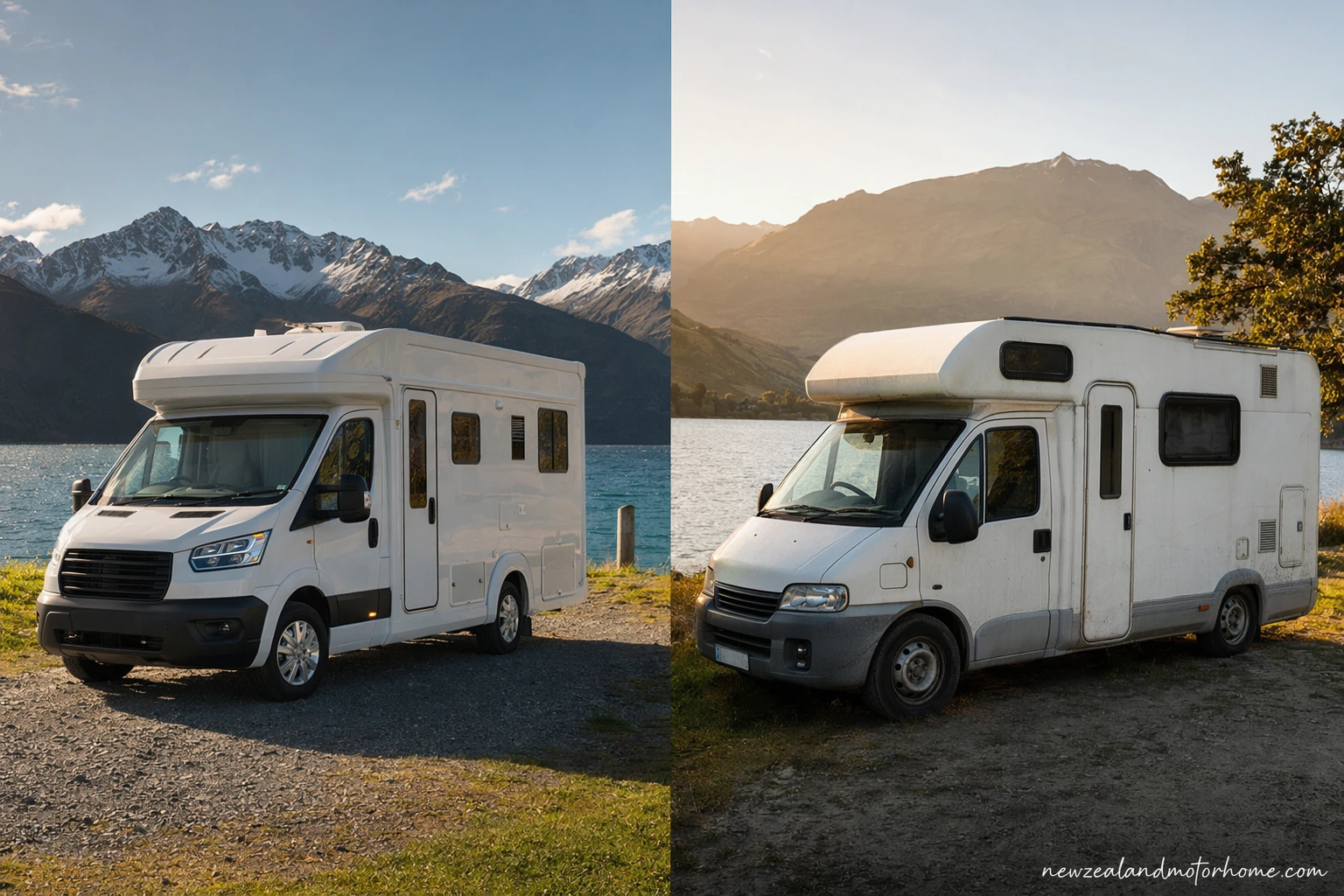
- Best compared by route, not age
- Self-containment check is essential
- Powered sites help older vans
- Larger vans need easier parking plans
- Dump, LPG and water stops matter
Choosing between a newer hire motorhome and an older ex-rental-style van is not just about shiny cupboards. In New Zealand it can affect where you sleep, how easily you fit into a holiday park site, whether you are eligible for some freedom camping areas, and how relaxed you feel on narrow roads.
This new vs ex rental motorhome New Zealand comparison is written for self-drive travellers sleeping in their own hired van. We will look at the practical trade-offs: parking, powered and unpowered sites, water and waste, LPG, comfort, road handling, and who each option genuinely suits.
What are you really comparing?
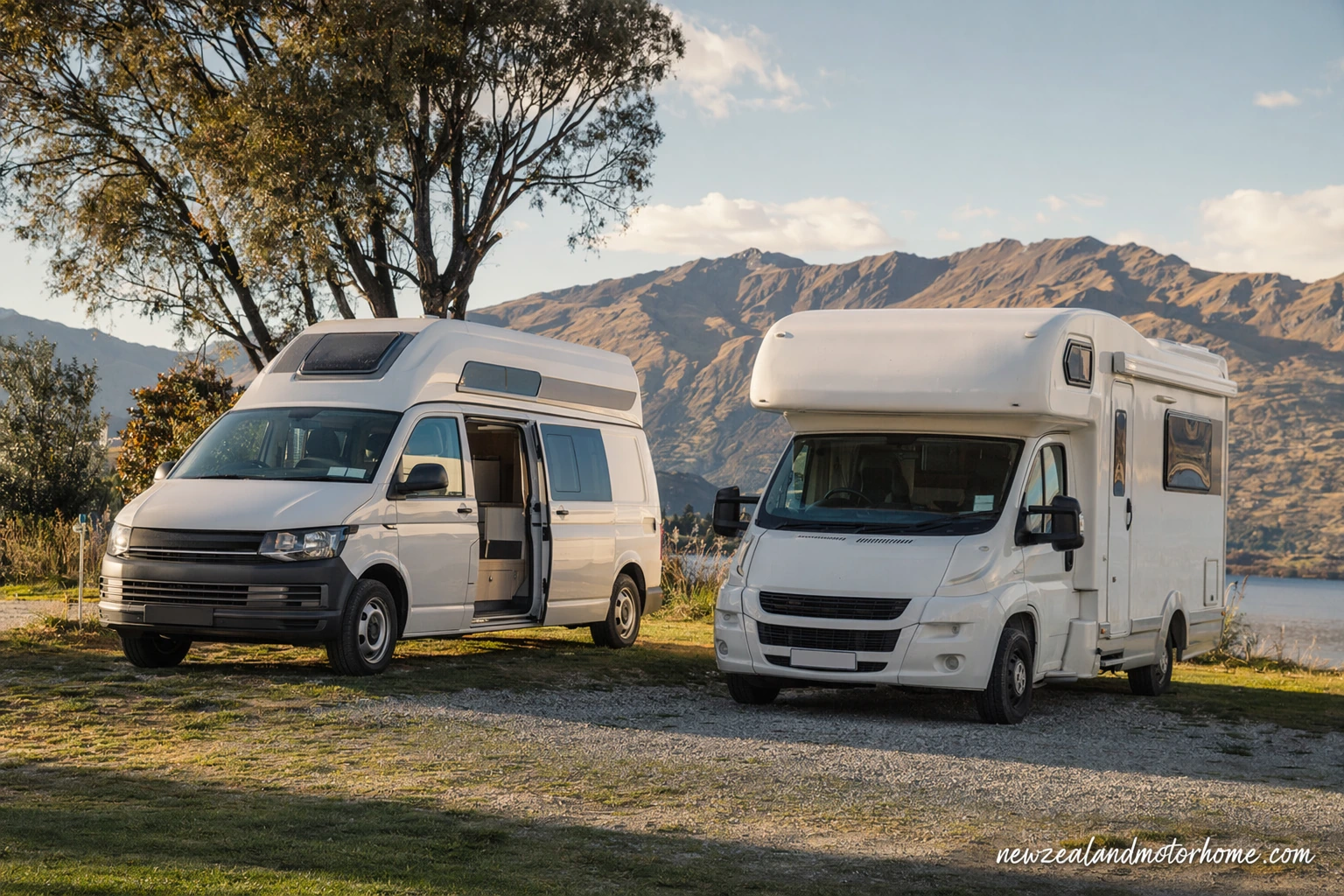
In everyday trip planning, a new motorhome usually means a near-new fleet vehicle with current fit-out, modern battery systems, tidy upholstery, and fewer kilometres on the clock. An ex-rental-style motorhome usually means an older van that has done seasons of hire work, or a budget camper based on an earlier rental layout.
Both can work well for a New Zealand road trip if they are legally roadworthy, properly insured for hire, and certified self-contained where required. The difference is how much checking you need to do before you depend on it for remote overnight stops, long climbs, and several days between holiday parks.
- Newer hire motorhome: often better for first-timers, winter touring, longer loops, and travellers who want fewer surprises.
- Older ex-rental-style van: can suit confident drivers, short regional trips, and travellers happy to use holiday parks more often.
- Do not assume: age alone does not prove freedom camping eligibility; always check the current self-containment certificate against the vehicle registration.
Parking, size and driving feel
Newer motorhomes can be wider and taller because many are built for comfort: fixed beds, internal showers, larger fridges, and more storage. That is lovely at night, but you will notice it in supermarket car parks, small coastal villages, and older holiday park lanes with trees overhanging the driveway.
Older ex-rental-style vans are often smaller and simpler, which can make them easier around tight town parking, scenic lookout bays, and single-lane access roads to beaches or lakefront reserves. The trade-off is less indoor space when rain arrives, and sometimes a more basic driving position or noisier cabin.
- Check length before booking: a compact campervan is easier in town; a larger motorhome is easier to live in on wet evenings.
- Check height: watch for low branches, older service station canopies, ferry ramps, and covered car parks.
- On NZ roads: allow extra time for winding coastal roads, alpine passes, loose gravel access, and one-lane bridges.
- At overnight stops: arrive before dark if you are driving a larger van, so you can choose a level bay without reversing under pressure.
Sites you can use: freedom camping, DOC-style stops and holiday parks
The biggest practical difference is not age; it is certification and facilities. Many freedom camping areas require a certified self-contained vehicle, and local rules can be stricter than the national baseline. A newer motorhome is more likely to have a fixed toilet, grey-water tank, fresh-water tank and compliant waste set-up, but you still need to confirm the paperwork.
An older ex-rental-style van may be perfectly comfortable at holiday parks, especially if you plug into a powered site and use the camp kitchen and showers. It may be less suitable for freedom camping if the toilet is portable, the certificate is expired, or the water and waste capacity is too limited for the number of people sleeping in the van.
- Powered sites: useful for charging house batteries, running a heater safely, and resetting after wet weather.
- Unpowered sites: fine if the van has strong battery capacity, enough water, and you are disciplined with lights, fridge and charging.
- Freedom camping: check local signage every time; a self-containment sticker is not permission to park anywhere.
- Dump stations: plan them into your route, especially after two nights off-grid or before crossing into a quieter region.
Comfort, utilities and what happens after two wet days
A newer hire motorhome usually gives you better insulation, heating options, cleaner seals around doors and windows, brighter lighting, and a more efficient fridge. Those small things matter in Fiordland rain, on a frosty Central Otago morning, or when everyone is inside while boots and towels drip by the door.
An older ex-rental-style van can still be cosy, but you should inspect the basics carefully. Ask how the hot water works, where the LPG bottles are stored, how much fresh water the tank holds, and whether the house battery has enough capacity for unpowered nights. A low nightly hire cost loses its charm if you have to chase powered sites every evening.
- Water: know where the fresh-water filler is and carry a hose fitting that suits common holiday park taps.
- Waste: check grey-water and toilet cassette access before your first dump station stop.
- LPG: confirm the bottle type, how to switch it off for ferries if required, and where refills or swaps are common on your route.
- Power: match your plan to the van, not the brochure; laptops, camera batteries and heaters drain more than people expect.
Cost, reliability and who each option suits
A newer motorhome usually costs more to hire, but the value is in predictability: newer tyres, fresher fittings, clearer manuals, and fewer tired little parts. If you are travelling with children, touring in winter, or driving both islands over several weeks, that calmness can be worth more than extra floor space on a spreadsheet.
An older ex-rental-style van can be the right choice when your route is simple, your days are shorter, and you are happy to use established campgrounds. It can also be a good match for travellers who pack lightly and prefer a smaller footprint over a full bathroom and permanent bed.
If you are unsure which way to lean, sketch your actual nights first: holiday park, unpowered campsite, freedom camping, then repeat. You can also use our plan-your-trip step to sense-check whether the van type fits the roads, seasons and overnight stops you have in mind.
- Choose newer: longer hire, winter travel, first NZ motorhome trip, more off-grid nights, or comfort-sensitive travellers.
- Choose older: shorter loop, warmer months, confident driver, more holiday park stays, tighter budget.
- Be cautious: if the van is not clearly self-contained, has unclear insurance conditions, or lacks recent servicing evidence.
Common questions
Can I freedom camp in an older ex-rental-style motorhome?
Only if the vehicle meets the current self-containment requirements and local rules allow overnight parking there. Check the certificate or warrant matches the registration, and always read the signage at the site before settling in.
Is a newer motorhome harder to park in New Zealand towns?
Sometimes, yes. Newer motorhomes can be longer, wider and taller, so town centres, waterfront car parks and small supermarket bays need more patience. Look for end bays, larger public car parks, or park a little further out and walk in.
Do I need powered sites if I hire an older van?
Not always, but older vans often have smaller or more tired house batteries. If you need heating, device charging, CPAP use, or long fridge time, plan regular powered nights and ask the hirer exactly how many unpowered nights the van is suited to.
What should I check before accepting the keys?
Check tyre condition, water level, grey-water drain, toilet cassette, LPG bottle, power cable, fresh-water hose, self-containment paperwork and any height or length notes. Also ask for a quick demonstration of the heater, hot water, fridge and dump station routine.
Which is better for South Island mountain roads?
A newer motorhome may feel stronger on climbs and steadier if it has modern driver aids, but size matters too. A smaller older van can be easier on narrow roads, provided it is well maintained and you allow time for slower hills and safe pull-overs.
Have a planner shape this for your dates
Send a short outline — your dates, party size, and the kind of trip you want. A planner replies with a vehicle recommendation, a paced route, and the realistic budget.