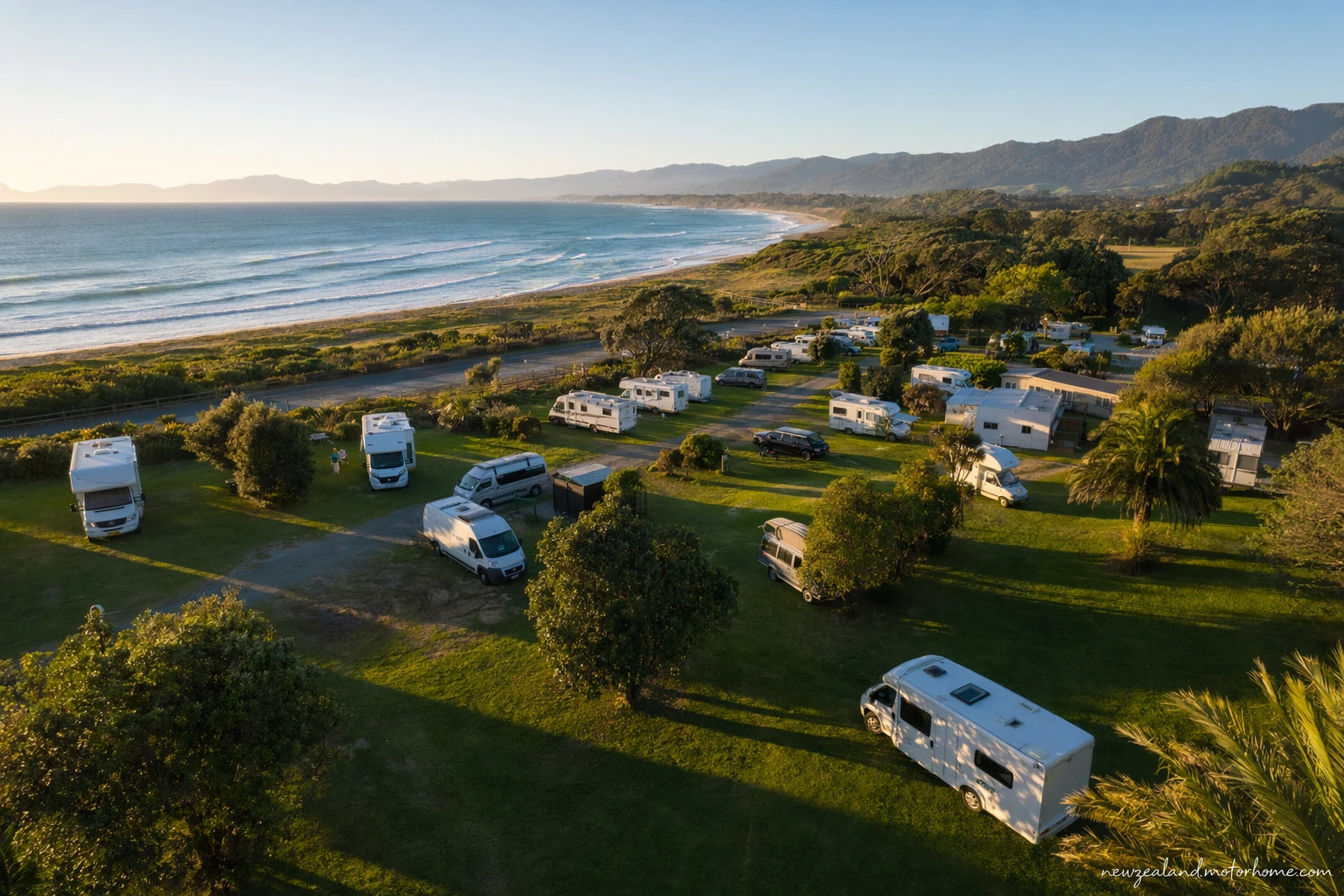
- Best booked ahead in summer
- Powered and unpowered sites available
- Self-contained rules vary by district
- Check dump stations and fresh water
- Van length matters on tight sites
New Zealand campervan campsites range from grassy holiday park bays beside a surf beach to simple conservation camps tucked near a lake, forest or alpine road end. For a self-drive campervan trip, the right overnight stop is not just a place to sleep — it is where you plug in, top up fresh water, empty waste, dry towels, cook out of the wind and give the van a proper reset.
This guide walks through the main types of campervan-friendly places to stay, how powered and unpowered sites differ, what self-containment means on the road, and the practical checks that make each night easier. Use it to shape a route that fits your van size, season and comfort level, rather than chasing the cheapest dot on a map after dark.
The main kinds of campervan campsites in New Zealand
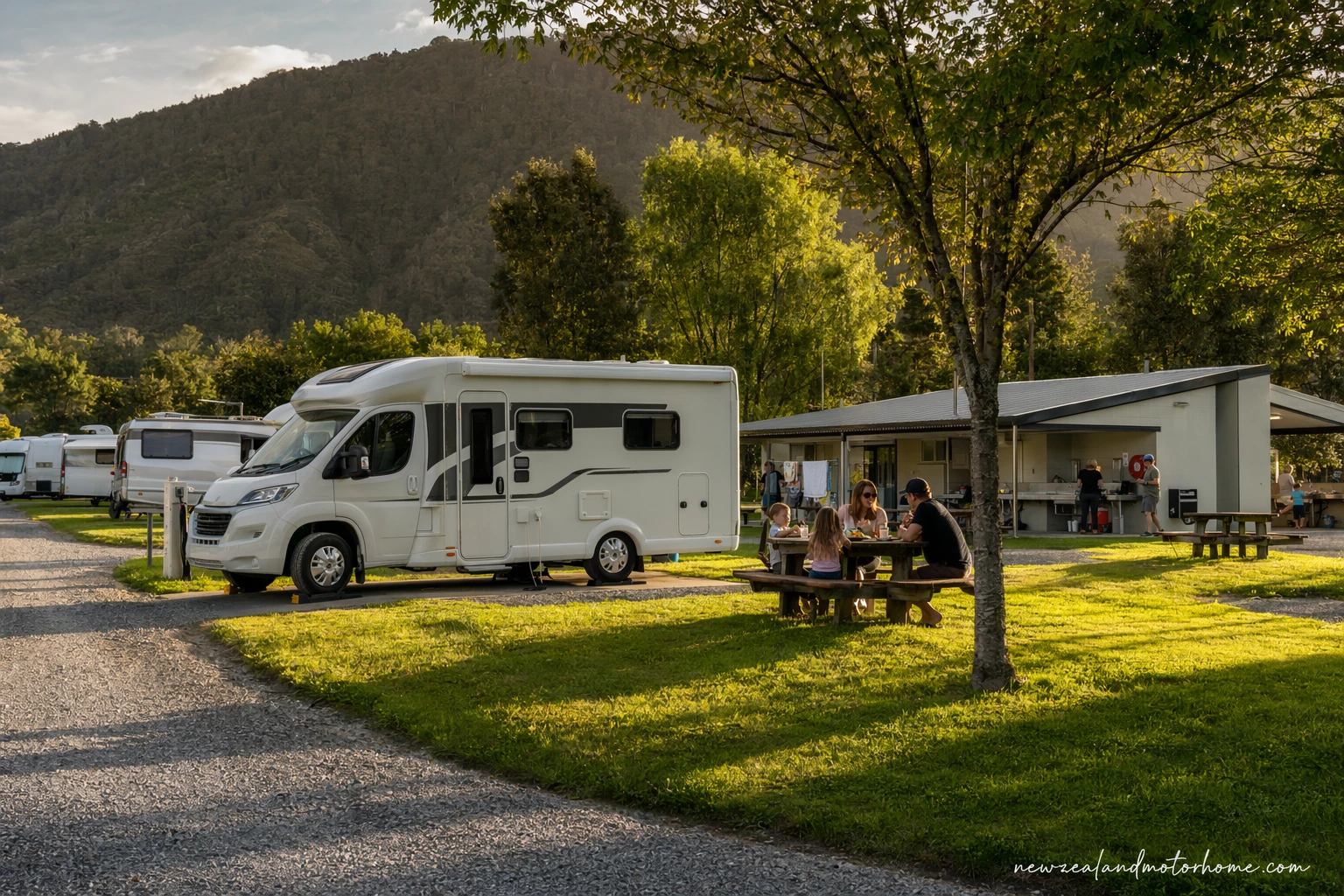
Most self-drive campervan travellers mix several styles of overnight stop. Holiday parks are the most serviced option, usually with marked powered sites, shared kitchens, hot showers, laundry, fresh-water taps and a dump station either on site or nearby. They suit first and last nights, wet-weather resets, families, and longer motorhomes that need a predictable bay.
DOC and council campgrounds are often simpler and more scenic: think lake edges, bush clearings, river terraces and coastal reserves. Facilities vary widely, so read the listing before you commit — some have toilets and water, while others are basic sites where you need a certified self-contained van and enough battery, water and LPG for the night.
- Holiday parks: best for power, showers, laundry, dump stations and town access.
- DOC campsites: often in quieter natural surroundings, with fewer services.
- Council or reserve camps: useful around small towns and coastal areas, but rules differ by district.
- Freedom camping areas: only where permitted, and usually only for properly certified self-contained vehicles.
Powered versus unpowered sites: what your van actually needs
A powered site lets you connect the campervan to mains electricity with the correct external lead. That means you can run the fridge more confidently, charge devices, use built-in appliances designed for 230V supply, and warm or cool the van depending on the fit-out. It is especially handy after a couple of nights off-grid, in winter, or when you are parked under trees and the solar panel has not kept up.
An unpowered site is usually cheaper and can be in a nicer corner of the campground, but you are relying on your house battery, gas and water tanks. Before choosing one, check your battery monitor, grey-water capacity, toilet cassette, LPG bottle and whether you will need heating overnight. If the site is shaded, windy or far from facilities, a small convenience saving can turn into a restless night.
- Choose powered after long driving days, cold nights, heavy device charging or several nights of free camping.
- Choose unpowered when your van is well charged, the forecast is settled, and you are comfortable managing water and waste.
- For larger motorhomes, ask for a site that suits your length and has easy access rather than a tight grass corner.
Self-containment, freedom camping and local rules
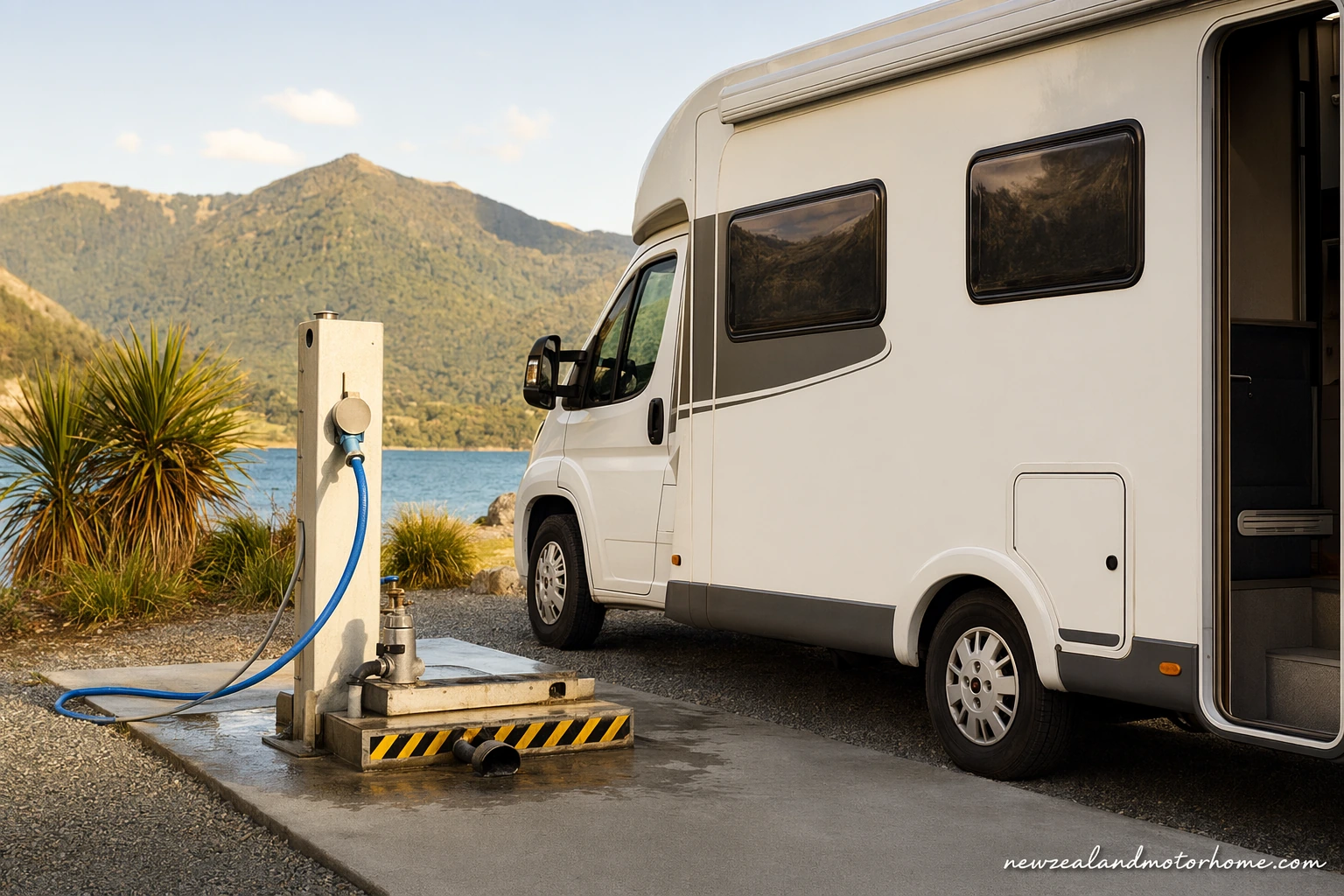
Self-containment certification matters because it shows your campervan can hold fresh water, grey water and toilet waste for a set period without relying on public facilities. In practice, it affects where you may legally stay outside commercial campgrounds. Many freedom camping areas require a certified self-contained vehicle, and councils can add their own restrictions by street, reserve or coastal zone.
Do not assume a scenic car park is an overnight stop. Look for current signs on the ground, check council or DOC information, and leave if the wording is unclear. Holiday parks generally remove that uncertainty: you park in an allocated bay, use the facilities, and can ask staff where the dump station, recycling, fresh water and late-arrival area are located.
If you are planning a route with a mix of holiday parks and freedom camping, build in regular service nights. A certified van still needs its grey-water tank emptied legally, its cassette toilet dealt with at a dump station, and fresh water topped up from a safe supply.
Facilities worth checking before you book
The best campsite for a campervan is the one that matches the practical needs of that particular night. A beachside unpowered site might be perfect when the tanks are empty and the battery is full; it is less appealing when you need laundry, a long shower, a water fill and a safe place to empty the toilet cassette.
When comparing new zealand campervan campsites, look past the photos and check the operational details. For taller motorhomes, note low tree branches at older parks and any tight internal turns. For long vans, a drive-through or large hardstand can make arrival easier, especially in rain when grass sites soften.
- Dump station: on site, nearby, or not available at all.
- Fresh water: drinking-water tap accessible to a van, not just a kitchen sink.
- LPG: bottle swap or refill access in the town, if your cooking or heating depends on it.
- Site surface: gravel or sealed pads are easier in wet weather than sloping grass.
- Access: check gate hours, after-hours arrival instructions and room to manoeuvre.
Booking around seasons, weather and popular routes
In summer, school holidays and long weekends, well-located holiday parks can book out, especially around Coromandel beaches, Abel Tasman gateways, Queenstown, Wānaka, Rotorua and the main West Coast stops. If your itinerary depends on a powered site in one of these places, book ahead rather than hoping to roll in at dusk.
Shoulder seasons are more flexible, but weather becomes a bigger factor. A powered site and laundry room can rescue a wet Fiordland or West Coast section, while a sheltered inland park might be more comfortable than an exposed beachfront reserve in a southerly. In winter, check whether facilities are fully open and whether nearby alpine roads may be icy or require extra care in a high-sided vehicle.
Try not to drive until you are tired and then start searching for a place to sleep. Plan overnight stops around realistic driving distances, dump station timing and daylight arrivals. If you would like help matching campsite choices to a campervan route, you can use the /talk-to-us/ step and we will help you think through the practical overnights.
Choosing campsites for surroundings, not just services
The setting often shapes how a campsite feels. A lakeside bay may give you still water in the morning, a coastal holiday park might put the van close to a beach track, and a small-town park can be the easiest base for groceries, a bakery stop and a dump station before the next rural stretch. For campervan travel, good surroundings also mean safe access, level parking and not having to reverse a large vehicle down a narrow lane in the dark.
Think about what you want to do after the handbrake is on. If you are walking to dinner, choose a town-edge park with footpaths or a short, well-lit route. If you are chasing quiet, look for a site away from highways and ferry routes. If you have a longer motorhome, a slightly less photogenic site with generous turning space can be a better choice than a cramped waterfront row.
- For beach stops, check wind exposure, sand access and whether the site floods after heavy rain.
- For lake and river camps, check sandfly levels, toilet facilities and safe water access.
- For alpine or national park gateways, check road conditions, fuel range and whether you need to arrive before office hours close.
Common questions
Do I need to book campervan campsites in New Zealand?
In peak summer, school holidays and popular resort towns, yes — especially if you need a powered site. Outside busy periods you can be more flexible, but it is still sensible to book the first night, last night and any must-stay locations.
Can I stay overnight anywhere if my campervan is self-contained?
No. Self-containment certification helps, but you still need to follow local council, DOC and posted site rules. Some areas ban overnight camping completely, while others allow it only in marked spaces or for a limited number of nights.
How often should I use a dump station?
That depends on your van’s grey-water tank, toilet cassette size and how many people are travelling. As a practical rule, plan a legal dump station stop every couple of days, and do it sooner before remote stretches or long weekends.
Are unpowered sites okay for a hired campervan?
Usually, as long as your house battery is charged and you understand what runs on battery, LPG or mains power. If you need heating, long device charging or reliable fridge time after cloudy days, a powered site is the safer choice.
What size campsite do I need for a motorhome?
Tell the campground your vehicle length and whether you prefer a drive-through or hardstand site. Longer or taller motorhomes need more turning room, fewer overhanging branches and easier access to the power bollard and water point.
Have a planner shape this for your dates
Send a short outline — your dates, party size, and the kind of trip you want. A planner replies with a vehicle recommendation, a paced route, and the realistic budget.