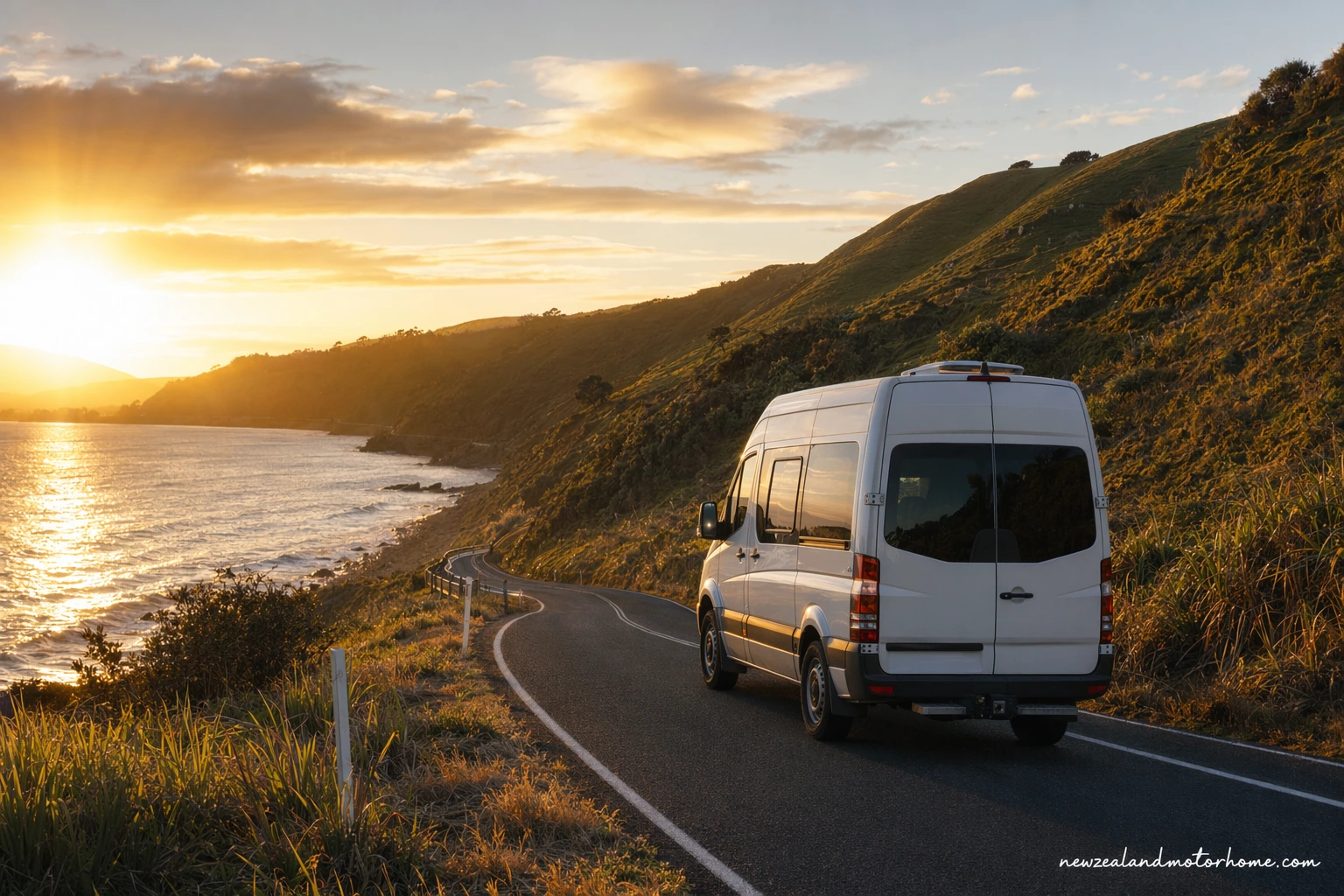
- Best for point-to-point NZ routes
- Allow depot time on first and last day
- Powered sites useful every few nights
- Check ferry length and height
- Self-containment rules vary by district
One way campervan hire NZ is the simple idea of picking up your motorhome in one town and dropping it in another, without looping back just to return the keys. For self-drive travellers, that can mean Auckland to Christchurch, Christchurch to Queenstown, or a quieter run between regional depots, depending on the van operator and season.
The trick is planning it as a campervan trip, not just a line on a map. You need sensible driving days, overnight stops that suit your self-containment status, places to empty grey water, refill fresh water and LPG, and a route that suits the height, width and weight of the van you have hired.
This page walks through the decisions that matter before you book: direction, ferry crossings, campsite style, depot timing and the small van jobs that keep a one-way trip feeling easy rather than rushed.
What one-way hire changes for campervan travellers
With a return hire, the road trip naturally makes a loop. With one-way hire, the journey can keep moving forward, which is especially useful in New Zealand where the classic self-drive lines are long and narrow: Auckland to the geothermal centre, across Cook Strait, down the West Coast, then over the Alps to Christchurch or Queenstown.
The van side matters. One-way hires often have depot rules, set pick-up and drop-off hours, and sometimes minimum hire lengths or relocation conditions. None of that is difficult, but it does mean your first and last day should be planned around paperwork, luggage, grocery loading, fuel, gas, water and a proper handover inspection.
- Allow time at pick-up to check tyre condition, hose fittings, power lead, toilet cassette, levelling blocks and LPG bottle access.
- Do not plan a long mountain drive straight after an afternoon pick-up; your first overnight stop should be straightforward and legal.
- On drop-off day, build in time to empty the toilet cassette and grey water, refill diesel if required, tidy the living area and return before the depot cut-off.
Because you are sleeping in the vehicle, the route needs more structure than a normal sightseeing itinerary. Your overnight pattern, dump station spacing and access to powered sites can decide whether the trip feels calm or cramped.
Choosing the right direction across New Zealand
The best direction depends on your flights, season and how much time you want in each island. Many travellers start in Auckland because international flights are easy and groceries are simple before heading south. Others prefer to begin in Christchurch or Queenstown and finish in the North Island, especially if flight schedules or depot availability line up better.
For a campervan, direction also affects the shape of your driving days. South Island alpine roads, West Coast weather, ferry timing and holiday traffic can all change how far you should push. A two-berth van is easier in town car parks; a larger motorhome gives more living space but needs more thought at supermarket bays, scenic pull-offs and narrow campsite access roads.
- Auckland to Christchurch suits travellers who want a broad North-to-South introduction without backtracking.
- Christchurch to Queenstown works well for a South Island-focused hire, with alpine roads, lakes and shorter depot-to-depot logistics.
- Auckland to Queenstown can be excellent, but it needs enough days to avoid turning every stop into a late arrival.
- Queenstown to Christchurch is a compact option if you want mountain scenery and a simpler final handover.
If you are unsure which direction suits your travel dates and van size, use our talk-to-us planning step and we can help shape a sensible one-way outline around your flights and overnight style.
Ferries, roads and driving days in a hired motorhome
If your one-way route crosses between the North and South Islands, the Cook Strait ferry becomes part of the campervan logistics. You usually take the van on board, park where directed, then leave it during the sailing. Book the vehicle length and height accurately, because motorhome space is not the same as a car space.
New Zealand distances can be misleading in a van. A 250 kilometre day through rolling Waikato roads is not the same as a 250 kilometre day over alpine passes, past single-lane bridges and into a lakeside campsite after dark. Plan by hours, road type and arrival time, not just kilometres.
- Check whether your hired campervan is allowed on gravel access roads before chasing remote freedom camping spots.
- Use lower gears on long descents, especially on routes such as the Crown Range, Arthur's Pass or the road into Milford Sound.
- Park only in marked long-vehicle spaces at busy lookouts; avoid blocking turning areas used by other vans and buses.
- Arrive at holiday parks before reception closes if you need a powered site, dump station access or a late check-in code.
Build lighter days around ferry sailings, mountain passes and big grocery restocks. The best one-way trips usually have a rhythm: drive, stop early, plug in when needed, and leave tomorrow's road feeling manageable.
Overnight stops: powered sites, freedom camping and self-containment
Your overnight options depend on the van and the local rules. A certified self-contained motorhome gives you more flexibility, but it is not a free pass to sleep anywhere. Councils set their own freedom camping bylaws, and signs on the ground always matter. If in doubt, choose a holiday park, DOC campsite or clearly permitted overnight area.
Powered sites are useful every few nights, especially in cooler months or if you are using laptops, camera batteries, electric heating where allowed, or a fridge that has been working hard. Unpowered sites can be lovely in scenic places, but you still need to manage battery level, water, waste and toilet capacity.
- Use powered sites after cold, wet or high-use days so the house battery and devices recover.
- Choose unpowered DOC-style camps when you have enough fresh water, toilet capacity and daylight to settle in.
- Plan dump station stops before remote stretches, not after the cassette light comes on.
- Keep a small rubbish bag system inside the van so you are not hunting for bins after dark.
For first and last nights, pick practical locations over postcard scenery. Near the pick-up depot, you want an easy grocery run and a flat bay to learn the van. Near drop-off, you want a legal overnight stop close enough to clean out, dump waste and reach the depot without stress.
Van services to plan before you book the route
A one-way itinerary works best when the van services are spaced through the trip. Fresh water, grey water, toilet cassette disposal, LPG, laundry and powered nights are the quiet backbone of a good motorhome holiday. Miss them, and the route starts being dictated by chores instead of places you actually want to spend time.
Before you lock the route, look at where you will be every second or third night and ask what the van needs there. Bigger motorhomes carry more water and waste, but they are not endless. Smaller campervans are easier to park in towns and at trailheads, yet may need more frequent facilities.
- Fresh water: refill at holiday parks, approved public taps or service points that clearly permit potable water.
- Grey water: use signed dump stations only; never drain at roadside drains, gravel car parks or campsites.
- Toilet cassette: empty before long scenic drives where dump stations are sparse.
- LPG: check whether your hire has swap bottles or refillable bottles and ask at handover how to monitor the level.
- Power: schedule powered sites after several unpowered nights, especially in winter or shoulder season.
This is also where depot location matters. A cheap-looking one-way idea can become awkward if the final depot is a long city drive from your last campsite, or if you have to cross peak traffic in a long vehicle on handover morning.
How to build a relaxed one-way itinerary
Start with your fixed points: arrival airport, departure airport, pick-up depot, drop-off depot and total hire days. Then subtract the admin days. Your first day is not a full touring day, and your final day is rarely a scenic detour day. What remains is the real road trip.
From there, choose a route with a few two-night stops. One-way travel can tempt you to keep rolling, but motorhome travel is better when you occasionally stop long enough to dry towels, charge batteries, do laundry, walk without watching the clock and enjoy the view from the side door.
- Keep most driving days under a comfortable van pace rather than chasing car-style distances.
- Book key powered sites early in summer, school holidays and around national events.
- Leave weather slack before ferry crossings, alpine roads and remote side trips.
- Check vehicle length restrictions before booking compact holiday park sites or tight lakeside pitches.
A good one-way campervan hire NZ plan should feel like a chain of useful overnight decisions, not a sprint between depots. When the campsites, dump stations, water fills and road notes line up, the freedom of finishing somewhere new is exactly the point.
Common questions
Is one way campervan hire in NZ usually possible?
Yes, it is often possible between major depot towns, but availability depends on the hire operator, season, vehicle type and direction. Some one-way hires may have minimum day requirements or extra conditions, so confirm those before booking flights.
Do I need a self-contained campervan for a one-way trip?
You do not always need one if you plan to stay in holiday parks or campgrounds every night. A certified self-contained van gives more flexibility for permitted freedom camping, but you still need to follow local signs and council bylaws.
Should I book powered sites in advance?
In summer, school holidays and popular places such as Queenstown, Wanaka, Rotorua and the West Coast, booking key powered sites is sensible. Outside busy periods, you can often keep some flexibility, but still plan where you will plug in every few nights.
Can I take a hired campervan on the Cook Strait ferry?
Usually yes, provided your hire agreement allows it and you book the correct vehicle length and height. Allow extra time on ferry days for check-in, parking the van on board and reaching your overnight stop after arrival.
How many days should I allow for a one-way campervan trip?
It depends on the route, but avoid treating pick-up and drop-off as full sightseeing days. For cross-island or both-island routes, build in spare time for slower roads, weather, van servicing and at least a few two-night stops.
What should I do before returning the campervan?
Plan a final dump station stop, remove rubbish, empty the toilet cassette, tidy the living area and refuel as required by your hire agreement. Staying fairly close to the depot on the last night makes handover morning much less rushed.
Have a planner shape this for your dates
Send a short outline — your dates, party size, and the kind of trip you want. A planner replies with a vehicle recommendation, a paced route, and the realistic budget.