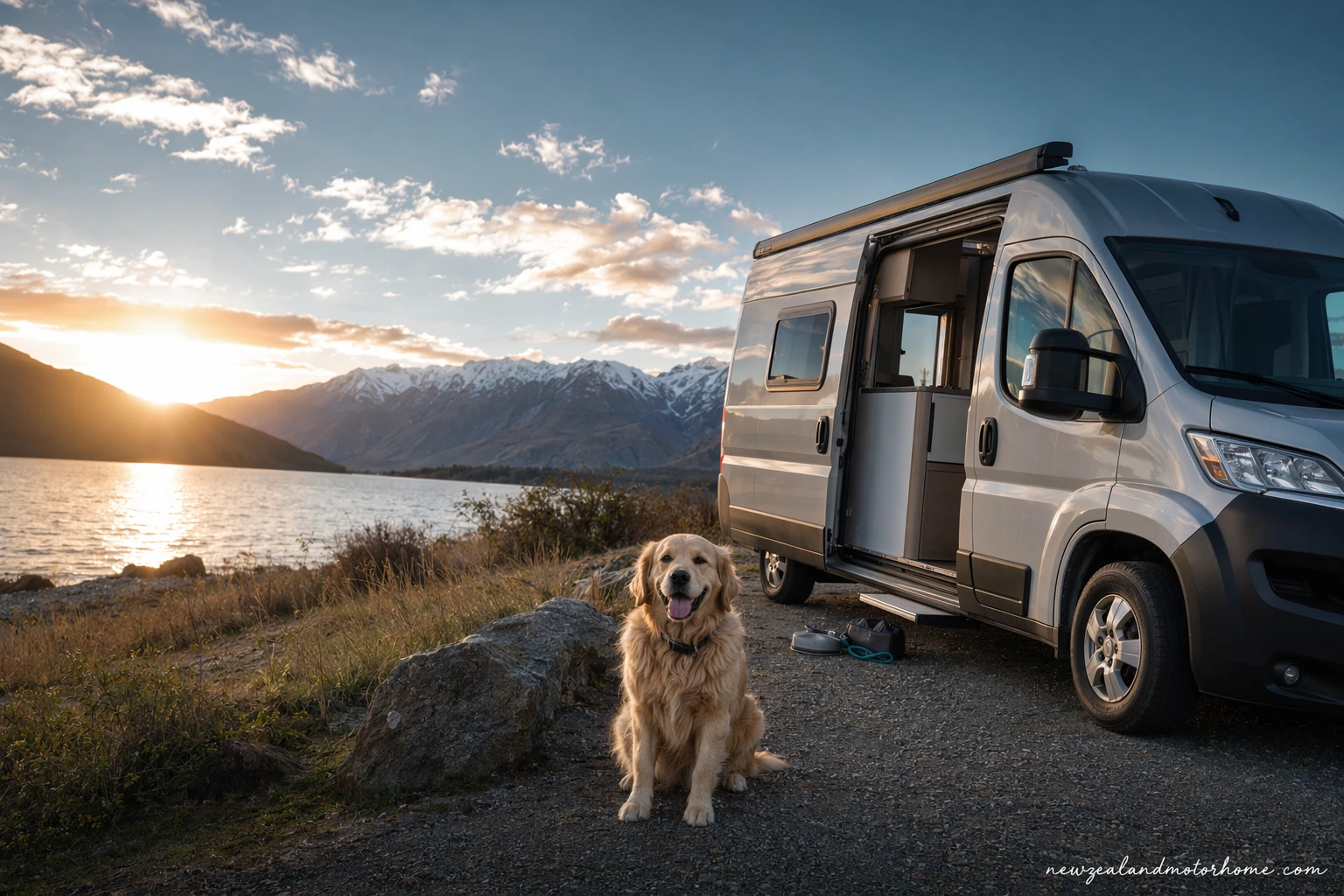
Pet friendly campervan hire NZ: planning a van trip with your pet
- Book pet approval before hire
- Check dog rules town by town
- Powered sites help in rough weather
- Self-containment still matters
- Allow shorter driving days
Pet friendly campervan hire NZ is not quite as simple as booking any van and clipping on the dog lead. You are choosing a small moving home, so the rules around cleaning, restraints, overnight parking, heat, beaches, national parks and freedom camping all matter before you point the bonnet out of the depot.
This guide is written for self-drive travellers sleeping in their hired campervan or motorhome with a pet on board. We will walk through how to choose the right van, where you can realistically stay overnight, how to handle water, dump stations and powered sites, and how to shape a route that gives your pet proper breaks without making every day feel like a logistics exercise.
How pet-friendly campervan hire works in practice
A pet-friendly campervan is still a normal hired vehicle, but with extra approval from the rental operator. You will usually need to declare the pet when booking, follow the vehicle cleaning rules, keep pets off bedding and upholstery unless protective covers are allowed, and return the van without hair, mud or odour build-up.
For dogs, think about the van layout before you think about the route. A compact two-berth can work for one calm dog and two tidy adults, but a larger motorhome gives more floor space for a bed, water bowl and wet-weather gear. Check the entry height too: older dogs may struggle with high steps, especially after beach walks or long driving days.
- Ask whether your pet is approved before paying for the hire.
- Confirm where the pet may sleep inside the campervan.
- Pack a washable mat, towel, lead, water bowl and familiar bedding.
- Use a harness, crate or secured space so your pet is not loose while driving.
- Do not rely on leaving a pet unattended in the van, especially in warm weather.
If you are travelling with a cat or more than one animal, get written approval early. Not every pet-friendly policy covers every pet, and the cleaning and damage expectations can be stricter than people expect.
Planning a route your pet can actually enjoy
The best pet-friendly campervan routes in New Zealand often avoid packing too many famous national park stops into one trip. Dogs are generally not allowed in national parks, including many tracks and campgrounds, so a route that looks perfect on a map can become awkward once you arrive with a lead in your hand.
Coastal regions, rural backroads, river towns and dog-friendly beaches can be easier to manage than alpine walking hubs. Always check local council beach rules, because summer restrictions, wildlife nesting areas and time-of-day bans vary from place to place. A good pet itinerary has shorter driving legs, shaded lunch stops, and overnight parks that confirm pets before you arrive.
- Build in two or three short leg-stretch stops on longer driving days.
- Check whether beaches allow dogs off-lead, on-lead, or not at all.
- Avoid assuming DOC land is pet-friendly; many conservation areas have strict rules.
- Choose towns with easy supermarket, vet, fuel, LPG and fresh-water access.
- Keep at least one flexible night in case weather or pet fatigue changes the plan.
If you want help matching a pet-friendly route to the size of your van and the season, you can use our talk-to-us step and tell us about your pet, travel dates and preferred island.
Where to stay overnight with a pet in the van
Your overnight options are narrower with a pet, so do not leave every stop to chance. Some holiday parks welcome dogs at the manager's discretion, some allow pets only outside peak holiday periods, and some do not allow them at all. A quick confirmation before you arrive can save a tired evening of ringing around from a supermarket car park.
Powered sites are useful if you need to run the fridge reliably, charge devices, use a heater in cooler months, or keep the van comfortable while you are inside with your pet. Unpowered sites can be fine in settled weather if your house battery is healthy and you are not trying to run everything at once. Either way, park with shade in mind and avoid sites where your lead, awning or door will intrude into the neighbouring pitch.
- Book pet-friendly holiday parks ahead for weekends and school holidays.
- Ask whether dogs must stay on-lead within the campground.
- Choose a site away from playgrounds, busy kitchens and rubbish areas if your dog is reactive.
- Use dump stations during the day rather than arriving late with full tanks.
- Fill fresh water before heading to smaller rural camping spots.
Freedom camping needs extra care. Your campervan must meet the local requirements for certified self-containment where those rules apply, and pets do not override local bylaws. Even at a legal freedom camping area, keep noise down, pick up waste immediately and never let a dog roam around other vans.
Daily van routines: water, waste, food and heat
Pet-friendly motorhome travel works best when the boring jobs are done early. Top up fresh water before you run low, empty grey and toilet waste at marked dump stations, and keep pet food sealed so the van does not smell like dinner every time you open a cupboard. A tidy van is not just nicer to live in; it is easier to return clean at the end of hire.
Heat is the big safety issue. A campervan can warm quickly when parked in the sun, even on a mild day. Plan walks for morning or late afternoon in summer, park nose-out where you can leave easily, use shade when available, and do not leave your pet shut inside while you go into a café, thermal pool or supermarket.
- Carry more drinking water than you think your pet will need.
- Keep a towel by the sliding door or habitation door for wet paws.
- Use campground taps for filling your tank only where permitted.
- Check LPG levels before colder nights if you rely on gas heating or cooking.
- Bag and bin pet waste properly; do not put it in the campervan toilet.
On rainy days, choose overnight stops with practical facilities rather than the prettiest view. A powered site, laundry, covered cooking area and an easy grass verge for quick toilet breaks can make a wet evening with a dog far more relaxed.
Road notes for driving a campervan with pets
New Zealand roads can be winding, narrow and slower than the distance suggests, especially around coastal hills, alpine passes and rural peninsulas. In a larger motorhome, allow extra time for pulling over safely, opening the side door, clipping the lead on and giving your pet a proper break without rushing back into traffic.
Use rest areas, town reserves and beach car parks carefully. Park the van where you can drive out forwards if possible, avoid soft sand and grass after rain, and watch for low branches if you are in a high-roof camper. In busy towns, a longer vehicle may need the far end of a public car park rather than the tight spaces near the shops.
- Secure pets before every drive, even short hops between campsites and beaches.
- Keep water handy in the cab or just behind the seats.
- Plan stops before steep or winding sections if your pet gets travel sick.
- Check gravel-road conditions with the hire operator before taking the van off sealed roads.
- Leave room behind the van to open doors safely at rest stops.
If you are crossing between islands, check ferry pet rules before booking and make sure your van length and height are correct for the sailing. Pet arrangements can differ by vessel and season, so do not assume you can manage it on the day.
Common questions
Can I hire a campervan in New Zealand with my dog?
Yes, but only with a rental operator and vehicle that specifically allow pets. Declare your dog before booking, follow the cleaning rules, and confirm whether there are limits on size, number of pets or where the dog can sleep inside the van.
Can I freedom camp with a pet in NZ?
Sometimes, but you must follow the same freedom camping rules as everyone else, including certified self-containment requirements where they apply. You also need to check local bylaws and keep your pet controlled, quiet and away from other campers.
Are dogs allowed in New Zealand national parks?
Generally, dogs are not allowed in national parks, including many tracks and campgrounds. There are limited exceptions, but you should check the exact place before building a route around it.
Should I choose a powered site when travelling with a pet?
A powered site is often easier, especially in hot, cold or wet weather. It helps with charging, refrigeration, heating where suitable, and spending a comfortable evening inside the motorhome with your pet.
What should I pack for a pet-friendly campervan trip?
Bring a secure harness or crate, bedding, towels, food, bowls, lead, waste bags, medication and vaccination details. A small brush and extra old towels are useful for keeping hair, sand and mud under control inside the van.
Have a planner shape this for your dates
Send a short outline — your dates, party size, and the kind of trip you want. A planner replies with a vehicle recommendation, a paced route, and the realistic budget.