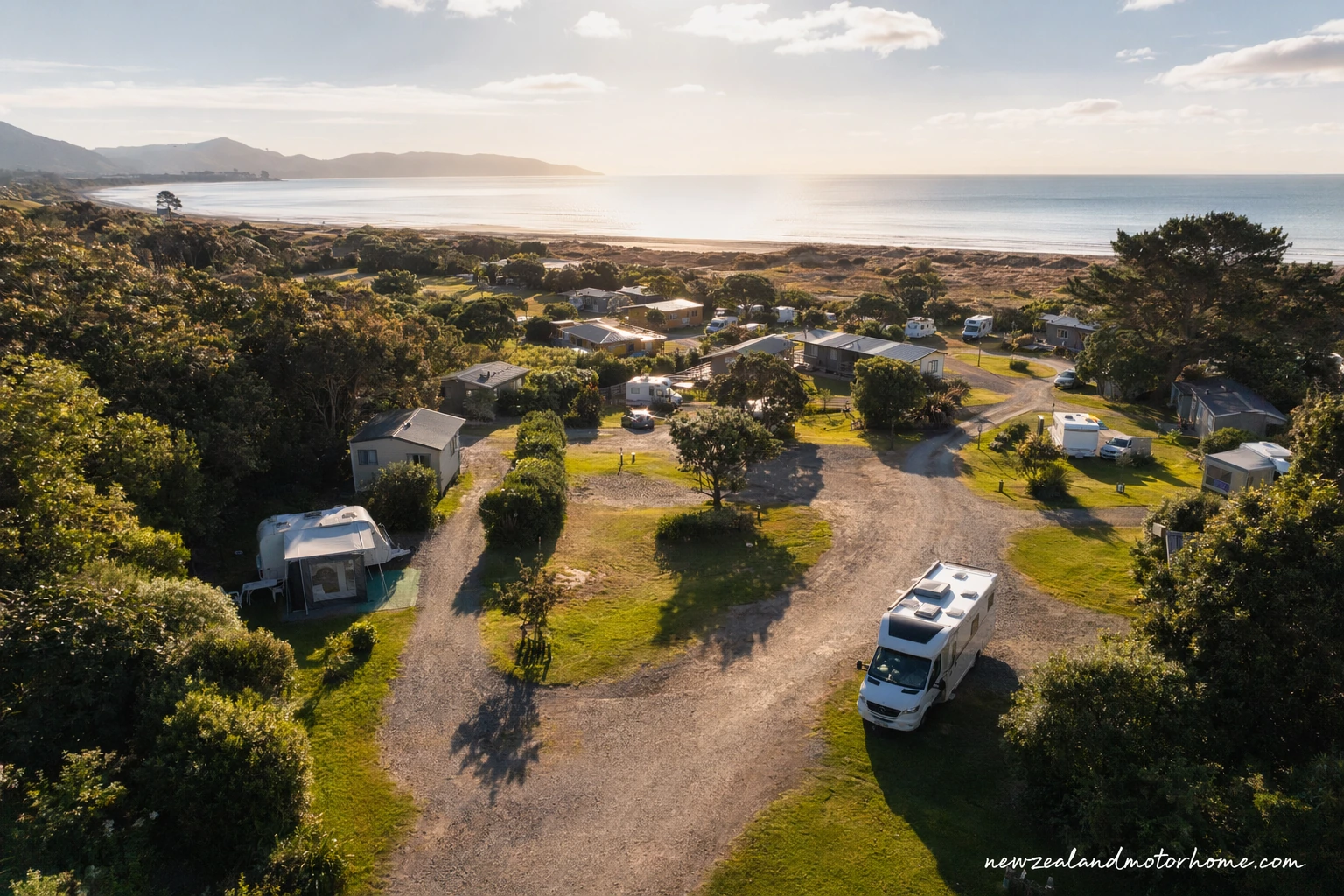
- Site type: powered and unpowered
- Best for: NZ campervan holiday planning
- Peak booking: summer and school holidays
- Van note: check length, height and turning room
- Facilities: dump station, fresh water and LPG
In New Zealand, where you sleep in the van matters almost as much as where you drive it. A good overnight stop can mean a level bay, a quiet night, hot showers, fresh water in the tank and a sensible place to empty the cassette before the next long road.
This guide is for self-drive campervan and motorhome travellers weighing up powered vs unpowered campervan sites NZ wide. You’ll learn what each site type actually gives you, when a holiday park is worth booking, how self-contained rules affect your choices, and what to check before you roll into a campsite with a taller or longer van.
What a powered campervan site gives you
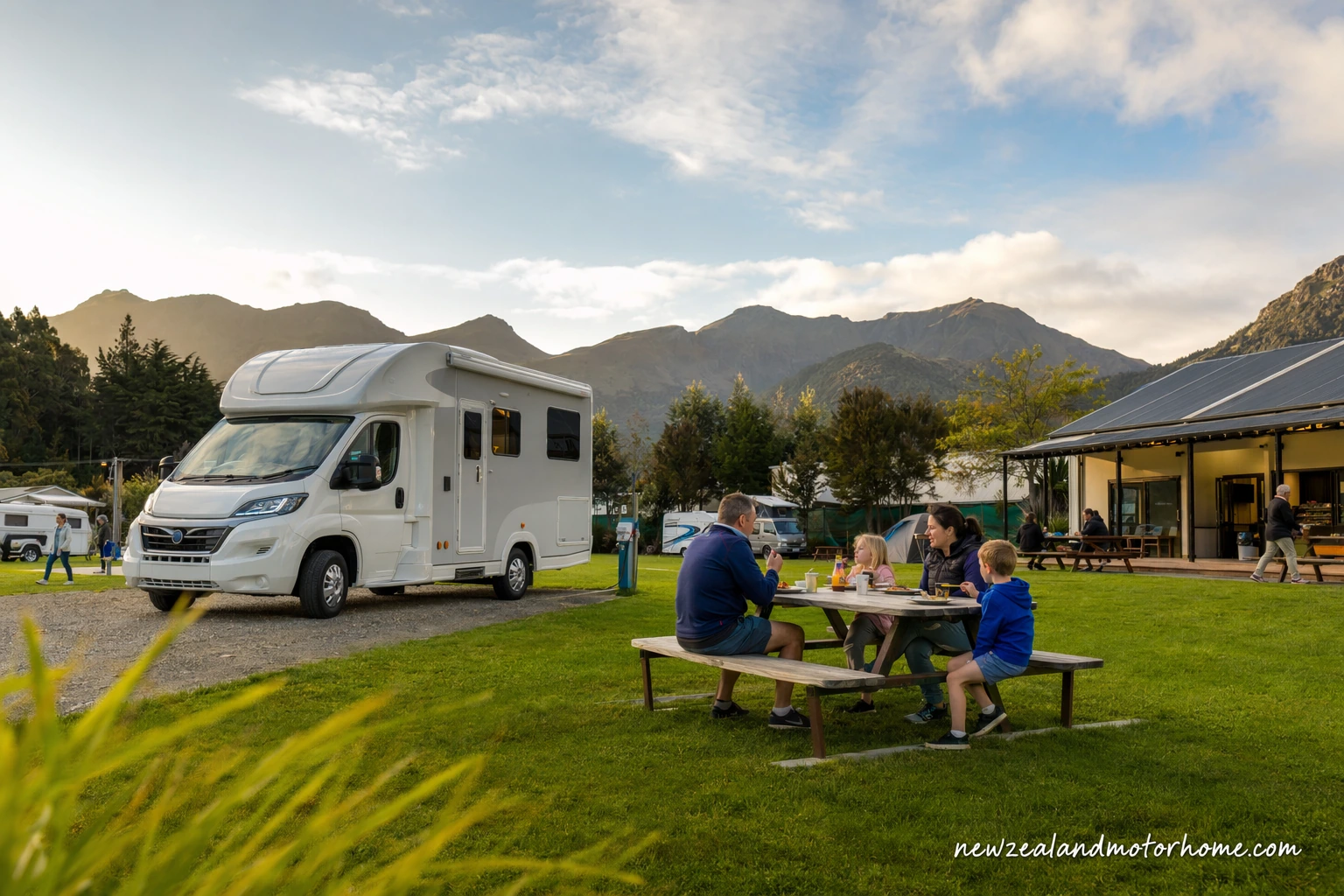
A powered site is the classic holiday park bay: you park the van on a marked grass, gravel or hardstand area and plug into a 230V power pedestal using the approved campervan lead supplied with your hire vehicle. It is the easiest option if you want to run the house battery charger, use built-in heating, keep devices topped up, and reduce battery anxiety after a string of cloudy driving days.
Powered sites are especially handy when you are travelling in shoulder season, staying two nights in one place, or using a larger motorhome with a fridge, water pump, lights and heater all drawing from the habitation battery. They also tend to put you close to shared facilities, although the best bays for views or privacy are not always powered.
- Choose powered if you need reliable heating, CPAP or medical-device charging, laptop charging, or battery recovery.
- Ask for a level bay if your van has a three-way fridge or if you are not carrying levelling ramps.
- Check lead reach before you settle in; do not run a power lead across a vehicle lane.
- Unplug and stow the lead before moving the van, even for a quick dump station run.
When an unpowered site is the better fit
Unpowered sites are usually cheaper, simpler and sometimes nicer for campervan travellers who are set up to be off-grid for a night or two. You still park inside the holiday park or campground, but you do not connect to mains power. You will normally use your van’s house battery, LPG for cooking or hot water, and your onboard fresh-water and grey-water tanks.
They can be a good choice after a decent driving day, because the alternator or solar may have topped up the battery while you were on the road. They are also useful in scenic campgrounds where the powered area is small, busy or tucked near the amenities block rather than beside the beach, lake or native bush.
- Check your battery monitor before committing to two unpowered nights in a row.
- Use LPG for cooking and hot water where your van allows it, rather than draining the battery.
- Arrive before dark so you can choose a level spot without blocking another camper’s awning space.
- Keep grey water contained; unpowered does not mean informal camping on the grass verge.
Holiday parks, DOC campsites and freedom camping
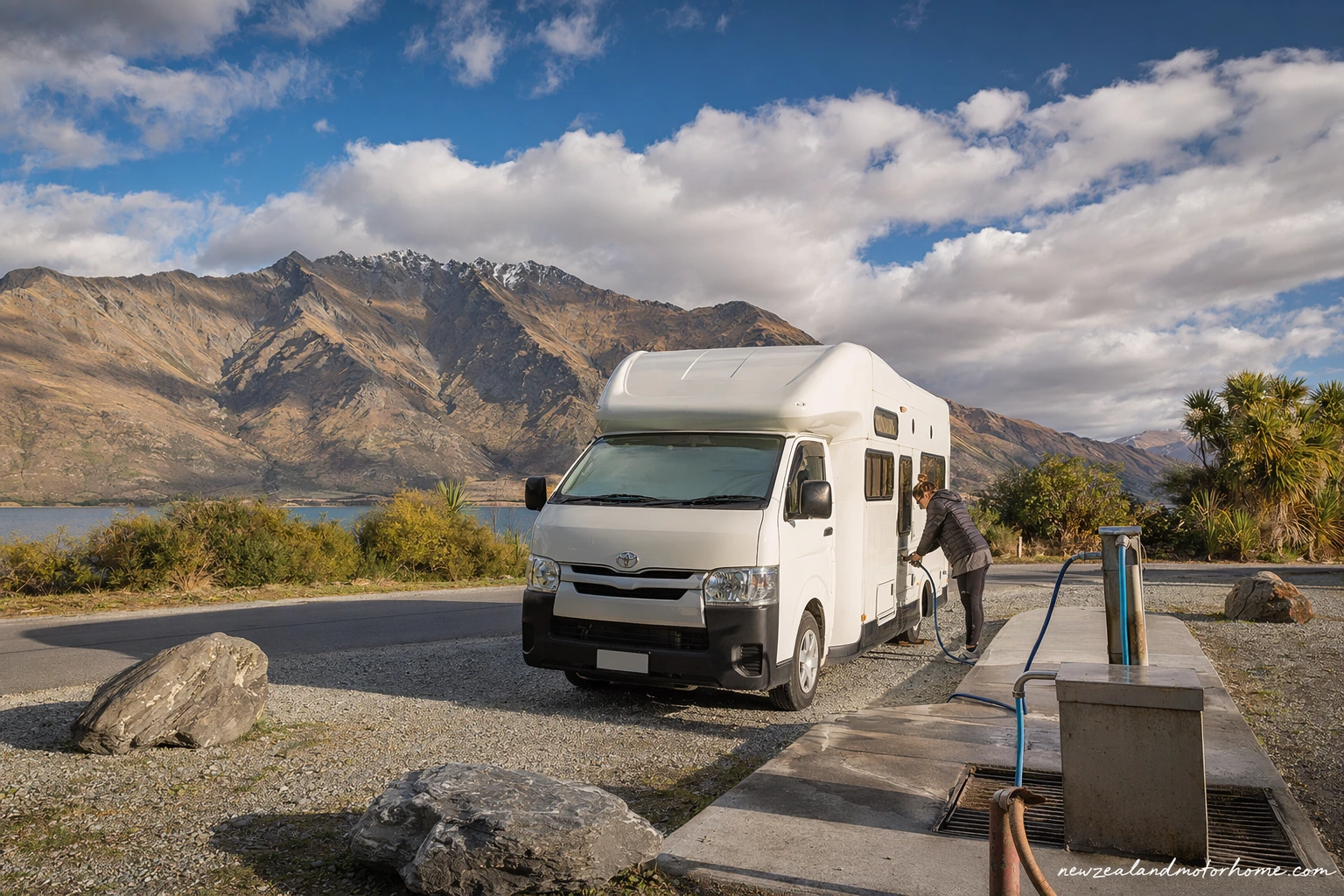
New Zealand overnight stops range from full-service holiday parks to basic conservation campsites and tightly controlled freedom camping areas. Holiday parks are the most predictable for hired campervans: you can usually book ahead, park on a marked site, use showers and kitchens, fill fresh water, and often empty the toilet cassette or grey water at an on-site dump station.
DOC and council campgrounds vary widely. Some have beautiful settings but no power, limited turning room, gravel access, long-drop toilets, or no dump station. Before taking a larger motorhome in, check whether the access road is sealed, whether there are low branches, and whether there is enough room to turn without reversing through tent sites.
Freedom camping is not a fallback for every spare patch beside the road. Many councils allow it only in signed areas, often only for certified self-contained vehicles, and some places exclude overnight parking entirely. Your hire van’s self-containment certificate must match the current rules, and you still need to carry your waste to an approved dump station.
Dump stations, fresh water and LPG: plan the practical loop
A smooth campervan trip has a rhythm: drive, park, sleep, refill, empty, repeat. When choosing between powered and unpowered sites, look beyond the plug. A park with a dump station, potable water tap and easy exit can save you a detour the next morning, especially before a remote section of coast or alpine road.
Not every water tap is drinking water, and not every dump station suits every vehicle. Park so the grey-water outlet and cassette hatch are on the right side for the facility, keep the hose clear of fresh-water fittings, and never rinse a toilet cassette at a drinking-water tap. If you are travelling with children or staying off-grid, refill fresh water before it is urgent.
- Use holiday park dump points when staying there, and public dump stations when passing through towns.
- Top up LPG before heading into quieter regions; swap/refill availability can thin out away from main centres.
- Carry a torch for evening dump station visits, but avoid emptying late at night near sleeping sites.
- Leave the bay tidy: no food scraps, hose drips or grey-water puddles on the grass.
Booking powered sites in peak season
From late December through January, long weekends, school holidays and major regional events, powered campervan sites can book out in the places travellers most want to linger: beach towns, lakeside settlements, national park gateways and ferry-route stopovers. If your van needs mains power every night, do not leave those stops to chance.
For peak travel, it often works best to lock in the first and last nights of the hire, ferry-adjacent nights if you are crossing Cook Strait, and any small towns with limited park capacity. Between those anchors, you can stay more flexible by mixing unpowered holiday park nights, DOC-style campgrounds and self-contained-approved stops where permitted.
If you are unsure how tightly to book, map the practical overnight chain before you commit. Our plan-your-trip step can help you think through driving distances, site types and where a powered night is genuinely useful rather than just nice to have.
How to choose the right site for your van
The best site is the one that suits your vehicle, your battery level and the next morning’s drive. A compact campervan may fit into smaller unpowered bays or basic campgrounds; a long motorhome needs more turning room, a firmer surface after rain, and careful attention to low trees, tight entrances and steep internal roads.
When you arrive, do a slow lap if the park layout allows it. Look for a level bay, safe awning space, no overhanging branches near roof vents or solar panels, and a sensible path to the amenities block. In wet weather, a gravel or hardstand powered site can be far better than a pretty grass site that becomes soft under the rear wheels.
- Travelling every day: unpowered may be fine if driving keeps the battery charged.
- Staying put for two or more nights: powered is usually easier and more comfortable.
- Remote next day: prioritise dump station, fresh water and LPG access before scenery.
- Large motorhome: ask about bay length, turning space and access road height before booking.
Common questions
Do I need a powered site every night in a hired campervan?
Usually not, if your van has a healthy house battery, LPG and you are driving most days. Plan a powered night every few days, or sooner in cold weather, after heavy device use, or if you rely on mains-powered equipment.
Can I plug my campervan into any normal power socket?
No. Use only the approved campervan power lead and designated holiday park power pedestal. Domestic extension leads and improvised connections are unsafe and should not be used with a hire campervan.
Are unpowered sites the same as freedom camping?
No. An unpowered site is still a paid or allocated campsite inside a holiday park or campground. Freedom camping is overnight parking outside a formal campground and is controlled by local rules, signage and self-containment requirements.
What does certified self-contained mean for overnight stops?
It means the vehicle is certified to manage toilet waste, grey water and rubbish for a set period without relying on public facilities. Many freedom camping areas require current certification, but it does not give permission to stay anywhere you like.
Should I book powered campervan sites before arriving in New Zealand?
For summer, school holidays, ferry stopovers and popular lake or beach towns, yes. Outside peak periods you can often be more flexible, but it is still wise to book your first night and any must-stay locations.
Can a large motorhome use DOC or basic campgrounds?
Sometimes, but check access carefully. Narrow gravel roads, low branches, soft grass and limited turning circles can make a basic campground awkward for a longer or taller motorhome.
Have a planner shape this for your dates
Send a short outline — your dates, party size, and the kind of trip you want. A planner replies with a vehicle recommendation, a paced route, and the realistic budget.