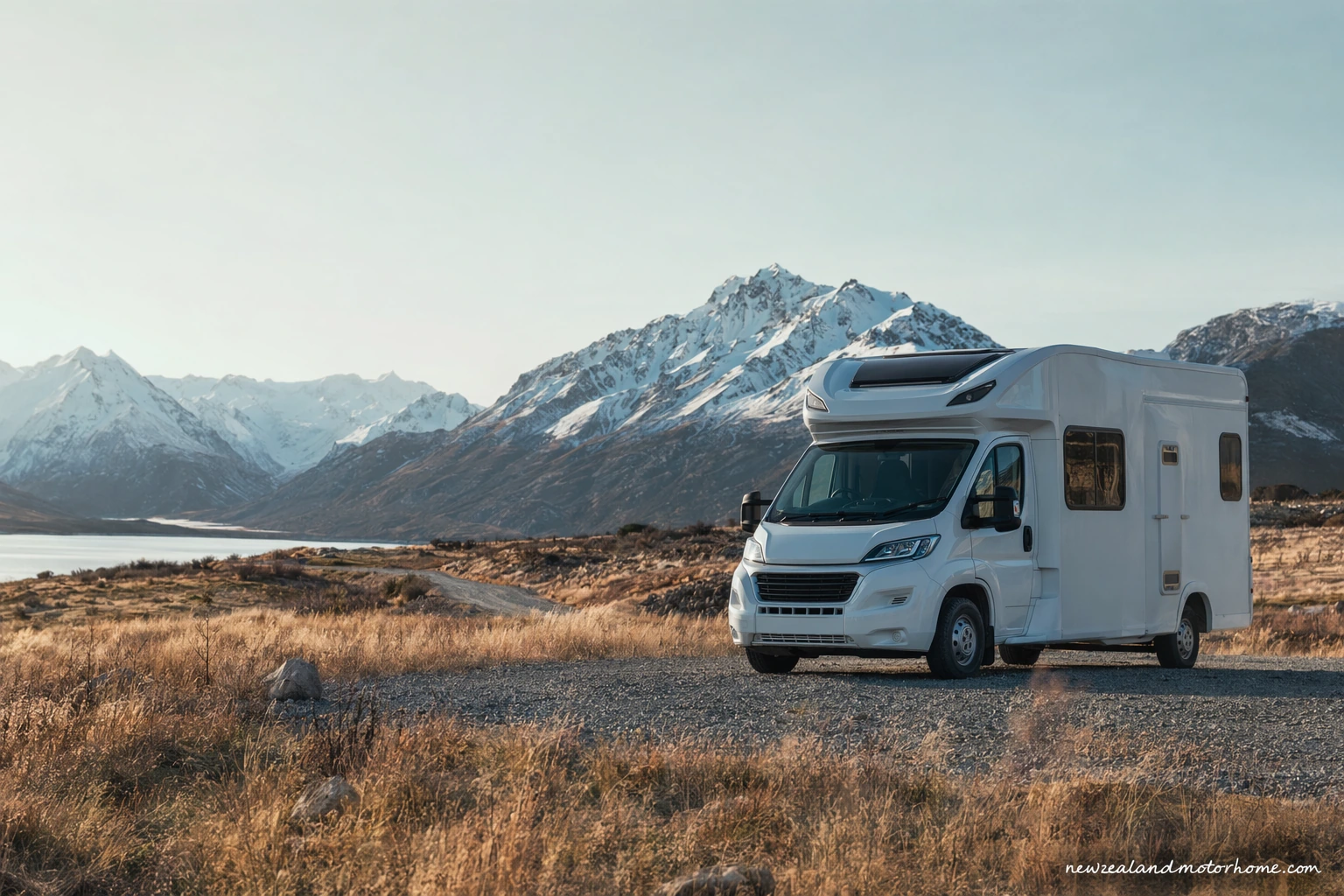
Self contained campervan hire NZ: how it works on the road
- Best for flexible self-drive touring
- Certified self-contained status required for many freedom spots
- Powered reset every few nights is sensible
- Check van height and length before booking sites
- Plan dump, water and LPG stops early
Self contained campervan hire NZ is for travellers who want the freedom of sleeping in their own van without guessing where the next toilet, water tap or legal overnight stop will be. A certified self-contained campervan gives you more options than a basic sleeper, especially on longer South Island loops, remote coast roads and shoulder-season trips when facilities can be spaced out.
This page explains what “self-contained” means in practical touring terms: the van equipment to check, how to use holiday parks and freedom camping areas sensibly, and how to plan dump stations, fresh-water fills, LPG and power before you roll into a small town at dusk.
What a self-contained campervan actually needs
A self-contained campervan is set up so you can wash, cook, use the toilet and store waste without relying on public facilities every few hours. For hire vehicles in New Zealand, the important point is not just the layout inside the van, but whether it has current NZ self-containment certification and displays the required evidence for the areas you want to stay in.
Before you book, look beyond the photos of the bed. Ask what is fixed into the vehicle, how waste is stored, and where the certification is shown. Rules and council bylaws can be stricter in popular places, so a “toilet on board” is not always the same as being accepted at a designated self-contained overnight area.
- Check for current certified self-contained status, not just a portable toilet in the cupboard.
- Confirm fresh-water and grey-water tank sizes, especially for two travellers on multi-night stretches.
- Ask whether the toilet is cassette-style and where the cassette is stored and emptied.
- Check battery set-up, solar, fridge type and how long you can reasonably stay unpowered.
- Make sure bedding, cooking gear, hose, power lead and levelling chocks are included or available.
Where you can sleep: holiday parks, DOC sites and freedom camping
Self-contained status gives you more overnight options, but it does not mean you can park anywhere. New Zealand overnight rules are a mix of national parks, council bylaws, local signs, private land and holiday park conditions. In practice, most campervan trips work best with a blend of booked powered sites, simple unpowered sites and the occasional designated freedom camping spot.
Holiday parks are useful reset stops. You can plug into power, fill fresh water, empty waste, use laundry facilities and take a longer shower without worrying about tank levels. DOC and council campsites are often more scenic and quieter, but facilities vary from full toilets and water taps to little more than a gravel bay and a view.
- Use powered sites every few nights if your van has a small house battery or you are using heating, laptops or camera chargers.
- Choose unpowered sites when your battery, solar and fridge set-up can comfortably handle the night.
- Read signs at freedom camping areas on arrival; some allow only certified self-contained vehicles and may limit length of stay.
- Arrive before dark in smaller towns so you can park neatly and avoid squeezing a van into unsuitable roadside spaces.
Planning water, waste, LPG and power days
The rhythm of a self-contained campervan trip is shaped by tanks and batteries. Fresh water runs down, grey water fills up, the toilet cassette needs emptying, and LPG may power your cooking, hot water or heating depending on the van. None of this is difficult, but it is much easier when you build service stops into the day rather than treating them as an emergency.
Dump stations are found at many holiday parks, some service stations, council facilities and transport hubs, but not every town has one that suits every vehicle. Use designated dump stations only, rinse carefully, and leave the area tidy for the next van. Fresh water taps are not always beside the dump point, so keep the hose accessible and know which tank you are filling.
- Top up fresh water before heading into rural coast roads, national park edges or alpine passes.
- Empty grey water and toilet cassette before they are full; it is calmer and cleaner that way.
- Check LPG bottle level before cold inland nights or longer sections without major towns.
- Carry your power lead where it is easy to reach, not buried under the bed platform.
- Do a quick tank-and-battery check before leaving each overnight stop.
Choosing the right van size for NZ roads
New Zealand roads reward a van that suits your confidence as much as your luggage. A compact certified self-contained camper is easier in supermarket car parks, narrow coastal lay-bys and older holiday park lanes. A larger motorhome gives you more standing room, a bigger bed and often a more comfortable bathroom, but you will notice its length on tight gravel campsite access roads and winding passes.
Think about where you want to park the van each day, not only where you will sleep. Town centres, lakefront car parks and scenic lookouts can have height barriers, short bays or signs excluding overnight parking. If you are travelling in a longer motorhome, plan earlier stops and avoid leaving dinner shopping until you are trying to reverse into a busy supermarket at 5 pm.
- Check vehicle length, width and height before booking ferry crossings, holiday park sites or covered parking.
- Allow extra time on winding roads such as alpine passes, lake roads and rainforest sections.
- Use pull-over bays to let local traffic pass when safe; it makes the drive better for everyone.
- Avoid unsealed side roads unless your hire conditions allow them and the weather is settled.
A simple way to plan a self-contained campervan route
Start with the nights, not the kilometres. Mark where you will need a powered reset, where freedom camping is genuinely allowed, and where dump stations and fresh-water fills sit along the route. Then build your driving days around daylight, food stops and places where a campervan can park without fuss.
For a first NZ motorhome holiday, it is usually better to move less and service the van well than to chase every viewpoint. Two-night stays at lake towns, coastal villages or national park gateways let you use the van properly: awning out if conditions allow, chairs on firm ground, tanks managed, and no late scramble for a legal overnight spot.
If you want help matching a certified van style to the route you have in mind, you can talk to us and we will help you shape the driving days around real campervan practicalities.
- Book popular holiday parks ahead for summer, school holidays and long weekends.
- Keep one flexible night in quieter seasons so you can respond to weather or road conditions.
- Plan dump and fresh-water stops before remote scenic sections, not after them.
- Save campsite confirmations offline, as mobile coverage can fade quickly outside main towns.
Common questions
Does self-contained mean I can freedom camp anywhere in New Zealand?
No. Certified self-contained status only helps you use places where self-contained vehicles are allowed. Always check local signs, council rules and any time limits before settling in for the night.
Do I still need holiday parks if I hire a self-contained campervan?
Usually, yes. Holiday parks are the easiest places to recharge on power, fill fresh water, empty waste, use laundry facilities and reset after a few unpowered nights. Many travellers mix holiday parks with DOC sites and designated freedom camping areas.
How often will I need to empty the toilet cassette and grey-water tank?
It depends on the van, the number of travellers and how much you cook and shower onboard. As a practical rule, check levels daily and empty at designated dump stations before anything is close to full.
Is a smaller self-contained campervan better than a larger motorhome?
A smaller van is easier to park and drive on narrow roads, while a larger motorhome gives more living space, storage and bathroom comfort. Choose based on your route, confidence with larger vehicles and how many nights you expect to spend unpowered.
What should I check before picking up a self-contained hire campervan?
Check the self-containment certification, tank gauges, toilet operation, LPG set-up, power lead, water hose and where the dump gear is stored. Before leaving the depot, make sure you know how to switch between battery, mains power and gas safely.
Have a planner shape this for your dates
Send a short outline — your dates, party size, and the kind of trip you want. A planner replies with a vehicle recommendation, a paced route, and the realistic budget.