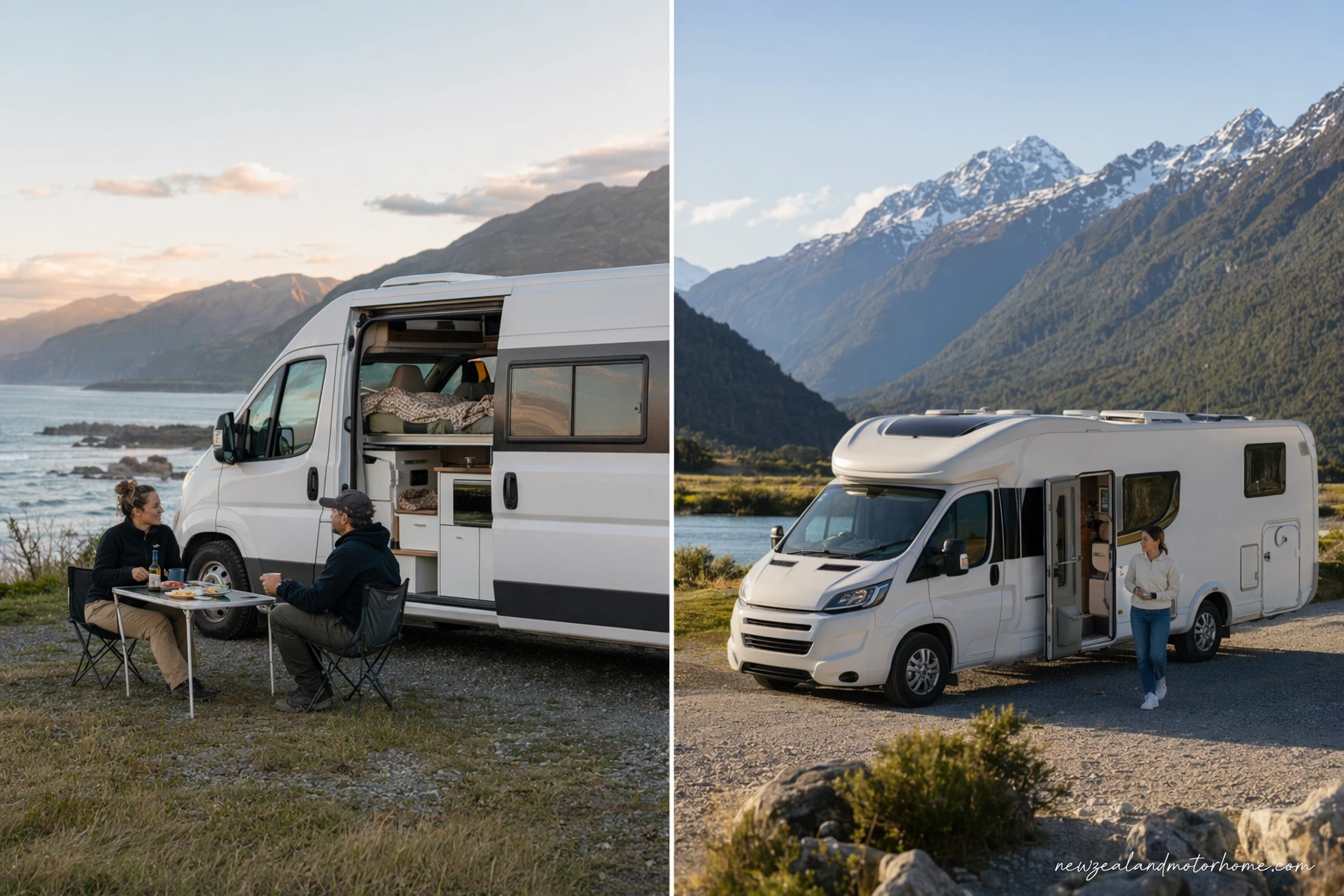
- Self-contained opens more overnight options
- Non self-contained needs toilet access
- Powered sites still useful
- Check green certification warrant
- Dump stations are part of the route
Choosing between a self contained and a non self contained campervan changes how you travel in New Zealand. It affects where you can legally sleep in the van, how often you need a holiday park, how you manage toilets and wastewater, and whether a quiet lakeside stop is realistic or only a daytime picnic spot.
This comparison is written for self-drive campervan travellers, not people hopping between motels. We’ll look at the real trade-offs: freedom camping eligibility, powered and unpowered sites, dump stations, fresh-water fills, LPG, vehicle size, comfort, and the kind of itinerary each van suits best.
The short answer: what “self contained” really changes
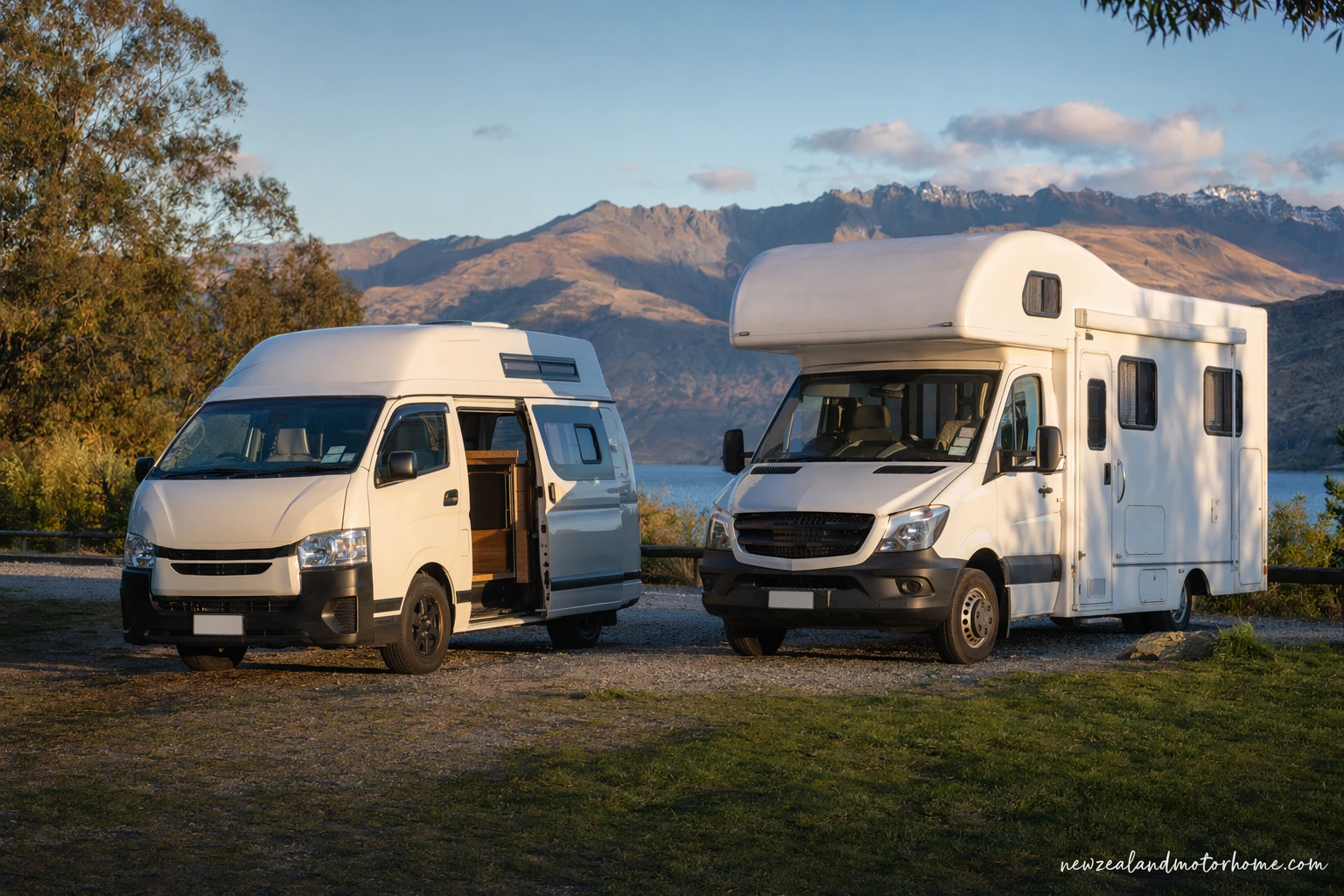
In New Zealand, a certified self-contained campervan is built to hold its own fresh water and wastewater, and to provide an onboard toilet setup that meets the current certification rules. For practical trip planning, that little green self-containment warrant is what opens up many overnight stops that are closed to non self-contained vans.
A non self-contained campervan can still be a good choice, especially for travellers who prefer holiday parks, cabins-and-campsite facilities, or short hops between towns. But you should plan on sleeping only where toilets are provided and overnight camping is permitted for your vehicle type.
- Self contained: better for approved freedom camping areas, unpowered sites, remote DOC-style stops, and flexible arrival times.
- Non self-contained: better for holiday parks, simple low-cost travel where you are happy using shared facilities, and travellers who want a smaller, easier van.
- Both: still need legal overnight stops, careful waste disposal, and respect for local signs and council bylaws.
Parking and overnight rules: the biggest practical difference
Daytime parking is usually about the size of your van, the signs on the street, and whether you fit safely in the bay. Overnight parking is different. Many councils and conservation areas separate vehicles into certified self-contained and non self-contained categories, and the rules can change from one district to the next.
With a self-contained campervan, you may be eligible to stay in marked freedom camping areas that require certification, provided you obey the local time limits and any vehicle restrictions. With a non self-contained campervan, assume you need a campground, holiday park, or designated campsite with toilets unless the sign clearly says otherwise.
Do not rely on the absence of a sign as permission to sleep in the van. In popular places such as lakefront towns, beach reserves, ferry ports and small alpine settlements, overnight enforcement can be active. If you are unsure, choose a recognised campsite or check the local council guidance before settling in for the night.
Sites you can use: freedom camping, DOC campsites and holiday parks
A self-contained van gives you the widest mix of overnight options. You can use holiday parks when you want showers, laundry and a powered site, then switch to approved self-contained freedom camping areas or basic unpowered campsites when the route suits it. That flexibility is especially useful on longer drives where the best stop is not always beside a town.
A non self-contained van does not mean you are stuck, but your route needs more structure. You will usually be looking for holiday parks, private campgrounds, council camping grounds, or DOC campsites that provide toilets and allow non self-contained vehicles. Some basic campsites have toilets but no potable water, rubbish facilities or dump station, so read the site details before you arrive.
- Powered sites: useful for charging devices, running appliances, using heaters safely where fitted, and resetting your house battery.
- Unpowered sites: easier with a self-contained van that has a decent battery, water storage and fridge setup.
- Basic campsites: often scenic, but may have limited turning space for longer motorhomes and no fresh-water fill.
- Holiday parks: the easiest option for first-night settling, showers, laundry, kitchens, dump stations and LPG nearby.
Cost and comfort: where the trade-off really sits
A self-contained campervan can cost more to hire than a simpler non self-contained van, but it may reduce the number of paid campground nights you need. That saving is not automatic: you will still want powered sites now and then, and in busy regions you may choose holiday parks simply for convenience, showers or laundry.
Comfort is the other side of the equation. Having your own toilet and wastewater tanks means fewer midnight walks across a wet campground, fewer rushed morning departures, and more confidence on remote sections. The trade-off is maintenance: you must empty the toilet cassette correctly, use dump stations for grey water, top up fresh water, and keep an eye on tank levels.
Non self-contained vans are often smaller and simpler. They can be easier in tight supermarket carparks, narrow coastal roads and older campground lanes. But the comfort depends heavily on the facilities at each overnight stop, so your itinerary needs to line up with toilets, showers and drinking-water access.
Road and van-size considerations for NZ driving
The self-contained choice often comes with a larger vehicle: high-roof campervans, long-wheelbase vans or full motorhomes. That extra space is welcome once you are parked, but it matters on New Zealand roads. Expect narrow bridges, winding harbour roads, gravel access tracks to some campsites, and town carparks that were not designed for a long rear overhang.
Before booking, check the vehicle length, height and whether bikes, roof boxes or aerials add to the clearance. A van under a low carpark barrier is a bad way to start a South Island lap, and some scenic pull-offs are too short for longer motorhomes to park without blocking traffic.
- Use slow-vehicle bays when traffic builds behind you on hills.
- Avoid reversing into soft grass unless the ground is firm and level.
- Arrive at smaller campsites before dark so you can choose a sensible spot.
- Check whether a campsite access road is suitable after heavy rain, especially for heavier motorhomes.
Who should choose which campervan?
Choose a self-contained campervan if your trip includes remote lakes, quieter coastlines, early-morning hikes, or a mix of holiday parks and low-facility overnight stops. It is also the safer pick if you want flexibility during peak season, when the most convenient powered sites can book out but approved self-contained areas may still be part of your fallback plan.
Choose a non self-contained campervan if you are travelling a shorter route, sticking close to towns, or you actively prefer the facilities of holiday parks. It can also suit travellers who are nervous about handling a larger vehicle and would rather have a nimble van with a simple daily rhythm: drive, park, use campground facilities, sleep.
If you are building a route and not sure which option matches your driving days and overnight stops, you can talk to us before locking in the van type. The right answer often depends less on the vehicle brochure and more on where you actually want to park each night.
Common questions
Can I freedom camp in a non self-contained campervan in New Zealand?
Only in places that specifically allow non self-contained vehicles, usually where toilets are provided. Many freedom camping areas require certified self-containment, so do not assume a quiet carpark is legal for overnighting.
Does a self-contained campervan mean I can sleep anywhere?
No. Certification gives you access to more legal overnight options, but local bylaws, time limits, prohibited areas and conservation rules still apply. Always check the sign at the site and leave if the area is not clearly permitted.
How often will I need a dump station in a self-contained van?
It depends on tank size and how many people are travelling, but you should plan dump station stops into your route rather than waiting until tanks are full. Empty grey water and toilet cassettes only at approved dump stations, never into drains, bushes or public toilets unless the site explicitly allows it.
Is a powered site necessary if my campervan is self-contained?
Not every night, but powered sites are still useful. They help recharge house batteries, run fitted appliances safely, and make wet-weather downtime more comfortable, especially if you are using devices, heating or a fridge heavily.
Is a smaller non self-contained van easier on NZ roads?
Often, yes. A smaller van can be easier to park in town, turn around at busy lookouts, and manage on narrow coastal or hill roads. The trade-off is that you will rely more on campgrounds and public facilities for toilets, showers and water.
Have a planner shape this for your dates
Send a short outline — your dates, party size, and the kind of trip you want. A planner replies with a vehicle recommendation, a paced route, and the realistic budget.