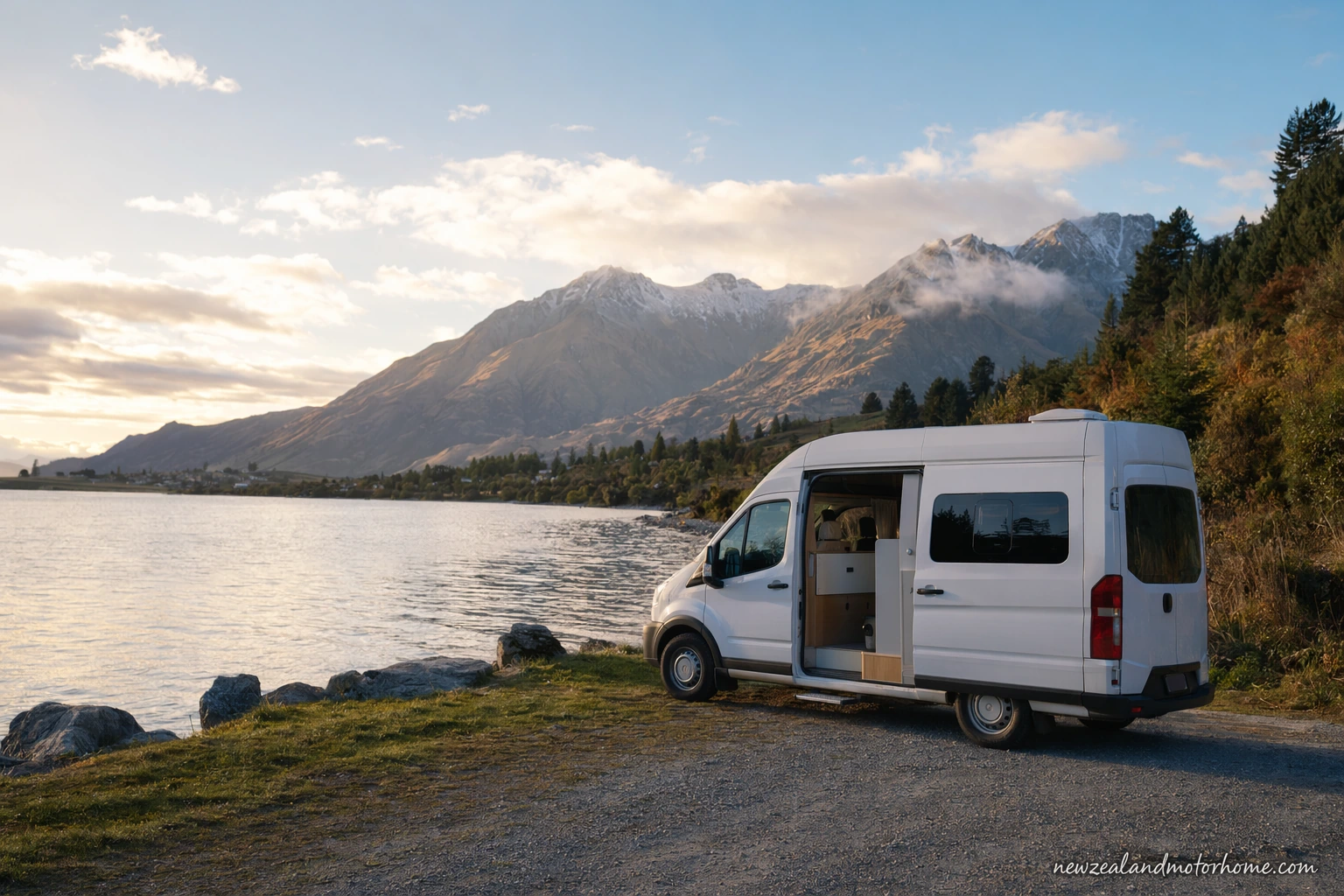
Planning a new zealand self drive both islands campervan trip
- Best with 15–21+ days
- Cook Strait ferry required
- Powered nights every few days
- Self-containment helps
- Watch van height and length
A new zealand self drive both islands trip is the classic campervan way to see the country: you collect your van, set your own pace, sleep where the road takes you, and link the North and South Islands by ferry across Cook Strait. It suits travellers who want beaches, geothermal country, harbours, alpine passes, lakes and wild coast roads in one journey without unpacking every night.
The trick is not to rush the map. Both islands are drivable in a hired campervan or motorhome, but New Zealand roads are slower than they look, ferries need planning, and good overnight stops make the difference between a smooth trip and a tiring one. This guide explains the van side of the journey: route flow, ferry logistics, powered sites, freedom camping, dump stations, fresh water, LPG and road notes for self-drive travellers.
How a both-islands campervan trip works
Most self-drive travellers either start in Auckland and finish in Christchurch or Queenstown, or do the trip in reverse. A one-way hire can save backtracking, especially if you have two to four weeks. A loop is possible too, but you will spend more days retracing main highways and need to allow extra time for the Cook Strait ferry twice.
The ferry between Wellington and Picton carries campervans and motorhomes, but you need to book the correct vehicle length and height. Allow time in Wellington before check-in, avoid arriving with an almost empty fuel tank, and make sure loose items inside the van are stowed before sailing. Gas bottles normally need to be turned off at the cylinder for the crossing, and you should follow the ferry operator’s instructions on the day.
- North to south: good if you want to warm into the trip with shorter North Island drives before the alpine and west coast roads.
- South to north: useful in peak season if you want to finish near Auckland flights, or if South Island campsite availability is easier at the start of your dates.
- One-way route: often the most relaxed for a first both-islands motorhome holiday.
- Return loop: works best with extra days and a careful plan around ferry times.
How many days to allow without rushing the van
For both islands, two weeks is the practical minimum for a highlights route, but it will be a moving trip rather than a slow one. Three weeks gives you room for rest days, weather shifts, laundry, dump station stops and the occasional road you decide to linger on. Four weeks or more lets the van do what it does best: stay an extra night beside a lake, detour to a quiet harbour, or wait out rain before tackling a scenic drive.
Plan driving days by time, not just kilometres. A 180-kilometre day through winding hills, roadworks or alpine country can feel longer than it looks on the map. In a larger motorhome, allow more time for pulling over, reversing into sites, refuelling, and taking corners steadily rather than trying to keep rental-car pace.
- 10–14 days: choose fewer regions and book key holiday park nights ahead.
- 15–21 days: a comfortable first both-islands plan with ferry buffer and rest days.
- 22–30+ days: ideal for slower driving, longer stays and more freedom camping options where permitted.
Overnight stops, powered sites and freedom camping
A balanced both-islands route usually mixes holiday parks, DOC-style conservation camps where suitable, and freedom camping only where it is legal for your vehicle. If your van has a current self-containment certification, you will have more overnight options, but every council area sets its own rules. Check signs on the ground and do not assume a beach car park, lakefront reserve or town centre parking area allows overnight stays.
Powered sites are useful every few nights for charging house batteries fully, running heaters or dehumidifying the van in damp weather, using campground kitchens and doing laundry. Unpowered sites are fine when your battery, solar, water and toilet capacity match the way you travel. In colder South Island locations, a powered night after a run of freedom camping can feel like a reset.
- Book powered sites ahead in summer, school holidays and around long weekends.
- Arrive at unbooked camps earlier in the afternoon, especially with a longer van.
- Use freedom camping as part of the plan, not as the whole plan.
- Keep a wet-weather fallback stop in mind if gravel access, wind or saturated grass becomes awkward.
Fresh water, dump stations, LPG and keeping the van sorted
Both-islands travel works best when van chores are built into the route rather than left until they become urgent. Empty the toilet cassette and grey water at approved dump stations only, refill fresh water from potable taps, and keep an eye on LPG if your van uses it for cooking, hot water or heating. Towns, holiday parks and some service areas have facilities, but remote stretches can leave you with fewer options than expected.
As a rhythm, many couples find every two or three days is a sensible interval for a full reset: dump, refill, charge, rubbish, laundry and groceries. Families or travellers using onboard showers may need to reset more often. Before longer stretches such as the West Coast, Northland peninsulas, the central plateau or alpine lake country, top up water and fuel in the larger town rather than hoping the next stop has what you need.
- Carry a drinking-water hose and know which filler is fresh water, not a rinse tap.
- Do not empty grey water into roadside drains or campground vegetation.
- Check LPG level before cold regions where heating is used more.
- Keep toilet chemicals, rubbish bags and a torch easy to reach for evening campsite jobs.
Road notes for driving a campervan across both islands
New Zealand rewards steady driving. Main highways are generally sealed, but many scenic routes are narrow, winding and shared with trucks, cyclists and local traffic. A campervan sits taller and wider than a car, so watch the mirrors, use slow-vehicle bays, and give yourself space on bridges, coastal bends and tight town streets.
On the North Island, expect busy approaches around Auckland, Wellington and popular holiday coastlines. In the South Island, weather can change quickly around alpine passes, exposed lakes, the West Coast and inland basins. Wind matters in a high-sided motorhome, and gravel side roads should be approached with caution, especially after rain or if your hire agreement restricts them.
- Check vehicle height before entering covered parking, supermarket basements or motel-style forecourts.
- Pull over only where the shoulder is firm and there is room to rejoin safely.
- Leave extra braking distance on descents and in wet weather.
- Ask your hire operator about snow chains and road restrictions if travelling in winter or early spring.
Shaping the route around the ferry and your travel style
The ferry should sit near the middle of the plan, not as an afterthought. Spend the night before within easy reach of Wellington or Picton rather than trying to race in from several hours away. If the crossing is delayed by weather, you will be glad you did not stack a long drive and a tight campsite check-in on the same day.
When we plan a both-islands campervan route, we look at your pickup city, drop-off city, vehicle size, comfort with winding roads, preferred site style and how often you want powered nights. If you want help turning the big map into a realistic day-by-day flow, you can use the talk-to-us step and share your dates, van type and must-see regions.
- Put at least one flexible night near the ferry side of the trip.
- Avoid planning your longest drive straight after the crossing.
- Keep city overnights simple: book a holiday park or approved site with easy van access.
- Let the South Island section breathe if mountains, lakes and the West Coast are your priorities.
Common questions
Can I take a hired campervan on the ferry between the islands?
Yes, campervans and motorhomes travel on the Cook Strait ferry between Wellington and Picton. Book using the correct vehicle length and height, and check your hire agreement for any ferry or insurance conditions before you lock it in.
Is two weeks enough for a new zealand self drive both islands trip?
Two weeks can work for a highlights route, especially with a one-way hire, but it will not feel slow. If you want rest days, freedom camping, weather buffers and less time watching the clock, three weeks is a better target.
Do I need a self-contained campervan for both islands?
You do not need one if you plan to stay only in holiday parks and campgrounds with facilities. A certified self-contained vehicle gives you more legal freedom camping options, but local bylaws still apply and signs on site always matter.
Should I book campsites before travelling both islands?
Book key powered sites in summer, school holidays, long weekends and in popular places such as Queenstown, Wānaka, Rotorua, Nelson and coastal holiday towns. Outside peak periods, you can often keep some flexibility, but it is still wise to plan where you will stop each night.
What size motorhome is best for driving both islands?
A compact campervan is easier in towns, ferry queues and winding scenic roads. A larger motorhome gives more living space and storage, but you need to be more careful with height, length, turning room and where you park overnight.
How often will I need dump stations and fresh water?
Most travellers should plan a full van reset every two or three days, or more often if using the onboard shower and toilet heavily. Empty waste only at approved dump stations and refill from potable water taps, not rinse hoses.
Have a planner shape this for your dates
Send a short outline — your dates, party size, and the kind of trip you want. A planner replies with a vehicle recommendation, a paced route, and the realistic budget.