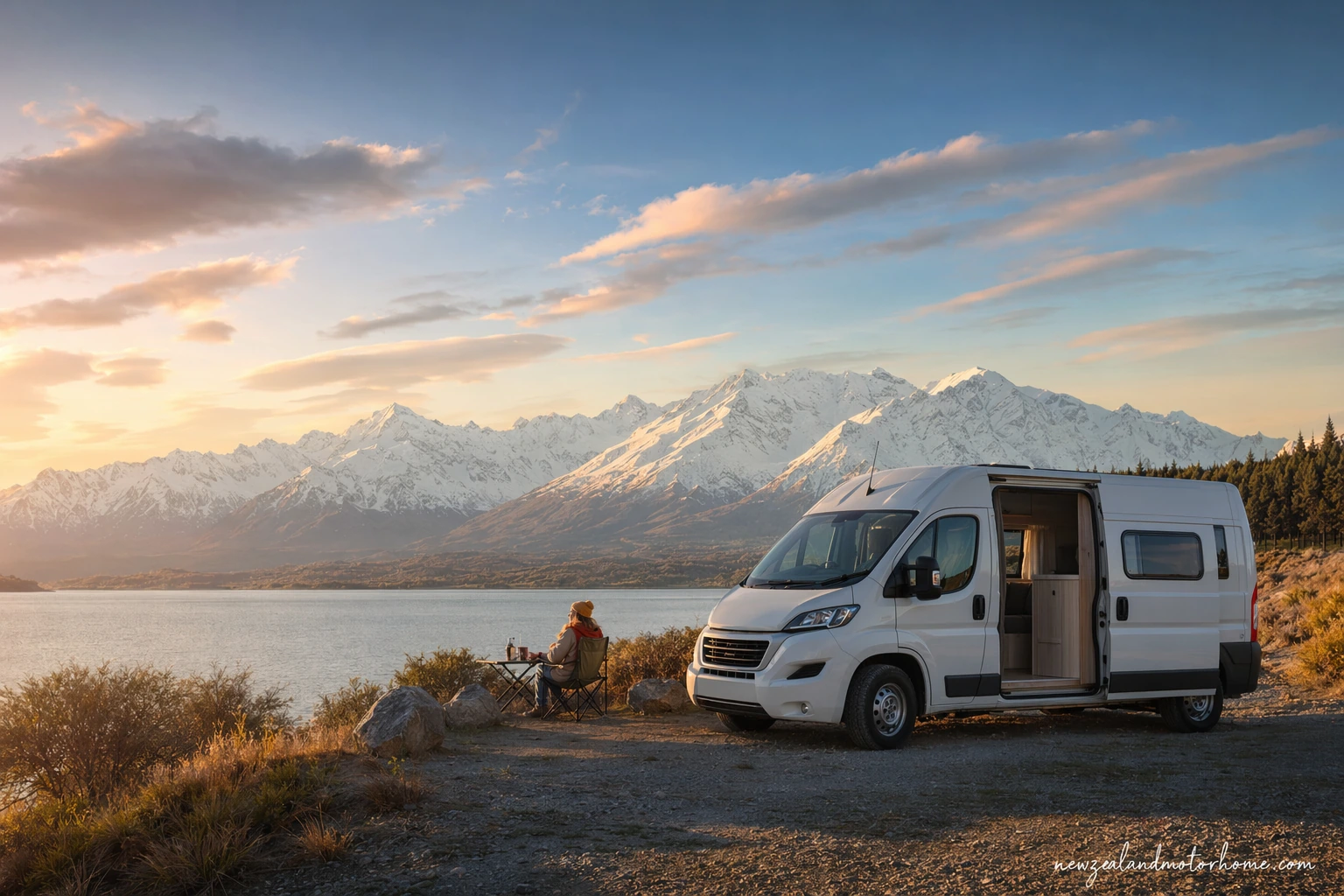
Your ski campervan holiday New Zealand, planned for snow and warm van nights
- Best season: June to September
- Allow 10 to 14 days
- Powered sites strongly recommended
- Chains and winter road checks needed
- Best with certified self-contained vans
A winter trip by campervan is a different kind of ski holiday: you wake close to the mountains, dry your gear beside a powered site, and keep the whole route flexible enough to follow the best weather window. This package shape is for self-drive travellers hiring a certified self-contained campervan or motorhome and using it as both transport and base camp.
We build the trip around realistic winter driving, places where the van can legally overnight, and sensible gaps between ski days. Expect powered campsites near the main ski towns, dump-station and fresh-water stops marked into the plan, and road notes for alpine access roads where chains, low gears and patience matter.
The shape of the ski-by-campervan route
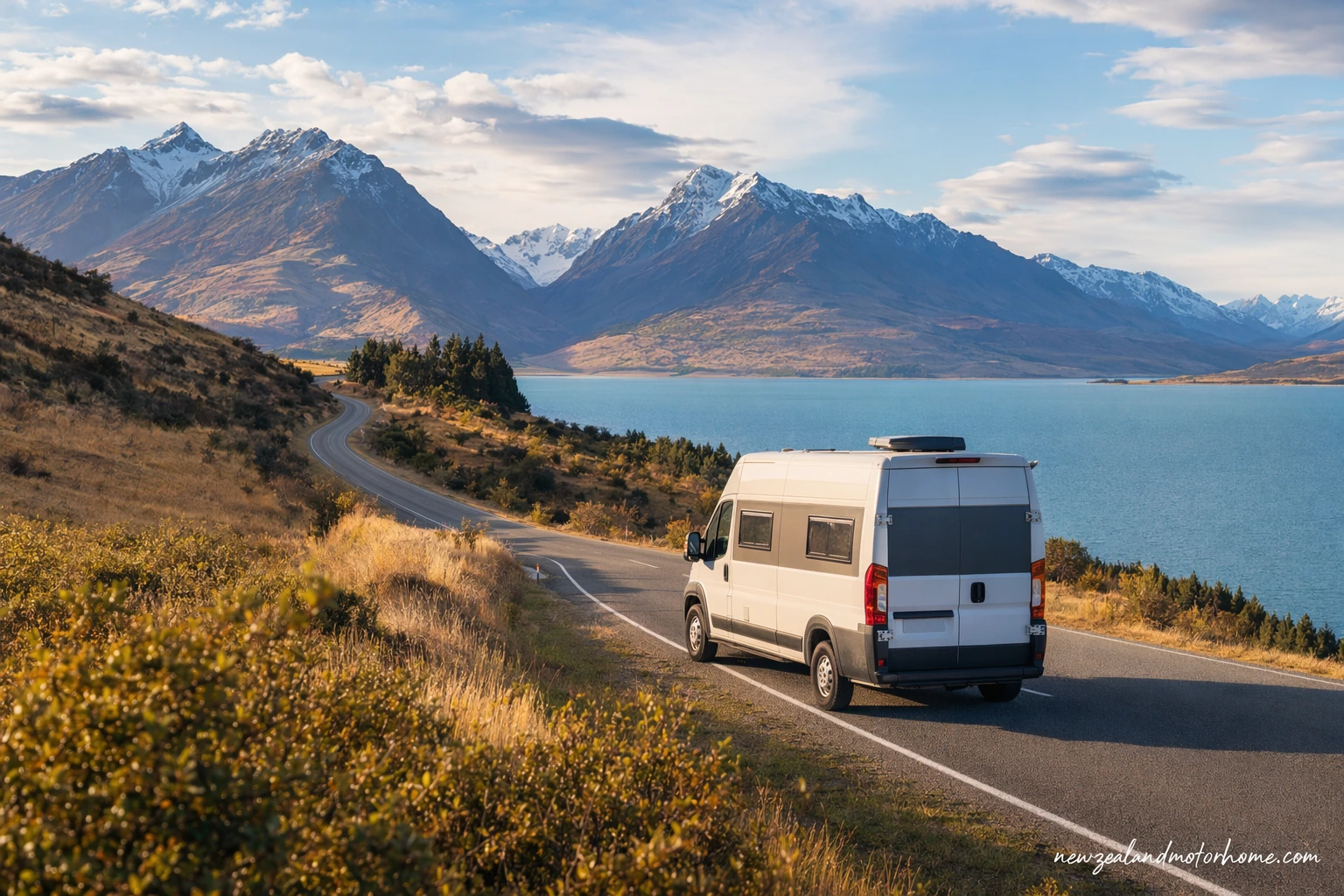
Most ski campervan holiday New Zealand routes work best as a South Island loop, starting in Christchurch or Queenstown and linking the Mackenzie Country, Wānaka, Queenstown and, if time allows, Methven for Mt Hutt. The point is not to tick off every ski field; it is to give you enough nights in each base to ski when conditions are right and stay put when the weather closes in.
A comfortable 10 to 14 day plan might include a first night at a powered holiday park to get used to the van, two to three nights near Lake Tekapo or Ōhau, three or four nights around Wānaka, and two or three nights in Queenstown or Arrowtown. Longer trips can add Methven, Hanmer Springs or the West Coast as a scenic thaw-out between snow days.
- Christchurch start: good for Mt Hutt, Tekapo, Ōhau, Wānaka and Queenstown in one direction.
- Queenstown start: handy for Coronet Peak, The Remarkables, Cardrona and Treble Cone without a long first drive.
- One-way option: useful if you want more mountain time and fewer repeat kilometres.
Where the van sleeps between ski days
Winter is when powered sites earn their keep. After a wet or snowy day, a powered campsite gives you plug-in heating, better gear drying, hot showers and a less glamorous but very welcome laundry session. We generally pace the package around powered holiday parks in ski towns, with occasional unpowered nights only where facilities and temperatures make sense.
Freedom camping can be limited around lakefronts, resort towns and mountain access roads, and winter conditions make it less forgiving. Your itinerary should only use legal overnight areas that match your vehicle length and self-containment certification, with a back-up paid site noted for busy weekends or stormy nights.
For a motorhome, the practical rhythm matters: empty the toilet cassette before a multi-night stay, top up fresh water before heading into colder country, and do not leave grey-water decisions until after dark. We map dump stations and fresh-water fills into the driving days so they are not an annoying detour when you are already tired from skiing.
The right campervan for winter snow travel
A ski package needs more than beds and a fridge. Look for a van with reliable heating, enough interior space to manage damp jackets, good insulation, winter bedding, and storage that does not bury your ski boots under the dining table. A slightly larger motorhome can be a pleasure in bad weather, but it also needs more care on narrow village streets, supermarket car parks and alpine roads.
Vehicle height and length matter in winter. Some ski-field access roads are steep, exposed or unsealed, and rental agreements can restrict where you may drive. The package plan should be honest about whether you park in town and take a shuttle, drive to the base building car park, or choose fields with easier access for your van.
- Heating: check whether it runs on mains power, diesel or LPG, and how that affects overnight choices.
- Power: plan regular powered sites so batteries are not doing all the winter work.
- LPG: build in refill or bottle-swap opportunities before remote lake or alpine stays.
- Gear: allow space for skis, boards, helmets and wet outer layers without blocking the aisle.
Mountain driving, chains and winter pace
New Zealand winter roads can change quickly, especially before sunrise and after dark. A sensible ski campervan plan avoids heroic transfers after a full day on the hill, keeps driving distances modest, and allows a weather day where you can drink coffee in the van instead of forcing a pass crossing in sleet.
Chains are part of the conversation, even if you hope not to fit them. Know whether your hire vehicle includes them, practise before you need them, and obey ski-field road signs. Some alpine roads may require chains on two-wheel-drive vehicles, and wind can be as much of an issue as snow when you are driving a high-sided campervan.
We also look at the small stuff that makes the day easier: where to park a longer motorhome near a ski shuttle stop, whether the access road has tight switchbacks, and which town has a supermarket, dump station and LPG stop before you head into a colder valley.
What the package thinking includes
This is not a fixed coach-style tour; it is a self-drive holiday plan shaped around your van, your ski level and how much comfort you want at night. The package thinking brings together route order, overnight bases, likely ski days, rest days, campsite style and the practical service stops that keep the motorhome running smoothly.
Depending on how you like to travel, we can shape the plan around fewer bases with more settled nights, or a wider loop with shorter stays and more scenery. Families often prefer longer powered stops and easier morning logistics, while confident couples may want a mix of ski fields and quiet lake nights when the forecast is calm.
If you want help matching the van, route and winter pace before you commit, use the talk to us step and tell us your dates, pick-up city, ski experience and preferred comfort level. From there, the plan can be tailored around school holidays, snow forecasts, vehicle size, and whether you would rather chase powder or keep the driving simple.
Common questions
Can I sleep in the campervan at a ski-field car park?
Sometimes no, and occasionally only under specific local rules. Treat ski-field car parks as day parking unless your itinerary has confirmed overnight permission, and always have a legal campsite or holiday park as the back-up.
Do I need a powered site every night in winter?
Not every night, but regular powered sites make a winter ski trip much more comfortable. They help with heating, battery recovery, drying gear and using campsite facilities instead of relying on the van for everything.
Is a large motorhome suitable for ski roads?
It depends on the road, weather and rental conditions. For steeper alpine access roads, it may be better to park in town or at a lower shuttle point rather than take a long, high-sided motorhome up to the snowline.
How many ski days should I plan in a 10-day campervan trip?
Four to six ski days is usually a sensible target once you allow for arrival, food shopping, road transfers, laundry, dump stations and weather. Building in a rest day makes the whole trip feel less rushed.
Do I need a self-contained campervan for this package?
Yes, a certified self-contained vehicle gives you more legal overnight options and better flexibility if plans change. Even so, winter routes should still lean on powered holiday parks and proper dump stations rather than relying on freedom camping every night.
Have a planner shape this for your dates
Send a short outline — your dates, party size, and the kind of trip you want. A planner replies with a vehicle recommendation, a paced route, and the realistic budget.