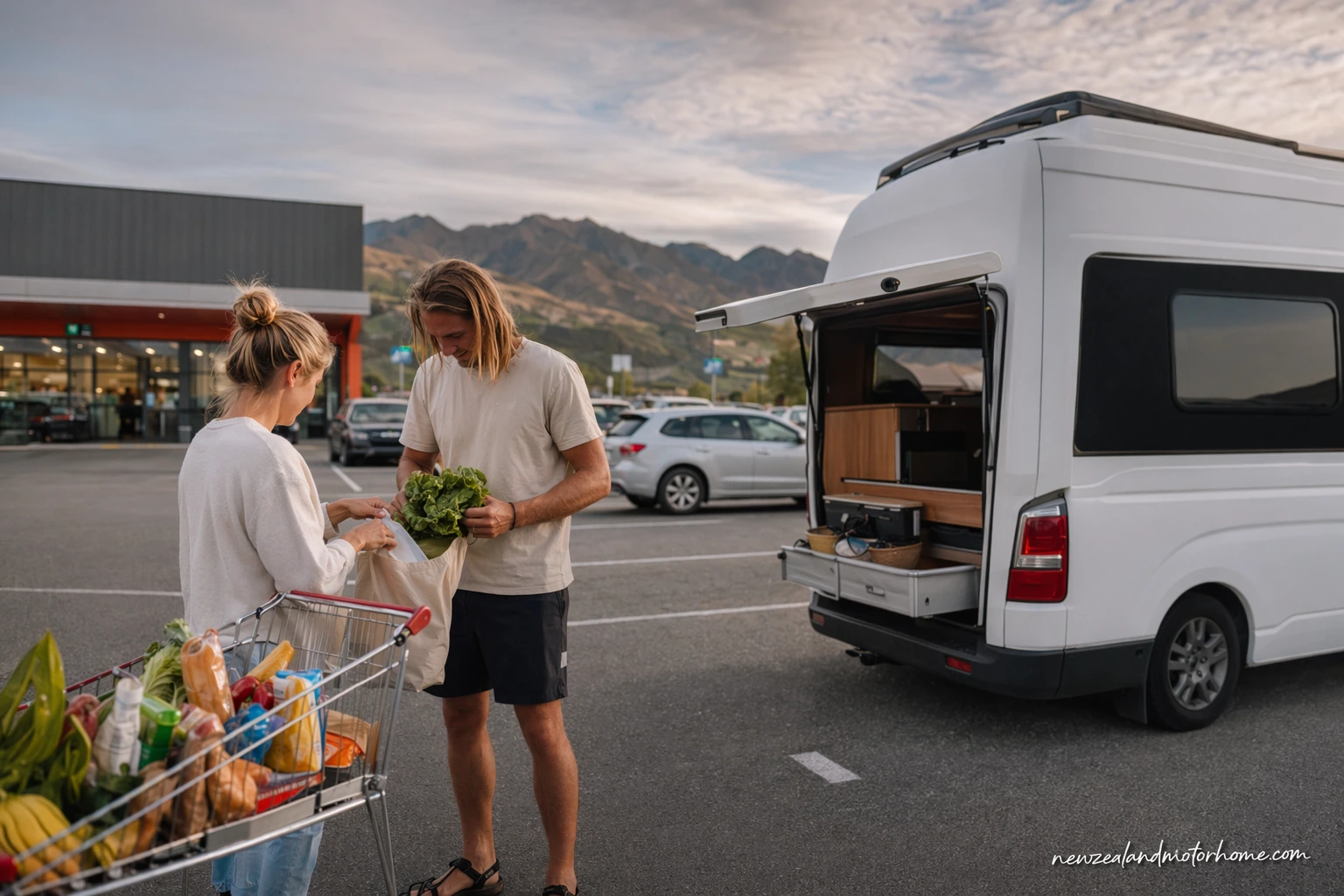
- Best big shop: regional towns
- Watch van height barriers
- Stock up before remote roads
- Use official dump stations
- Plan fridge space for unpowered nights
Food shopping in a campervan is part grocery run, part route planning. In New Zealand, the easy stock-up towns can be a long way apart once you head into the Mackenzie Country, the West Coast, Northland, East Cape or Fiordland, and your van fridge is only so big.
This guide is for self-drive motorhome travellers who are parking, cooking and sleeping in their hired van. You will find practical advice on where to shop, how to manage supermarket car parks in a longer vehicle, what to buy for a small galley, and how to line up groceries with water, LPG, dump stations and overnight stops.
How supermarkets fit into a campervan day
In the main centres and larger towns, supermarkets are usually the easiest place to do a full van stock-up: fresh food, dry goods, ice, cleaning supplies, toilet paper, rubbish bags and basic picnic gear are generally in one stop. In small settlements you may find a compact grocery store, dairy or fuel-station shop instead, with less choice and shorter opening hours.
Plan your big shop before you leave a service town rather than waiting until you are parked beside a lake with one shelf of pasta left. This matters most if you are travelling with a 12V fridge, limited pantry space, or a tight route with several nights on unpowered sites.
- Do a larger shop in cities and regional hubs before remote stretches.
- Top up bread, milk, fruit and snacks in smaller towns when available.
- Carry a spare simple meal for late arrivals, bad weather or closed shops.
- Check public holiday opening rules if you are travelling over Easter, Christmas or regional anniversary weekends.
Parking the van at supermarkets without stress
Supermarket car parks are built for everyday shoppers, not always for a 7-metre motorhome with a high roof and rear overhang. Before turning in, look for height bars, tight ramps, underground entries, steep driveways and one-way lanes. If the car park looks cramped, park on a nearby street where it is legal and walk the trolley back in stages.
Early morning and mid-evening are often easier than lunchtime. Take a bay on the outer edge if you can, avoid blocking loading areas, and leave room for your sliding door or rear locker. Never assume a supermarket car park is an overnight stop; shop there, then move on to a legal campsite or freedom camping area that suits your van certification.
- Avoid underground or covered parking unless you know your vehicle height.
- Watch the rear swing when turning out of narrow lanes.
- Do not use accessible, parent or loading bays unless permitted.
- Keep the trolley clear of traffic while loading the fridge and cupboards.
What to buy for a small campervan kitchen
A good campervan shop is not the same as a home pantry shop. Choose food that stacks well, cooks quickly on two burners, and does not create a mountain of packaging. Soft fruit, glass jars and tall cartons need careful storage once the van starts winding through passes and gravel access roads.
Think in meals, not ingredients. If you are moving most days, it is easier to cook one-pot dinners, breakfast at the campsite, and picnic lunches from the side door. Keep stronger-smelling food sealed, especially if you are sleeping near your galley.
- Choose flat-pack or resealable items that fit in shallow cupboards.
- Buy smaller quantities of chilled food if you will be unpowered for more than one night.
- Carry tea towels, biodegradable dish liquid, rubbish bags and a lidded food container.
- Keep a separate snack box in the cab so you are not unpacking the living area at every viewpoint.
Link groceries with water, LPG, fuel and dump stations
The smoothest travel days are the ones where you group practical stops together. In many New Zealand towns, the supermarket sits near fuel, public toilets, laundries, hardware supplies or a dump station, but not always within easy walking distance for a tired driver. Check your route before you commit to a town stop.
Fresh water and LPG are not supermarket guarantees. Some larger retail areas have nearby service stations or outdoor stores where gas bottles can be swapped or filled, while water fills and dump stations may be at holiday parks, council facilities or designated service points. If your grey-water tank is close to full, deal with that before filling the fridge.
- Shop, refuel and empty waste in the same town where possible.
- Refill fresh water only from signed potable-water taps.
- Use official dump stations for toilet cassettes and grey water.
- Check LPG bottle access before you are cooking on the last sputter of gas.
If you would rather have these logistics built into your driving plan, you can use the talk-to-us step and we will help shape a route around sensible stock-up towns, overnight stops and van services.
Where to stock up before quieter stretches
New Zealand is compact on a map, but campervan travel is slower than it looks. Hills, one-lane bridges, road works, ferry timing and scenic stops can turn a short-looking hop into a full day. Before you leave a town with a proper supermarket, ask whether the next two nights are in larger settlements, small communities or conservation-style camping areas with no shops at all.
On the South Island, stock up before heading into places such as the West Coast between larger towns, Aoraki/Mount Cook, the Catlins, inland Otago, Marlborough Sounds or Milford Road. On the North Island, think ahead before East Cape, the central plateau back roads, parts of Northland, the Coromandel in peak season, and rural coastal loops.
- Buy enough for an extra breakfast and dinner if the weather could slow you down.
- Keep drinking water separate from your main tank supply for day walks.
- Do not rely on small holiday settlements having full supermarket ranges.
- Top up before ferry days, as sailing times can squeeze your shopping window.
Food, rubbish and campsite manners
Once the shopping is in the van, the campsite part begins. Keep chilled food cold, secure loose bottles before driving, and take packaging off bulky items while you are still near recycling and rubbish facilities if that is allowed. A small van bin fills quickly, especially after a big supermarket shop.
At powered sites, give your house battery and fridge a proper recharge if you have been parked unpowered for a night or two. At unpowered or freedom camping spots, be conservative with fridge opening, water use and dishwashing. Never leave food scraps, grey water or packaging at a lay-by, beach car park or trailhead.
- Use campsite rubbish and recycling stations only for permitted waste.
- Store food securely if you leave windows or vents open at night.
- Wash dishes in your van sink or campsite kitchen, not in public bathroom basins.
- Leave supermarket car parks cleaner and quicker than you found them.
Common questions
Can I sleep overnight in a supermarket car park in New Zealand?
Usually, no. Supermarket car parks are for shopping unless clear signage or local rules specifically allow overnight parking. Use a legal holiday park, campground or freedom camping area that matches your self-containment certification.
Will a large motorhome fit in New Zealand supermarket car parks?
Often it will, but not always comfortably. Watch for height barriers, underground parking, tight turns and short bays, especially in city suburbs and older town centres. If in doubt, park legally on a nearby street and walk in.
Should I buy everything in one big shop or top up often?
Do a solid stock-up before remote sections, then top up fresh food when you pass through towns. A campervan fridge and cupboards are limited, so buying too much can make daily living messy. Keep at least one backup meal in case shops are closed or you arrive late.
Can I fill fresh water or empty grey water at a supermarket?
Do not assume so. Use signed potable-water taps for fresh water and official dump stations for toilet cassettes and grey water. Some supermarket areas are near service facilities, but the supermarket itself may not provide them.
Are reusable bags worth carrying in a campervan?
Yes. Keep a few sturdy bags or collapsible crates in the van so groceries do not roll around while you drive. They also make it easier to carry food from a street park back to the motorhome if the supermarket car park is too tight.
What should I check before shopping on a public holiday?
Check opening hours and alcohol sales rules for the area you are in. Some shops may close, reduce hours or be very busy. If you are travelling over Easter, Christmas or a long weekend, stock up the day before.
Have a planner shape this for your dates
Send a short outline — your dates, party size, and the kind of trip you want. A planner replies with a vehicle recommendation, a paced route, and the realistic budget.