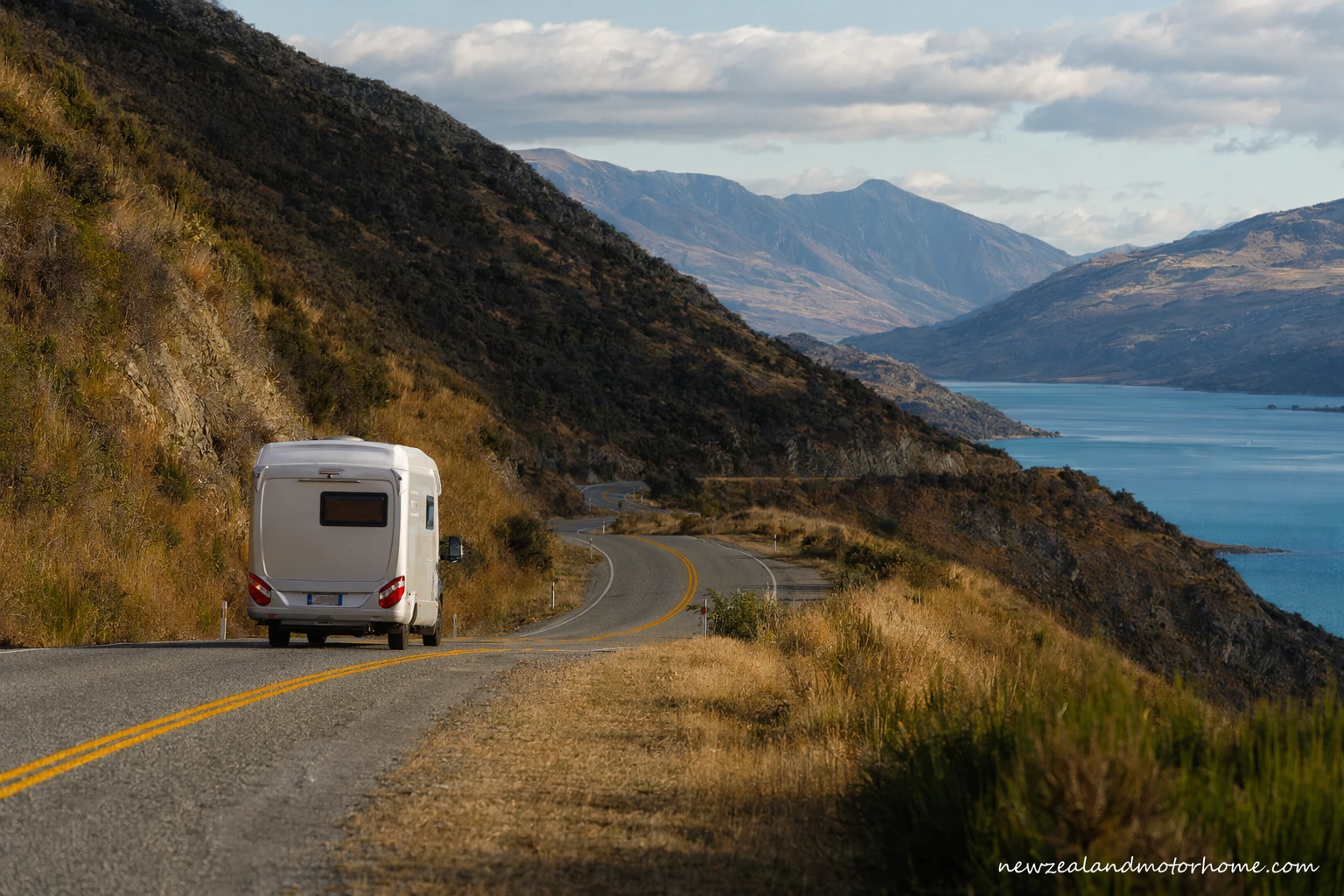
Auckland to Nelson campervan route: North Island to Tasman Bay
- Allow 4–5 days comfortably
- Cook Strait ferry required
- Best in spring to autumn
- Use powered sites to reset batteries
- Winding roads into Nelson
An Auckland to Nelson campervan trip is a proper cross-country run: motorway out of the city, geothermal plateau country, the long pull down State Highway 1, a Cook Strait ferry crossing, then the green, twisting roads into Tasman Bay. It suits travellers who like a route with variety, but it is not a one-day dash in a motorhome.
This guide is written for self-drive van travel, with realistic legs, where to pause for powered sites, when unpowered or freedom camping may work, and the practical bits that matter once you are living in the vehicle: dump stations, fresh-water fills, LPG, ferry loading, and roads that feel different in a high-roof campervan.
How many days to allow for the Auckland to Nelson drive
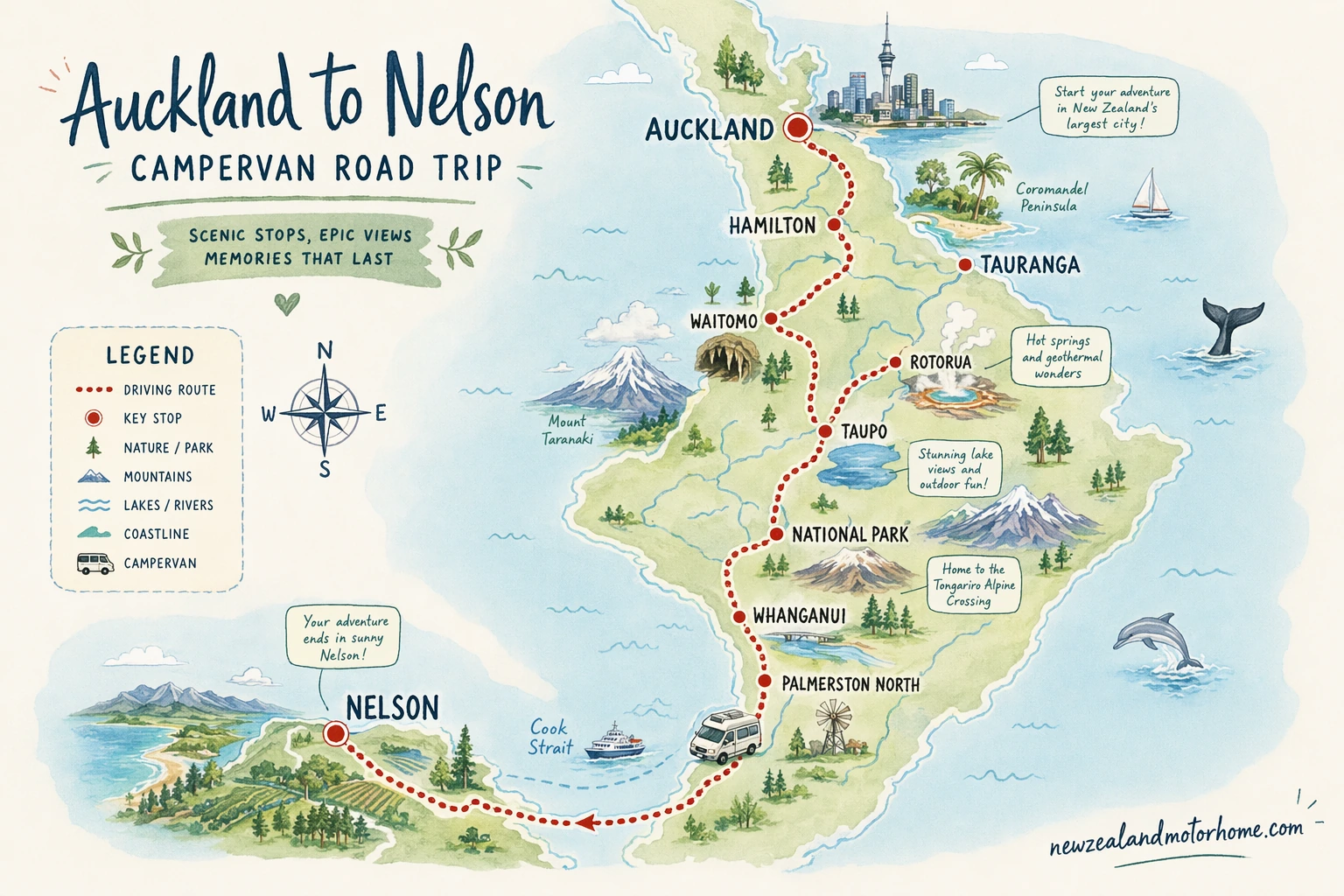
The Auckland to Nelson drive is roughly 800-plus kilometres of road driving plus the Cook Strait ferry, depending on your exact overnight stops and route into Nelson. In a campervan, three days is the brisk version, four to five days is far more comfortable, and a week lets you add short walks, hot pools, wineries or a quiet night by the coast without constantly packing up.
For most hired motorhomes, the easiest rhythm is to break the North Island into two or three driving days, overnight near Wellington before the ferry, then take a slower Marlborough-to-Nelson leg rather than arriving tired. Remember that driving a 6–7 metre van through hills and city traffic takes more concentration than the same distance in a small car.
- Fast but workable: Auckland to Taupō, Taupō to Wellington, ferry to Picton, Picton to Nelson.
- More relaxed: Auckland to Waikato or Waitomo, then Taupō/Tūrangi, then Kāpiti or Wellington, then Picton/Marlborough, then Nelson.
- Best for first-timers: allow a buffer night before or after the ferry so wind, delays or slower hill driving do not squeeze the trip.
Suggested campervan legs and overnight stops
Leaving Auckland, get out of the urban traffic early if you can. South of the city, the Waikato has holiday parks and rural campgrounds that make an easy first night if you have collected the van late, stocked the fridge and need to learn the water, power and toilet systems before tackling longer distances.
Taupō, Tūrangi and National Park Village are handy middle-section stops with a good spread of powered sites, unpowered sites and access to fuel, groceries and dump stations. If you are winter travelling, check the weather around the Central Plateau and leave extra time for wet roads, fog or snow warnings near the higher country.
Closer to Wellington, Kāpiti Coast, Porirua and the Hutt Valley can be easier overnight choices than trying to park a large van in the central city. If you need an early ferry, choose a legal overnight site that lets you reach the terminal without a stressful peak-hour crawl.
- Powered site night: useful after two days off-grid for battery top-up, hot showers and laundry.
- Unpowered site night: fine if your house battery is healthy and you are not running high-draw appliances.
- Freedom camping: only where local bylaws allow it, and only if your vehicle meets current self-containment requirements.
Cook Strait ferry planning in a motorhome
The ferry is the hinge point of any Auckland to Nelson motorhome road trip. Book the vehicle length accurately, including bike racks or tow bars, and arrive with enough time for check-in and loading. Ferry staff are used to motorhomes, but you still need to secure loose gear, turn off the gas at the bottle if instructed, and take what you need upstairs because you cannot usually stay in the vehicle during the crossing.
Try not to plan a long Wellington drive, a ferry crossing and the Picton-to-Nelson road all in the same tiring day. Wind can affect sailings, and the crossing itself takes a few hours before you have unloaded, found fuel, and reset for South Island roads.
- Before boarding: empty rubbish, check cupboards are latched, and make sure the fridge is set appropriately for travel.
- On arrival in Picton: use the town to refuel, buy groceries, top up water if available at your campground, and decide whether to stop overnight.
- With pets or bikes: check ferry rules early, as storage and access arrangements can affect your booking.
Picton to Nelson: road choice for larger vans
From Picton you have two main styles of route into Nelson. Queen Charlotte Drive via Havelock is scenic, with harbour views and bushy corners, but it is narrow, winding and slower in a tall or long campervan. It is best taken in daylight, with patience and plenty of pull-over courtesy for faster traffic.
The alternative via Blenheim, then State Highway 6 through Havelock and Rai Valley, is still not a motorway, but it generally feels more straightforward for nervous drivers or bigger motorhomes. Expect hills, bends, logging trucks in places, and variable weather through the valleys. Do not rely on the map time alone; add a buffer for slow corners, photo stops and a lunch break where the van can be parked without blocking locals.
- Shorter scenic option: Queen Charlotte Drive, only if you are comfortable with narrow, twisting roads.
- Van-friendlier option: Picton to Blenheim to Havelock to Nelson on main highways.
- Parking note: in Havelock and small settlements, use marked longer bays or park slightly out from the centre rather than squeezing into car-sized spaces.
Water, waste, LPG and camping around Nelson
Nelson is a good place to reset the van after the long haul. Tāhunanui, Richmond and the wider Nelson area have holiday parks and campgrounds where you can choose powered or unpowered sites, fill fresh water where permitted, use dump stations, and get laundry done before heading towards Abel Tasman, Golden Bay or the West Coast.
Freedom camping around Nelson and Tasman is tightly managed and changes by council area, so check current signage and official local information before settling in. A self-containment certificate does not mean you can park anywhere; it simply makes you eligible for places that allow certified self-contained vehicles.
LPG is easiest to sort in larger towns along the route rather than leaving it until you are tucked into a smaller bay or valley. If you want this route shaped around your van size, ferry date and preferred camping style, you can talk to us before locking in your nights.
- Dump regularly: do not wait until the cassette or grey-water tank is full, especially before the ferry or remote stays.
- Carry drinking water: use approved potable taps only, not random public taps.
- Plan Nelson parking: choose larger coastal or edge-of-town parking areas, then walk or bus into busy streets if your van is long.
Keep planning
Visiting sky tower auckland by campervan
Read onVisiting rainbows end auckland by campervan
Read onHoliday parks nelson tasman
Read onHoliday parks nelson
Read onHoliday parks auckland
Read onFarmers markets nelson tasman
Read onCommon questions
Can I drive from Auckland to Nelson in a campervan in two days?
It is technically possible, but it is a hard push once you include the ferry and the slower pace of a motorhome. Three days is the minimum we would plan, with four or five days giving you a safer, calmer trip.
Is Queen Charlotte Drive suitable for a motorhome?
Yes, confident drivers take campervans over Queen Charlotte Drive, but it is narrow, winding and slow. If you have a larger vehicle or are new to driving a high-roof van, the Blenheim and State Highway 6 option is usually less stressful.
Where should I stay before the Cook Strait ferry?
Choose a legal campground or holiday park in Wellington, Lower Hutt, Porirua or the Kāpiti Coast, depending on your sailing time. For an early ferry, staying closer to the terminal reduces the chance of traffic and parking stress.
Do I need a certified self-contained campervan for this route?
You can complete the route without freedom camping if you use holiday parks and campgrounds. If you want to use designated freedom camping areas, your vehicle must meet current self-containment requirements and you still need to follow each council’s local rules.
Are dump stations easy to find between Auckland and Nelson?
They are available in many larger towns and holiday parks along the route, including around Taupō, the lower North Island, Picton and Nelson. Check current listings as you travel and empty tanks before ferry day or before heading into smaller coastal areas.
Have a planner shape this for your dates
Send a short outline — your dates, party size, and the kind of trip you want. A planner replies with a vehicle recommendation, a paced route, and the realistic budget.