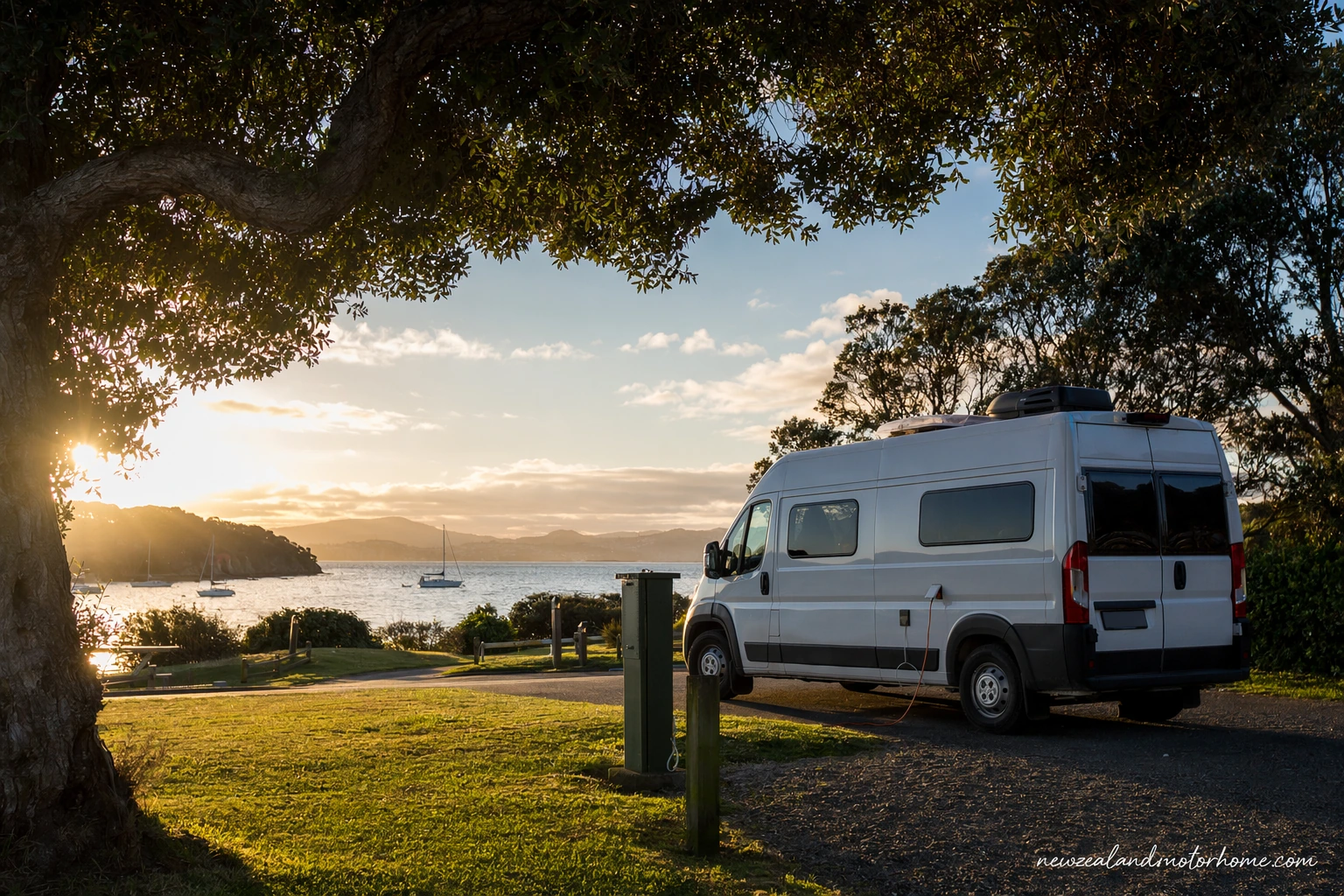
- Best for first or last NZ night
- Powered and unpowered sites available
- Book ahead in summer and holidays
- CBD parking is difficult for large vans
- Check self-containment rules locally
Auckland is not the easiest place to “wing it” in a motorhome. The harbour, motorways, bus lanes and tight inner-city parking can make a big van feel bigger than it is, so choosing the right overnight base matters.
This guide to holiday parks Auckland focuses on self-drive campervan travel: where powered and unpowered sites tend to suit, how to approach the city by van, what you can walk to, and when it is smarter to leave the motorhome plugged in and use a ferry, bus or train instead.
Where to base your van: coast, city fringe or south
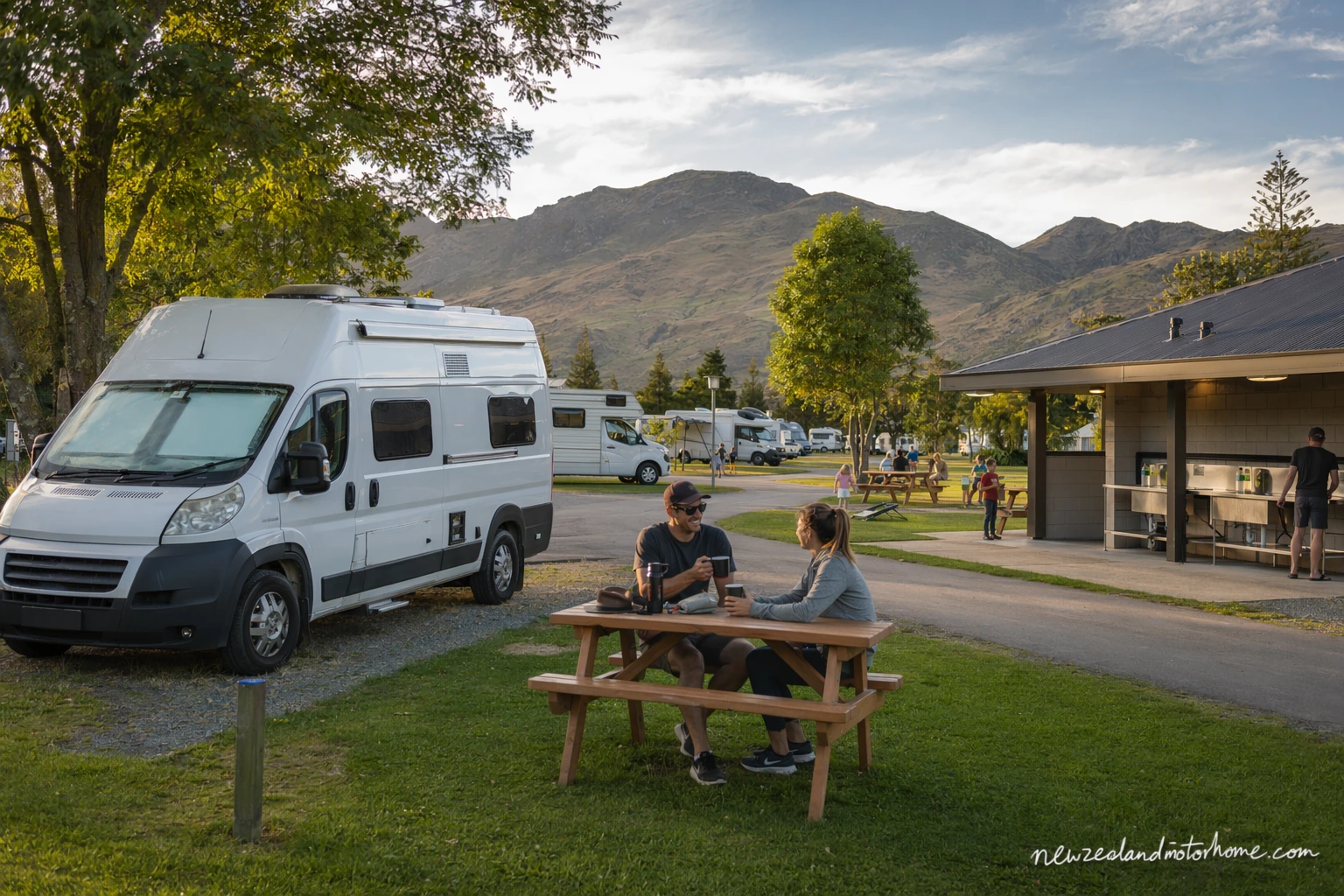
Most practical campsites Auckland travellers use sit outside the tight CBD rather than right among the tower blocks. For a first or last night after a flight, the southern and eastern edges of the city can be convenient. For beaches and a slower start, the north coast around Ōrewa and the Hibiscus Coast feels more relaxed, with roomier roads and easier approaches for longer motorhomes.
If you are searching for an auckland top 10 holiday park, you will usually be looking at a coastal-style base rather than an inner-city car park. That can work beautifully if your plan includes beach walks, a supermarket run and a reset day before heading north to Northland or south towards the Waikato.
- North of the bridge: good for Ōrewa, Whangaparāoa, Matakana and a gentler exit towards Northland.
- West Auckland: handy for the Waitākere Ranges and black-sand beaches, but roads can be narrower and hillier.
- South and east: useful for airport timing, motorway connections and early starts towards the Coromandel or Rotorua.
- Central Auckland: best visited by public transport once your van is safely parked at your overnight base.
Powered sites Auckland: what to check before you book
For most motorhome travellers, powered sites Auckland wide are the simplest choice after a long drive or before a flight. You can top up house batteries, run appliances without watching the monitor, and sort the van properly before the next leg. Unpowered sites can be fine for well-equipped certified self-contained vans, but do not assume every urban or coastal campground has the same facilities.
Before booking, check your van length, whether the site is sealed or grass, and whether awnings or slide-outs are allowed. Auckland rain can turn a pretty grass pitch into a careful traction exercise, especially in heavier vehicles.
- Ask about site size: give your motorhome length and mention bikes, rear racks or a tow bar if fitted.
- Check power access: powered sites should use the correct campervan lead, not a household extension cord.
- Confirm dump station access: some parks have one on site; others direct you to a public dump point.
- Look for fresh-water taps: fill only from potable water points and keep your hose separate from waste gear.
- Plan LPG early: do refills or bottle swaps before a public holiday weekend, not after dinner when everything is shut.
Getting around Auckland without fighting city parking
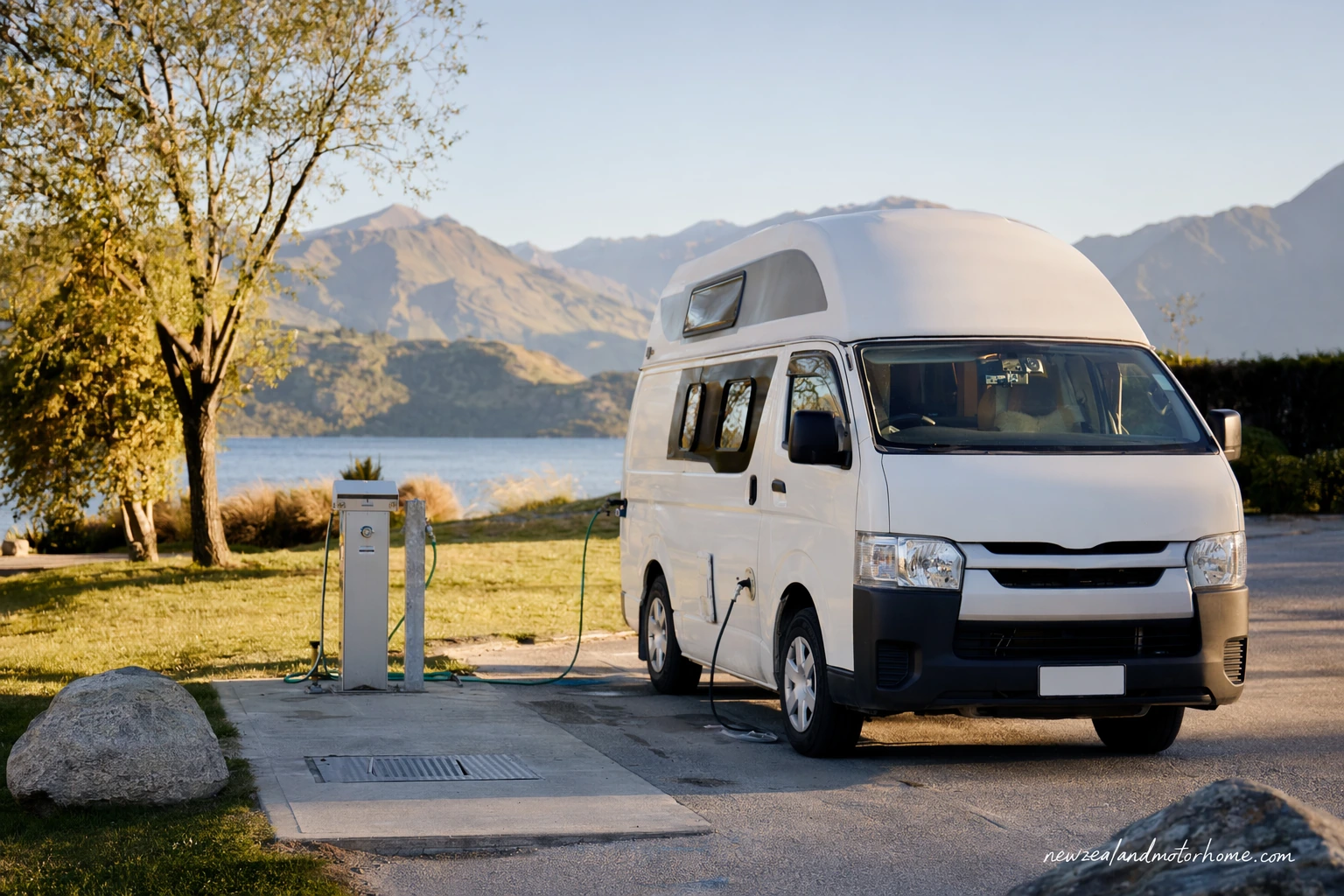
Auckland is spread out, and the CBD is not made for casual motorhome parking. Multi-storey car parks are usually out because of height limits, and kerbside spaces can be short, busy or restricted. Once you are set up at a holiday park, the easiest day is often one where the van stays plugged in and level.
From coastal or fringe bases, use trains, buses, ferries or rideshares for the central waterfront, museums, galleries and dining areas. Devonport, Wynyard Quarter, the Viaduct, Britomart and the ferry terminals are all much more enjoyable when you are not watching the clock on a large-vehicle park.
- Avoid peak motorway runs: weekday mornings into the city and late afternoons out can be slow and tiring in a van.
- Watch bus and transit lanes: they change by time of day and are easy to enter accidentally.
- Do not rely on parking buildings: many have low clearance and tight ramps.
- Use park-and-ride carefully: not all sites suit long vehicles, and overnight parking is not the same as daytime parking.
What is walkable from Auckland holiday parks
The best base is not always the closest dot to the CBD. For camping Auckland in a campervan, walkability often means being able to reach a beach, dairy, supermarket, fish-and-chip shop, bus stop or waterfront path without packing down the whole van. That one detail can turn a stopover into a proper rest day.
Coastal holiday parks may give you easy access to swimming beaches, estuary paths and early-morning coffee. Fringe parks may be less scenic but better for laundries, fuel, LPG, grocery restocks and motorway access. If you are travelling with children, check whether you can walk safely without crossing fast arterial roads.
- For beach time: look north or east, where coastal paths and calmer evening walks are common.
- For city sightseeing: prioritise nearby public transport over being geographically central.
- For van chores: choose a base near supermarkets, fuel, LPG and a dump station.
- For wet weather: a sealed site, laundry and indoor common space can matter more than a sea view.
Freedom camping, self-containment and city rules
Auckland has restrictions on where campervans can stay overnight, and the rules can vary by reserve, road end and coastal area. A certified self-contained vehicle gives you more options around New Zealand, but it does not mean you can sleep anywhere you find a view. Always check the current council signage and app-based information for the exact spot before settling in.
If your first night in New Zealand is in Auckland, a holiday park is often the lower-stress choice. You can learn the van, test the power cable, fill fresh water, empty waste if needed and check that the bed, fridge and heating are behaving before you head into more remote areas.
- Carry proof of self-containment: make sure your certification details match the vehicle you hired.
- Arrive in daylight: it is much easier to reverse, level and connect power before dark.
- Respect no-camping signs: they are enforced in popular coastal and reserve areas.
- Leave no grey water: use proper dump stations only, even for small amounts.
A sensible Auckland campervan rhythm
Auckland works best when you treat it as a practical hub rather than a place to drive through repeatedly. Book a site for the first night if you are collecting a hire campervan after a long flight, then allow time for groceries, bedding setup, LPG or water checks, and a short test drive before tackling the motorway network.
If you are unsure which side of the city suits your route, sketch the next two driving days before choosing a park. Heading north? Avoid crossing the harbour at peak time if you can. Heading south or east? A northern beach base might look lovely, but it can add a slow bridge crossing to your morning.
- First night: stay close enough to collect supplies and learn the van without a long drive.
- Middle night: choose coast or fringe depending on sightseeing, not just the map distance.
- Last night: prioritise dump station, fuel, LPG, laundry and an easy run to drop-off.
- Need a hand: if your route is still fuzzy, you can talk to us before locking in your Auckland stop.
Keep planning
Visiting sky tower auckland by campervan
Read onVisiting rainbows end auckland by campervan
Read onCampervan supplies auckland
Read onCampervan hire auckland
Read onCampervan hire auckland airport
Read onAuckland to wellington campervan
Read onCommon questions
Are there holiday parks in central Auckland for motorhomes?
Should I book a powered site in Auckland?
Can I freedom camp around Auckland in a certified self-contained van?
Is it hard to park a campervan in Auckland city?
Which Auckland area is best before driving to Northland?
Do Auckland holiday parks have dump stations?
Have a planner shape this for your dates
Send a short outline — your dates, party size, and the kind of trip you want. A planner replies with a vehicle recommendation, a paced route, and the realistic budget.