- Best before leaving the city
- Avoid CBD parking buildings
- Fill LPG, fuel and water early
- Book a first-night site
- Check self-containment rules
Auckland is often the first real stop after picking up a hired campervan, and it pays to use it well. Before you point the bonnet towards Northland, the Coromandel, Rotorua or the Waikato, take an hour or two to sort food, gas, fresh water, laundry and waste.
This guide is written for self-drive travellers sleeping in their own van, not just passing through in a car. You’ll find practical notes on supermarkets Auckland campervan travellers can manage, where a longer motorhome is easier to park, how to approach an LPG refill Auckland stop, and what to check before your first overnight site.
Best areas to stock up without dragging a van through the CBD
For most campervan pick-ups, the easiest provisioning is not central Auckland. The CBD has tight lanes, bus corridors, low-clearance parking buildings and very little room to reverse a 6-berth motorhome calmly. Stay on the fringes where supermarkets, petrol stations and laundromats sit beside wider roads and open-air car parks.
If you have collected near the airport, Māngere and Onehunga are practical first-stop areas. If you are heading south, Manukau works well. For the Coromandel or Rotorua, Mt Wellington and the Sylvia Park side of town keep you close to the motorway. Northbound vans can look at Albany, Wairau or Westgate before crossing the Harbour Bridge or joining SH16.
- Airport / Māngere: handy after depot pick-up; expect busy car parks but generally easier access than the inner city.
- Onehunga / Mt Wellington: useful if you want groceries, fuel and a hardware-style gas stop before SH1 or SH2.
- Albany / Wairau: a calmer place to shop before Northland, with more open-air parking than the city centre.
- Westgate: good for vans taking the western route north or avoiding the Harbour Bridge at peak times.
Parking a motorhome while you shop
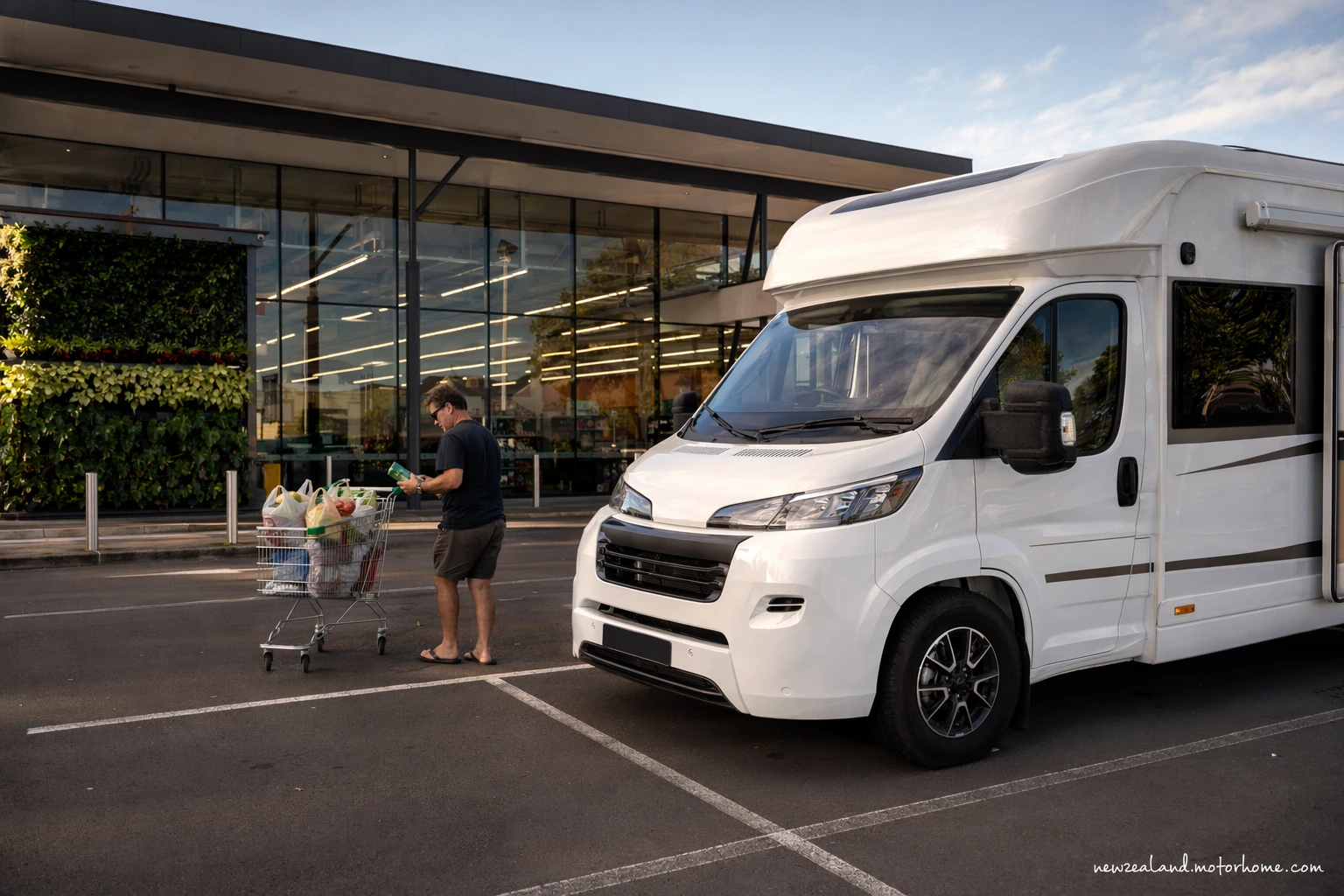
When choosing supermarkets Auckland campervan visitors can use comfortably, look for surface parking rather than a multi-storey building. Many car parks around malls have height bars or narrow ramps that are not friendly to high-roof campers. If in doubt, park on the outer edge of the car park and walk a little further rather than trying to squeeze close to the entrance.
A long rear overhang can catch kerbs and planting beds, especially when turning out of angled parks. It is often easier to take two end-to-end spaces at the quiet edge of a car park if the layout allows, but do not block access lanes or delivery areas. Shopping early in the morning or later in the evening usually makes the first big stock-up less stressful.
- Know your van height before you leave the depot, including roof vents, air-con units or bike racks.
- Avoid underground and multi-level supermarket parking unless height clearance is clearly suitable.
- Put cold items in the fridge last, then drive soon after so the 12V system can help maintain temperature.
- Keep heavy groceries low and packed tight; Auckland’s motorway ramps and hill starts will find loose jars quickly.
Food, water and the first-night pantry
Auckland is the right place to buy the awkward basics: oil, salt, coffee, tea, washing-up liquid, bin liners, toilet paper suitable for cassette toilets, reusable containers and a few meals that do not rely on perfect weather. Once you are on smaller roads, the shops are often excellent but choice can narrow and parking a large van outside a small village store may be harder.
For fresh water, fill from a proper potable tap, not a beach shower or random garden tap. Your hire operator may send you out full; still, check the gauge before leaving the city. If you are freedom camping later, starting with a full fresh-water tank and an empty grey-water tank is part of travelling responsibly under your self-containment certification.
- Stock one easy arrival dinner for your first powered or unpowered site.
- Carry drinking water bottles for walks and driving days, even if your onboard tank is full.
- Buy quick-dry towels or extra tea towels if your van is light on kitchen linen.
- Choose compact packaging where you can; campervan cupboards fill faster than you expect.
LPG, fuel and road checks before leaving Auckland
Most hired motorhomes use LPG for cooking, hot water and sometimes heating. An LPG refill Auckland stop can mean either refilling a gas bottle or swapping it, depending on the bottle and the supplier. Check what your rental depot allows before you hand over an empty bottle, and make sure you know whether your van uses a removable bottle or a fixed tank.
Petrol stations Auckland-wide are plentiful, but forecourts vary. A larger van is easier at service stations with wide entry, high canopy clearance and room to turn without reversing across traffic. Top up fuel before you leave the urban area if your route heads into the Coromandel, Northland back roads or a late-night arrival where smaller stations may be closed.
- Check diesel or petrol carefully; many motorhomes are diesel, but do not assume.
- If hiring a diesel van, ask about road user charges and what is already covered.
- Confirm LPG bottle operation before cooking your first meal, not after dark at camp.
- Inspect tyre pressure, windscreen washer fluid and mirrors before a motorway run.
Dump stations, laundry and your first overnight stop
A dump station Auckland plan is worth making before the cassette is full. Some public dump points sit at holiday parks, service areas or council-managed sites, and access can change, so check a current camping app, council information or your hire company notes before driving across town. Never empty grey water or toilet waste into stormwater drains.
If you need a laundromat Auckland stop, choose one near a supermarket or fuel stop so you are not parking the van twice. Keep an eye on height, turning room and whether you can legally sit in a loading zone; a campervan is not a courier van just because the hazard lights are on.
For the first night, many travellers do best with a booked holiday park or designated campervan site rather than trying to learn freedom camping rules while jet-lagged. Auckland’s freedom camping is controlled and location-specific, and some places require certified self-contained vehicles only. If you want us to shape the first few nights around your pick-up time, van size and route, mention it through /talk-to-us/ when you plan your trip.
Keep planning
Visiting sky tower auckland by campervan
Read onVisiting rainbows end auckland by campervan
Read onHoliday parks auckland
Read onCampervan hire auckland
Read onCampervan hire auckland airport
Read onAuckland to wellington campervan
Read onCommon questions
Can I take a campervan into central Auckland to buy supplies?
You can, but it is rarely the easiest option. Central Auckland has tight streets, bus lanes, expensive parking and many low-clearance buildings, so most motorhome travellers are better stocking up near the airport, Onehunga, Mt Wellington, Albany or Westgate.
Where should I do an LPG refill in Auckland?
Look for service stations or hardware-style outlets that advertise LPG bottle refills or swaps, then confirm they handle your bottle type. Your rental depot should tell you whether your camper uses a swappable bottle, refillable bottle or fixed LPG tank.
Is there a dump station in Auckland for campervans?
Yes, Auckland has dump station options, but access and opening conditions can change. Use a current camping app, council information or your hire operator’s notes, and only empty cassette toilets and grey water at a proper dump point.
Should I book my first night near Auckland?
Usually, yes, especially after an international flight or a late van pick-up. A booked powered site gives you time to unpack, charge devices, learn the fridge and heating, and sort any questions before driving further.
What supplies are easy to forget on the first shop?
Travellers often forget toilet chemicals or cassette-safe paper, dish cloths, rubbish bags, matches or a lighter, basic seasonings, insect repellent and a torch. Also check whether your van already includes levelling chocks, an outdoor table and a fresh-water hose.
Have a planner shape this for your dates
Send a short outline — your dates, party size, and the kind of trip you want. A planner replies with a vehicle recommendation, a paced route, and the realistic budget.