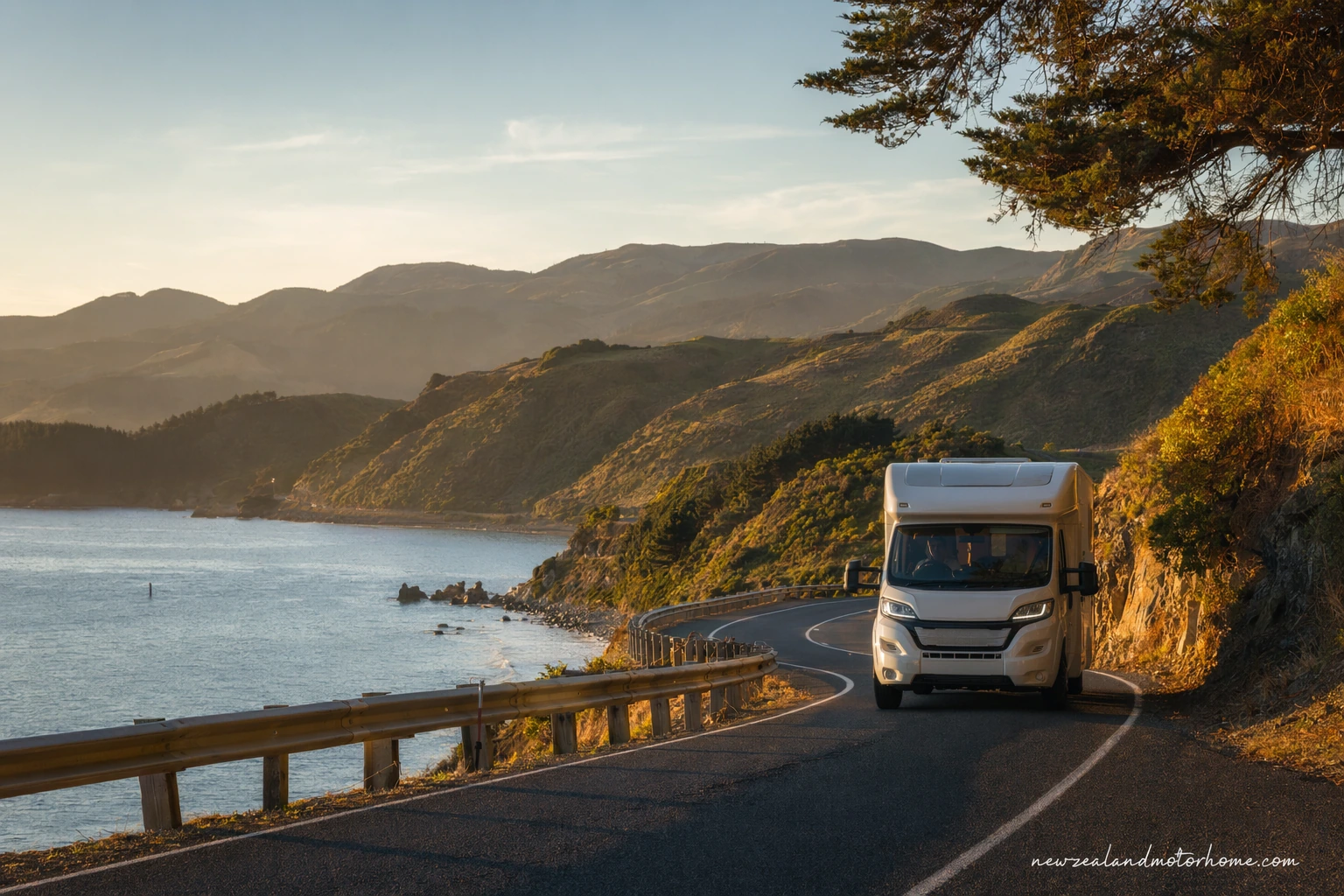
Auckland to Wellington campervan route for a relaxed North Island crossing
- Best in spring to autumn
- Allow 4 to 5 days
- Approx. 650 km direct
- Book Wellington nights early
- Desert Road weather check
The Auckland to Wellington campervan route is one of the most useful North Island drives: city to city, but with hot pools, lake edges, volcanic plateau roads and windy coastal approaches in between. You can do it quickly, but it is far better in a hired campervan when you give yourself room for slower hills, supermarket stops, fresh-water fills and a proper night off the road.
This guide is written for travellers driving and sleeping in their own van. It covers sensible legs, where to overnight, how to think about powered versus unpowered sites, road notes for longer vehicles, and the practical bits that make an Auckland to Wellington motorhome road trip feel easy rather than rushed.
How many days to allow and the best basic route
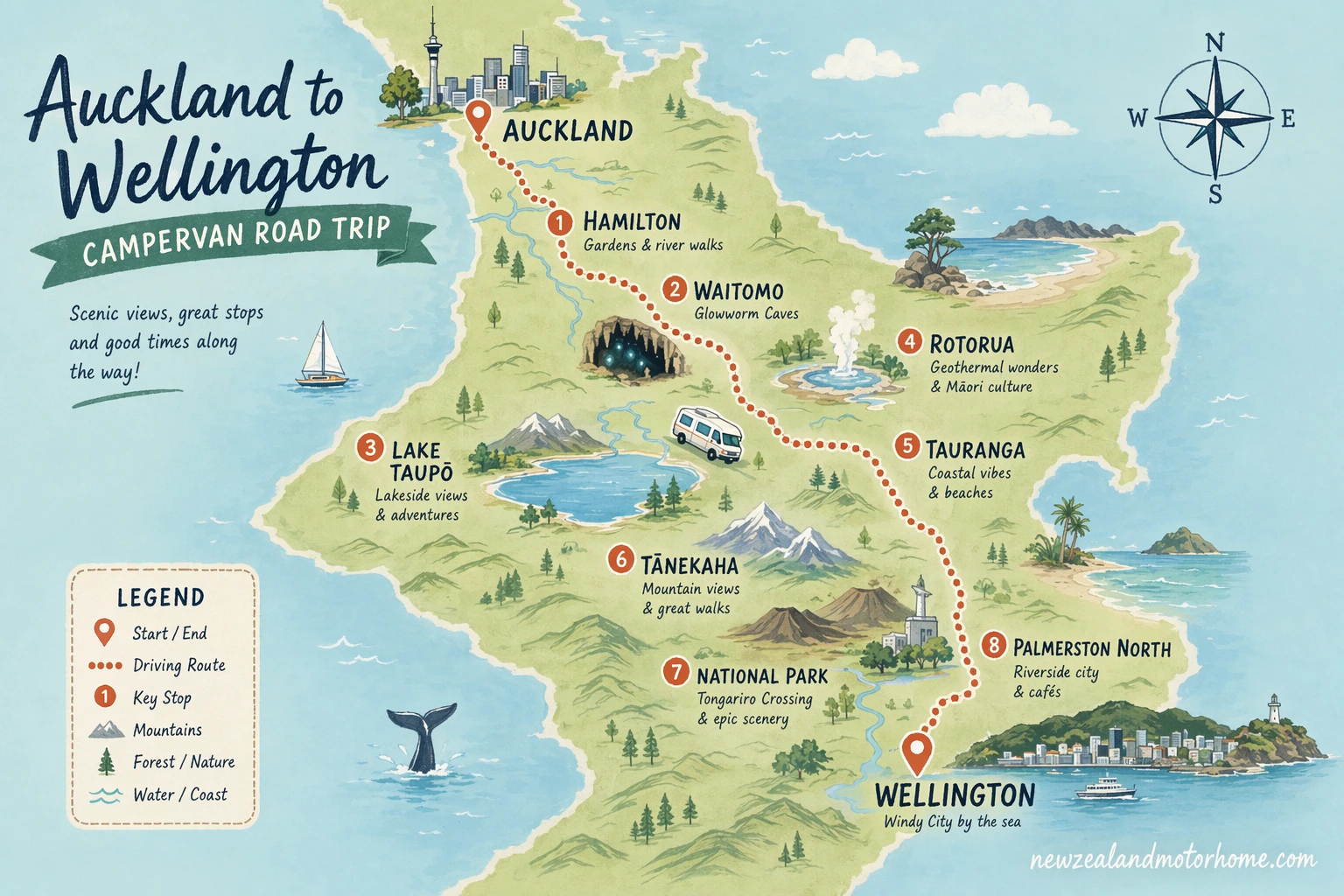
The direct Auckland to Wellington drive is usually treated as a full-day car mission, but in a campervan that misses the point. The distance is roughly 650 kilometres depending on detours, and a van day includes packing down, finding parking, dumping waste, filling water and arriving at camp before reception closes or daylight disappears.
A comfortable minimum is three days, while five to seven days lets you enjoy Taupō, Tongariro or Whanganui without feeling like you are just moving the van from one site to the next. The most straightforward route follows the Waikato Expressway and State Highway 1 through or near Hamilton, Taupō, the Desert Road, Taihape, Bulls, Levin and the Kāpiti Coast into Wellington.
- Fast but tiring: 2 long driving days, only if you are confident with NZ roads and have booked camps ahead.
- Balanced: 4 to 5 days with overnight stops around Waitomo or Hamilton, Taupō, Ruapehu or Whanganui, then Wellington.
- Slow and scenic: 6 to 7 days, adding hot pools, short walks, a lake stay and a coast night before the capital.
Suggested campervan legs from Auckland to Wellington
Leave Auckland with a full fresh-water tank, charged house battery and enough food for the first night, especially if you are collecting the van late in the day. City traffic, motorway merging and getting used to the vehicle are enough for day one, so do not plan a heroic first leg unless your pick-up is early.
A practical first night is around Hamilton, Cambridge or Waitomo, where holiday parks and designated campervan sites make it easy to plug into power and sort your van routine. From there, Taupō is a natural second stop: you can use a powered site to recharge, walk to the lakefront from some camp areas, and look for dump station and fresh-water facilities before heading onto the higher central plateau.
For the next section, choose between staying near Tūrangi, National Park, Ohakune, Whanganui or further south depending on weather and your pace. The final approach into Wellington is best done fresh, as traffic builds near Levin, Ōtaki, the Kāpiti Coast and Ngauranga Gorge, and wind can make a high-sided motorhome feel busier than the map suggests.
Overnight stops: powered, unpowered and freedom camping
On this route, mix site types rather than trying to freedom camp every night. Powered holiday park nights are useful after long drives, wet weather, winter heating or heavy device charging, while unpowered sites suit self-contained vans with good batteries and a settled weather forecast. If your hire vehicle has only a small house battery, plan more powered nights than you think you need.
Freedom camping rules change by council area, and the route passes through several districts with different signage and enforcement. Use only designated areas, obey time limits, and make sure your campervan is certified self-contained under the current NZ requirements before relying on freedom camping. Taupō, Ruapehu, Whanganui, Horowhenua, Kāpiti and Wellington all have local rules that matter.
- Auckland departure: overnight close to pick-up if you land late, then start the main drive rested.
- Waikato or Waitomo: good first-night territory for new van drivers wanting an easy shakedown.
- Taupō: handy for laundry, groceries, dump stations, LPG swaps and a powered reset.
- Ruapehu or Whanganui: cooler nights, scenic stops and a good break before the lower North Island.
- Kāpiti or Wellington: book ahead in peak periods; legal overnight options close to the city are limited.
Road notes for larger vans and motorhomes
The main Auckland to Wellington campervan route is sealed and suitable for standard hire campervans and motorhomes, but it is not flat. Expect motorway driving out of Auckland, wide expressway sections through Waikato, lake and hill approaches near Taupō, and exposed conditions on the Central Plateau. The Desert Road can be affected by snow, ice, fog and strong wind in winter and during sudden southerly changes.
Keep an eye on your van height when pulling into service stations, supermarket car parks and town-centre parking areas. Longer motorhomes are easier to park at the edge of town or in larger public car parks, then walk in rather than circling tight streets. Use lower gears on long descents, leave extra following distance, and pull over when safe if traffic is building behind you.
Wellington adds its own driving character: narrow suburban streets, steep hills, gusty harbour winds and busy commuter approaches. If you are booked on an inter-island ferry, allow extra time to refuel, dump, refill water if needed and reach the terminal without threading a large van through the central city at the last minute.
What to see without making parking a headache
The best stops on this road trip are the ones where you can park the campervan safely and still enjoy the place without worrying about height barriers or tight turns. Waitomo is a good early detour if you want a cave visit, while Cambridge and the Waikato River trails suit travellers who want an easier first day out of Auckland.
Around Taupō, aim for larger visitor car parks and arrive earlier in the day for places like Huka Falls, lakefront reserves and short walks. The Tongariro area is spectacular, but alpine weather changes quickly; check road and track conditions before committing to a big walking day, and do not leave loose items outside the van overnight in exposed camps.
Further south, Whanganui gives you river history and a calmer overnight feel than pushing straight down State Highway 1. The Kāpiti Coast is a useful final pause, especially if you want a beach walk and a short last drive into Wellington. If you want help shaping the stops around your van size, ferry timing or preferred mix of powered and unpowered nights, you can talk to us before locking in the plan.
Dump stations, water, LPG and final Wellington planning
Do not leave waste and water jobs until the van is already full or empty. Build them into your driving days: after breakfast before departure, at a holiday park before check-out, or during a supermarket and fuel stop where facilities are clearly marked for campervans. Public dump stations are common enough along this corridor, but they are not always exactly where you want them at the end of a long day.
Taupō is a useful mid-route service point for many motorhome travellers because you can combine groceries, fuel, LPG bottle exchange or refill options, fresh water and a proper overnight stop. Before the run into Wellington, check toilet cassette capacity, grey-water levels and fresh water so you are not hunting for services in city traffic.
In Wellington, choose your overnight base before you arrive. Some travellers stay at a holiday park or designated motorhome area outside the tightest central streets, then use public transport or walkable connections to explore. If you are continuing south by ferry, keep your gas bottles secured, check ferry guidance for LPG, and arrive with enough time for check-in procedures.
Keep planning
Visiting zealandia wellington by campervan
Read onVisiting weta workshop wellington by campervan
Read onVisiting te papa wellington by campervan
Read onVisiting sky tower auckland by campervan
Read onVisiting rainbows end auckland by campervan
Read onHoliday parks wellington
Read onCommon questions
How long should I take for an Auckland to Wellington campervan trip?
Allow at least 3 days, with 4 to 5 days more comfortable for most campervan travellers. That gives you time for Taupō, a central plateau stop, dump stations, water fills and slower driving in a larger vehicle.
Can I freedom camp between Auckland and Wellington?
Yes, but only where local council rules allow it and only if your van meets the required self-containment standard. The route crosses several council areas, so check current signage and do not assume one district's rules apply to the next.
Is the Desert Road suitable for a motorhome?
In normal conditions, yes, the Desert Road section of State Highway 1 is suitable for standard hire motorhomes. In winter or bad weather it can have snow, ice, fog and strong wind, so check road conditions before leaving Taupō, Tūrangi or Waiouru.
Where should I stop overnight if I only have three days?
A simple three-day plan is Auckland to the Waikato or Waitomo area, then Taupō or Tūrangi, then Wellington. If the weather is poor on the plateau, consider shifting the second night to a lower, more sheltered stop.
Is Wellington easy to drive around in a campervan?
Wellington is manageable, but it is not the easiest city for a large van. Expect hills, narrow streets, wind and limited central parking, so it is usually better to park at your overnight base and explore the city without moving the motorhome.
Have a planner shape this for your dates
Send a short outline — your dates, party size, and the kind of trip you want. A planner replies with a vehicle recommendation, a paced route, and the realistic budget.