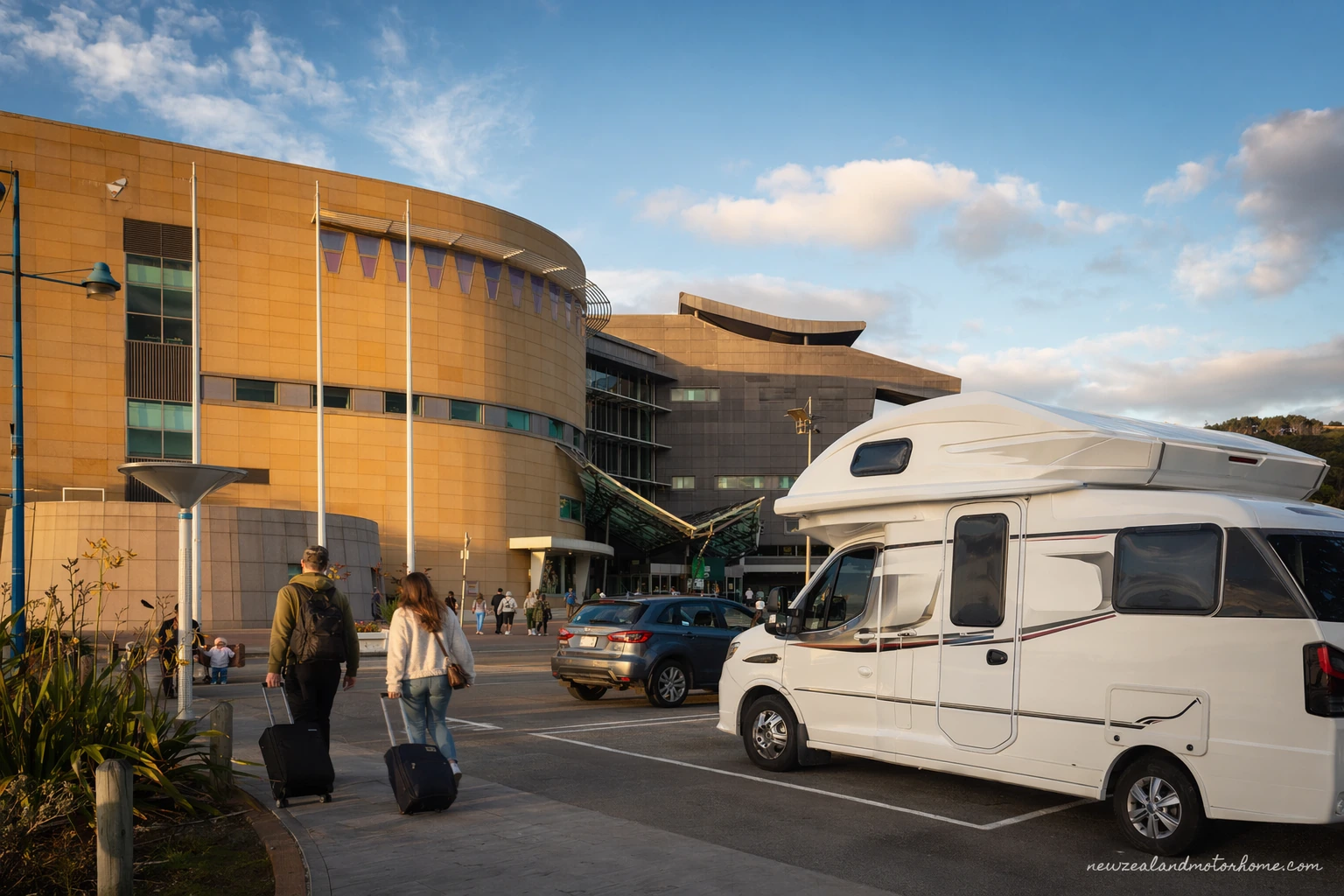
Visiting Te Papa Wellington by campervan: van-friendly logistics
- Allow 3–5 hours
- CBD parking suits smaller vans
- Powered sites outside the centre
- Self-contained camping only where signed
- No dump station at Te Papa
Te Papa sits right on Wellington’s waterfront, which is brilliant once you are on foot and a little awkward when you are arriving in a high-roof campervan. The streets around Cable Street, Wakefield Street and the harbour edge are busy, signed, and often better suited to cars than long wheelbase vans.
This guide is for self-drive travellers who need the practical bits: where to point the van, what to expect from Te Papa Wellington campervan parking, where to stay overnight, and how long to allow without rushing your fresh-water fill, dump station stop or next ferry connection.
Getting to Te Papa by road in a campervan
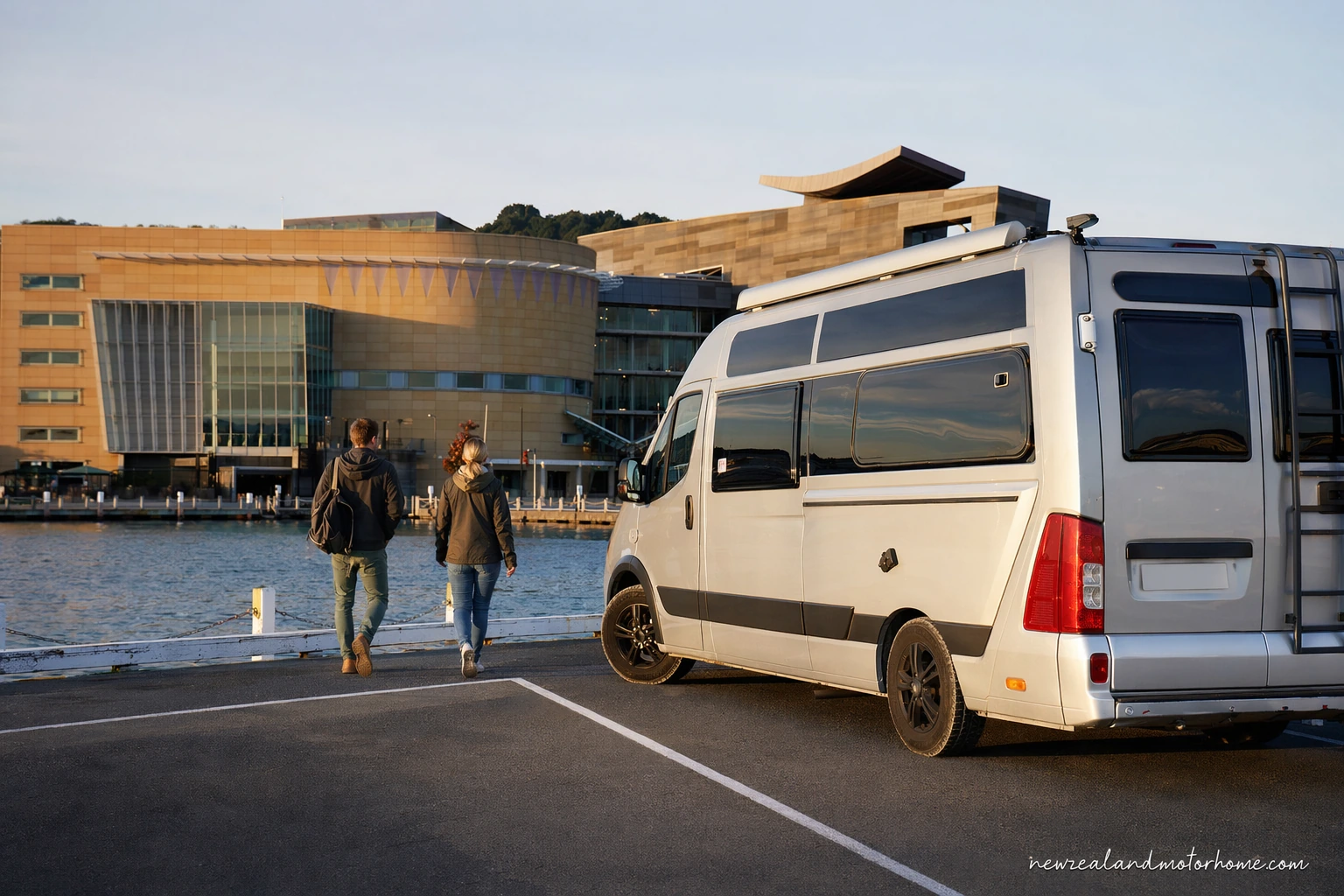
If you are working out how to get to Te Papa Wellington, aim first for the central waterfront rather than trying to thread through the hill suburbs. From the north and the ferry terminals, the most straightforward approach is usually via the signposted city routes and waterfront streets; from the Hutt Valley or Wairarapa, come in via SH2 and allow extra time around the quays.
Wellington’s central lanes can feel narrow in a wide motorhome, especially in wind or commuter traffic. Avoid letting your navigation app send you over steep residential shortcuts just to save two minutes; stay on the main signed roads and make your turns early.
- Best arrival window: after the morning peak and before late afternoon traffic if you want a calmer park-up.
- Watch for: bus lanes, one-way sections, loading zones and short-term parking signs around the waterfront.
- Van note: know your height, width and length before you enter any covered car park or tight side street.
- Wind: Wellington gusts are real; open sliding doors carefully and keep both hands on the wheel on exposed quays.
Te Papa Wellington campervan parking: what to expect
Te Papa Wellington campervan parking needs a Plan B. The museum is in the middle of the city, and nearby parking is mostly designed for cars, short vans and commuters. Any covered or basement parking should be treated as suitable only if your campervan is clearly within the posted height and length limits on the day.
If you are in a compact certified self-contained van, you may find a legal paid bay within walking distance, but longer motorhomes can struggle with bay length and overhang. Do not nose into a small space if the rear blocks the lane or footpath; Wellington parking wardens and local drivers have little patience for it.
- High-roof van: assume many central car parks are too low until signs prove otherwise.
- Long motorhome: look for open-air, legal parking farther out and walk or use public transport for the last leg.
- Overnighting: do not plan to sleep in the museum car park or on unsigned central streets.
- Security: take passports, cameras and valuables with you; leave curtains open enough to show the cab is empty.
A practical tactic is to drop passengers and day packs near the waterfront, then have the driver park the van legally a little farther away. It is less romantic than rolling up to the front door, but it saves the stress of circling narrow city blocks in a tall vehicle.
Campsites near Te Papa Wellington and overnight choices
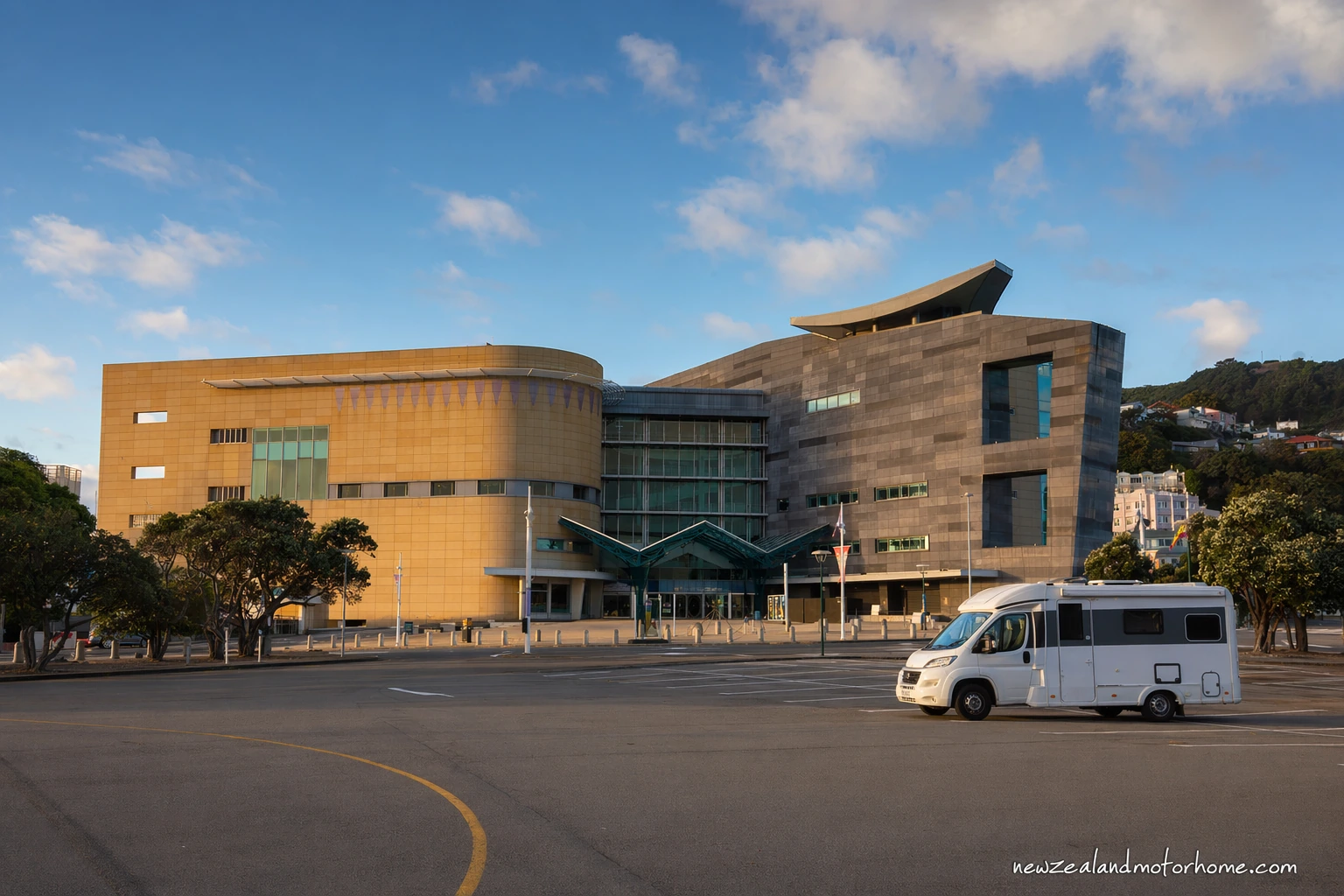
Campsites near Te Papa Wellington are limited because this is a dense harbour city, not a lakeside holiday town. For powered sites, showers, laundry, fresh water and a reliable dump station, look to holiday parks around Lower Hutt, Petone or other city-edge suburbs rather than expecting a full-service campground beside the museum.
For certified self-contained vehicles, Wellington City Council sometimes provides designated freedom camping areas such as bays around Evans Bay or the south coast, but rules, maximum stays and bay numbers can change. Check the current council signage before setting up, and remember that self-contained does not mean you can camp anywhere you like.
- Powered site option: choose a holiday park outside the tight CBD and bus, train or drive in early.
- Unpowered stop: only use signed, legal areas for certified self-contained vans.
- Dump and water: easier at a holiday park than in the central waterfront.
- Event weekends: book ahead when ferries, stadium events or summer holidays fill the city.
If you are linking Te Papa with the ferry, Wairarapa, Kapiti Coast or a South Island crossing, it is worth mapping the overnight stop before the museum day. You can also talk to us if you want the Wellington night placed sensibly inside a bigger campervan route.
How long to allow once the van is parked
Allow at least three hours for Te Papa if you want more than a quick look, and four to five hours if you are travelling with children, planning lunch, or want time on the waterfront afterwards. The museum is large, layered and easy to enjoy slowly, which is handy on a wet or windy Wellington day.
The key campervan trick is to park once and walk. Moving the van between nearby attractions is rarely worth it; the waterfront, Waitangi Park, Cuba Street, Oriental Bay and central cafés are all better handled on foot once you have found a legal place for the vehicle.
- Quick visit: 2 hours, if you already have parking sorted and a clear plan.
- Comfortable visit: 3–4 hours, with time for main galleries and a break.
- Family pace: half a day, especially with interactive exhibits and snacks.
- Nearby on foot: waterfront sculptures, harbour views, Cuba Street and Oriental Bay.
Van services before or after your museum day
There is no reason to bring a full waste tank, empty water tank or low LPG bottle into central Wellington. Te Papa is a museum visit, not a service stop, so handle the practical campervan jobs before you roll into the waterfront or after you return to your overnight base.
Use your holiday park’s dump station where possible, or a current public dump station shown by council or campervan travel resources. For LPG bottle swaps or refills, supermarkets and service stations outside the tightest CBD streets are generally easier to access than inner-city forecourts.
- Fresh water: fill at your campsite or a signed potable-water tap, not from random public taps.
- Grey and black water: empty only at an approved dump station.
- LPG: check bottle levels before a windy Wellington night; heating and cooking use more than you think.
- Rubbish: use campsite or public bins correctly, and keep recycling separate where provided.
If you are staying unpowered, arrive with devices charged and fridge settings sorted. Wellington’s cool climate helps, but a level overnight park-up still matters for sleep, cooking and safe movement inside the van.
Keep planning
Visiting zealandia wellington by campervan
Read onVisiting weta workshop wellington by campervan
Read onWellington to whangarei campervan
Read onWellington to tauranga campervan
Read onWellington to rotorua campervan
Read onWellington to picton campervan
Read onCommon questions
Can I park a campervan at Te Papa?
Possibly, but only if your van fits the current posted height, length and bay rules for the parking you choose. High-roof campervans and larger motorhomes should not rely on covered central parking; plan for an open-air legal space within walking distance.
Is there freedom camping near Te Papa Wellington?
Not at Te Papa itself. Use only signed council-designated areas, and only if your vehicle meets the self-containment requirements shown on the local signage. Rules can change, so check before settling in for the night.
What are the best campsites near Te Papa Wellington for a motorhome?
For powered sites, dump stations, fresh water and showers, look to holiday parks in city-edge areas such as Lower Hutt or Petone rather than the CBD waterfront. If you only need an unpowered self-contained stop, check current council-designated options and arrive early.
How do I get to Te Papa from the ferry terminal in a campervan?
Follow the main signed city and waterfront routes rather than cutting through steep residential streets. Allow extra time if a ferry has just unloaded, as several campervans can be moving through the same harbour roads at once.
Can I leave the van parked while we spend the day at the museum?
Yes, if it is in a legal paid or permitted space for the whole time you are away. Lock the van, take valuables with you, and check the meter or parking app carefully so you are not caught by a short-stay limit.
Should I visit Te Papa before or after servicing the campervan?
Service the van first if your tanks are near full or your fresh water is low. Central Wellington is not the place to search for a dump station, LPG or a roomy water fill with a long motorhome.
Have a planner shape this for your dates
Send a short outline — your dates, party size, and the kind of trip you want. A planner replies with a vehicle recommendation, a paced route, and the realistic budget.