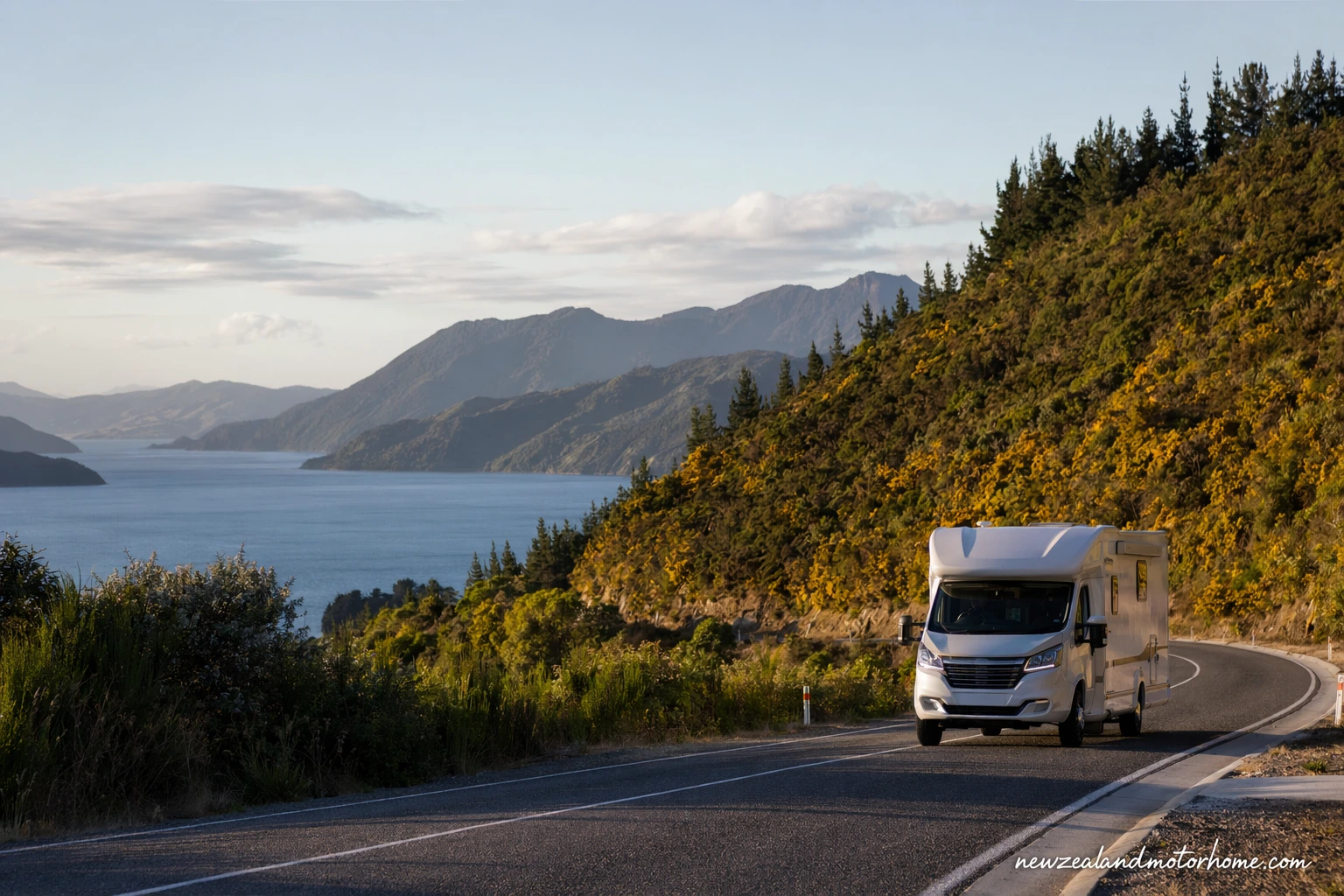
- Allow 1–3 days
- Cook Strait ferry required
- Book by full van length
- Powered sites useful either side
- Certified self-contained only for freedom spots
The Wellington to Picton campervan route is less a normal road trip and more a small adventure with a ferry in the middle: city streets, a Cook Strait sailing, then the slow green entrance into the Marlborough Sounds. For motorhome travellers, the planning is mostly about timing, vehicle length, gas, overnight stops, and being ready to roll off the ferry without hunting for water or a site in the dark.
This guide is written for people driving and sleeping in their own hired van. You’ll find practical notes on the Wellington to Picton drive to the ferry terminal, how to handle the crossing with a campervan, where to stay on either side, and which onward roads suit larger motorhomes once you arrive in Picton.
How the route works: road, ferry, then Sounds driving
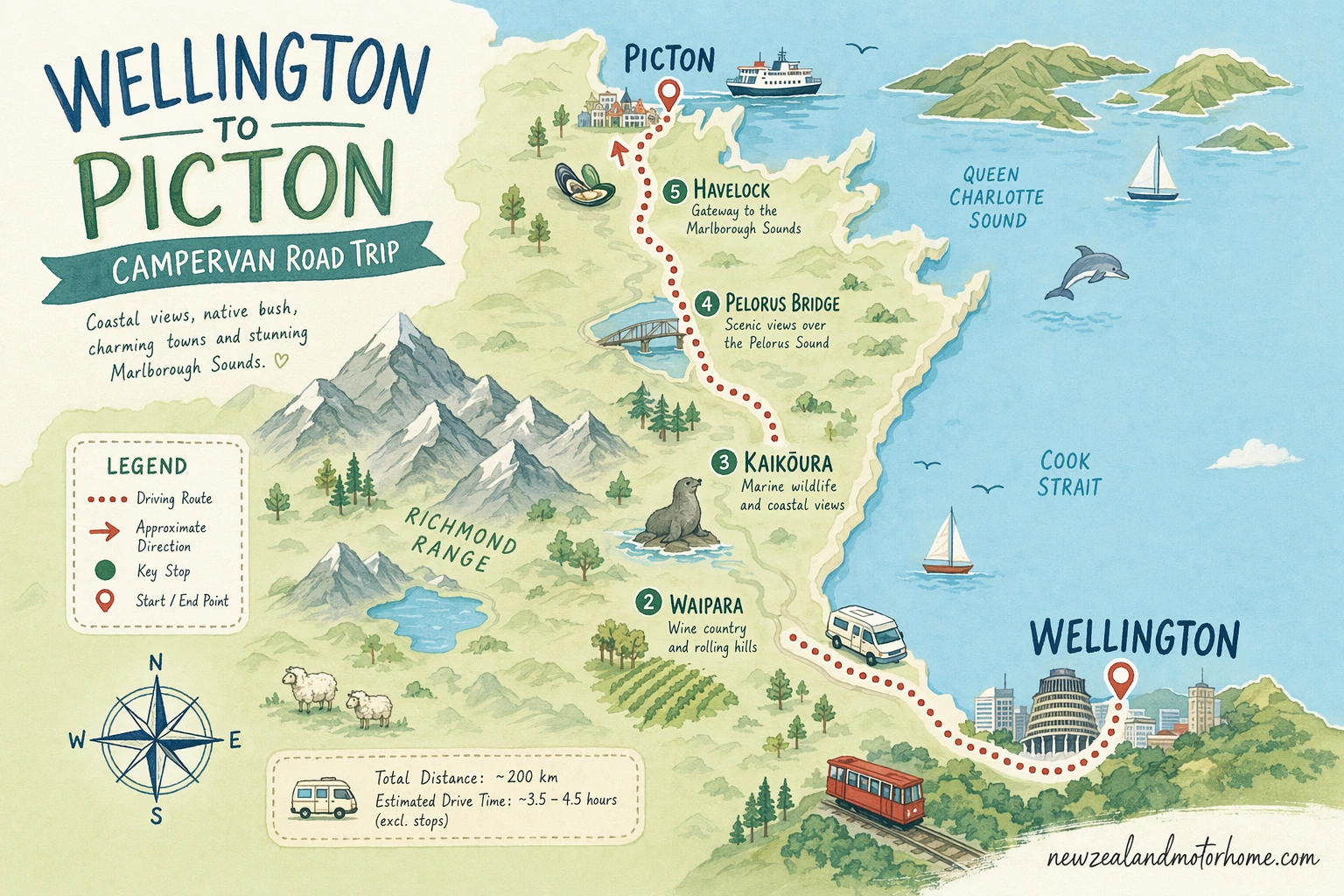
The classic Wellington to Picton motorhome road trip is not a continuous drive. You drive your van to the Wellington ferry terminal, sail across Cook Strait, then drive off in Picton at the head of Queen Charlotte Sound. The crossing is the main event, so treat it like a travel day rather than squeezing it between long drives.
Most campervan travellers are happiest allowing at least one night on either side if they have the time. Wellington gives you a chance to top up supplies and empty waste before boarding; Picton gives you an easy first night in the South Island without immediately tackling winding Sounds roads after a ferry.
- Best pace: 1 full day for the crossing, 2 days if you want a relaxed Wellington start and Picton arrival.
- Road type: sealed urban roads in Wellington, ferry deck, then sealed roads around Picton.
- Van factor: book the ferry with your exact vehicle length and height, including bike racks, roof boxes or rear storage.
- Arrival tip: if your sailing lands late, pre-arrange a legal overnight stop rather than relying on freedom camping.
Getting the van ready in Wellington
Wellington is compact, hilly and windy, so do your campervan chores before you nose into the central city. Surface car parks are friendlier than multi-storey buildings for high-roof vans, and you’ll want to watch for clearways, tight waterfront turns and busier commuter periods around the motorway approaches.
For the night before the ferry, look for a holiday park or campground in the wider Wellington, Hutt Valley or Porirua area if you want a powered site, showers and an easier morning departure. Freedom camping rules are strict and location-specific in the capital region; only use signed areas that allow certified self-contained vehicles, and check the time limits before you settle in.
- Before boarding: empty grey and black water, refill fresh water, and secure loose gear inside the van.
- LPG: make sure bottles can be turned off for the ferry and that the locker is accessible.
- Food and fridge: stock up before the sailing, but don’t rely on accessing the vehicle deck during the crossing.
- Dump stations: use council-listed public dump points or your campground facilities before heading to the terminal.
Taking a campervan on the Cook Strait ferry
When booking the ferry, enter the full length and height of your motorhome honestly. A six-berth van with a rear bike rack, tow bar or storage box can be longer than the number on the hire paperwork, and under-booking can cause problems at check-in. If you are unsure, measure or ask your hire provider before the day.
On ferry day, aim to arrive early enough to queue without rushing. Staff will direct you into the correct lane and onto the vehicle deck; once parked, leave the van in gear or park, apply the handbrake, turn off alarms if instructed, and turn off LPG at the bottle. You usually cannot return to the vehicle deck during the sailing, so take jackets, medication, snacks, chargers and anything for children with you.
- Weather note: Cook Strait can be calm one day and lively the next; secure cupboards and fridge latches before boarding.
- Battery note: avoid leaving interior lights, inverters or non-essential appliances running while parked on the ferry.
- Pets: check the ferry operator’s current rules before booking if you’re travelling with an animal.
- Driving off: let traffic clear if you are new to the van; there is no prize for being first onto Picton’s streets.
Arriving in Picton: where to park, stay and reset
Rolling into Picton by campervan is a great introduction to the South Island: marina, steep bushy hills and the ferry wash behind you. The town centre is small, so longer motorhomes are better off using signed larger-vehicle parking or campground parking rather than trying to squeeze into short kerbside bays near the foreshore.
Picton and nearby Waikawa have holiday park and campground options with powered and unpowered sites, which suit a first-night reset after the crossing. If you plan to freedom camp, check the current local bylaw map and only use places where certified self-contained campervans are permitted; Marlborough’s coastal areas are monitored, and many attractive waterfront spots are day-use only.
- Good first-night choice: a powered site if you used the fridge, lights and devices heavily before the ferry.
- Dump and water: Picton has campervan service facilities in the town area and at some campgrounds; don’t assume every parking area has water.
- LPG: refill or swap bottles in larger service centres when convenient, especially before heading into quieter Sounds areas.
- Parking manners: keep awnings, steps and chairs for campsites, not public car parks.
Onward drives from Picton that suit motorhomes
From Picton, you have three very different van routes. State Highway 1 towards Blenheim is the easiest sealed run for larger motorhomes and a good option if you want supermarkets, fuel, LPG and straightforward dump-station access. State Highway 6 towards Havelock and Nelson is also a common motorhome route, though it becomes slower and more winding in places.
Queen Charlotte Drive is the scenic temptation, and it is beautiful, but it is narrow, bendy and not a road for rushing a big van. Confident drivers in shorter campervans usually enjoy it if they take their time, use pull-offs to let traffic pass, and avoid driving tired straight off the ferry. In a long motorhome, consider whether the views are worth the concentration required.
- Picton to Blenheim: best for an easy first South Island leg, supplies and wineries with van parking checked in advance.
- Picton to Havelock/Nelson: a slower touring route with good overnight options if you book ahead in peak season.
- Queen Charlotte Drive: scenic but tight; avoid if you dislike narrow edges, sharp bends or impatient following traffic.
- Sounds side roads: check road width, turning space and campground access before committing a large motorhome.
Suggested timing for a relaxed crossing
If you simply need to relocate, the Wellington to Picton drive-and-ferry day can be done in one go: wake near Wellington, board the ferry, arrive in Picton, and park up at a booked site. That works best with a daytime sailing and a clear plan for where you’ll sleep.
For a nicer rhythm, spend the night before in the Wellington region, take a morning or midday sailing, then stay in Picton or Waikawa. With three days, add a short Marlborough Sounds drive, a waterfront walk, or an easy run to Blenheim before continuing south or west.
If you’d like help matching ferry times with campground availability, van size and your wider South Island route, you can use the soft planning step at /talk-to-us/ and we’ll help shape the crossing day around how you actually travel in a motorhome.
- 1 day: ferry-focused travel day with a booked Picton overnight stop.
- 2 days: Wellington prep night, ferry crossing, Picton reset.
- 3 days: add Waikawa, Queen Charlotte views or Blenheim supplies before moving on.
Keep planning
Visiting zealandia wellington by campervan
Read onVisiting weta workshop wellington by campervan
Read onVisiting te papa wellington by campervan
Read onHoliday parks wellington
Read onHoliday parks picton
Read onFarmers markets wellington
Read onCommon questions
Can I drive from Wellington to Picton without taking the ferry?
No. Wellington and Picton are separated by Cook Strait, so your campervan must travel by ferry. Treat the crossing as part of the route and book using your van’s full length and height.
Should I stay in Wellington or Picton on the night of the crossing?
If your sailing is early, stay in the Wellington region the night before so you can reach the terminal without city traffic stress. If you arrive in Picton late, book a powered or unpowered site in advance rather than searching for legal freedom camping in the dark.
Can I freedom camp in Picton after the ferry?
Only in places where the local rules allow certified self-contained campervans, and often with time limits. Many waterfront areas are restricted or day-use only, so check current Marlborough freedom camping maps before you park for the night.
Do I need to turn off LPG on the ferry?
Yes, expect to turn LPG off at the bottle before sailing and follow the ferry crew’s instructions. Make sure your gas locker is easy to access and that your fridge and food are prepared for the time without gas.
Is Queen Charlotte Drive suitable for a large motorhome?
It is sealed and scenic, but narrow and winding. Shorter campervans with confident drivers usually manage it well; longer motorhomes should take extra care, avoid rushing, and use pull-offs to let faster traffic pass.
Have a planner shape this for your dates
Send a short outline — your dates, party size, and the kind of trip you want. A planner replies with a vehicle recommendation, a paced route, and the realistic budget.