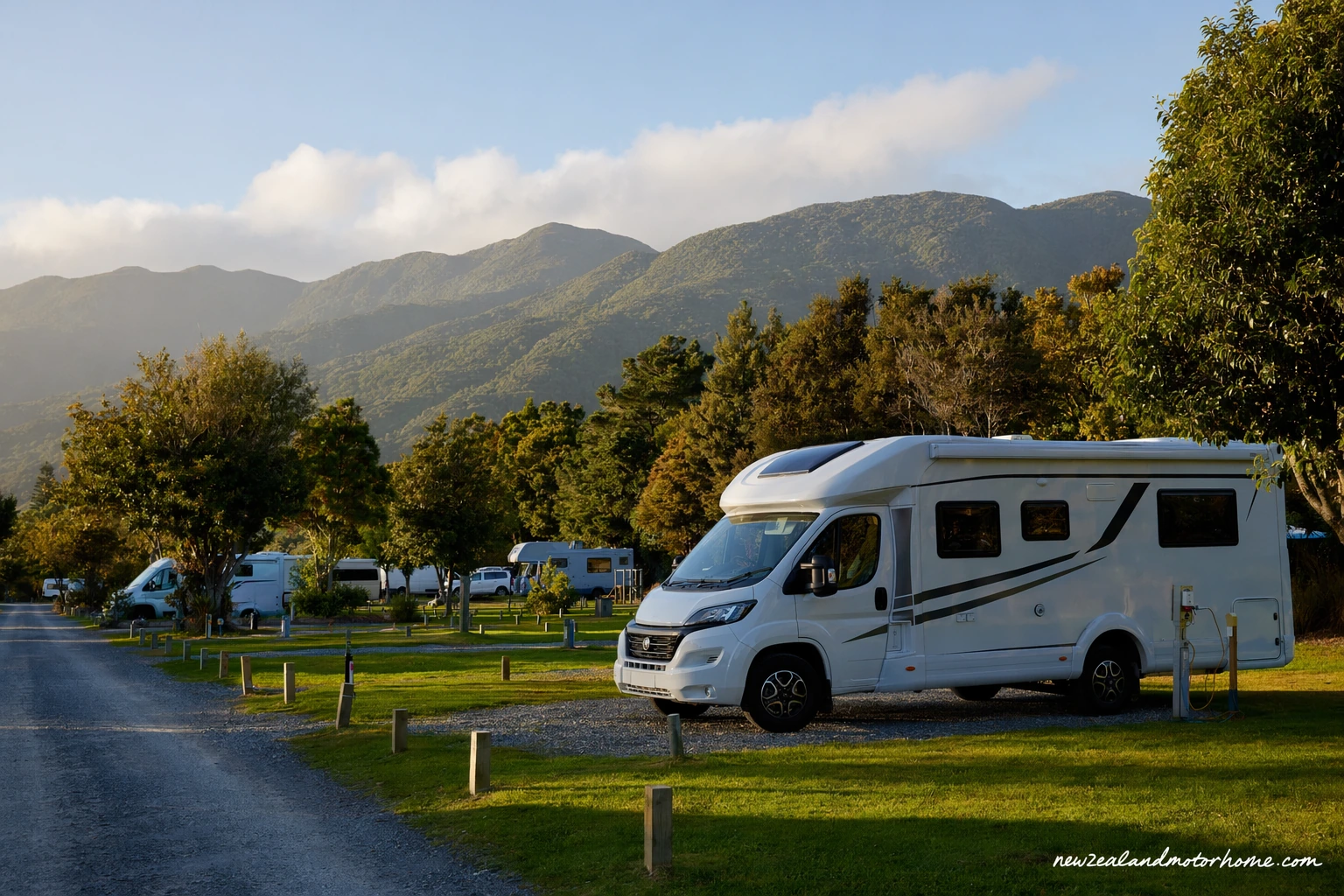
- Best season: spring to autumn
- Book powered sites for events
- Watch wind on exposed roads
- Certified self-contained for freedom camping
- Good base before the ferry
Wellington is a compact region with a big spread of campervan choices: harbour-side bases close to the ferry, valley parks with easier manoeuvring, coastal campsites up the Kāpiti Coast, and quieter Wairarapa stops over the Remutaka Range. For motorhome travellers, the best base is rarely just the closest pin on the map — it is the one with the right access, site size, power, water and overnight rules for your van.
This guide looks at holiday parks Wellington-wide from a self-drive point of view: where powered sites make sense, when unpowered sites are fine, how freedom camping is controlled, and what each base unlocks without needing to thread a large vehicle through tight city streets every day.
How Wellington’s holiday parks are spread out
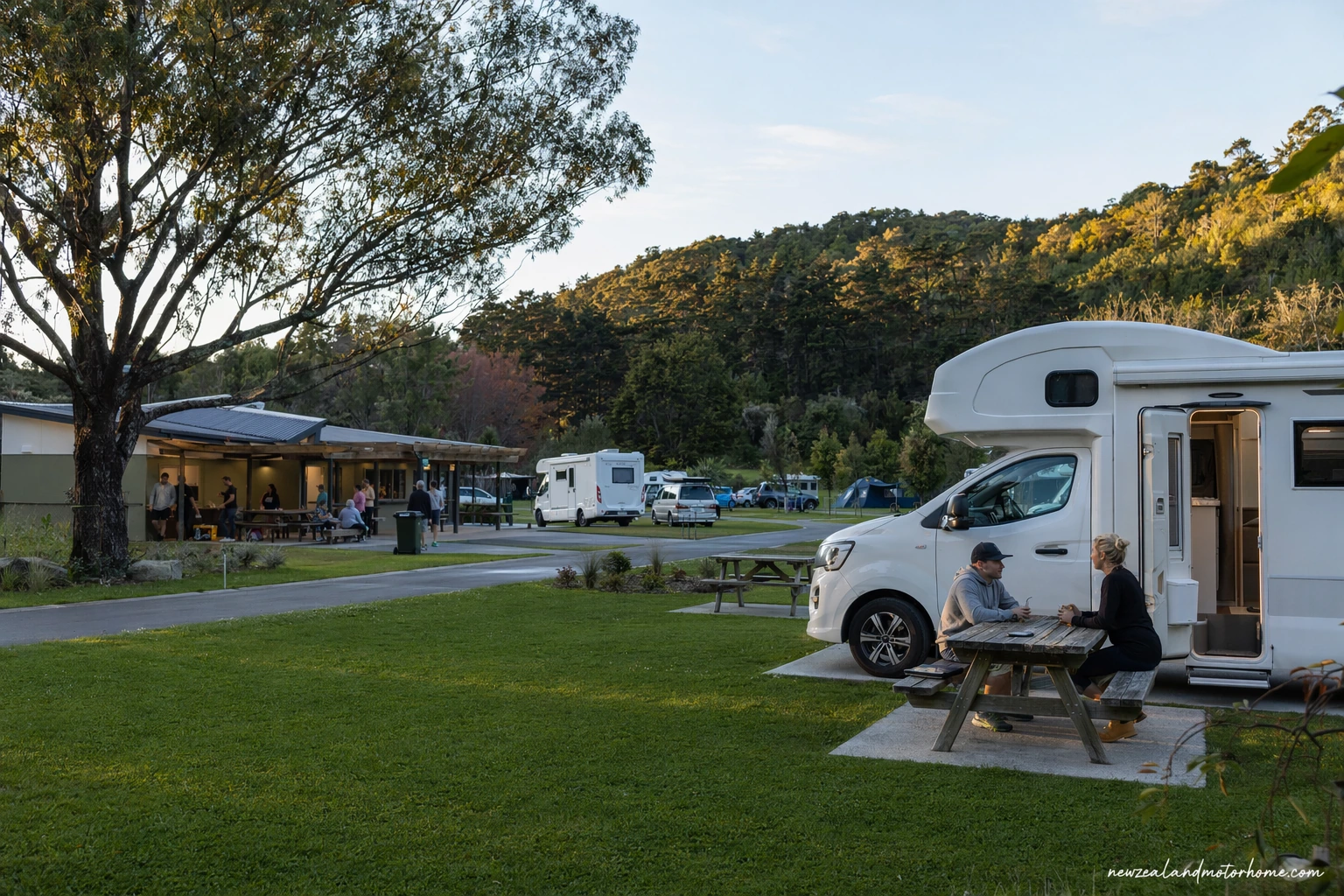
There are only limited places to sleep in a campervan right in central Wellington, and the CBD is not where most drivers want to be hunting for a bay at the end of the day. The easier campgrounds Wellington travellers use tend to sit on the edges: Lower Hutt and Petone for the harbour and ferry, Porirua and Pāuatahanui for the northern approach, Kāpiti for beach nights, and Wairarapa for wineries, small towns and more breathing room.
If you are arriving late off the Cook Strait ferry, avoid building a plan that depends on a long night drive over unfamiliar roads. A nearby powered site is often the calmest first night, especially if the wind is up and you still need to sort bedding, water and groceries in the van.
- Best for ferry access: harbour and Hutt Valley bases, with simpler driving than crossing the city at peak time.
- Best for beaches: Kāpiti Coast campsites, where you can park up and walk rather than keep shifting the van.
- Best for wine country: Wairarapa holiday parks and campsites around the main towns.
- Best for city time: stay outside the CBD and use train, bus or ferry services where practical.
Powered, unpowered and what to book first
Powered sites Wellington-wide are worth booking ahead in summer, school holidays, long weekends and around major events. The weather can change quickly here, and power gives you a more comfortable margin for heating, charging devices and managing a fridge after a windy ferry crossing or a day parked up sightseeing.
Unpowered sites can work well for certified self-contained vans with good house batteries, especially on the coast or in Wairarapa where you are moving every few days. Check the site surface before committing: grass sites can be lovely in dry weather but may be less appealing after heavy rain, particularly in a heavier motorhome.
- Confirm whether the park accepts your vehicle length before booking a large motorhome.
- Ask for a level site if you are travelling with a fridge-sensitive setup or sleeping crosswise in the van.
- Use powered nights to reset batteries, refill fresh water and do laundry.
- Do not assume every campground has a dump station; check before you arrive with full waste tanks.
Rather than chasing a generic top 10 holiday park Wellington list, match the base to the driving you actually want to do the next morning.
Freedom camping rules around Wellington
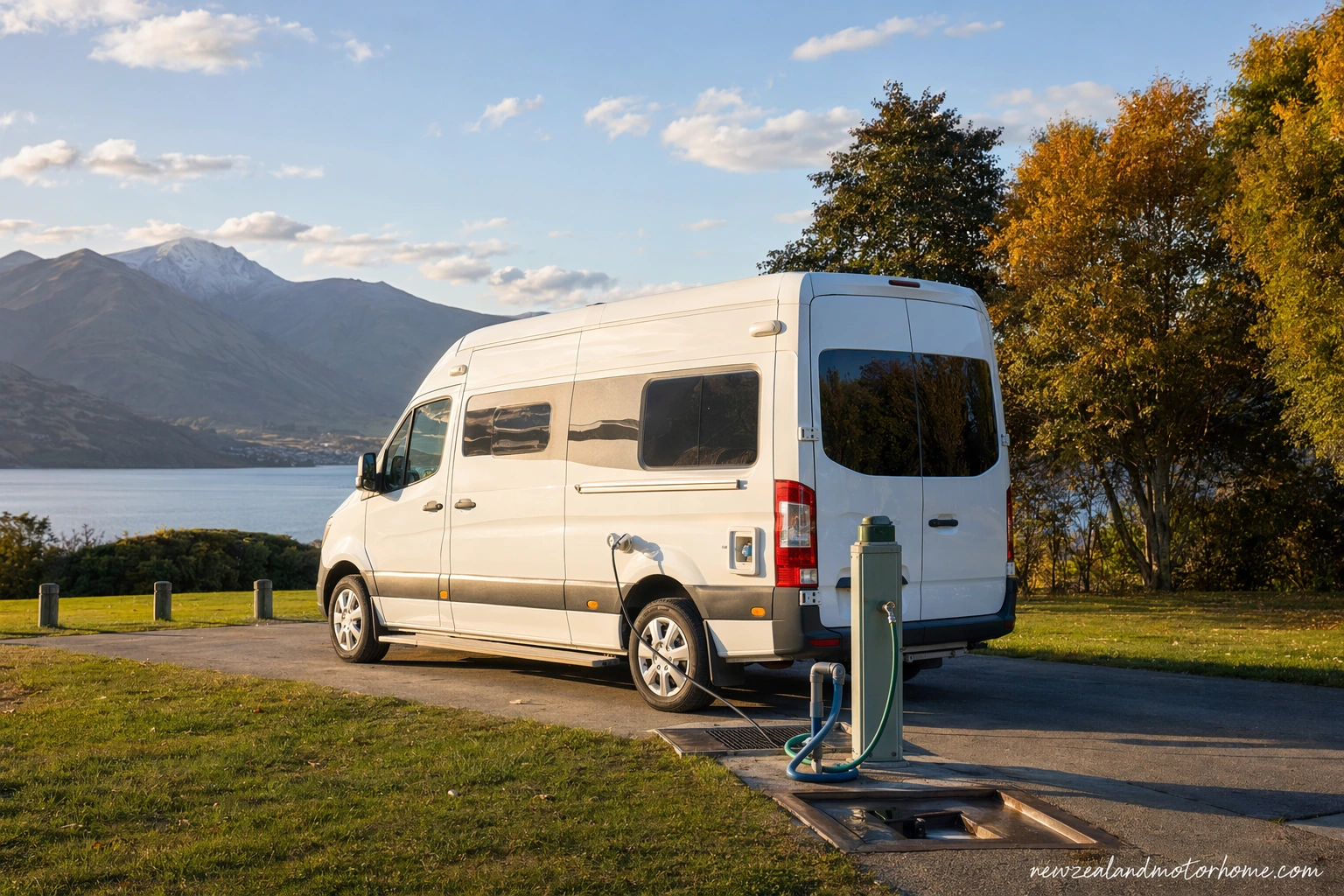
Freedom camping in the Wellington region is controlled by local council bylaws, and the rules change between Wellington City, Hutt Valley, Porirua, Kāpiti Coast and Wairarapa districts. A site that is acceptable in one council area may be prohibited a few kilometres away, so check current signage and council maps on the day.
In general, expect designated areas, time limits and strict requirements for certified self-contained vehicles. Being self-contained does not give you permission to stay anywhere; it simply means you may qualify for places that are only open to certified vans. Rangers do check, particularly near beaches, reserves and busy waterfront car parks.
- Display your current self-containment certification clearly.
- Arrive early enough to read signs in daylight and park within marked areas.
- Do not put awnings, chairs or washing out in car-park style freedom camping areas.
- Leave before any posted time limit and take all rubbish with you.
Dump stations, water, LPG and practical van chores
Wellington is a good place to reset the van before heading north, crossing the strait, or looping into Wairarapa. Many holiday parks have fresh-water taps and rubbish facilities for staying guests, while public dump stations are spread unevenly across the wider region. Do not leave dumping until your waste tank is near full if you are heading onto quieter coastal roads.
LPG bottle swaps and refills are easier to find around larger suburbs and service hubs than in small beach settlements. If your heating, cooking or hot water relies on LPG, check levels before a cold southerly arrives — Wellington weather is not shy about reminding you where the draughts are in a van.
- Fill fresh water before crossing the Remutaka Range or leaving the main urban corridor.
- Empty grey and black waste only at approved dump stations.
- Plan laundry and long showers for powered holiday park nights.
- Keep a small buffer day if you need repairs, tyres or campervan supplies before the ferry.
Driving between bases: city, coast and ranges
Driving a campervan around Wellington is straightforward if you respect the hills, wind and tighter urban streets. The motorway approaches are the easiest way to reposition, while central streets and waterfront parking can feel cramped in a long or high vehicle. If your van is tall, always check height restrictions before entering covered parking or supermarket car parks.
Transmission Gully has made the northern approach smoother, but side roads into beaches and bays can still be narrow. The Remutaka Hill Road to Wairarapa is sealed and commonly driven, yet it has bends, gradients and exposed sections; take it slowly, use pull-outs when safe, and avoid rushing it in poor weather.
- Allow extra time in strong wind, especially on exposed motorway and harbour sections.
- Use public transport from a holiday park base rather than driving into the CBD each day.
- Fuel up before heading to quieter coastal or rural overnight stops.
- For a tailored loop, you can share your van size and travel dates via /talk-to-us/ and we will help shape the overnight stops.
Keep planning
Wellington to whangarei campervan
Read onWellington to tauranga campervan
Read onWellington to rotorua campervan
Read onWellington to picton campervan
Read onWellington to palmerston north campervan
Read onWellington to new plymouth campervan
Read onCommon questions
Are there holiday parks in central Wellington for campervans?
Do I need to book powered sites in Wellington?
Can I freedom camp in Wellington with a certified self-contained campervan?
Where should I stay before or after the Cook Strait ferry?
Is the Remutaka Hill Road suitable for motorhomes?
Have a planner shape this for your dates
Send a short outline — your dates, party size, and the kind of trip you want. A planner replies with a vehicle recommendation, a paced route, and the realistic budget.