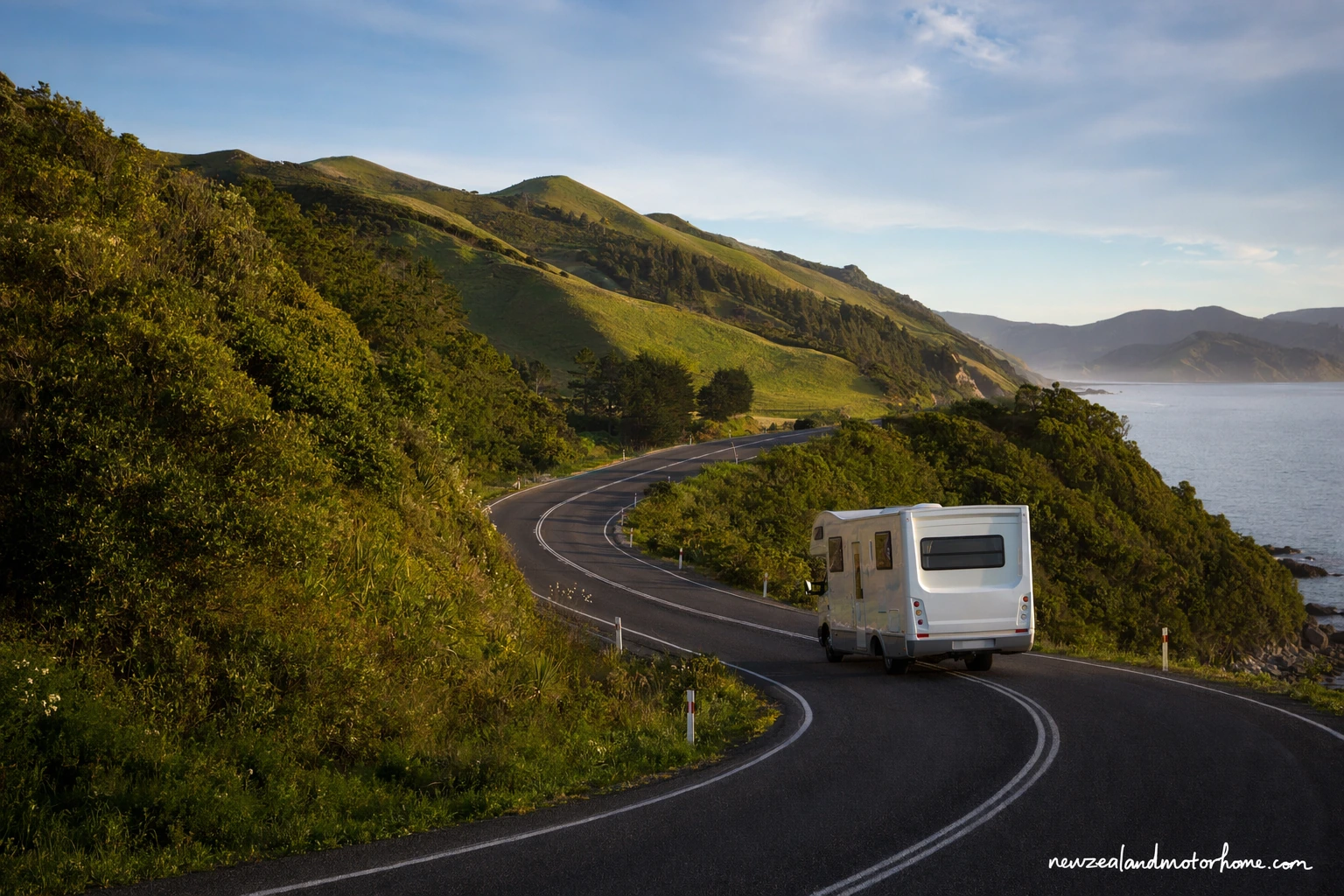
Wellington to Tauranga campervan route for a relaxed North Island crossing
- Best over 2-4 days
- Main route via SH1, Taupō and Rotorua
- Desert Road weather can change fast
- Powered sites useful at Taupō or Rotorua
- Freedom camping only where signed and legal
The Wellington to Tauranga campervan route is a proper North Island traverse: harbour roads out of the capital, wide farm country through Horowhenua and Rangitīkei, the open pull of the Desert Road, then lake, geothermal country and the Bay of Plenty coast. It is not a difficult drive in a well-set-up van, but it rewards good pacing, especially if you are new to driving a taller motorhome on windy or hilly roads.
This guide is written for self-drive campervan travellers sleeping in their hired van. You will find sensible day splits, where to think about powered and unpowered nights, how to handle water, LPG and dump stations, and which road choices suit longer vehicles. Use it to shape a Wellington to Tauranga motorhome road trip that feels like a holiday, not a delivery run.
Best route and how many days to allow
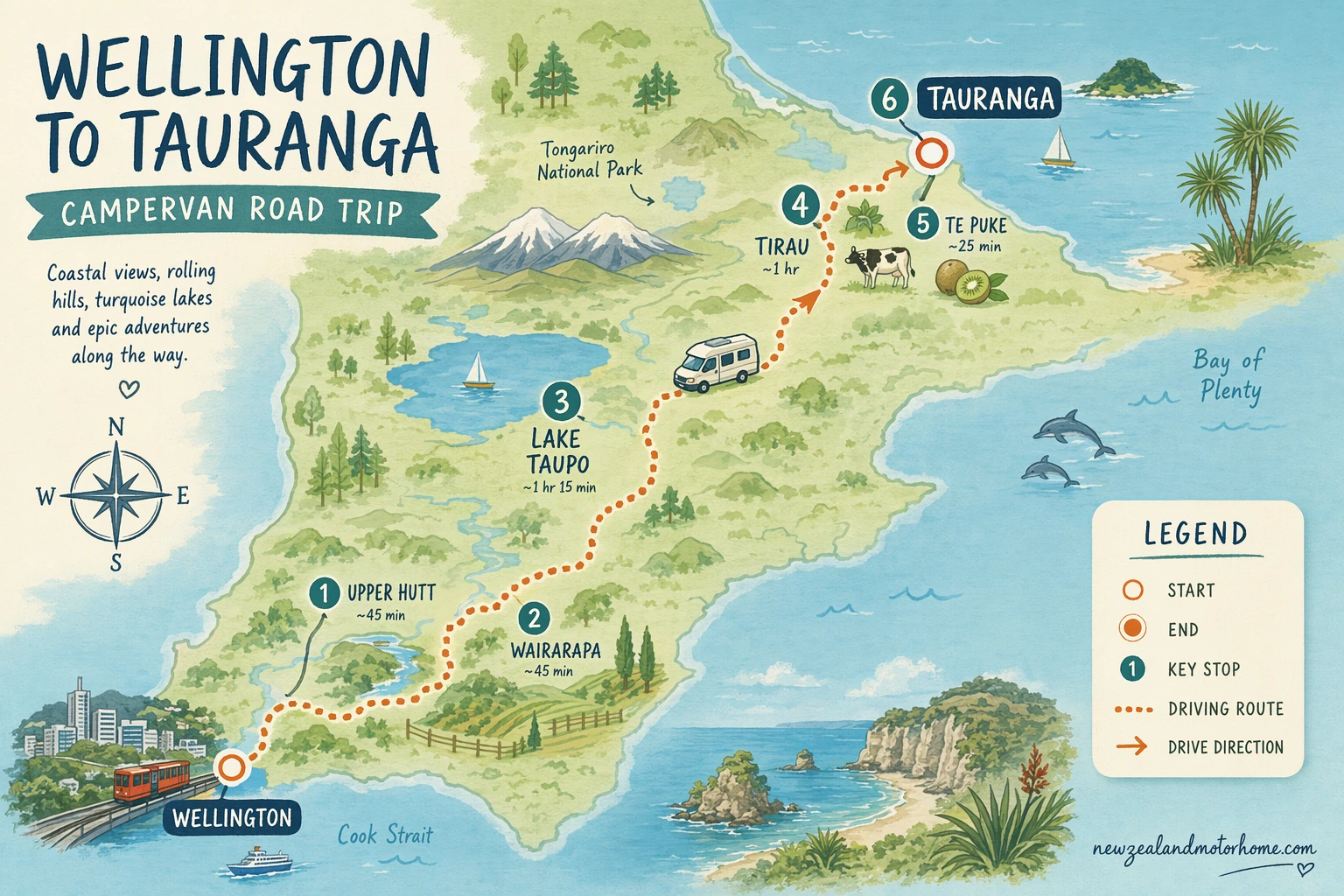
The most straightforward Wellington to Tauranga drive follows State Highway 1 north through Kāpiti, Levin, Bulls, Taihape, the Desert Road and Taupō, then continues towards Rotorua and Tauranga. In clear conditions it can be driven in a long day by car, but in a campervan or motorhome it is far more comfortable over two to four days.
A two-day version usually means a big first day to Tūrangi or Taupō, then across to Tauranga the next day. Three days gives you better van-life rhythm: leave Wellington without rushing, overnight around Taihape, Tūrangi or Taupō, then decide whether to spend a night near Rotorua before rolling into Tauranga. Four days lets you add lake time, geothermal stops and a slower arrival at the coast.
- Quick but tiring: 2 days, with one overnight around Tūrangi or Taupō.
- Balanced: 3 days, giving room for dump station stops, groceries and a proper lunch break.
- Relaxed: 4 days or more, ideal if you want Rotorua, Lake Taupō or Mount Maunganui time.
- Van note: allow extra time for fuel, fresh-water fills, toilet cassette emptying and slower hill sections.
If you would like help matching this route to your hire van size, travel dates and campsite style, you can use the plan-your-trip step and we will help turn the outline into a workable campervan itinerary.
Leg 1: Wellington to Kāpiti, Levin or Rangitīkei
Leaving Wellington in a campervan is mostly about timing and patience. The Ngauranga Gorge and motorway sections can feel busy in a taller vehicle, especially in wind or commuter traffic, so avoid peak times if you can. Transmission Gully has made the northbound run smoother, but keep your speed steady and leave room for stronger gusts on exposed sections.
Kāpiti is a useful first pause if you have picked up the van in Wellington and want to reorganise cupboards, check the gas bottle and do a first grocery shop before the longer inland stretch. Paraparaumu, Waikanae, Ōtaki and Levin all have practical stopping points, supermarkets and service stations where a larger van is easier to manage than in central Wellington streets.
- Good first-night pattern: stay at a holiday park on the Kāpiti Coast, Levin area or further north near the Rangitīkei if you collected the van late.
- Powered site useful for: charging devices, learning the van systems and running the fridge confidently on your first night.
- Freedom camping: only use signed, permitted areas and make sure your vehicle is certified self-contained.
- Practical stop: top up groceries before leaving the larger towns; choices thin out between smaller rural settlements.
Do not feel you have failed the route by stopping early. A calm first night with fresh water in the tank, a charged house battery and a known legal overnight spot makes the rest of the drive much easier.
Leg 2: Rangitīkei and Taihape to the Desert Road
North of Bulls and Marton the road begins to feel more open, with rolling farmland, river valleys and longer gaps between services. Taihape is a natural campervan break: it is large enough for fuel and food, but still easy to negotiate in a motorhome if you choose your parking with care. Look for longer kerbside spaces or public parking areas rather than trying to nose into tight angled parks.
From Taihape towards Waiōuru and the Desert Road, weather becomes the main planning factor. The road is high, exposed and beautiful, with big views towards Ruapehu, Ngāuruhoe and Tongariro when the cloud lifts. It can also be affected by snow, ice, wind, fog or road closures, particularly in winter and shoulder seasons.
- Before the Desert Road: check current road conditions, fuel level and your fresh-water situation.
- Driving style: use passing lanes courteously; do not feel pressured to sit at car speed in a heavy van.
- Weather call: if conditions look poor, pause in Taihape, Waiōuru or Tūrangi rather than pushing on tired.
- Overnight options: holiday parks and basic campgrounds around Taihape, Tūrangi and the Tongariro area suit a staged drive.
For longer motorhomes, the Desert Road itself is not especially narrow, but crosswinds can be tiring. Keep both hands on the wheel, secure loose items in the living area, and remember that a tall van moves differently from a car when trucks pass in the opposite direction.
Leg 3: Tūrangi, Lake Taupō and the best campervan pause
Tūrangi and Taupō are the easiest places on this route to reset the van. If you have been freedom camping, this is a sensible point to use a dump station, fill fresh water where permitted, restock food and give the battery a powered night. Around Lake Taupō, designated parking fills quickly on fine days, so arrive early for lakefront walks and avoid squeezing a motorhome into car-sized spaces.
Taupō works well as a one- or two-night stop on a Wellington to Tauranga campervan trip because it breaks the distance and gives you genuine downtime. You can park up, walk by the lake, visit Huka Falls with care around busy parking areas, or simply make dinner in the van without another long leg ahead.
- Powered sites: useful after two driving days, especially in cooler months when lights, heating fans and devices use more battery.
- Unpowered sites: fine if your house battery is healthy and you are moving again the next day.
- Dump stations: check council or campsite information for current public access; many holiday parks have facilities for guests.
- LPG and supplies: Taupō and Rotorua are better bets than smaller settlements for bottle swaps, hardware and supermarkets.
Do not assume that a scenic lakefront car park allows overnighting. Taupō district freedom camping rules can be specific, and enforcement is active in popular areas. Read signs on site, use current council information, and keep your self-containment certificate visible if required.
Leg 4: Taupō to Rotorua and over to Tauranga
From Taupō, many campervan travellers take SH5 to Rotorua, then continue to Tauranga via SH36. This route gives an easy geothermal stop and a chance to stay near Rotorua if you want another night before the coast. The road has curves and some busier sections, but it is a common motorhome route when driven steadily.
An alternative is to continue via the Waikato side and cross the Kaimai Range on SH29 towards Tauranga. This can make sense depending on your stops, but the Kaimai road is hilly, winding and used by trucks. In a larger motorhome, use low gear on descents, let faster traffic pass where safe, and do not ride the brakes.
- Rotorua stop: good for powered holiday parks, dump stations, fresh water, supermarkets and LPG before the final coast leg.
- SH36: a practical Taupō-Rotorua-Tauranga link, with bends and changing speed limits; allow more time than the map suggests.
- SH29 Kaimai: suitable for confident drivers, but take extra care with weight, braking and weather.
- Arrival tip: Tauranga and Mount Maunganui traffic can be slow at commuter times and on summer weekends.
Whichever road you choose, arrive at your Tauranga overnight stop before dark if possible. Coastal holiday parks and council-regulated parking areas are much easier to assess in daylight, particularly if you need a level site or have a longer van.
Where to stay: powered, unpowered and freedom camping
This route has plenty of campervan-friendly overnight choices, but they are not evenly spaced. Wellington, Kāpiti, Taupō, Rotorua and Tauranga have the widest choice of holiday parks and serviced campgrounds. Smaller rural stops can be excellent for a quiet night, but facilities may be simpler and booking ahead is wise in summer, school holidays and long weekends.
Powered sites suit the first and last nights, cold-weather travel, or any night after heavy use of the fridge, lights and device charging. Unpowered sites are fine for short stays if you understand your battery, gas and water limits. Freedom camping is possible only where local rules allow it, and most areas require a certified self-contained vehicle.
- Wellington end: consider staying outside the tight city centre if you are collecting or returning a larger van.
- Central route: Taihape, Tūrangi and Taupō are sensible stop points that keep driving days manageable.
- Rotorua: a strong mid-route base if you want geothermal stops and full van services.
- Tauranga and Mount Maunganui: book ahead in peak season; freedom camping is restricted and signs must be followed.
- Dump and water rhythm: empty the toilet before it is urgent, fill fresh water when you see a reliable source, and never discharge grey water outside approved facilities.
A good pattern is powered night one, flexible middle night, then a booked Tauranga or Mount Maunganui site on arrival. That keeps the van comfortable while still leaving room for the weather and the road to shape your days.
Keep planning
Visiting zealandia wellington by campervan
Read onVisiting weta workshop wellington by campervan
Read onVisiting te papa wellington by campervan
Read onHoliday parks wellington
Read onHoliday parks tauranga
Read onFarmers markets wellington
Read onCommon questions
Can I drive from Wellington to Tauranga in one day in a campervan?
You can, but it is a long and tiring day in a motorhome, especially with wind, roadworks or a slower hill section. Most self-drive travellers are better off allowing at least two days, with Tūrangi or Taupō as a practical overnight stop.
Is the Desert Road suitable for a large motorhome?
Yes, in good conditions, the Desert Road is commonly driven by campervans and motorhomes. The main issues are wind, snow, ice, fog and closures, so check conditions before leaving Taihape, Waiōuru or Tūrangi and delay if the forecast looks rough.
Where should I empty the toilet cassette on this route?
Use approved dump stations only. Plan around larger centres such as Wellington, Kāpiti or Levin, Taihape, Tūrangi, Taupō, Rotorua and Tauranga, and check current council or campsite information before relying on any single facility.
Do I need to book campsites between Wellington and Tauranga?
In summer, school holidays and long weekends, booking is strongly recommended around Taupō, Rotorua, Tauranga and Mount Maunganui. Outside peak times you may have more flexibility, but booking your first night and arrival night makes the route much calmer.
Can I freedom camp in Tauranga or Mount Maunganui?
Freedom camping is restricted and location-specific in the Tauranga area. You need a certified self-contained vehicle and must follow current council signs and maps; if in doubt, use a holiday park or designated legal overnight area.
Which is better for a campervan, SH36 through Rotorua or SH29 over the Kaimais?
Both can be driven in a campervan, but they feel different. SH36 via Rotorua is a useful route if you want services and a possible overnight stop, while SH29 over the Kaimais is hilly and winding, so larger vans need careful speed and braking.
Have a planner shape this for your dates
Send a short outline — your dates, party size, and the kind of trip you want. A planner replies with a vehicle recommendation, a paced route, and the realistic budget.