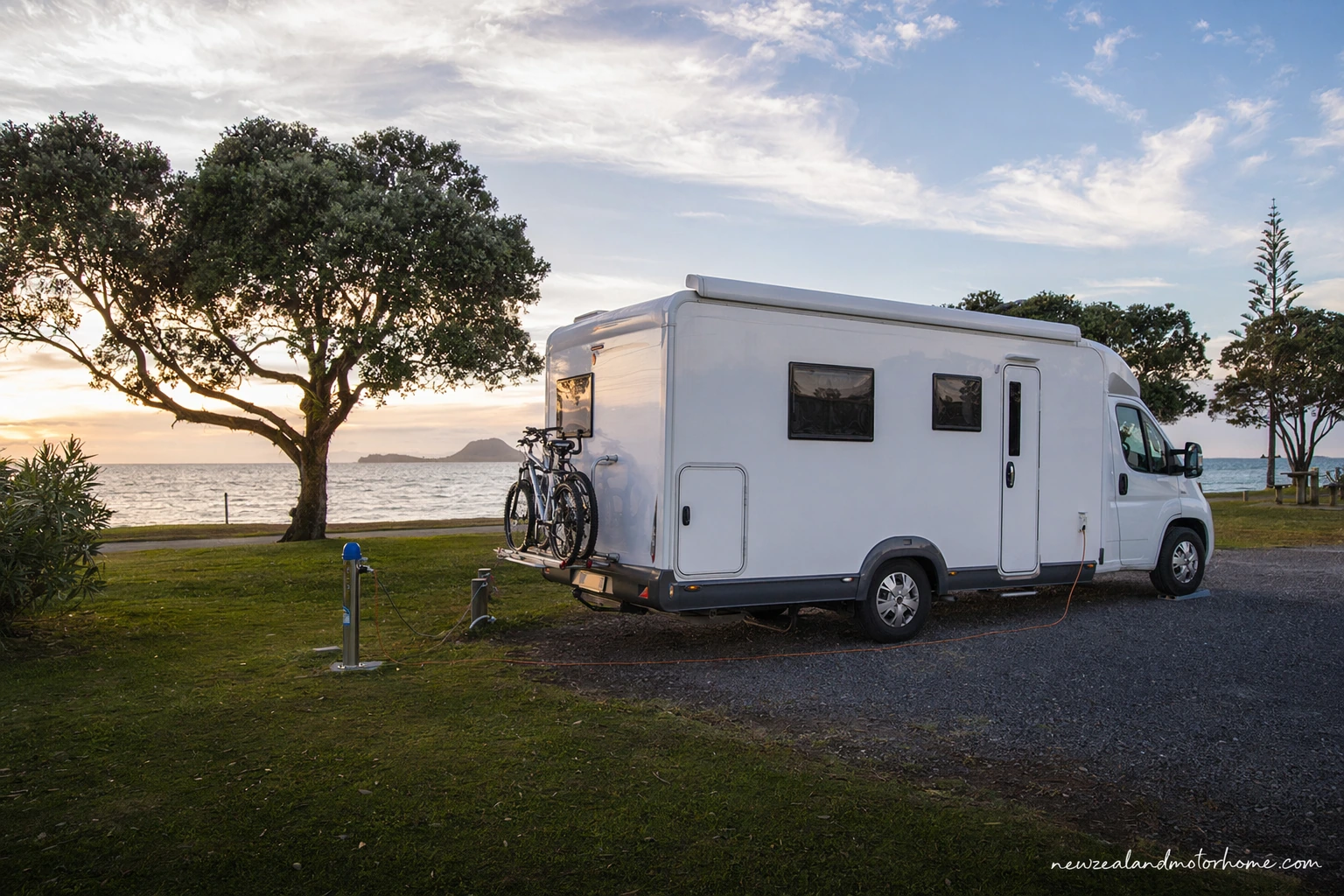
- Best booked ahead in summer
- Powered and unpowered sites available
- Beach areas have strict overnight rules
- Allow 1-3 nights
- Check site size for longer vans
Tauranga is an easy Bay of Plenty base in a campervan: harbour on one side, surf beaches on the other, and useful van jobs close by when you need fresh water, groceries, LPG or a dump station. The main choice is whether you want to be near the city waterfront, over towards Mount Maunganui, or further along the coast at Pāpāmoa where the sites usually feel more relaxed.
This guide is written for self-drive campervan and motorhome travellers, not day visitors. It covers how to compare holiday parks Tauranga wide, what to look for in powered and unpowered sites, where parking the van is easiest, and how to avoid getting caught by tight beach streets or freedom camping rules.
Choosing your Tauranga base by van, not just by map
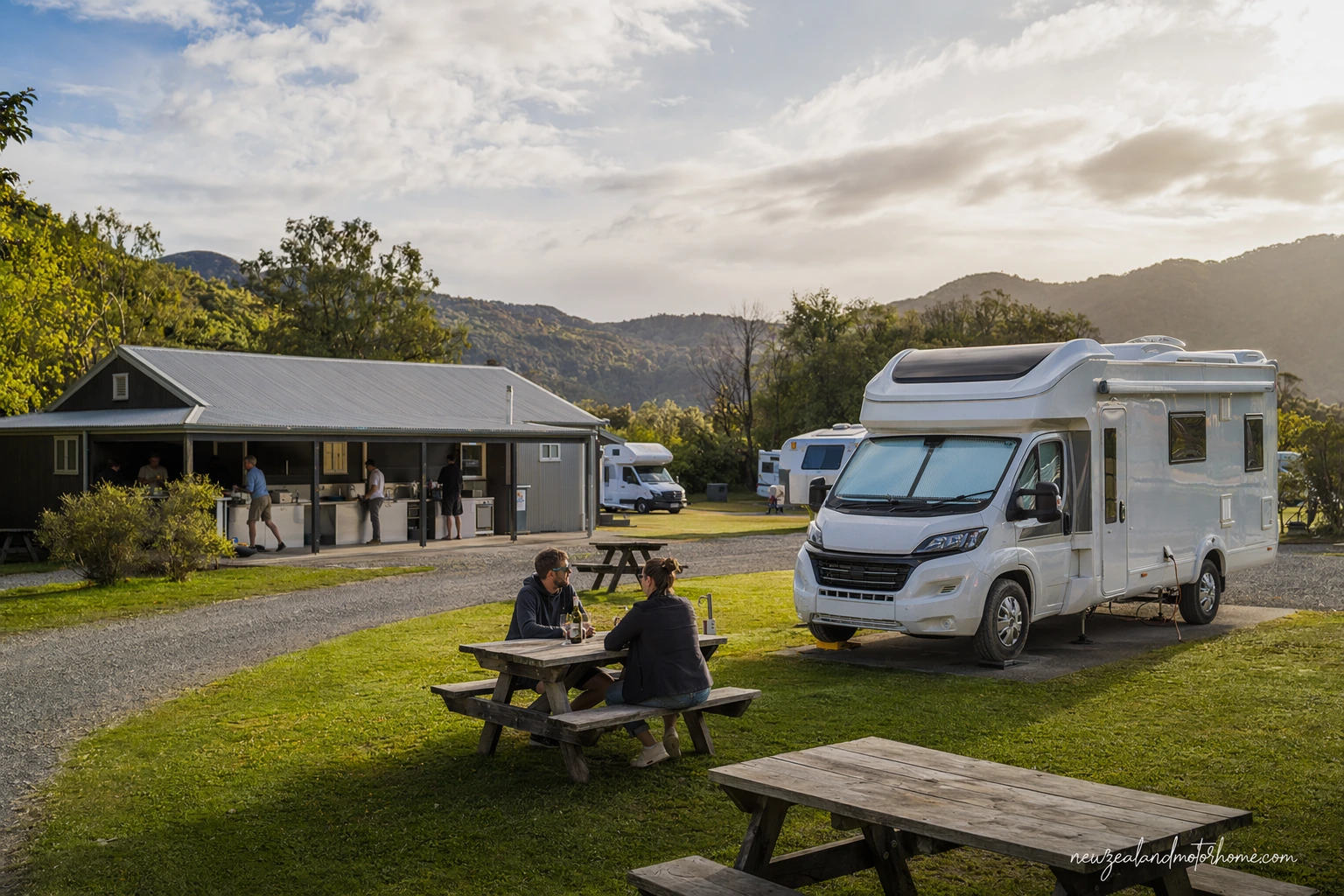
On a map, Tauranga, Mount Maunganui and Pāpāmoa look close together. In a motorhome, the difference is more about traffic, turning space and what you want to walk to once the handbrake is on. Tauranga city gives you harbour walks and easier access to shops and services; the Mount puts you nearer the beach, Mauao and cafés; Pāpāmoa suits a quieter coastal stay with more breathing room around the van.
If you are searching for a Tauranga TOP 10 holiday park, widen the search to include independent holiday parks and coastal campgrounds too. The best fit may not be the biggest name, but the one with a site that suits your vehicle length, an easy dump point, and a safe walk to the beach or bus stop.
- City-side stay: handy for groceries, waterfront walks and onward driving to Rotorua, Hamilton or the Coromandel.
- Mount Maunganui stay: best for beach time, Mauao walks and leaving the van parked once you arrive.
- Pāpāmoa stay: a good option for longer vans, quieter nights and coastal cycling or walking.
- North of Tauranga: useful if you are heading towards Katikati, Waihī Beach or the Coromandel next.
Powered sites, unpowered sites and what to ask before booking
Powered sites Tauranga wide are worth booking ahead in summer, school holidays and long weekends, especially near the Mount and Pāpāmoa. Even if your campervan has solar, a powered site can make sense after a few humid beach days when you want the fridge, fans, device charging and hot showers running without watching the battery monitor.
Unpowered sites can be fine for a night or two if your van is properly self-contained and you are not relying on a microwave or plug-in heater. Before you book, ask about site surface, shade, slope and whether larger motorhomes are placed on drive-on hardstand or grass. After heavy rain, some grass sites can be soft for heavier vans.
- Confirm your van length and whether you have a rear bike rack or awning that needs extra room.
- Ask whether the site is reverse-in, drive-through or tight between cabins and parked cars.
- Check if the holiday park has a dump station for guests and whether fresh-water filling is close to the sites.
- If you need quiet, ask for a site away from communal kitchens, playgrounds and the main entrance.
Dump stations, water, LPG and the practical van reset
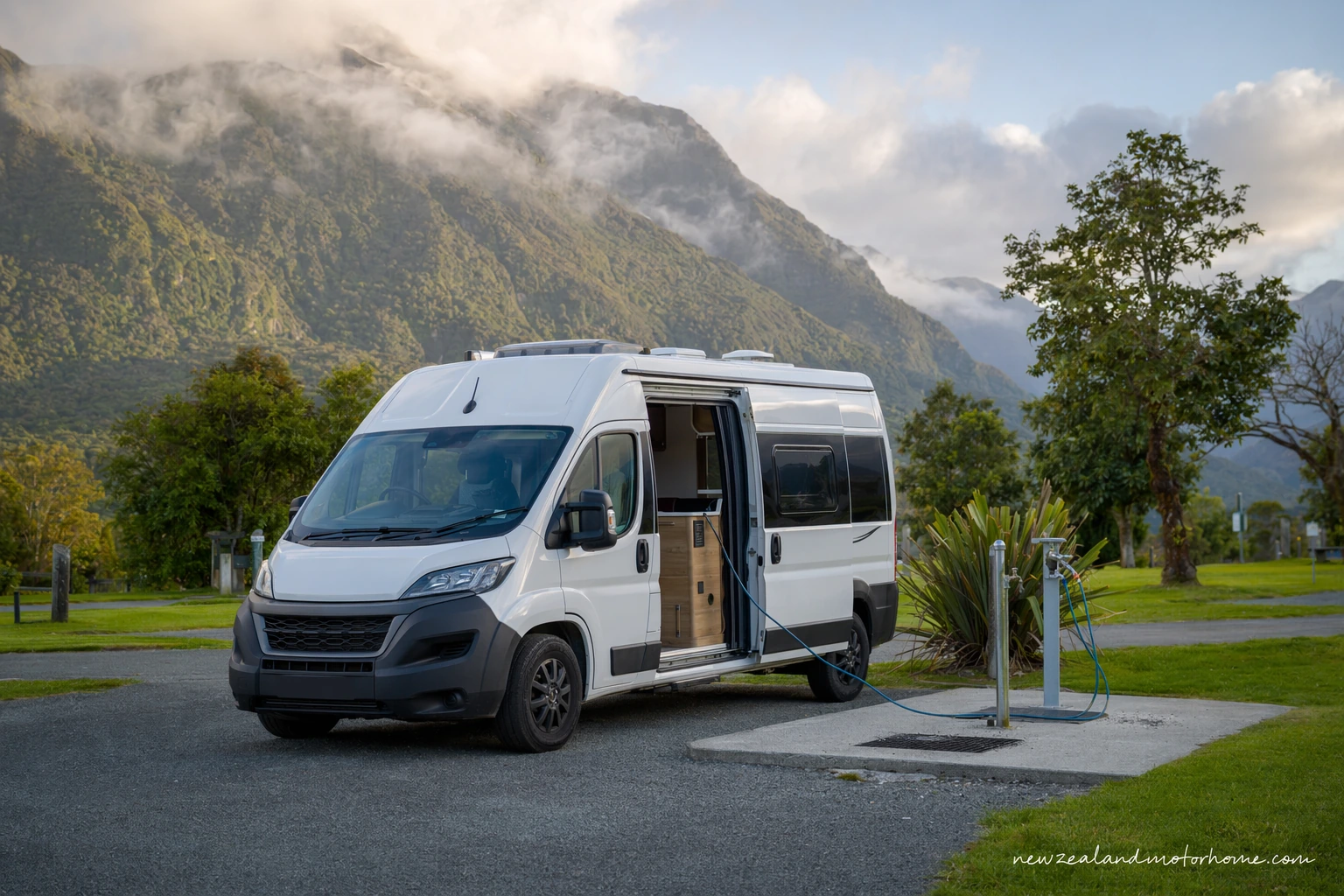
Tauranga is a useful place to reset the van before heading into beach-hopping country. Many holiday parks have guest dump stations and potable water points, but access rules vary, so do not assume you can use them if you are not staying. Public dump station locations can change with roadworks and council updates, so check current signage or a trusted camping app before you plan the day around one stop.
For LPG, fuel and supermarket supplies, the main arterial roads through Tauranga, Mount Maunganui and Pāpāmoa are easier than poking a larger motorhome through small beach-side streets. Use a larger service station forecourt where you can enter and exit without reversing across traffic, and refill fresh water only from marked potable taps.
- Empty grey and black water before you leave the city if you are heading to smaller coastal settlements.
- Top up fresh water before driving inland towards Rotorua or over to the Coromandel.
- Keep a separate drinking-water hose and do not use dump station rinse hoses for filling tanks.
- Plan LPG refills during business hours rather than arriving late with an empty bottle.
Driving into Tauranga and parking once you arrive
The main van approaches are via SH2 along the coast, SH29/29A from the Waikato side, and routes across from Rotorua. Tauranga traffic can build around commuter times, port movements and beach weekends, so give yourself more time than the kilometres suggest. The harbour bridge and causeways are straightforward in normal conditions, but wind and lane changes feel more noticeable in a high-sided motorhome.
Once you are near the beach, streets can be busy with pedestrians, surfboards, cyclists and cars reversing from angle parks. If you have a longer van, it is often easier to park a few streets back and walk, rather than hunting for the closest beachfront space. Overnighting is not the same as day parking: always follow council signs and your holiday park booking conditions.
- Avoid arriving at a beach holiday park right on check-in time during peak season if you dislike tight manoeuvres.
- Use your mirrors carefully around Mount Maunganui’s busier shopping streets and beach car parks.
- Watch for low branches in older residential streets, especially if your van has roof vents, solar panels or a high aerial.
- Keep an eye on parking time limits; a motorhome can draw attention if it stays too long in a day-use bay.
What is walkable from Tauranga holiday parks
The best campsites Tauranga offers for a no-drive evening are the ones where you can walk safely to the water, dinner or a dairy without moving the van. Around the Mount, that might mean beach access, Mauao tracks and cafés. Around the Tauranga side, it may be harbour paths, parks and easier access to central services.
Camping Tauranga style is often about parking once and slowing down: morning coffee with the sliding door open, a swim before the wind picks up, then a short walk rather than another drive through traffic. If you are deciding between two areas, think about what you will do after 5 pm when parking a larger motorhome becomes less fun.
- Mauao and Pilot Bay: excellent walks, but day parking can be busy and tight for larger vans.
- Mount main beach: great for swimming and surf watching; check surf conditions and keep sand out of the van.
- Tauranga waterfront: easier strolling, dining and harbour views without a beach-park squeeze.
- Pāpāmoa: good for beach walks and a more spread-out coastal stay.
Freedom camping and when a holiday park is the better call
Tauranga and the wider Western Bay have strict rules around freedom camping, particularly near beaches, reserves and busy visitor areas. You must be in a certified self-contained vehicle where required, and you still need to use only permitted areas and follow time limits. Signs on the ground override what you remember from an old app listing.
For many campervan travellers, a holiday park is the simpler choice here: you get legal overnight parking, showers, laundry, rubbish disposal, fresh water and a proper place to empty tanks. If you want help matching a Tauranga stop with the rest of your Bay of Plenty route, you can talk to us before you lock in the nights.
- Do not assume beach car parks allow overnight stays, even if other vans are parked there.
- Keep your self-containment certificate visible and current if you use any permitted freedom camping area.
- Arrive in daylight so you can read signs and avoid parking partly over grass, footpaths or no-stopping areas.
- Use holiday park facilities for grey water, toilets and rubbish rather than stretching tanks too far.
Keep planning
Wellington to tauranga campervan
Read onTauranga to rotorua campervan
Read onTauranga to picton campervan
Read onTauranga to invercargill campervan
Read onQueenstown to tauranga campervan
Read onNelson to tauranga campervan
Read onCommon questions
Do I need to book holiday parks in Tauranga ahead?
Are there powered sites in Tauranga for larger motorhomes?
Can I freedom camp near Mount Maunganui or Pāpāmoa?
Where can I empty my campervan toilet in Tauranga?
Is Tauranga easy to drive around in a campervan?
Have a planner shape this for your dates
Send a short outline — your dates, party size, and the kind of trip you want. A planner replies with a vehicle recommendation, a paced route, and the realistic budget.