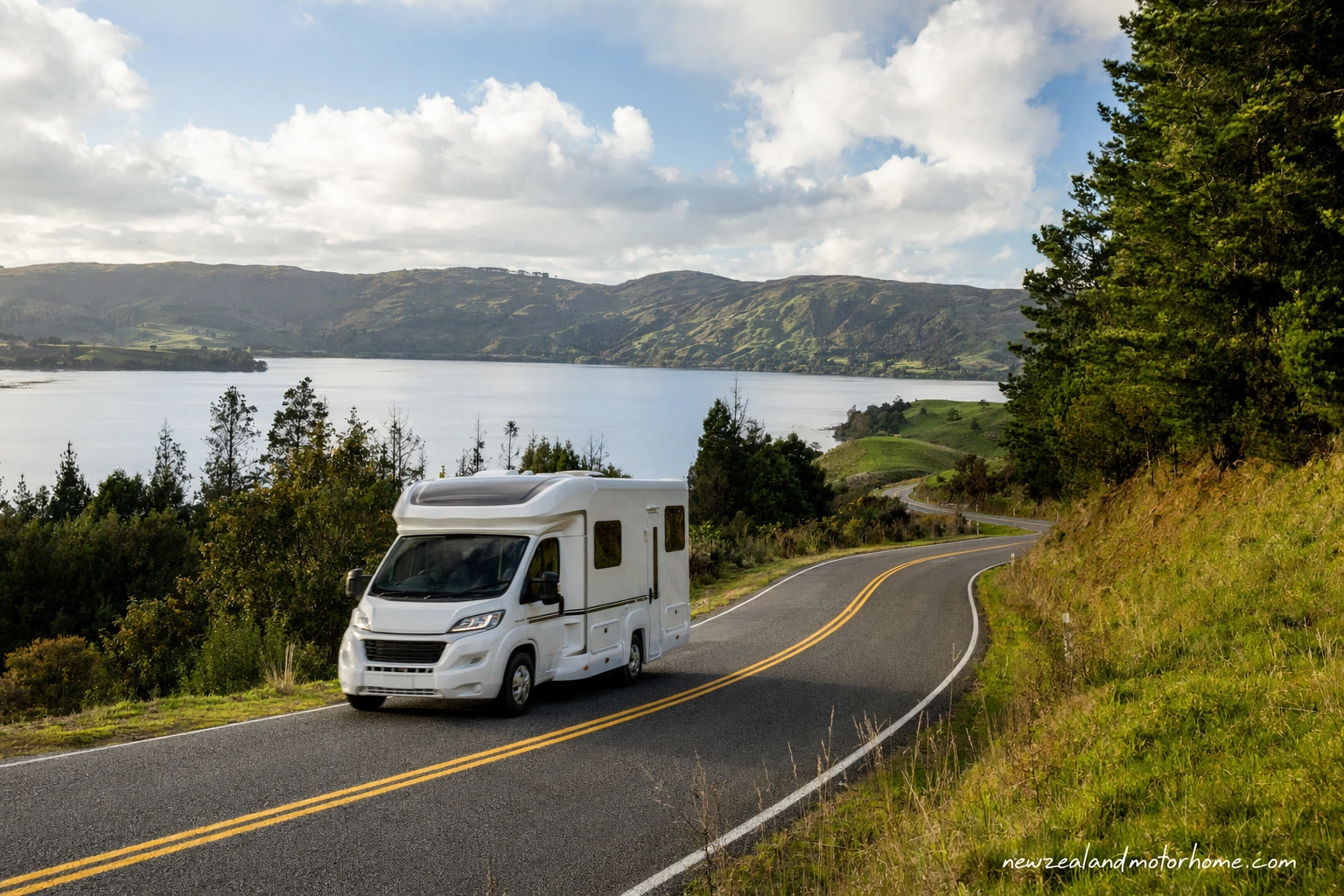
Tauranga to Rotorua campervan route: coast to geothermal lakes
- 65 km direct route
- Allow 1.5 hr driving
- 2-3 days relaxed
- Sealed SH36 with bends
- Powered sites in Rotorua
The Tauranga to Rotorua campervan run is a short hop on the map, but it makes a satisfying little motorhome road trip: salt air at the Mount, quiet rural hills, then steam vents and lake edges as you roll into Rotorua. You can drive it in around 90 minutes, but it is much better with a night or two tucked in along the way.
This guide is written for travellers driving and sleeping in their own hired van. You will find the best route choices, where to park a longer vehicle, powered and unpowered overnight ideas, freedom camping cautions, dump station planning, water and LPG notes, and the small road details that matter when your bed and kitchen are behind you.
How long to allow for the Tauranga to Rotorua drive
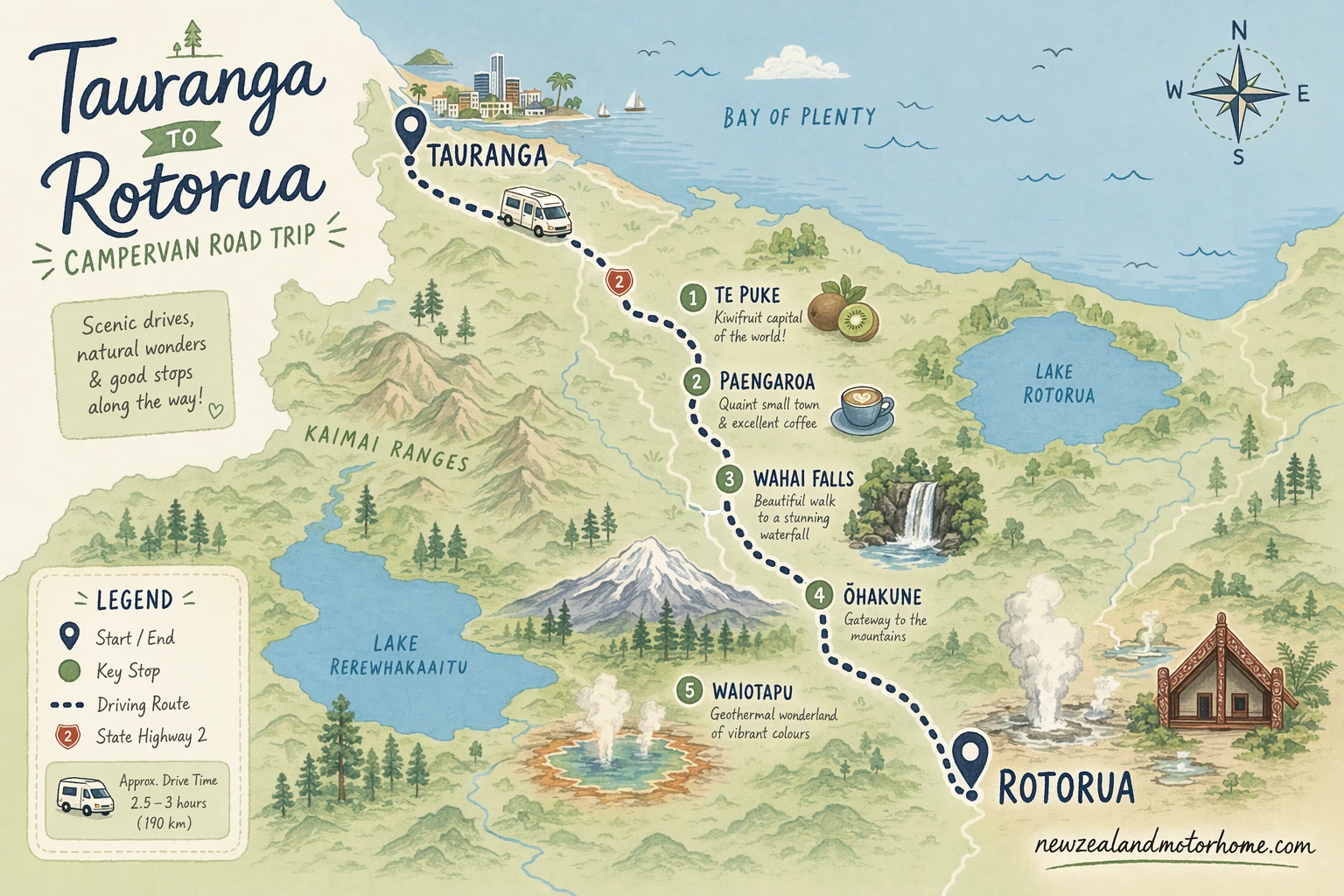
The direct Tauranga to Rotorua drive via SH36 is roughly 65 kilometres, depending on where you start around Tauranga or Mount Maunganui. In a campervan, allow 1.5 hours without long stops, and a little more if you are in a larger motorhome or travelling behind slower rural traffic.
For a proper Tauranga to Rotorua motorhome road trip, two to three days feels right. That gives you time for the beach before you leave, a bush or waterfall stop near the Kaimai foothills, then a relaxed arrival into Rotorua without trying to find a campsite after dark.
- Fast transit: half a day, with fuel, supermarket and dump station sorted before departure.
- Easy overnighter: Tauranga or McLaren Falls area to Rotorua, with one powered or unpowered site.
- Relaxed trip: two nights, adding Mount Maunganui, McLaren Falls, Rotorua lakefront and a hot pool soak.
Best campervan route: SH36 through Pyes Pa
Most campervans take SH36 from Tauranga through Pyes Pa and Ngongotahā into Rotorua. It is sealed all the way and commonly used by motorhomes, but it is not a flat motorway-style road. Expect rolling farmland, passing traffic, some tighter bends through the Mangorewa Gorge area, and the odd truck or logging vehicle.
If your van is tall or long, use the lower gears on descents, give yourself room before bends, and pull over only where there is a proper bay or safe sealed shoulder. Do not rely on every scenic-looking verge; many are soft, narrow or sloping, which is not ideal for a heavy vehicle.
- Road type: sealed state highway, suitable for standard campervans and motorhomes.
- Watch for: bends, changing speed limits, rural driveways, cyclists and slower trucks.
- Large van note: if you are nervous in a 7m-plus motorhome, take it steadily and avoid arriving into Rotorua in peak commuter times.
- Alternative: SH2 and SH33 via Paengaroa is longer but can feel more open for some drivers.
Stops worth making with a van
Start with the practical jobs in Tauranga: groceries, fuel, fresh water if your next site allows filling, and a dump station if your grey tank is getting heavy. Around Mount Maunganui and Papamoa, choose proper car parks and check signs carefully; beachfront parking areas can be busy, height-restricted or time-limited, especially in summer.
McLaren Falls Park is the natural pause between Tauranga and Rotorua. It suits a slower campervan day: park in marked areas, keep the van off damp grass unless signage says it is okay, and be ready for narrower access roads around picnic and walking areas. Always check current council rules if you are hoping to stay overnight, as permitted areas and self-containment requirements can change.
As you near Rotorua, the lakefront and Kuirau Park area are good first stops, but central parking can be tight for big rigs. If you are in a longer motorhome, look for larger edge-of-centre parking areas, avoid overhanging marked bays, and walk the last few minutes rather than squeezing into small city spaces.
- Mount Maunganui: beach walk, cafés and harbour views; park early and respect time limits.
- McLaren Falls: waterfall, short walks and picnic stops; best in daylight with room to turn.
- Ngongotahā/Rotorua lake edge: good for a first Rotorua leg-stretch before checking in.
Overnight stops: powered, unpowered and freedom camping
For the first night, Tauranga, Mount Maunganui and Papamoa have holiday park-style options where powered sites are useful if you want to run heaters, charge devices and reset before heading inland. Unpowered sites can work well in mild weather, but check whether your house battery and fridge are coping before you leave the coast.
Between Tauranga and Rotorua, overnight options are more limited and more rule-dependent. If you are considering a council-managed reserve or freedom camping spot, you need a certified self-contained vehicle to the current NZ standard, and you still must follow the signs on the day. Freedom camping does not mean pulling into any quiet lay-by on SH36.
Rotorua has the broadest choice: holiday parks with powered sites, lake-area campgrounds, and some unpowered options for self-contained vans. Book ahead for long weekends, school holidays and major event periods; Rotorua fills quickly, and arriving late in a motorhome is when the easy sites have often gone.
- Powered site: best for winter, wet gear, electric heaters and full battery top-ups.
- Unpowered site: fine for a short stay if your solar and battery are healthy.
- Freedom camping: only where permitted, and usually only with certified self-containment.
- Quiet-night tip: choose your Rotorua base before you soak in hot pools, not afterwards.
Dump stations, water, LPG and arrival jobs
Because this is a short route, it is tempting to leave all the practical jobs until Rotorua. It is still easier to travel light and tidy: empty grey and toilet cassettes at an approved dump station before you leave Tauranga if you are near capacity, and refill fresh water only from taps marked potable.
Service stations and larger retail areas around Tauranga, Pyes Pa and Rotorua are the best places to handle fuel and LPG bottle swaps or fills, depending on your hire van setup. Check your bottle level before climbing inland; running out after you have parked up for dinner is a very preventable nuisance.
Rotorua is well set up for campervans, but geothermal ground and lakeside environments make waste rules especially important. Use holiday park dump points or public dump stations shown on current council and camping-app listings, never stormwater drains or toilet blocks not designed for cassettes. If you want help matching your route to campsite spacing, you can use our talk-to-us planning step before you lock in dates.
- Before leaving Tauranga: dump if needed, fill potable water, fuel up, check LPG.
- On the road: do not dump or drain at lay-bys, picnic areas or rural roadsides.
- In Rotorua: arrive with enough daylight to find your site, level the van and plug in safely.
Season and driving tips for this short inland run
This route is driveable year-round, but the feel changes. Summer brings busy beach car parks in Tauranga and more competition for Rotorua campsites. Winter can be wonderfully quiet, though the inland section may be damp, misty and darker under trees, so keep headlights on and give yourself more braking room.
The main thing is not to underestimate a short route in a heavy van. Cupboards should be latched before the winding sections, loose gear should be stowed, and bikes on rear racks need a quick check before you leave the coast. If you have just collected a hired campervan, this is a sensible first inland drive because it is short, sealed and has plenty of services at both ends.
- Best light: leave Tauranga after morning traffic and reach Rotorua before dusk.
- Weather: expect sea breeze at the coast and cooler air inland, especially in winter.
- Van comfort: use engine braking on descents and avoid sudden pull-offs on soft shoulders.
- Security: lock the van and keep valuables out of sight at walk and waterfall stops.
Keep planning
Visiting polynesian spa rotorua by campervan
Read onVisiting agrodome rotorua by campervan
Read onHoliday parks tauranga
Read onHoliday parks rotorua
Read onFarmers markets rotorua
Read onCampervan supplies tauranga
Read onCommon questions
Is the Tauranga to Rotorua campervan route suitable for a large motorhome?
Yes, SH36 is sealed and commonly used by campervans and motorhomes. Larger vehicles should take extra care on bends and descents, and only pull over where there is a safe, formed area with enough room to rejoin traffic.
Can I freedom camp between Tauranga and Rotorua?
Only in places where overnight camping is specifically allowed, and usually only if your van is certified self-contained. Check current council signage and camping-app updates on the day, because rules around reserves and coastal areas can change.
How many days should I allow for a Tauranga to Rotorua motorhome road trip?
You can drive it in half a day, but two days is much more relaxed. Three days lets you enjoy Mount Maunganui, McLaren Falls and Rotorua without rushing campsite check-in, dumping and water fills.
Where should I empty the toilet cassette and grey water?
Use approved dump stations only, either at holiday parks or public dump points listed by local councils and current camping apps. Do not empty grey water or cassettes into stormwater drains, public toilets, lake edges or roadside areas.
Do I need to book a powered site in Rotorua?
It is wise to book if you are travelling in school holidays, long weekends or winter when you may want heating and battery charging. If you are self-contained and your battery is strong, an unpowered site can work for a short stay, but Rotorua’s popular spots still fill quickly.
Is there an easier alternative to SH36 for nervous campervan drivers?
The SH2 and SH33 route via Paengaroa is longer but can feel more open in places. It is a useful option if you prefer a less winding approach, though you should still check weather, roadworks and your campsite arrival time before choosing.
Have a planner shape this for your dates
Send a short outline — your dates, party size, and the kind of trip you want. A planner replies with a vehicle recommendation, a paced route, and the realistic budget.