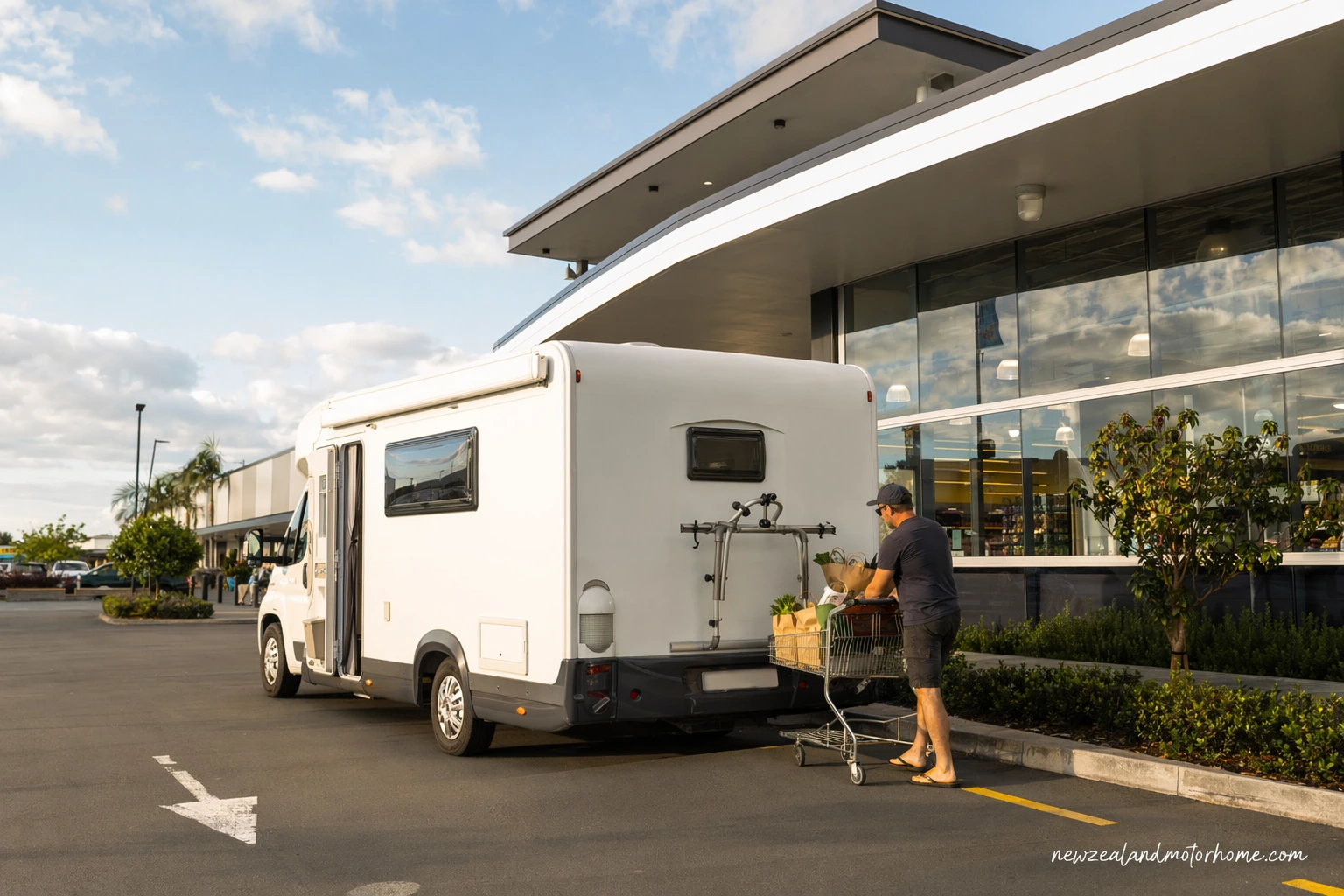
- Best as a full van reset stop
- Allow 2-4 hours for errands
- Use outer suburbs for easier parking
- Check freedom camping rules first
- Fill before the Kaimai or coast
Tauranga is a useful reset point for a self-drive campervan trip: big supermarkets, petrol stations, LPG options, laundromats and dump station access are all within a short drive, but the city is busy and not every car park suits a long or high-roof van.
This guide is for stocking the cupboards, topping up fresh water, sorting the toilet cassette and getting the washing dry before you head over the Kaimai Range, around the Bay of Plenty coast, or north towards the Coromandel. Treat it as a practical campervan supplies Tauranga checklist rather than a sightseeing stop.
How to approach Tauranga in a campervan
Tauranga spreads around the harbour, so the easiest supply run depends on where you are sleeping and which road you are leaving on. If you are coming in from Rotorua or Hamilton, the western and southern suburbs can be simpler than crossing town first. If you are based near Mount Maunganui, use the Mount and Bayfair side for groceries and fuel, then avoid doubling back across the harbour at peak times.
For longer motorhomes, the main thing is not distance but turning room. Cameron Road, Hewletts Road, SH2 and SH29A all carry plenty of traffic, and the approaches to the harbour bridge can crawl during commuter periods. Plan your errands in one loop, keep an eye on height bars at covered car parks, and do not assume a central-city park will fit a 7-metre van.
- Best timing: mid-morning or early afternoon on weekdays is usually less fraught than after-work traffic.
- Van size note: outer-suburb shopping areas are generally easier than the Tauranga CBD waterfront for long vehicles.
- Road ahead: SH29 over the Kaimai Range is steep and winding in places, so fill fuel, secure cupboards and check tyres before leaving town.
Supermarkets and where to park the van
For supermarkets Tauranga campervan travellers usually do best in the larger suburban shopping areas rather than small central car parks. Look around Gate Pa, Greerton, Bethlehem, Bayfair and the Mount Maunganui side for full-size supermarket car parks with better aisle width and fewer tight exits. Arrive before the dinner rush if you want a space where you can open the sliding door without annoying everyone beside you.
Park at the back or edge of the car park, away from trolley bays and pedestrian crossings. If you are in a high-roof camper, avoid any underground or covered parking unless the height clearance is clearly marked and comfortably above your vehicle. Do not leave fridge vents blocked tight against a wall if you are stopping for a longer shop on a hot day.
Stock with the next stretch in mind. Tauranga has choice; some of the roads out of town have much less. If you are heading towards the Coromandel, East Cape or DOC-style camping, buy a few meals that do not rely on a powered site or a full kitchen.
- Top up drinking water containers and fridge food before leaving the city.
- Buy easy van meals for windy nights when cooking outside is unpleasant.
- Choose compact packaging where possible; Tauranga is a good place to reduce rubbish before smaller coastal settlements.
- Grab toilet chemicals, bin bags and basic cleaning supplies if your hire van is running low.
Fuel, LPG and fresh-water top-ups
Petrol stations Tauranga-wide are generally easy to find on the main routes, especially around Cameron Road, Hewletts Road, Mount Maunganui, Bethlehem and the SH2 approaches. For a motorhome, choose forecourts with a clear drive-through layout rather than a cramped corner site. If you are driving a diesel camper, check whether the pump lane gives you enough swing to leave without reversing.
For an LPG refill Tauranga has options, but not every service station refills bottles; many only swap bottles. If your hired camper uses a removable LPG bottle, check whether you need a refill or a swap, and make sure the bottle test date is current. Turn off the gas at the bottle before entering a forecourt, and stow it upright and secured after filling.
Fresh-water fills are more variable. Holiday parks will normally have potable water for guests, while some service stations and council-listed points may allow filling if you ask first. Use a drinking-water hose only, avoid rinsing toilet gear near a fresh tap, and fill before you commit to a freedom camping area or a basic unpowered site.
- Fill fuel before the Kaimai Range if you are heading west.
- Check LPG before a run of unpowered nights on the coast.
- Keep grey-water and fresh-water hoses separate and labelled.
- Do not rely on a random public tap being suitable for drinking water.
Dump stations, rubbish and laundry resets
A dump station Tauranga stop is worth doing before you leave the urban area, especially if the next few nights are at smaller holiday parks, council camping areas or freedom camping spots with no services. Use only designated dump stations for toilet cassette and grey-water disposal, and check Tauranga City Council information or your camping app before driving across town to a point that may have changed access.
Holiday parks often provide dump points, fresh water and rubbish facilities for paying guests, which can make a powered night good value after several basic stops. If you are not staying, do not assume you can use their facilities; ask first and follow any posted rules.
For a laundromat Tauranga has plenty of suburban choices, and they are often easier with a van than trying to park in the CBD. Greerton, Gate Pa, central Tauranga and the Mount side all have laundry areas nearby, but scout the street layout before committing. A dry bag for wet towels is handy if you need to move the van before the dryer cycle is finished.
- Empty the toilet cassette before remote coastal sections, not after it is full.
- Use dump stations for grey water; never drain onto a roadside or reserve.
- Separate recycling and landfill in the van so rubbish stops are quicker.
- Do laundry during your grocery run to avoid losing half a travel day.
Overnight stops and freedom camping around Tauranga
Tauranga and Mount Maunganui are popular and closely managed, so do not treat any beachfront or reserve car park as an overnight stop unless signs clearly allow it. Freedom camping rules can change by season, event and council bylaw, and you will normally need a certified self-contained vehicle with current documentation displayed.
If you want showers, laundry, water, a dump point and a relaxed reset, book a holiday park and choose between powered and unpowered sites. Powered sites are useful if you need to charge devices, run the fridge hard in summer, or dry out after wet weather. Unpowered sites can suit a one-night stop if your house battery, water and toilet capacity are in good shape.
If your route depends on freedom camping after Tauranga, check the latest council maps before you shop, because that affects how much water, food and toilet capacity you need. If you would rather have the stops stitched together for your van size and pace, send us a note through talk to us and we can help shape the supply run into the wider itinerary.
What to stock before the road out of town
Tauranga is the last big, easy provisioning point before several very different campervan routes. West over the Kaimai Range is a driving day where you want fuel, water and cupboards secured. North towards Waihi and the Coromandel can mean slower roads, busier summer settlements and fewer large supermarket car parks. East towards Whakatane and the coast is easier, but you will still be glad you dealt with LPG, laundry and rubbish before leaving the city.
Think in terms of van systems, not just groceries. Food is only one part of campervan supplies Tauranga can solve: you can also reset the toilet, water, waste, gas, battery charging and bedding before the next few nights.
- For the Kaimai Range: fill fuel, check oil or AdBlue if your hire vehicle requires it, and latch every cupboard.
- For beach camping: pack extra drinking water, shade, insect repellent and a mat to keep sand out of the van.
- For unpowered sites: charge devices, check the house battery level and make sure the fridge is cold before you arrive.
- For wet-weather travel: carry spare towels, a small clothesline and a plan for laundromat drying.
Keep planning
Wellington to tauranga campervan
Read onTauranga to rotorua campervan
Read onTauranga to picton campervan
Read onTauranga to invercargill campervan
Read onQueenstown to tauranga campervan
Read onNelson to tauranga campervan
Read onCommon questions
Where is easiest to shop for groceries in a campervan in Tauranga?
Use the larger suburban supermarket car parks around areas such as Gate Pa, Greerton, Bethlehem, Bayfair or Mount Maunganui rather than tight central-city parking. Park on the outer edges, avoid covered parks unless height clearance is clear, and shop outside peak times if you are in a long motorhome.
Can I get an LPG refill in Tauranga for my campervan bottle?
Yes, Tauranga has LPG services, but some places only swap bottles rather than refill them. Check what your hire camper uses, confirm the bottle test date is current, and ring or check online before driving a large van to a cramped forecourt.
Is there a dump station in Tauranga?
There are designated dump station options in the Tauranga area, including facilities associated with some holiday parks for guests. Always confirm the current Tauranga City Council listing or your camping app before relying on one, as access and rules can change.
Can I freedom camp near Mount Maunganui after stocking up?
Only where overnight camping is clearly permitted and only if your vehicle meets the current self-containment requirements. Tauranga and Mount Maunganui are closely monitored, so check signage and council maps on the day rather than assuming a beach car park is allowed.
Should I choose a powered site after a Tauranga supply stop?
A powered site is useful if you have laundry to dry, devices to charge, or a fridge working hard in summer. If your house battery, water and toilet capacity are all healthy, an unpowered site can be fine for a simple overnight reset.
Have a planner shape this for your dates
Send a short outline — your dates, party size, and the kind of trip you want. A planner replies with a vehicle recommendation, a paced route, and the realistic budget.