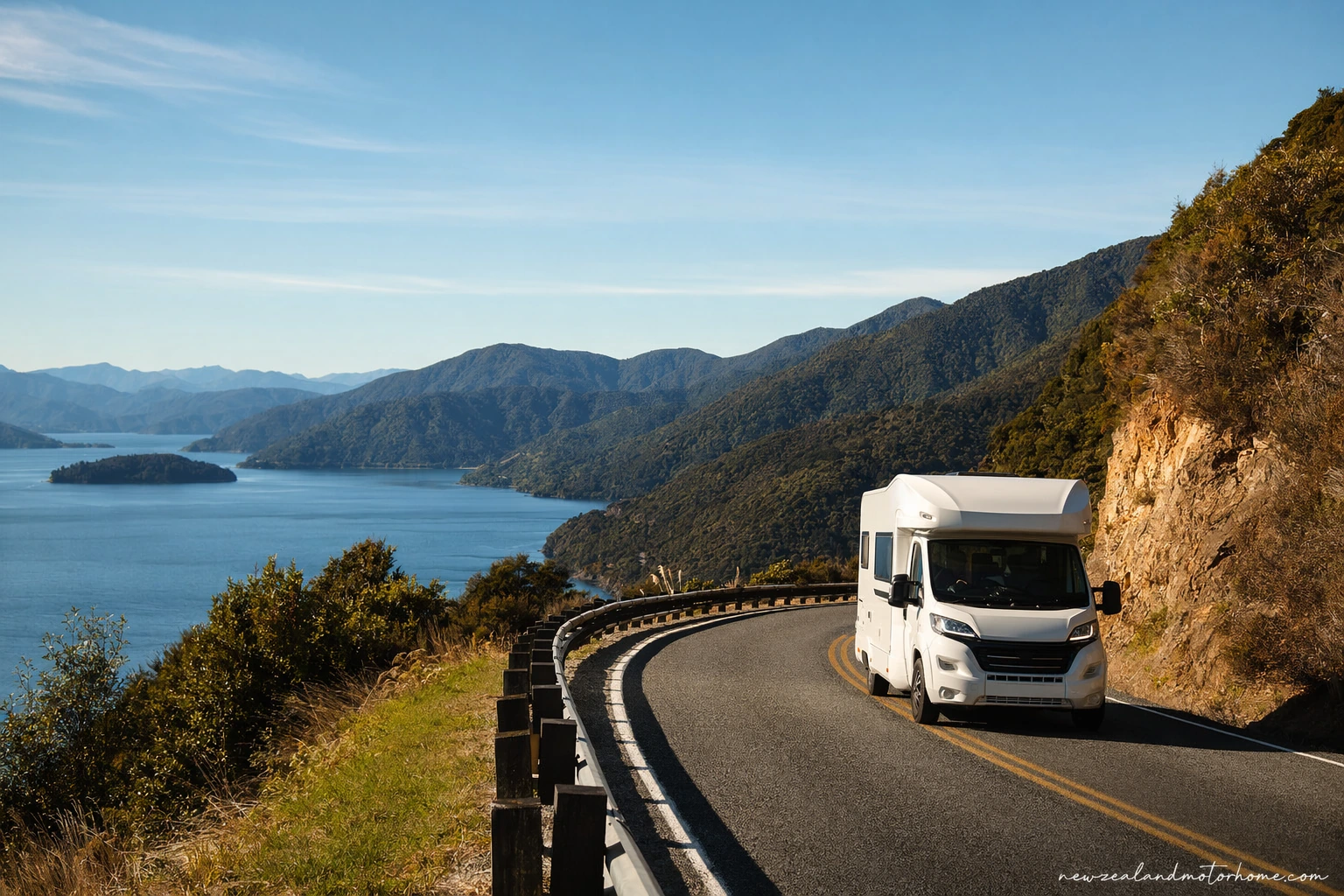
Tauranga to Picton campervan route: Bay of Plenty to the ferry
- Allow 3–5 days
- Includes Cook Strait ferry
- Main highways, weather-aware
- Powered sites recommended pre-ferry
- Self-containment needed for many freedom spots
A Tauranga to Picton campervan trip is a proper cross-island drive: harbour roads out of the Bay of Plenty, geothermal country around Rotorua and Taupō, the open pull of the Central Plateau, then Wellington’s ferry lanes and the first Marlborough hills beyond Picton.
This guide is written for travellers sleeping in the van, not just passing through. You’ll find sensible legs, where to think about powered and unpowered nights, how to manage water, waste and LPG, and the road notes that matter when your home is wider, taller and slower to stop than a car.
If you want a second pair of eyes on your ferry timing, overnight spacing or whether your van length suits the stops you’ve picked, you can add your details through talk to us and we’ll help you shape it.
How long to allow for the Tauranga to Picton drive
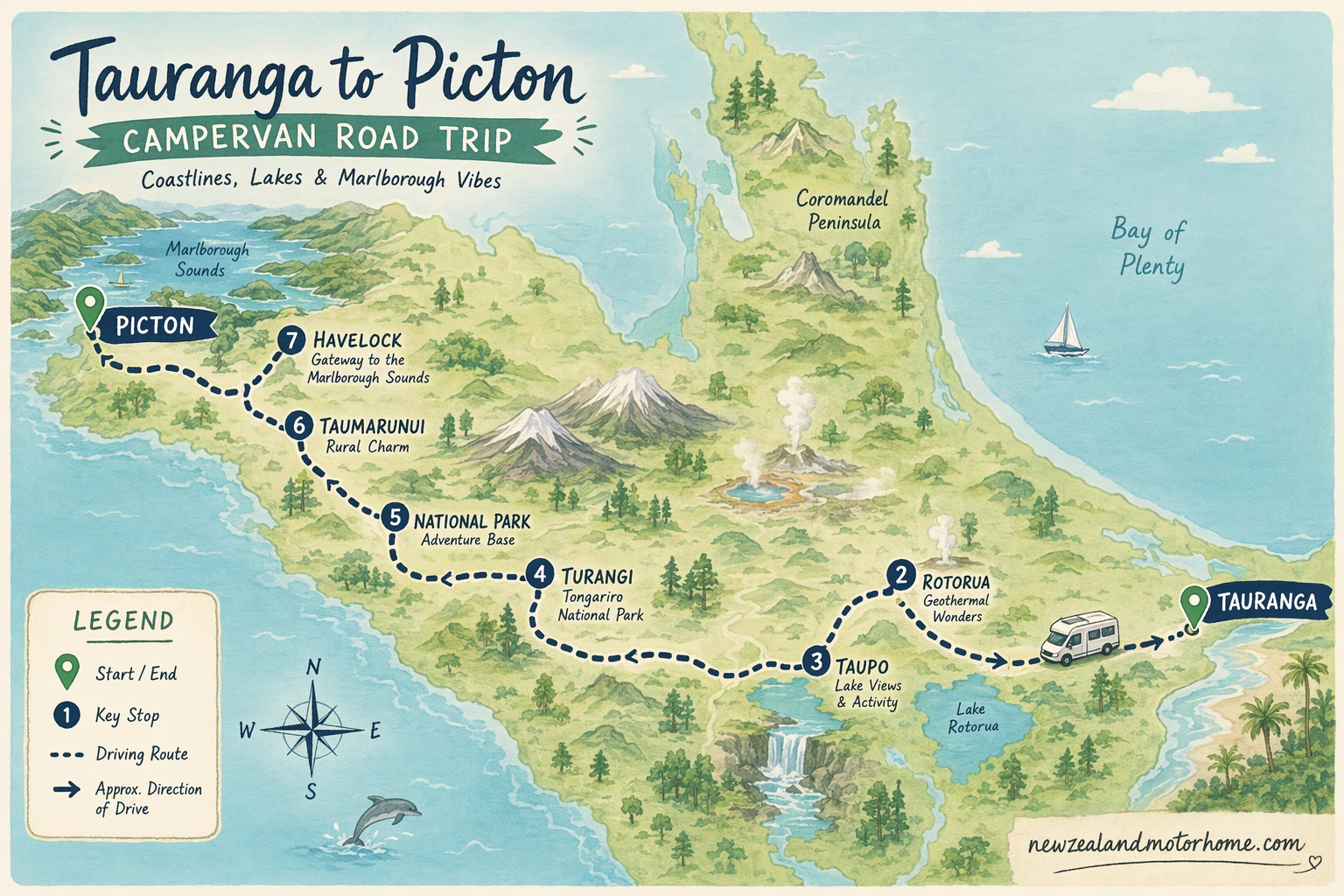
You can technically push the Tauranga to Picton drive into two very long days plus the Cook Strait ferry, but it is not how we’d plan it in a motorhome. The better rhythm is three to five days, especially if you want time to top up fresh water, empty the toilet cassette, arrive at the ferry rested, and avoid reversing a tired driver into a tight holiday park bay after dark.
A comfortable Tauranga to Picton motorhome road trip usually works best with one overnight around Rotorua or Taupō, a second around Tongariro, Whanganui or Kāpiti, then either a Wellington night before the ferry or an early check-in straight from a nearby campsite.
- Fast but still sane: 3 days, with Tauranga to Taupō, Taupō to Wellington/Kāpiti, ferry to Picton.
- More relaxed: 4 days, adding a Central Plateau or Whanganui stop so the van days stay shorter.
- Best for first-time van travellers: 5 days, with buffer time for weather, laundry, dump stations and ferry check-in.
Book the ferry with your vehicle length and height correct, including bike racks, roof vents and any rear overhang. Turning up with the wrong dimensions can create real headaches on a sailing day.
Leg 1: Tauranga to Rotorua or Taupō
Leaving Tauranga, most campervan travellers head inland towards Rotorua, then continue to Taupō if they want a longer first day. The road is sealed and commonly used by larger vehicles, but expect bends, passing lanes and traffic around Tauranga, especially near commuter times. Give yourself more braking space than you would in a car, and pull over when safe if a queue builds behind the van.
Rotorua makes an easy first overnight because there are holiday parks with powered sites, showers, laundry and dump facilities, plus supermarket and LPG bottle swap options around town. If you are in a certified self-contained campervan, check the current Rotorua Lakes Council freedom camping rules carefully before choosing any lakefront or reserve stop; signs on the ground override old apps.
- Good first-night style: powered site in Rotorua if you’ve just collected the van and want to sort the fridge, charging and water system.
- Longer first day: continue to Taupō for lake views and a head start towards the Central Plateau.
- Van jobs: use Rotorua or Taupō for groceries, fresh water, dump station access and LPG before the quieter sections south.
In Taupō, use marked long-vehicle parking where available rather than squeezing into tight lakefront car parks. The lake can be windy, and awnings should stay packed away unless you are on a proper campsite pitch.
Leg 2: Taupō to the Central Plateau and lower North Island
From Taupō, the route south crosses open volcanic country and gives big views towards Tongariro, Ngāuruhoe and Ruapehu. It is one of the memorable parts of the journey, but it deserves respect in a high-sided campervan: wind, ice, fog and winter closures can all affect the Desert Road. Check road conditions before you leave, and do not treat summer timing as a winter guide.
If you want to slow the trip down, overnight around Tūrangi, National Park Village, Ohakune, Whanganui or the Kāpiti Coast depending on your chosen line south. Holiday parks are the easiest option for powered sites and dump facilities; Department of Conservation style camps, where available, are often more basic and may suit self-contained vans with full water and battery capacity.
- Road note: keep fuel topped up before remote-feeling stretches, especially if your van is heavy or diesel-hungry in headwinds.
- Cold-weather note: allow for condensation and overnight frost around the plateau; a powered site is useful if your van heating relies on mains power.
- Walking note: if doing short walks, park only where the van fits fully inside marked areas and avoid blocking shuttle or bus turning space.
Do not assume freedom camping is allowed just because a lay-by has a view. For overnighting, you need a legal site, the right self-containment certification if required, and room to park without putting the rear of the van into the traffic lane.
Leg 3: Into Wellington and lining up the Cook Strait ferry
The final North Island section is where planning matters most. Wellington traffic, wind and ferry check-in windows can make a relaxed morning feel suddenly tight, so many motorhome travellers overnight on the Kāpiti Coast, in the Hutt Valley, or at a Wellington-area holiday park before sailing. That gives you time to dump waste, fill fresh water and arrive at the terminal without rushing.
Before boarding, secure loose gear inside the van, close LPG bottles as instructed, turn appliances off, and follow crew directions on the vehicle deck. You’ll normally leave the vehicle deck during the crossing, so pack a small day bag with jackets, medication, snacks and anything you need during the sailing.
- Ferry booking: enter accurate vehicle length, height and any trailer or bike rack details.
- Arrival buffer: allow extra time for Wellington traffic and finding the correct terminal entrance.
- Pre-ferry chores: dump the toilet cassette, reduce grey water, fill drinking water and secure cupboards.
- Weather: Cook Strait can be rough; avoid packing breakables loose on benches or in overhead lockers.
Some travellers try to freedom camp close to the ferry to save time, but Wellington-area restrictions are strict and change by location. Use current council information and on-site signs, and if in doubt book a legal campsite rather than risking a fine before the crossing.
Arriving in Picton with a campervan
Picton is small, busy when ferries arrive, and full of vehicles trying to turn, queue and find food at the same time. After disembarking, resist the urge to stop suddenly near the terminal unless you are directed to do so. Drive clear of the ferry traffic, then look for marked parking that suits your van length before walking back into town.
If Picton is your stop for the night, choose between a holiday park with powered sites and facilities, a basic campsite further out, or a legal self-contained option where permitted. If you are continuing towards Blenheim, Nelson or the West Coast, it can still be worth pausing in Picton to check tyre pressure, top up supplies and give the fridge time to settle after the ferry.
- Powered night: useful after several driving days, especially for laundry, charging devices and a proper shower.
- Unpowered night: workable if your house battery is healthy and you have enough fresh water.
- Dump and water: plan this before heading into quieter Marlborough Sounds roads, where large-vehicle turning space can be limited.
- Road caution: the Sounds roads are beautiful but narrow and winding; check whether your hire agreement allows the specific road you plan to take.
Picton is also a good place to reset your itinerary. If the ferry was delayed or the weather changed, build in a shorter next day rather than forcing a long South Island drive when everyone in the van is tired.
Campervan route notes, supplies and overnight strategy
This route is straightforward on main highways, but it crosses enough climates and busy transport points that small decisions make a big difference. Keep the van tidy before each driving leg, store heavy items low, and avoid leaving the grey-water tank or toilet cassette until they are nearly full. Dump stations are common in the main towns, but less convenient once you are trying to meet a ferry check-in.
For overnight planning, think in systems rather than just scenery: battery, water, waste, food, laundry and safe parking. A lakeside photo stop is not the same as a legal overnight site, and a certified self-contained sticker does not automatically permit camping anywhere.
- Fresh water: fill at holiday parks, approved public taps or dump-station facilities where drinking water is clearly marked.
- Waste: empty toilet and grey water only at designated dump stations.
- LPG: check bottle levels before leaving bigger towns, particularly if cooking and heating are gas-fed.
- Parking: use long-vehicle bays where available and avoid tight town centres at peak lunch and ferry-arrival times.
- Apps and signs: apps help, but council signs and current bylaws decide where you may stay.
With a bit of spacing, the Tauranga to Picton campervan route feels like a journey rather than a transfer: geothermal steam one day, plateau air the next, then salt spray on the ferry and Marlborough hills out the windscreen.
Common questions
Can I drive Tauranga to Picton in a campervan in two days?
You can, but it is a tiring plan once you include ferry check-in and possible weather or traffic delays. Three days is a much safer minimum for most campervan travellers, and four or five days gives time for legal overnights, dump stations and a calmer ferry day.
Where should I stay the night before the Cook Strait ferry?
Many van travellers stay on the Kāpiti Coast, in the Hutt Valley, or at a Wellington-area holiday park. The key is choosing a legal site with enough room for your vehicle and allowing a generous drive-in buffer for the ferry terminal.
Do I need a certified self-contained campervan for this route?
You do not need certification to drive the route or stay in holiday parks, but you will need the correct self-containment certification for many freedom camping areas. Always check the local council rules and on-site signs before staying overnight outside a formal campsite.
Is the Desert Road suitable for motorhomes?
Yes, it is a main highway and commonly used by larger vehicles, but conditions can change quickly. High winds, ice, snow and fog are the main concerns, so check road conditions and be ready to reroute or wait if the weather is poor.
What campervan details do I need when booking the ferry?
You need the accurate length and height of the van, including roof boxes, vents, bike racks or tow bars. If your hire documents list dimensions, use those, and do not guess — ferry loading depends on correct vehicle sizes.
Should I book powered sites in advance?
In summer, school holidays and around long weekends, booking powered sites is wise, especially in Taupō, Wellington and Picton. Outside peak times you may have more flexibility, but a powered night before or after the ferry can make the whole route easier.
Have a planner shape this for your dates
Send a short outline — your dates, party size, and the kind of trip you want. A planner replies with a vehicle recommendation, a paced route, and the realistic budget.