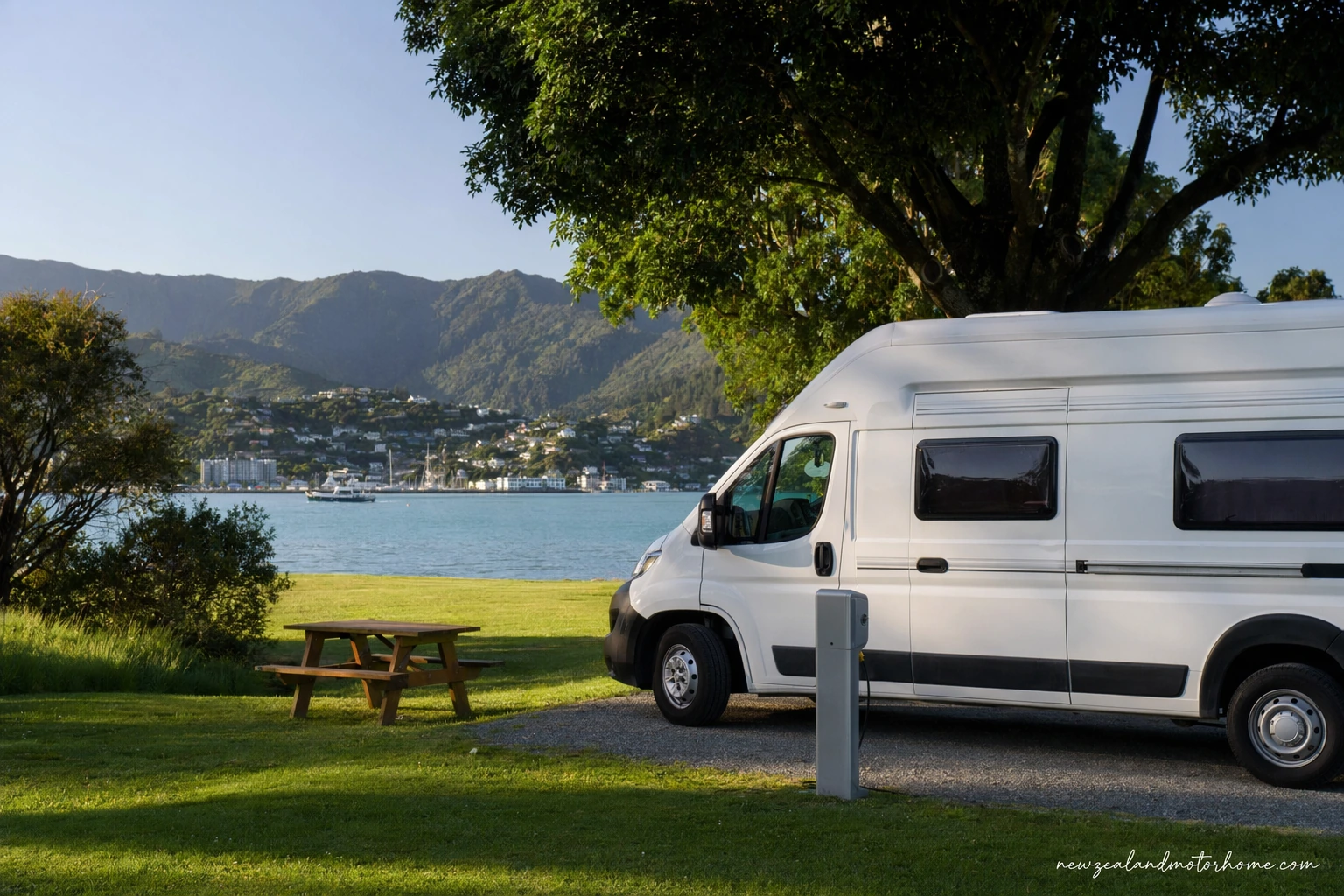
- Best for ferry nights
- Powered and unpowered sites
- Service before the Sounds
- Watch Queen Charlotte Drive
- Book early in summer
Picton is a small harbour town that does a big job for motorhome travellers: it is the Cook Strait ferry gateway, the front door to the Marlborough Sounds, and a handy first or last overnight stop in the South Island. If you are arriving tired after a sailing, or lining up an early ferry, choosing the right place to park the van matters.
This guide looks at holiday parks Picton travellers can use as practical campervan bases: powered and unpowered sites, dump station access, water fills, walkable harbour spots, and the road notes that matter when you are driving a longer or taller vehicle. It is written for self-drive vans only, not day-trippers passing through by car.
Where Picton holiday parks sit, and what that means in a van
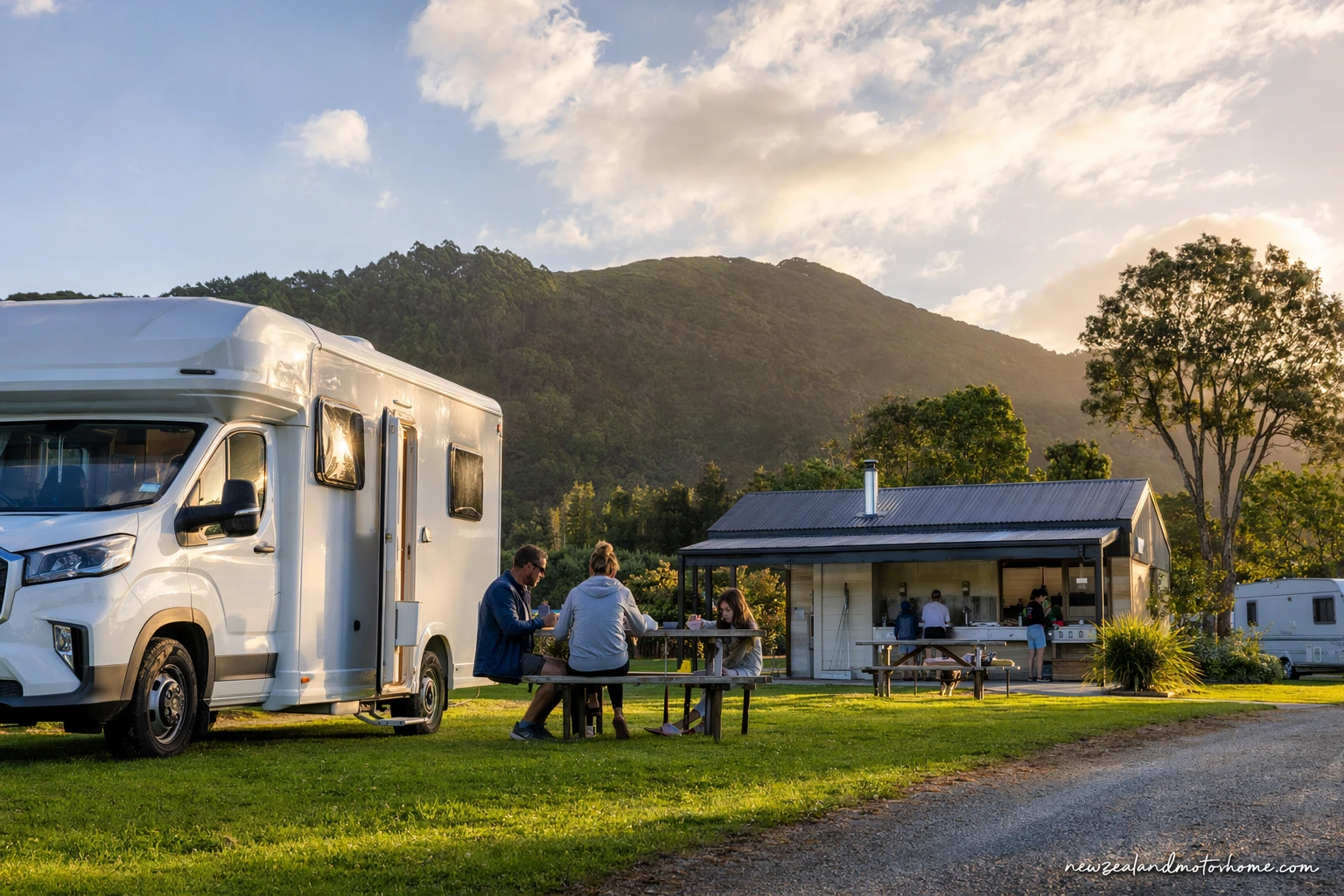
Most camping Picton options are either close to the town centre and ferry terminal, or a short drive out towards Waikawa Bay. The central spots are best if you want to leave the van plugged in and walk to the foreshore, cafes, marina, supermarket and ferry check-in area. Waikawa feels quieter and more boat-harbour than ferry-port, but you will still want the van for errands unless you enjoy a longer walk.
If you are comparing campsites Picton-wide, think first about your arrival time. Late ferry arrivals are much easier when you have a confirmed site and clear after-hours instructions. Do not assume you can simply pull into a car park or ferry holding area overnight; local signage and enforcement can change, and freedom camping is tightly controlled around busy visitor towns.
- Closest feel: town-side parks for walking to the waterfront and ferry services.
- Quieter feel: Waikawa Bay and the road towards the marina.
- Before a ferry: choose a site with easy morning access back to SH1 and the terminal.
- After a ferry: book ahead in summer, school holidays and long weekends.
Powered versus unpowered sites in Picton
Powered sites Picton travellers look for are especially useful before or after the ferry. You can top up house batteries, run the fridge properly, charge devices, dry towels and reset the van after a few nights in basic sites around the Sounds. In cooler months, power also makes the evening more comfortable without leaning too hard on gas heating or batteries.
Unpowered sites can work well for self-contained vans with solar and good battery capacity, particularly if you only need one night. Check the site surface when booking: some holiday parks have a mix of sealed, gravel and grass areas, and grass can be less forgiving after rain for heavier motorhomes.
- Choose powered if you have an early ferry, wet gear, low batteries or need to run a heater safely.
- Choose unpowered if your van is self-contained, your batteries are healthy and you are staying briefly.
- Ask about site size if your motorhome is long, has a rear bike rack, or needs room for an awning.
- Carry a compliant lead and avoid stretching cables across access lanes.
Dump stations, fresh water and LPG top-ups
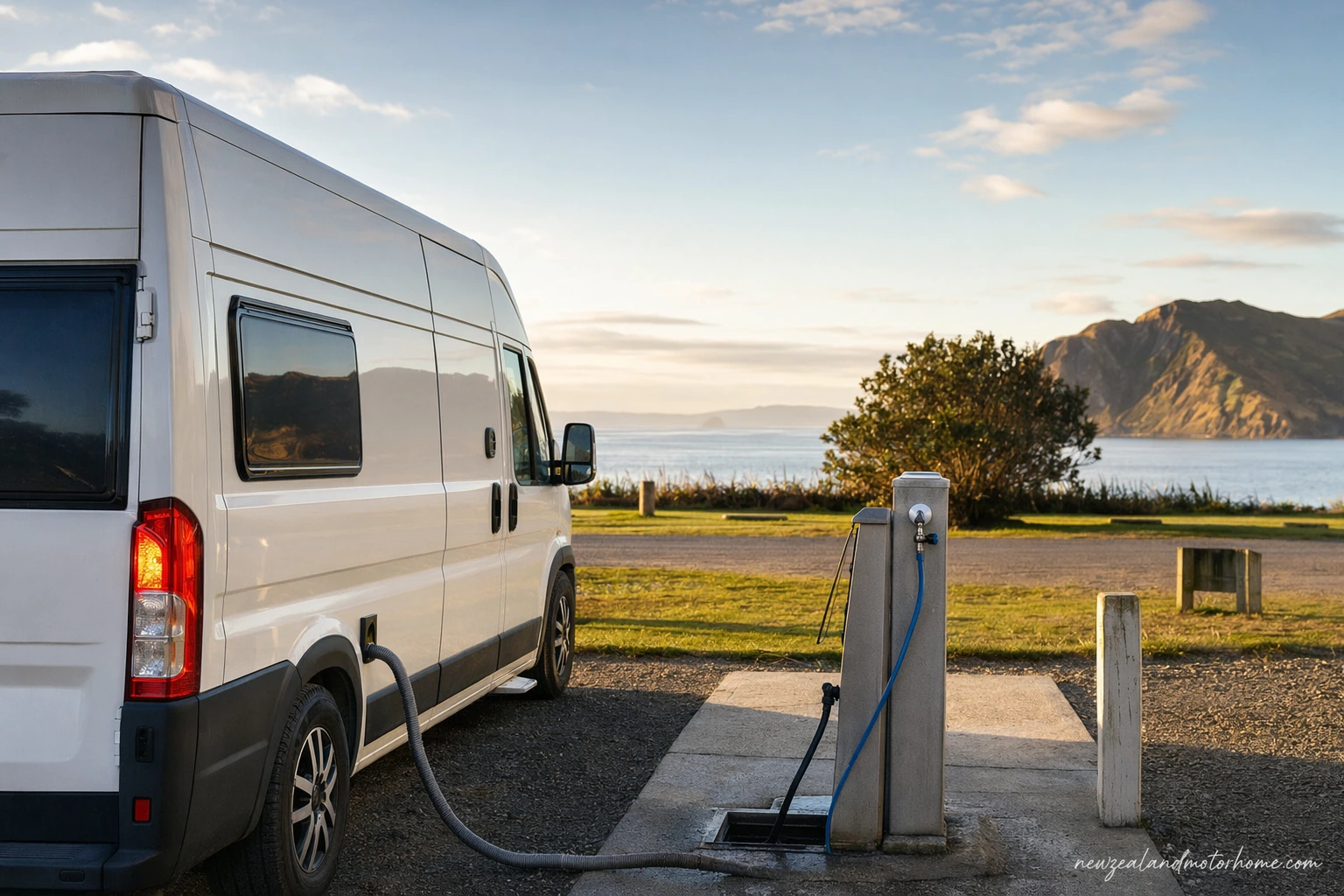
A good Picton stopover is often about servicing the van as much as sleeping. Many holiday parks have guest dump stations or cassette-emptying points, and some provide fresh-water fills close to the site lanes. Always confirm when you book, because access can be different for guests, non-guests, large motorhomes and late arrivals.
Picton and nearby Waikawa usually give you options for water, waste and basic road-trip supplies, but do not leave everything until five minutes before ferry check-in. LPG bottle swaps or refills are usually handled by service stations or hardware-style outlets rather than the holiday park itself. If you are heading into the Marlborough Sounds, service the van first; narrow roads and small bays are not the place to discover your grey tank is full.
- Empty grey and black water only at approved dump stations.
- Refill fresh water before driving Queen Charlotte Drive or out to smaller Sounds camps.
- Check LPG levels before a multi-night stay away from town.
- Keep your self-containment certificate visible and current if you plan any certified freedom camping elsewhere.
Driving into Picton: ferry traffic, hills and harbour streets
Picton is straightforward by New Zealand standards, but it can feel busy when ferries are loading or unloading. From Blenheim, SH1 is the simplest approach for most campervans. From Havelock, Queen Charlotte Drive is scenic but narrow and winding, with tight bends, limited shoulders and plenty of drivers stopping for views; it is beautiful in a van, but not a road to rush in a long motorhome.
In town, watch height and length limits around smaller waterfront parking areas. If you are stopping for lunch before checking in, look for signed long-vehicle spaces or park slightly away from the busiest foreshore streets and walk back. Avoid blocking boat-trailer parks around the marinas, especially at Waikawa.
- Allow extra time around ferry sailing windows and summer weekends.
- Use lower gears on winding descents rather than riding the brakes.
- Check your mirrors on narrow Sounds roads and pull over where safe to let traffic pass.
- Do not rely on street parking overnight unless signs clearly allow it for your vehicle type.
What is walkable once the van is parked
One of the advantages of a town-side holiday park is being able to park once and leave the van settled. From central Picton, you can usually walk to the foreshore, marina, cafes, small shops, ferry terminal area, and the waterfront museum precinct. It is a pleasant reset after a day of driving, and it saves hunting for a motorhome-sized park in the middle of town.
If you stay out towards Waikawa Bay, the marina and shoreline are the easy wins. For longer walks, the tracks around Victoria Domain and the Snout are a good way to stretch your legs before another driving day, but check time, weather and whether you are happy leaving the van where it is parked. For a tailored stop that fits your ferry time and van size, you can also use our talk-to-us planning step.
- Harbour walks are easiest from central Picton sites.
- Waikawa suits travellers who want a quieter evening near the marina.
- Stock up before heading into more remote Sounds roads.
- Keep valuables out of sight if leaving the van for a walk or boat trip.
How Picton compares with nearby overnight bases
The Picton TOP 10 Holiday Park and other local holiday-park style stays are convenient when the ferry is part of your day. They are not the only option, though. Some travellers prefer staying near Blenheim if they want wineries, supermarkets and a flatter drive, while others push towards Havelock for access to the western Sounds and Nelson direction.
For most first-time campervan travellers, Picton is the low-stress choice when timing matters. You are close to the ferry, close to services, and not committed to a long evening drive after a crossing. If your plan includes more basic Department of Conservation or council-style camping later, use Picton as the tidy-up night: plug in, dump, refill, do laundry and start fresh.
- Stay in Picton for ferry timing, harbour walks and van servicing.
- Stay near Blenheim for vineyards, bigger shops and a flatter road network.
- Stay towards Havelock for the western Marlborough Sounds and Nelson route.
- Book Picton early around summer sailings, Easter and school holidays.
Keep planning
Wellington to picton campervan
Read onTauranga to picton campervan
Read onQueenstown to picton campervan
Read onPicton to whangarei campervan
Read onPicton to timaru campervan
Read onPicton to rotorua campervan
Read onCommon questions
Do Picton holiday parks have powered sites for campervans?
Yes, powered sites are common at holiday parks in and around Picton, but availability can tighten around ferry peaks and summer holidays. Book ahead if you need power for charging, heating, fridge recovery or medical equipment.
Can I freedom camp in Picton before catching the ferry?
Do not assume you can sleep in any car park near the ferry terminal. Picton has local freedom-camping rules, and you must follow current signage and self-containment requirements. A holiday park is usually the safer choice before an early sailing.
Is Picton easy to drive into with a large motorhome?
SH1 from Blenheim is the simplest approach for larger vans. Queen Charlotte Drive from Havelock is scenic but winding and narrow in places, so allow extra time, use pull-offs courteously, and avoid driving it tired after a ferry crossing.
Will I find dump stations and fresh water in Picton?
Many holiday parks provide dump station access and fresh water for staying guests, and there are usually public service options around the wider Picton-Waikawa area. Confirm access before arrival, especially if you are not staying overnight or have a larger motorhome.
Should I stay in Picton or Waikawa Bay?
Stay in central Picton if you want to walk to the foreshore, shops and ferry area. Choose Waikawa Bay if you prefer a quieter marina setting and do not mind driving or taking a longer walk for town errands.
Have a planner shape this for your dates
Send a short outline — your dates, party size, and the kind of trip you want. A planner replies with a vehicle recommendation, a paced route, and the realistic budget.