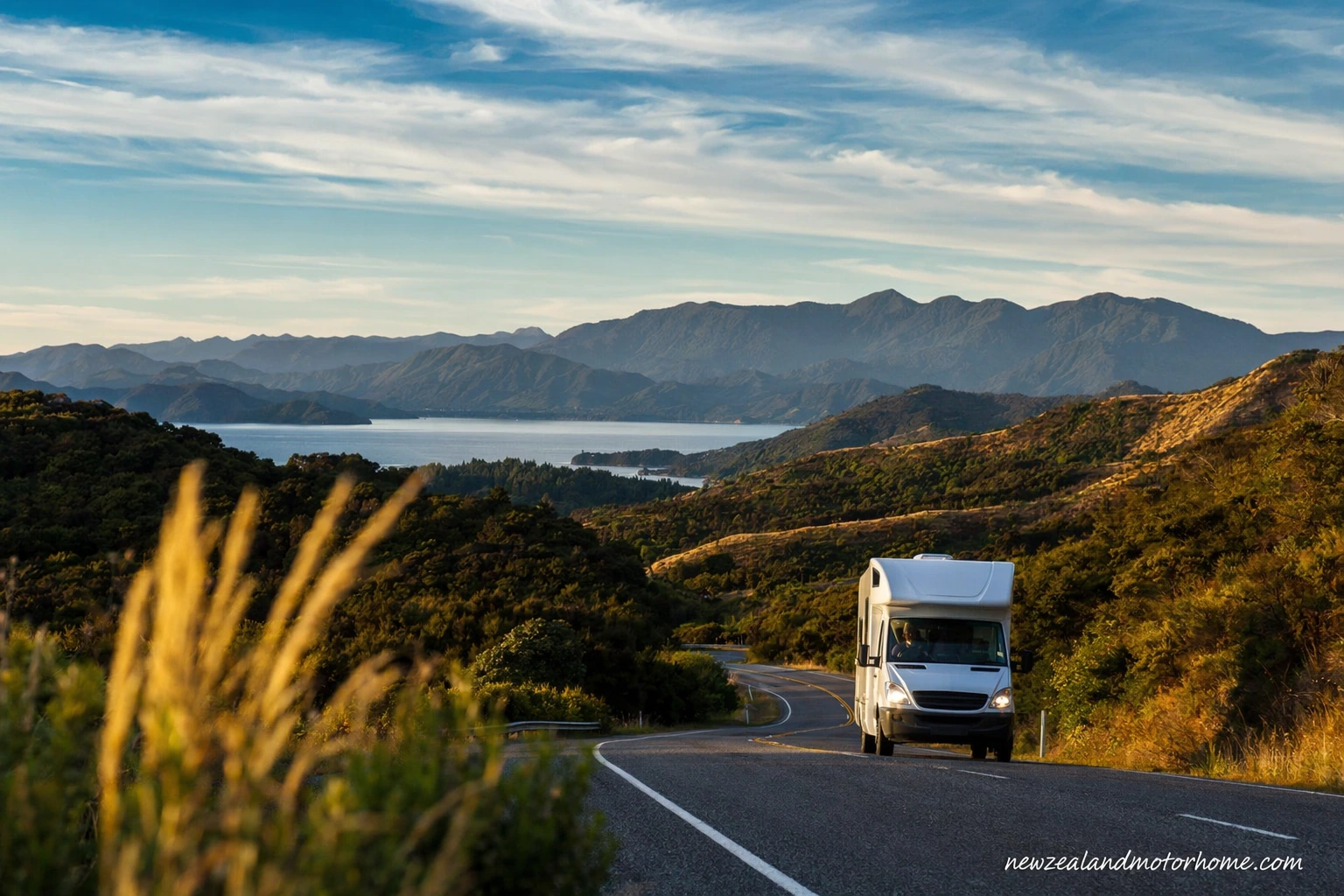
Picton to Rotorua campervan route for a steady North Island crossing
- Best over 2–4 days
- Cook Strait ferry included
- SH1 and SH5 via Taupō
- Powered sites recommended
- Check Desert Road weather
The Picton to Rotorua campervan route is more than a point-to-point dash: it starts with the Cook Strait ferry, then rolls through Wellington, the Kāpiti Coast, the central plateau and Taupō before dropping into Rotorua’s geothermal country. In a hired motorhome, that means thinking about ferry lanes, overnight parking, dump stations, fresh water and where your van will feel comfortable on the longer inland roads.
This guide lays out a practical Picton to Rotorua drive for self-contained campervans and motorhomes, with sensible legs rather than heroic days. You’ll find road notes, stopover ideas, powered versus unpowered camping pointers, and the little van jobs that make the trip calmer: LPG, water, waste and arrival timing.
How long to allow for the Picton to Rotorua campervan route
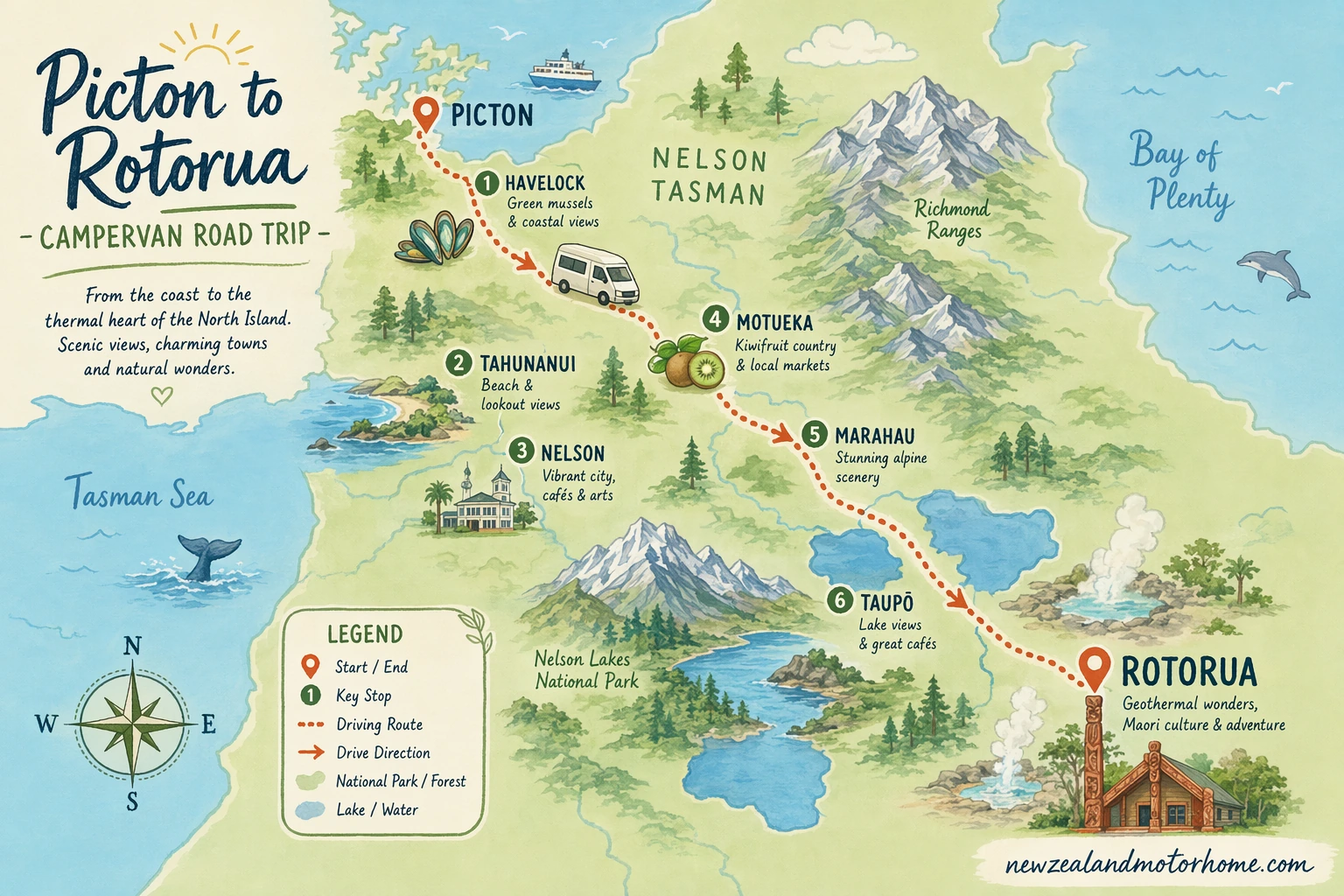
At its fastest, the route is a ferry crossing plus a long North Island driving day, but that is rarely the nicest way to do it in a campervan. Most van travellers will be happier allowing two to four days, especially if you want to arrive in Rotorua with the waste tank empty, water topped up and everyone still speaking to each other.
The most direct campervan-friendly line is Picton ferry terminal to Wellington, then SH1 north via the Kāpiti Coast, Levin, Taihape and Waiouru, continuing past Tūrangi and Taupō before taking SH5 into Rotorua. This is the classic Picton to Rotorua motorhome road trip: big scenery, plenty of service towns, and enough holiday parks and council-approved camping areas to keep the logistics manageable.
- Minimum: 2 days if your ferry timing is kind and you are comfortable with a long second day.
- Comfortable: 3 days with a first night near Wellington or Kāpiti, and a second near Taupō or Tūrangi.
- Easy pace: 4 days if you want time for short walks, lake stops and a slower Rotorua arrival.
- Best van rhythm: book powered sites every second night if you are running heating, charging devices or travelling in cooler months.
Leg 1: Picton ferry terminal to Wellington and your first night
Start the day early in Picton and give yourself more ferry check-in time than you would in a car. Motorhomes are directed by length and height, and staff may ask about LPG; turn gas bottles off before boarding and make sure loose gear inside the van is stowed before the Cook Strait swell does the tidying for you.
Picton is a good place to reset the van before crossing. If you have overnighted in town or nearby, use the dump station and fresh-water facilities at your campground or a signed public facility before joining the ferry queue. Once you land in Wellington, do not expect easy kerbside parking in the central city with a long van; head for pre-booked holiday parks, motorhome-friendly parking areas on the city edge, or continue north to Porirua, Lower Hutt or the Kāpiti Coast.
- Before boarding: check LPG is off, mirrors are folded if asked, and fridge doors and cupboards are latched.
- After arrival: avoid peak commuter traffic through Wellington if you are tired from the ferry.
- Overnight options: powered holiday park sites around Wellington/Kāpiti, unpowered campground sites, or certified self-contained freedom camping only where local bylaws allow it.
- Parking note: central Wellington car parks often have height barriers, tight ramps or time limits unsuitable for motorhomes.
Leg 2: Wellington or Kāpiti to Tūrangi, Taupō or the central plateau
This is the main driving leg of the route. From Wellington or Kāpiti, SH1 runs through Levin and the Manawatū, then climbs gradually toward Taihape and Waiouru. In a larger motorhome, keep left on passing lanes, let faster traffic go, and take the hillier sections steadily rather than trying to match car pace.
The Desert Road between Waiouru and Tūrangi is spectacular but exposed. High winds, ice, snow or poor visibility can affect this section, particularly in winter and shoulder seasons, so check current road conditions before committing. If the forecast looks rough, build in an extra night around Taihape, National Park, Tūrangi or Taupō rather than pushing on in a tired van.
- Good break towns: Levin, Bulls, Taihape and Tūrangi all give you easier turning space than tiny roadside pull-offs.
- Fuel planning: top up before the central plateau if your van is heavy or you are running heating in cold weather.
- Overnight rhythm: Taihape or Tūrangi works well for a shorter day; Taupō works well if you want an easy final run to Rotorua.
- Van handling: expect gusts on open plateau sections; keep both hands on the wheel and avoid sudden lane changes.
Leg 3: Taupō to Rotorua on SH5
The final leg from Taupō to Rotorua is short compared with the day before, but it still deserves attention in a motorhome. SH5 has rolling country, forest edges and steady tourist traffic, so take your time and use proper lay-bys rather than squeezing onto narrow shoulders for photos.
Taupō is a smart service stop before Rotorua: dump the grey and black water where signed, refill fresh water if available, and stock the fridge before moving on. In Rotorua itself, aim for a booked campground or holiday park if you want powered sites, hot showers and an easy dump-station reset after several days on the road.
- Driving time: allow extra time for slower vehicles, road works and scenic stops rather than planning to the minute.
- Parking in Rotorua: use large lakeside, attraction or campground car parks where motorhomes are permitted; avoid small retail car parks with tight turning circles.
- Arrival tip: get to your overnight site before dark if you need to level the van, connect power or find the dump station.
- Geothermal areas: keep to marked parking and do not overnight at attraction car parks unless it is explicitly allowed.
Where to sleep: powered sites, unpowered sites and freedom camping
For this route, a mixed camping plan works well. Use a powered site after the ferry or the long central plateau day, then consider an unpowered site when your batteries are healthy and the weather is mild. Freedom camping is possible in some areas, but only if your vehicle meets the current self-containment rules and the specific council bylaw allows overnight stays in that exact place.
Wellington, Kāpiti, Taupō and Rotorua all have tighter rules than many travellers expect, and signs can change from one car park to the next. Do not assume a lakeside or beachside spot is legal just because another van is parked there; check local signs, camping apps and council information before settling in.
- Powered sites: best after the ferry, in winter, or when you need heating, charging and a long shower.
- Unpowered campground sites: useful for a quieter night while still having toilets, rubbish and sometimes a dump station nearby.
- Freedom camping: only for properly certified self-contained vehicles, and only where overnight parking is permitted.
- Waste plan: never leave grey water until the tank is full; dump when facilities are convenient, especially before remote or busy holiday periods.
Campervan services and road notes before you roll
A smooth Picton to Rotorua campervan trip comes down to small checks done at the right time. Before leaving Picton, confirm your ferry booking includes the correct vehicle length and height. Before leaving Wellington or Kāpiti, check fuel, tyre pressure, water levels and whether your next overnight stop needs to be booked.
If you would like help matching the route to your ferry time, van size and preferred camping style, you can use the talk-to-us step and we will shape the plan around how you actually want to travel. This route is very doable in a hired motorhome, but it rewards travellers who leave room for weather, fatigue and the practical jobs that come with sleeping in the vehicle.
- Length and height: know your measurements for ferry lanes, fuel stations, low branches and height-restricted car parks.
- Fresh water: refill at campgrounds or signed public taps suitable for potable water; do not rely on random taps.
- LPG: turn bottles off for the ferry and refill in larger towns before cold high-country sections.
- Driving comfort: plan a real stop every couple of hours so the driver can stretch and check the van exterior.
Keep planning
Visiting polynesian spa rotorua by campervan
Read onVisiting agrodome rotorua by campervan
Read onHoliday parks rotorua
Read onHoliday parks picton
Read onFarmers markets rotorua
Read onCampervan supplies rotorua
Read onCommon questions
Can I drive from Picton to Rotorua in one day in a campervan?
It is technically possible only with a very early ferry and a long, tiring driving day, but it is not the best plan for most motorhome travellers. Two or three days gives you safer margins for ferry delays, Wellington traffic, dump-station stops and central plateau weather.
Where should I spend the first night after the ferry?
If your ferry arrives late, stay in the Wellington, Lower Hutt or Porirua area rather than pushing north tired. If you arrive earlier, Kāpiti can make a calmer first night with easier access to SH1 the next morning.
Is the Desert Road suitable for a motorhome?
Yes, in normal conditions SH1 over the Desert Road is suitable for campervans and motorhomes. The issue is exposure: wind, snow, ice and poor visibility can close or slow the road, so check conditions and be ready to overnight before the plateau if needed.
Do I need a self-contained campervan for this route?
You do not need self-containment if you stay only in campgrounds and holiday parks with facilities. You will need current self-containment certification if you want to use freedom camping areas that require it, and you must still follow each council’s local rules.
Where should I empty the toilet and grey water?
Use signed dump stations at holiday parks, campgrounds or public motorhome service points along the route. Good times to dump are before boarding the ferry, after your Wellington/Kāpiti night, and again around Taupō or Rotorua before settling in.
Should I book powered sites in advance?
Book ahead for Wellington, Taupō and Rotorua during weekends, school holidays and summer. Powered sites are especially worth booking if you are travelling with a larger van, need a level bay, or want reliable charging and heating overnight.
Have a planner shape this for your dates
Send a short outline — your dates, party size, and the kind of trip you want. A planner replies with a vehicle recommendation, a paced route, and the realistic budget.