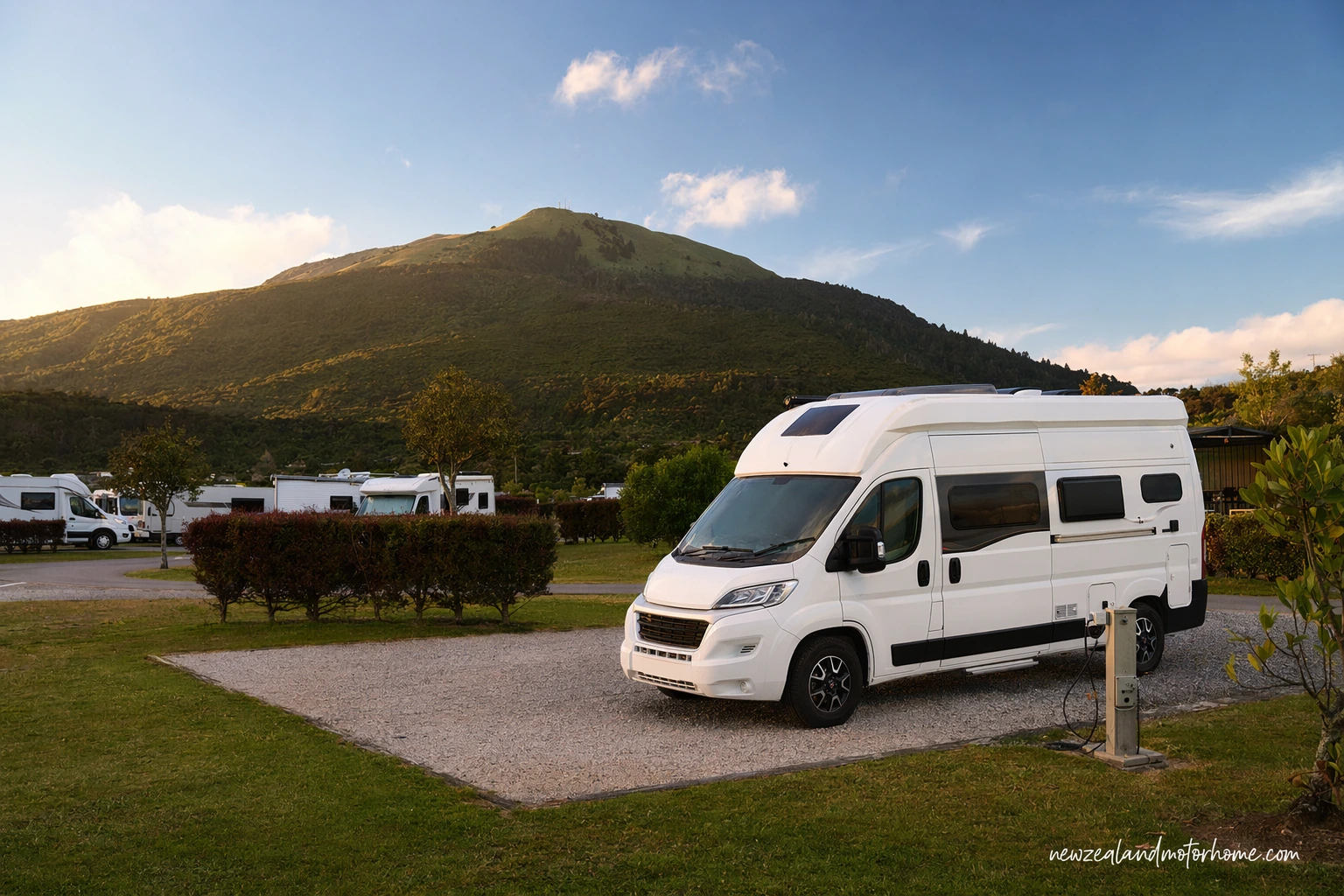
- Best stay: 2–3 nights
- Site types: powered and unpowered
- Book early in school holidays
- Certified self-contained for freedom camping
- Watch tight lake roads in larger vans
Rotorua is one of those places where the right overnight base changes the whole feel of your campervan trip. Stay close to town and you can walk to dinner after plugging into a powered site; choose a lake-edge campground and your morning starts with mist on the water, a quiet coffee beside the van, and a short drive to the forest or hot pools.
This guide looks at holiday parks Rotorua-wide from a self-drive point of view: where the campsites Rotorua travellers use are clustered, how powered and unpowered sites differ, what to know about freedom camping rules, and how to keep on top of dump stations, fresh water and LPG while moving between lakes, geothermal stops and forest tracks.
How Rotorua’s holiday parks are spread out
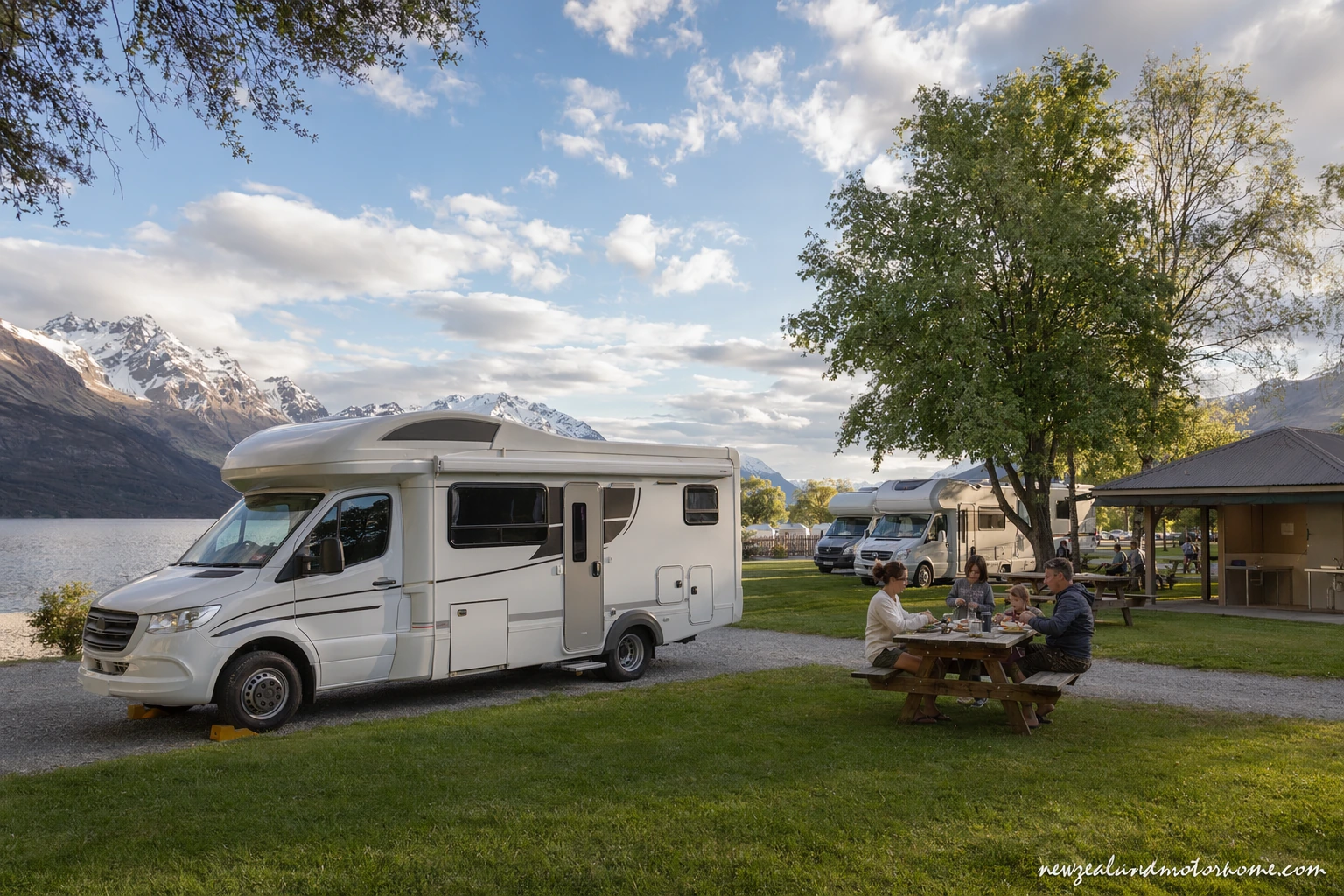
Rotorua does not have one single camping strip. The main choice is between a town-side base, a lake base, or a quieter edge-of-region stop where you trade walking access for space, birdsong and easier early starts. For campervans, that matters because short distances on the map can still mean slower lake roads, busy car parks, or a longer run back to your powered site at night.
Town and lakefront holiday parks are handy if you want supermarkets, laundries, restaurants and fuel nearby. Ngongotahā and the northern side of Lake Rotorua suit travellers heading towards Hamurana, the lakeside walks and SH36. East and south-east bases are better for Lake Tikitapu, Lake Tarawera, Okere Falls and the forest tracks, especially if you prefer to park the van once and spend the day walking or biking from a nearby trailhead.
- Central Rotorua: best for errands, dump station access, eating out and short urban drives.
- Lake Rotorua and Ngongotahā: good for calmer sites, lake views and easy access to the northern lakeside.
- Blue Lake and Tarawera side: useful for swimming, forest walks and quieter nights away from town traffic.
- Okere Falls and SH33 side: practical if you are linking Rotorua with Tauranga, Whakatāne or the Bay of Plenty coast.
Powered sites, unpowered sites and picking the right bay
Powered sites Rotorua-wide are worth booking ahead in school holidays, long weekends and during mountain biking or lake events. A powered site gives you reliable charging, heater use on cool nights, and easier fridge management after a few days on the road. Unpowered sites can be fine for a certified self-contained campervan with good batteries, but Rotorua’s shady, tree-lined parks can reduce solar top-ups more than you expect.
When you book, tell the park your vehicle length and whether you have a rear bike rack, roof box or awning. Some older campgrounds Rotorua travellers love have tight internal lanes, mature trees and sloping corners that are charming but not ideal for a long motorhome. Ask whether the site is grass, gravel or concrete, and whether you need levelling chocks after rain.
- Choose a powered bay if you are staying two nights or more, using an electric heater, or travelling with e-bikes.
- Pick a gravel or hardstand site in winter or after heavy rain; grass can soften quickly around the lakes.
- Check overhead branches before raising a pop-top, satellite dish or roof vent.
- If you want a quiet night, ask for a site away from the camp kitchen, playground and main access road.
Freedom camping around Rotorua: be careful and check the signs
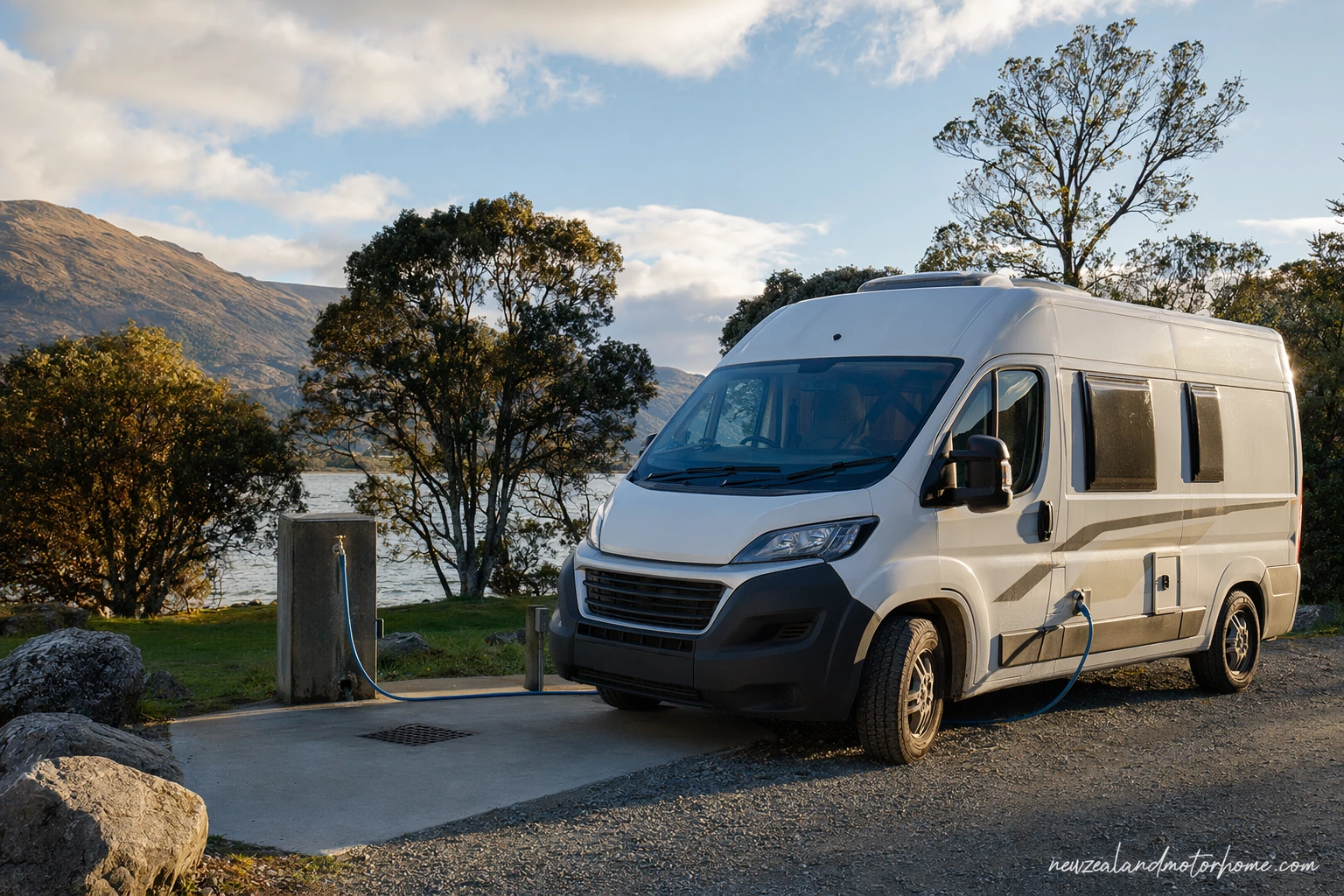
Rotorua’s lakes and reserves are tempting places to pull up, but you should not assume you can sleep anywhere just because your van is certified self-contained. Freedom camping is controlled by local rules, and many lakefront reserves, boat ramps and urban car parks have clear no-camping restrictions or time limits. Always check the current Rotorua Lakes Council guidance before you settle in for the night.
In practice, most campervan travellers use holiday parks for Rotorua nights because they make the region easier: showers after forest walks, laundry after lake days, rubbish disposal, fresh water and a proper dump station. If you do use a permitted freedom camping area, arrive in daylight, park within the marked area, keep tables and chairs packed away unless allowed, and leave before the stated time.
- Your van must meet current self-containment certification requirements for any site that requires it.
- No-camping signs apply even if other vans are already parked there.
- Do not empty grey water, dish water or cassette toilets anywhere except an approved dump station.
- Avoid blocking boat ramps, lake access tracks and local driveways; Rotorua’s lakes get busy early.
Dump stations, fresh water, LPG and everyday van logistics
Rotorua is straightforward for campervan logistics if you plan your loop. Larger holiday parks generally provide guest facilities such as rubbish points, potable water and dump stations, but access rules vary, so confirm when booking rather than arriving with full tanks. There are also public motorhome service points in the wider area; check the latest council map or your camping app before relying on one.
For LPG, fuel and groceries, central Rotorua is the easiest place to reset before heading out to lake bases or quieter campsites. Do the practical jobs before you leave town: fill fresh water, empty grey and black tanks, restock food, and check tyre pressures if you have been driving gravel access roads or carrying bikes. It is much nicer to arrive at a lake campground ready to park the van than to turn around for one forgotten gas bottle.
- Empty the cassette before it is urgent; some lake drives are slower than the distance suggests.
- Use potable water taps only for filling the fresh-water tank, not rinsing toilet gear.
- Keep a short food shop in town if you are staying near Tikitapu, Tarawera or Okere Falls.
- Ask your holiday park whether dump station use is included for guests and where larger vans should turn around.
Driving between bases, lakes and geothermal stops
Distances around Rotorua look modest, but campervan driving is a little different from car touring. SH5, SH30, SH33 and SH36 are the main connectors, while lake roads can be narrower, hillier and busier with cyclists, walkers and boat trailers. Take your time on the bends around the eastern lakes and avoid squeezing into small roadside pull-offs if your vehicle overhangs the line.
Parking at forest, lake and geothermal areas can fill quickly in summer and on fine weekends. In a longer motorhome, aim to arrive earlier in the day and choose end bays or larger sealed areas where you can drive through rather than reverse between cars. If you are comparing campgrounds Rotorua-wide, think about the day trips you most want: a slightly further-out holiday park can save repeated town crossings.
- Allow extra time for roundabouts and urban traffic when crossing Rotorua at school or commuter times.
- Watch for steam, damp road surfaces and pedestrians around geothermal visitor areas.
- Keep your van height in mind under trees at older holiday parks and lake picnic areas.
- If your trip is still loose, use the plan-your-trip step and we can help line up sensible overnight bases with your driving days.
Which Rotorua base suits your campervan trip?
Rather than chasing a generic top 10 holiday park Rotorua list, start with how you want each day to work. If you are travelling with children, a holiday park with safe internal roads, a camp kitchen and easy laundry may matter more than being closest to a trailhead. If you are a couple in a compact certified self-contained van, a quieter unpowered bay near the lake might be exactly right for two settled nights.
Rotorua rewards slower stays. Two nights gives you enough time to plug in, reset tanks, explore the forest or lakes and still enjoy a soak or evening meal without moving the van after dark. Three nights works well if you want one town day, one lake or forest day, and one geothermal or scenic-drive day before moving on towards Taupō, Tauranga or the central North Island.
- First-time Rotorua stop: choose a central or lakefront powered site for easy logistics.
- Forest and biking focus: base near the south-east side of town or the lakes for shorter morning drives.
- Quiet lake stay: look beyond central sites, but confirm water, dump and grocery access.
- Transit night: pick a park close to your next highway so you are not crossing town with a large van at peak time.
Keep planning
Wellington to rotorua campervan
Read onVisiting polynesian spa rotorua by campervan
Read onVisiting agrodome rotorua by campervan
Read onTauranga to rotorua campervan
Read onRotorua to whangarei campervan
Read onRotorua to timaru campervan
Read onCommon questions
Do Rotorua holiday parks have powered sites for campervans?
Yes, many holiday parks in and around Rotorua offer powered sites suitable for campervans and motorhomes. Book ahead in busy periods, and give your van length, height and any bike rack details so the park can allocate a practical bay.
Can I freedom camp beside Rotorua’s lakes?
Only where local rules and signs allow it, and usually only if your vehicle meets current self-containment requirements. Many reserves and lakefront car parks restrict overnight camping, so check Rotorua Lakes Council guidance before relying on a lakeside stop.
Where should I base myself if I do not want to drive the van every day?
Choose a central Rotorua or lakefront holiday park if you want to walk to food, shops or the lake. For forest walks, biking and swimming, a base closer to the south-eastern lakes can reduce daily driving and make parking easier early in the morning.
Are unpowered campsites in Rotorua suitable for a self-contained van?
They can be, especially for one or two nights if your batteries are healthy and you are careful with power use. Rotorua parks can be shady, so do not rely entirely on solar; choose powered sites if you need heating, device charging or e-bike batteries.
Is Rotorua easy for dumping grey water and filling fresh water?
Rotorua is generally manageable for motorhome servicing, with facilities at many larger holiday parks and some public service points in the wider area. Confirm access before arrival, especially if you are not staying at that park, and always use approved dump stations.
How many nights should I allow for Rotorua in a campervan?
Two nights is a good minimum because it lets you set up once, service the van and explore beyond town. Three nights is more comfortable if you want lake time, forest trails and geothermal sights without packing each day too tightly.
Have a planner shape this for your dates
Send a short outline — your dates, party size, and the kind of trip you want. A planner replies with a vehicle recommendation, a paced route, and the realistic budget.