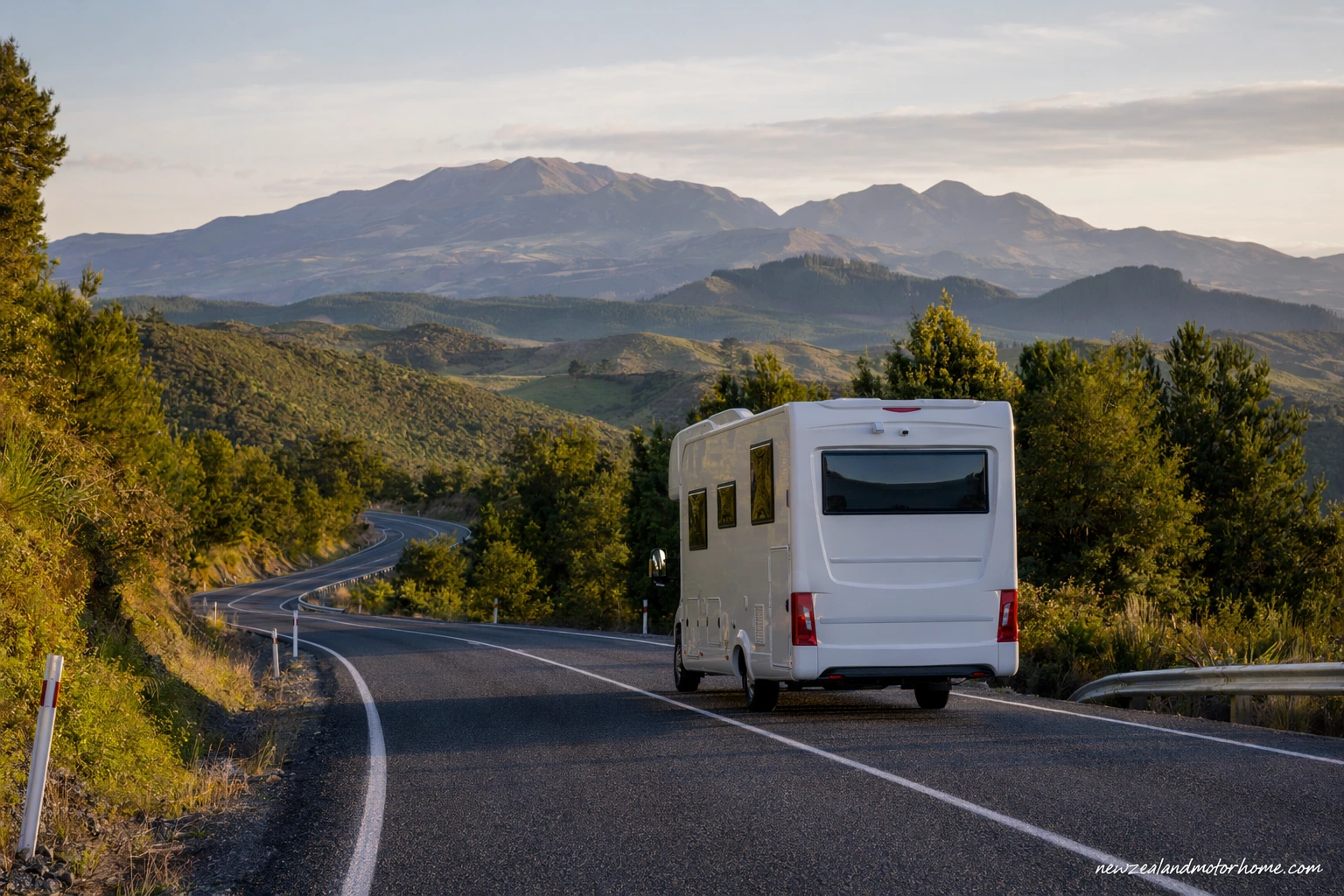
- Allow 2–4 days
- Main route: SH1 and SH5
- Desert Road weather check
- Powered sites in Taupō and Rotorua
- Self-containment needed for freedom camping
The Wellington to Rotorua campervan route is one of the North Island’s most useful point-to-point drives: harbour city to geothermal country, with the Kapiti Coast, Rangitīkei hill country, the Central Plateau and Lake Taupō all sitting neatly between them.
You can push through the Wellington to Rotorua drive in a long day, but it is much better in a van with at least two nights to spare. This guide breaks the road into practical legs, with van-friendly stopping points, overnight ideas, servicing notes, and the road conditions that matter when your bed, kitchen and water tanks are travelling with you.
How long to allow for the Wellington to Rotorua drive
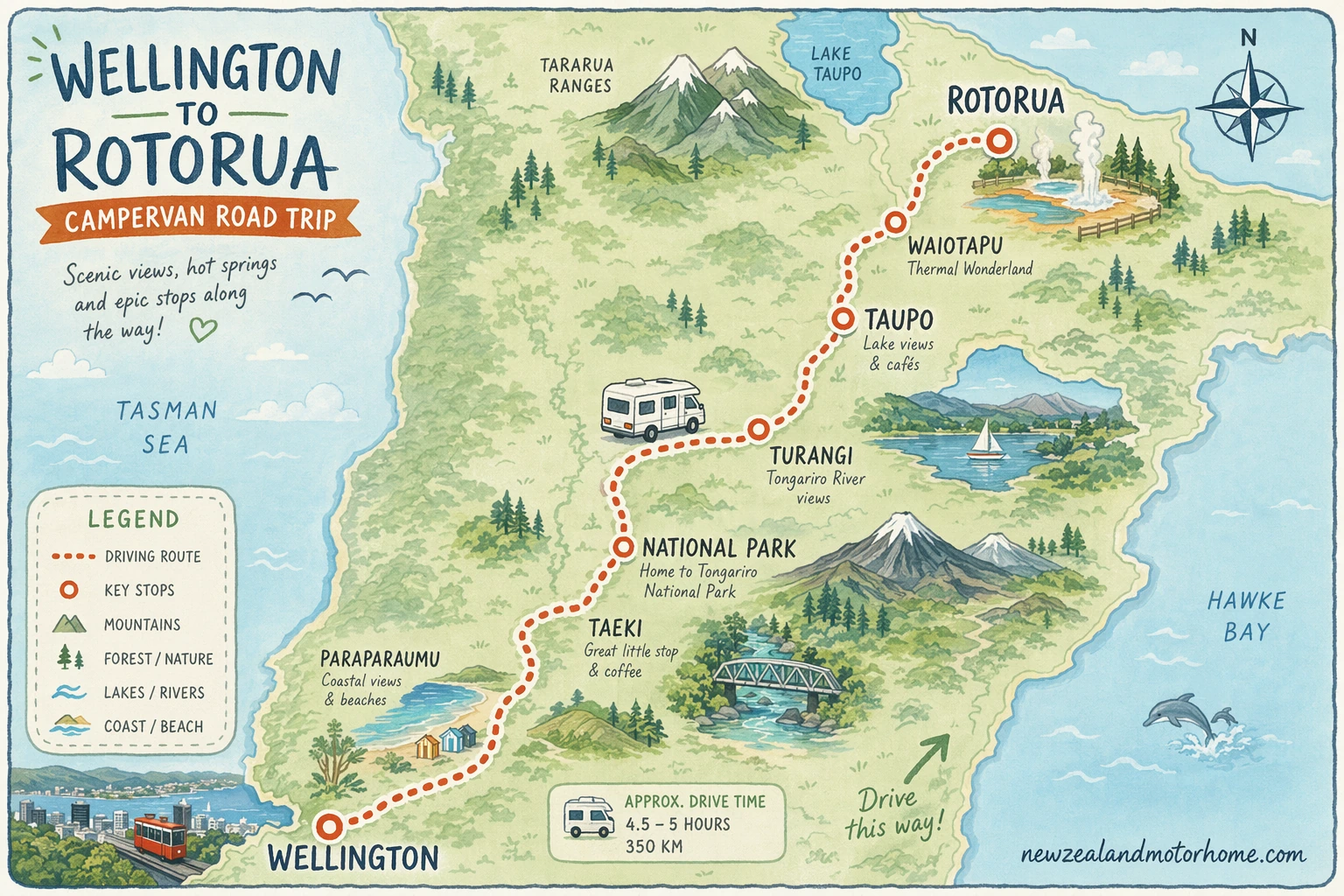
The direct Wellington to Rotorua motorhome road trip is roughly a full day of driving before you add supermarket stops, dump station time, lunch by the lake, or a slower climb over the Central Plateau. In a campervan, plan the day around daylight, fatigue and where you are legally allowed to sleep, rather than treating it like a car sprint.
A comfortable pace is two to four days. Two days works if you simply need to reposition the van; three days lets you enjoy Taupō or Turangi; four days gives you room for short walks, weather delays on the Desert Road, and an easier arrival into Rotorua before dark.
- Fastest practical van pace: 2 days, usually overnighting around Taupō, Turangi, Taihape or Waiouru.
- Best relaxed pace: 3 days, with a Central Plateau night and a Lake Taupō night.
- Good for first-time visitors: 4 days, especially if you want easy driving windows and time for thermal stops near Rotorua.
- Winter note: check Desert Road conditions before committing, as snow, ice and high wind can close or slow the route.
Leg 1: Wellington to Kapiti, Levin and the Manawatū
Leaving Wellington in a campervan is easiest outside peak commuter traffic. From the city or airport depots, follow SH1 north through the motorway system and Transmission Gully. It is a wide, modern road by New Zealand standards, but crosswinds can still nudge a high-sided van, so keep both hands on the wheel and let faster traffic use the passing lanes.
Paraparaumu, Ōtaki and Levin are useful first-leg service towns. This is where you can top up groceries, fill fresh water where available, check tyre pressures, and sort LPG before the road becomes more spread out. If you are leaving Wellington late in the day, it is better to stop on the Kapiti or Horowhenua coast than to hunt for a legal overnight site tired and in the dark.
- Van parking: choose supermarket or town-centre parks with long bays or outer edges; avoid squeezing into tight angled parks in busy village centres.
- Overnight options: look for holiday parks or council-approved freedom camping areas around Kapiti, Foxton or Levin, and always check the current local bylaw.
- Servicing: dump stations and potable water points are commonly listed through council or camping apps in the larger towns on this section.
- Road feel: mostly straightforward SH1 driving, with traffic bunching near Ōtaki, Levin and Bulls.
Leg 2: Manawatū to Taihape, Waiouru and the Desert Road
North of Bulls the route becomes more open, then climbs gradually through the Rangitīkei and towards the Central Plateau. Taihape is a sensible campervan pause: there is space to regroup, buy food, check fuel, and decide whether the weather is good enough to continue over the high country.
The Desert Road section between Waiouru and Turangi is memorable, with wide views towards Ruapehu, Ngāuruhoe and Tongariro on clear days. It is also exposed. In a motorhome, wind and winter weather matter more than the scenery, so check the road status, keep your speed conservative, and do not rely on being able to pull over anywhere you like.
- Before the climb: fill fuel in Taihape or Waiouru if your range is getting low; services are thinner across the plateau.
- Vehicle note: longer motorhomes should use passing lanes courteously and avoid abrupt lay-by stops where the shoulder is soft or narrow.
- Winter driving: snow, ice and closures are possible; if the Desert Road is marginal, wait it out or use the signed alternative only if conditions suit your van.
- Overnight choices: Taihape, Waiouru and Turangi have holiday park or designated camping options; freedom camping must be in permitted areas and usually requires current self-containment certification.
Leg 3: Turangi, Lake Taupō and the run into Rotorua
Turangi and Taupō are the most natural places to slow the Wellington to Rotorua campervan route. Turangi suits a quieter night and access to the Tongariro River, while Taupō has more supermarkets, fuel, LPG options, laundries and a wider choice of powered and unpowered sites. The lakefront is scenic, but do not assume you can simply park up and sleep beside it; local freedom camping rules are actively managed.
From Taupō to Rotorua, SH5 rolls through forestry, geothermal country and rural traffic. It is not a difficult road, but it has curves, occasional slow vehicles, and misty patches in cooler months. Give yourself time, especially if your van is long or you are still getting used to its width.
- Good van stops: Turangi for a quieter reset, Taupō for servicing and lake walks, Rotorua for powered sites before exploring geothermal areas.
- Dump and water: check current dump station listings in Turangi, Taupō and Rotorua before you arrive; do not leave tank emptying until late evening.
- Parking in Taupō: use larger public car parks where campervans are permitted, and avoid tight lakefront spaces at peak times.
- Rotorua arrival: book a holiday park or legal campsite if arriving after dark, as central freedom camping choices are limited and rule-dependent.
Where to sleep, service the van and plan your pace
This route has plenty of places to sleep legally, but the best choice depends on your van’s certification, your preferred facilities, and how full your fresh and grey-water tanks are. Powered sites are easiest after a long driving day, especially if you need showers, laundry, battery charging and a proper water refill. Unpowered sites work well if your house battery is healthy and you are only stopping for the night.
Freedom camping is possible in some districts along the way, but it is never a blanket permission. Use current council information, check signs on the ground, and make sure your vehicle meets the required self-containment standard before relying on free or low-cost overnight areas.
If you want help choosing the right number of nights for your van size, driving confidence and pick-up time, you can sketch your plan with us at talk to us before locking in campsites.
- Best first night options: Kapiti/Horowhenua for a late Wellington start, or Taihape/Waiouru if you leave early and want to reach the plateau.
- Best second night options: Turangi or Taupō, especially if you want an easier final leg into Rotorua.
- Powered site strategy: use one powered night every couple of days if you are running heater, fridge, devices and hot water heavily.
- Tank strategy: empty grey and toilet tanks before they are urgent; dump stations are easier to use in daylight and outside check-in rush hours.
Keep planning
Visiting zealandia wellington by campervan
Read onVisiting weta workshop wellington by campervan
Read onVisiting te papa wellington by campervan
Read onVisiting polynesian spa rotorua by campervan
Read onVisiting agrodome rotorua by campervan
Read onHoliday parks wellington
Read onCommon questions
Can I drive from Wellington to Rotorua in one day in a campervan?
Yes, but it is a long day in a high-sided vehicle and leaves little room for weather, traffic or servicing the van. Most campervan travellers are happier splitting the Wellington to Rotorua drive with an overnight around Taihape, Turangi or Taupō.
Is the Desert Road suitable for motorhomes?
Yes, in normal conditions it is a standard state highway used by large vehicles. The issue is exposure: wind, ice, snow and poor visibility can affect a motorhome more than a car, so check road conditions before leaving Taihape, Waiouru or Turangi.
Where should I freedom camp between Wellington and Rotorua?
Only use places where the local council or land manager allows overnight camping for your type of vehicle. Rules vary between districts, and many areas require a current self-containment certificate, so check the latest signage and approved camping maps before settling in.
Do I need to book powered sites on this route?
In summer, school holidays, long weekends and around major events, booking is wise in Taupō and Rotorua. Outside peak periods you may have more flexibility, but a powered site is still worth reserving if you know you will arrive late or need to recharge the van properly.
Where can I empty waste and refill fresh water?
Dump stations and fresh-water points are commonly available in larger centres such as Levin, Taihape, Turangi, Taupō and Rotorua, but locations and access can change. Check a current camping app or council listing, and plan to service the van before tanks are full.
Have a planner shape this for your dates
Send a short outline — your dates, party size, and the kind of trip you want. A planner replies with a vehicle recommendation, a paced route, and the realistic budget.