- Allow 2-4 days
- Around 500 km via SH1
- Best with a Kaikōura overnight
- Powered sites in main towns
- Check freedom camping bylaws
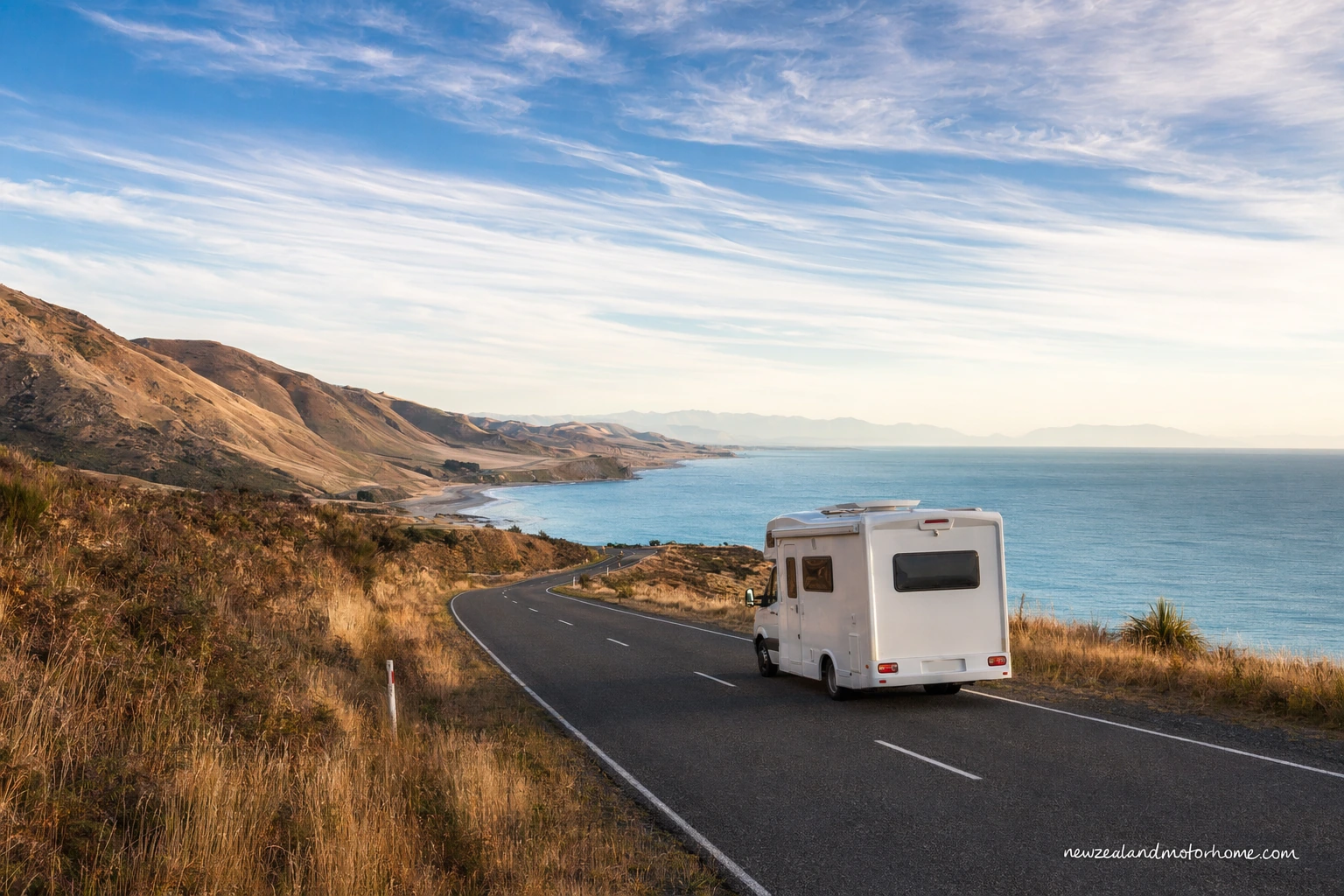
The picton to timaru campervan route is a satisfying South Island run: off the ferry, through Marlborough vineyards, along the rebuilt Kaikōura coast, then down the wide Canterbury Plains to Timaru. It is not a route to rush if you are driving a larger van for the first time; the scenery is best when you have time to pull in properly, level the vehicle at night, and keep your tanks in order.
This guide is written for travellers sleeping in their hired campervan or motorhome, not just driving point to point. You will find sensible driving legs, where to think about powered and unpowered sites, how to handle freedom camping rules, and the practical bits that make the picton to timaru drive easier: dump stations, fresh-water top-ups, LPG, and road notes for longer vehicles.
How many days to allow for the Picton to Timaru drive
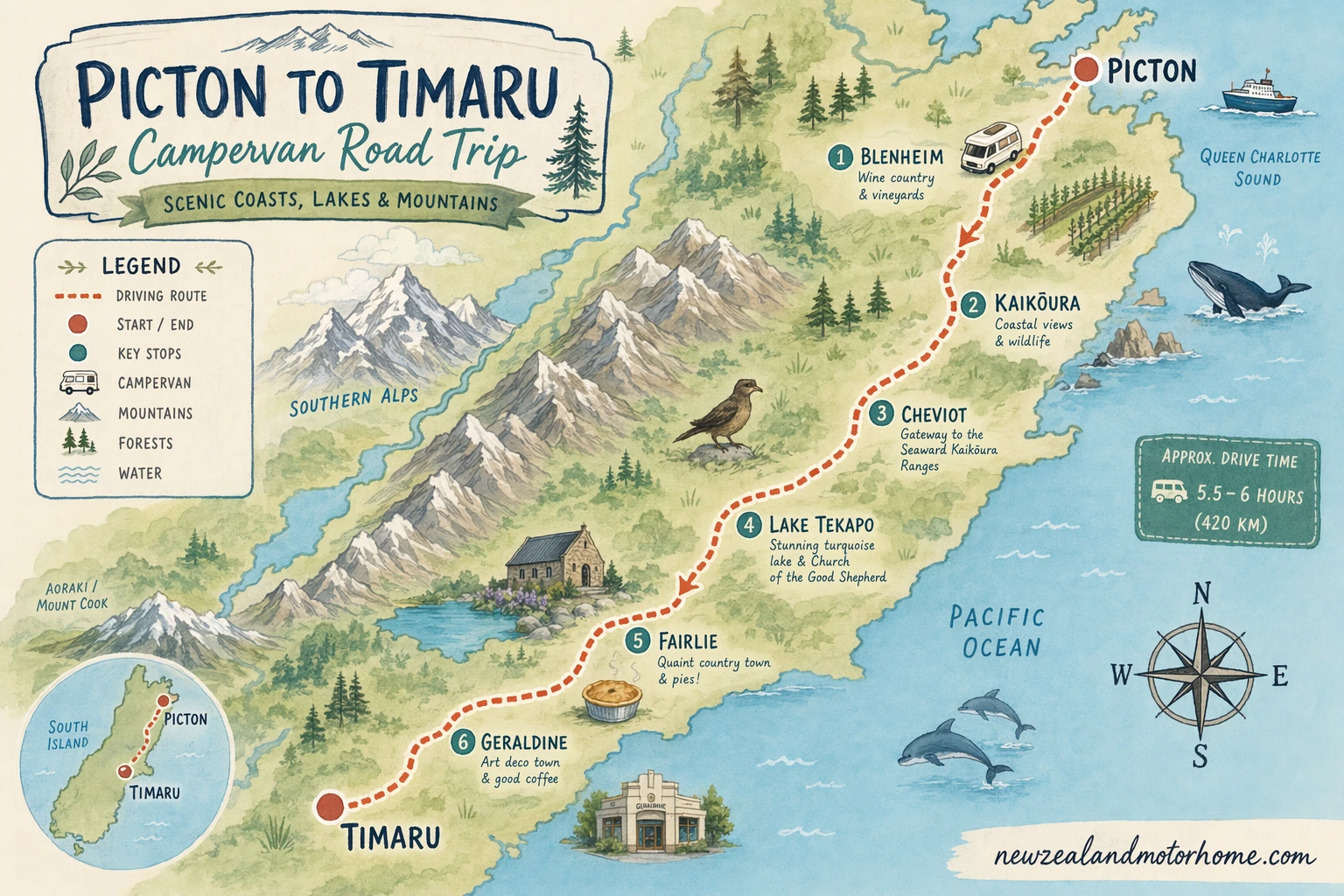
Picton to Timaru is roughly a 500 kilometre drive by the usual SH1 coastal route. In a car it can be done in a long day, but in a campervan that turns into a tiring haul, especially after a ferry crossing or if the Kaikōura coast is windy. For most self-drive motorhome travellers, two nights is the practical minimum and three or four nights feels much better.
A comfortable picton to timaru motorhome road trip usually breaks the drive at Kaikōura and then somewhere around Christchurch, Rakaia, Ashburton or Geraldine before rolling into Timaru. That gives you daylight for supermarket stops, tank servicing and the slower parts of coastal SH1.
- Fast but still sane: Picton to Kaikōura, then Kaikōura to Timaru with an early start and few stops.
- Better pace: Picton or Blenheim to Kaikōura, Kaikōura to Christchurch, Christchurch to Timaru.
- Scenic pace: Add a night near Marlborough, Waipara, Geraldine or the Rangitata area.
- After a late ferry: Stay in Picton or Blenheim rather than driving the coastal road tired.
Leg 1: Picton to Kaikōura through Marlborough
From the ferry terminal, give yourself a few minutes to settle the van before joining SH1. Picton has tight corners and busy ferry traffic at peak sailing times, so it is worth checking mirrors, height and reversing camera before you roll out. The short run to Blenheim is straightforward, with fuel, supermarkets, LPG bottle swap or refill options, fresh water at holiday parks and public dump station facilities in the wider town area.
South of Blenheim the road starts to feel more open before reaching the coast near the Clarence and Kaikōura. The coastal section is one of the highlights of the route, but it has narrow shoulders, railway crossings, seal-viewing pull-offs and weather that can change quickly. Use proper lay-bys rather than easing half onto the shoulder; a high-sided motorhome can be buffeted by wind and trucks.
- Good first-night options: Picton if you arrive late, Blenheim if you need supplies, or Kaikōura if you want the coast.
- Powered sites: Holiday parks in Picton, Blenheim and Kaikōura are the easiest choice after a ferry day.
- Unpowered sites: Often available at holiday parks and some council or DOC-style camp areas; check access and length limits before committing.
- Freedom camping: Only use signed, legal areas and make sure your van meets current self-containment certification requirements.
Leg 2: Kaikōura to Christchurch and North Canterbury
Leaving Kaikōura, SH1 hugs the coast before turning inland through Cheviot, the Hurunui and Waipara. This is a good leg for drivers who like to stop often: the road has cafés, beach access points and wine-country scenery, but not every gravel pull-in suits a long rear overhang. If you are in a six-berth motorhome, choose sealed parking areas and avoid reversing into soft verges.
Kaikōura is a useful servicing point before heading south. Empty grey and black tanks where signed, top up fresh water if your next night is unpowered, and sort rubbish before leaving town. North Canterbury has holiday parks and council-managed camping areas, but freedom camping rules vary by district and can change street by street.
- Road note: SH1 is suitable for standard hired campervans and motorhomes, but the coastal sections need patience and good lane position.
- Van parking: In small towns, park on the edge of the main street or in signed longer-vehicle bays rather than taking angled car spaces.
- Overnight choice: Kaikōura for marine wildlife, Waipara or Amberley for a quieter rural stop, Christchurch if you want a reset night with full facilities.
- Supplies: Larger grocery and fuel choices are easier in Kaikōura, Amberley and Christchurch than in the smaller coastal settlements.
Leg 3: Christchurch to Timaru across the Canterbury Plains
South of Christchurch the route follows SH1 across the Canterbury Plains, crossing the Waimakariri, Rakaia, Ashburton and Rangitata rivers before reaching Timaru. The road is generally van-friendly, but it can be exposed in nor'west winds. Keep both hands on the wheel when passing trucks or crossing open bridges, and allow extra stopping distance if the van is heavy with water and gear.
This is the practical part of the journey: easy fuel stops, supermarkets, dump stations in larger towns and plenty of places to sort laundry or groceries. Rakaia and Ashburton work well as pause points, while Geraldine is a worthwhile inland detour if you want a quieter night before dropping to Timaru. Check whether your rental agreement allows any gravel access before heading towards river mouths or rural camp areas.
- Christchurch departure: Avoid peak commuter times if you are still getting used to the vehicle width.
- Ashburton stop: Handy for fuel, groceries, public dump station facilities and a leg-stretch without city traffic.
- Geraldine detour: Good for a calmer overnight and access to holiday park facilities, but add time to the day.
- Timaru arrival: Daytime parking is easiest around Caroline Bay and the waterfront; follow signs closely for any overnight restrictions.
Where to sleep: powered sites, unpowered stops and freedom camping
On this route, the easiest rhythm is to alternate facility nights with simpler nights. A powered site in Picton, Kaikōura, Christchurch or Timaru lets you recharge house batteries, run the heater or fan more freely, fill fresh water, dump waste and use showers without watching your tank levels. Unpowered sites suit shorter summer nights if your battery and fridge are coping.
Freedom camping is possible in parts of Marlborough, Kaikōura, Hurunui, Christchurch, Ashburton and Timaru districts, but it is controlled by local bylaws and signage. Do not assume that a beach car park or reserve is legal overnight just because another van is there. Current self-containment certification, toilet access inside the van, and using designated spaces matter.
- Best powered reset points: Picton or Blenheim after the ferry, Kaikōura on the coast, Christchurch for full services, Timaru at the end.
- Good unpowered thinking: Arrive with fresh water full, grey tank empty, rubbish managed and enough battery for the fridge overnight.
- Freedom camping checks: Look for current council signs, maximum-stay limits, certified self-contained requirements and no-camping zones.
- Dump station planning: Build in stops at Picton or Blenheim, Kaikōura, the Christchurch area, Ashburton and Timaru rather than waiting until tanks are urgent.
Driving notes for larger campervans and route planning
The main Picton to Timaru route via SH1 is the right choice for most hired motorhomes. It avoids the rougher inland tracks and keeps you close to services, fuel, LPG, mechanics and proper camping options. Some scenic-looking alternatives on maps can involve gravel, high-country gates, seasonal conditions or rental-agreement exclusions, so check before taking shortcuts inland.
Height is rarely the issue on SH1 itself, but town parking can be. Watch for height barriers at supermarket car parks, waterfront areas and covered parking. Length is the bigger everyday challenge: leave room for your rear swing, avoid tight beach access roads, and do not rely on being able to turn around at small coastal lookouts.
If you want this shaped around your ferry arrival, van size, powered-site preference and how long you want in Kaikōura or Timaru, you can use our talk-to-us step before locking in the route.
- Weather: Check road updates after heavy rain, coastal slips, high winds or winter southerlies.
- Season: Summer brings busy campgrounds; winter brings shorter daylight and colder unpowered nights.
- Vehicle care: Secure cupboards before the Kaikōura coast and check tyres visually before long open-road legs.
- Fuel range: Do not run low between towns; top up in Picton, Blenheim, Kaikōura, Christchurch, Ashburton or Timaru.
Common questions
Can I drive from Picton to Timaru in one day in a campervan?
You can, but it is a long day in a campervan and not ideal after a ferry crossing. Two or three days gives you safer daylight driving, time to service tanks, and a proper overnight stop around Kaikōura or Christchurch.
Is the Picton to Timaru route suitable for a large motorhome?
Yes, the standard SH1 route is suitable for typical hired motorhomes, including larger vehicles. Take extra care on the Kaikōura coastal section, in small-town parking areas, and anywhere with gravel shoulders or tight beach access.
Where should I stop overnight between Picton and Timaru?
Kaikōura is the classic first or second night stop, with Christchurch, Amberley, Ashburton, Geraldine or Timaru working well depending on your pace. Choose powered sites when you need showers, battery charging and tank servicing; use freedom camping only where it is clearly legal for certified self-contained vans.
Are there dump stations on the Picton to Timaru drive?
Yes, you can plan dump station stops around Picton or Blenheim, Kaikōura, the Christchurch area, Ashburton and Timaru. Always check current signage and access, and avoid leaving grey or black tanks until they are nearly full.
Do I need to book campsites ahead on this route?
In summer, school holidays and long weekends, booking powered sites ahead is wise, especially in Kaikōura, Christchurch and Timaru. Outside peak periods you may have more flexibility, but arriving before dark still makes parking and levelling the van much easier.
Can I freedom camp near Kaikōura or Timaru?
Only in places where current local signs and bylaws allow it, and usually only with certified self-contained vehicles. Both coastal areas have sensitive reserves and car parks where overnight stays may be restricted, so check the exact site before settling in.
Have a planner shape this for your dates
Send a short outline — your dates, party size, and the kind of trip you want. A planner replies with a vehicle recommendation, a paced route, and the realistic budget.