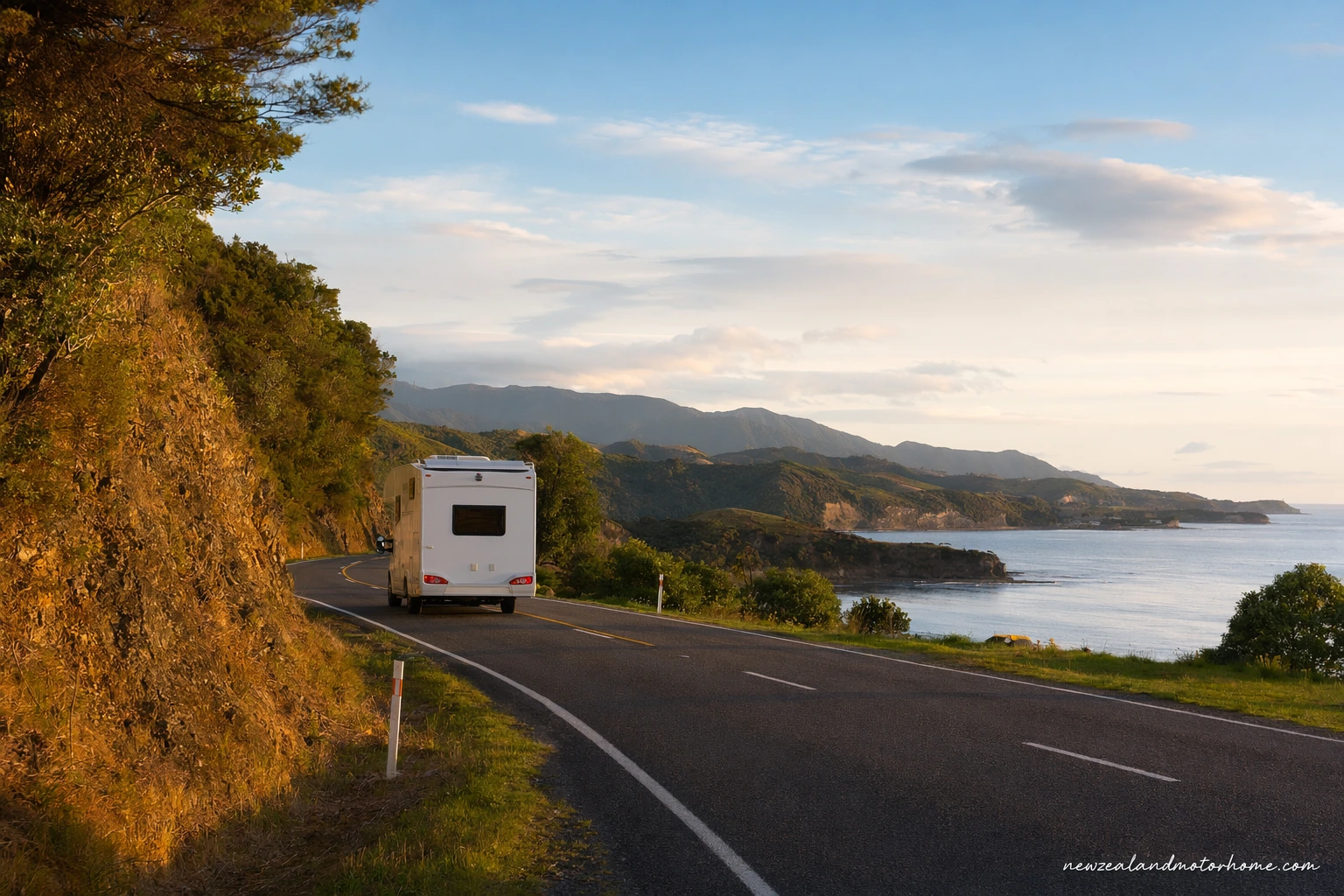
- Allow 5–8 days
- Includes Cook Strait ferry
- SH1 with exposed plateau sections
- Powered sites useful every 2–3 nights
- Freedom camping only where permitted
A Picton to Whangarei campervan trip is a proper two-island run: Marlborough Sounds, Cook Strait, the lower North Island, the volcanic centre, Auckland traffic, then the warmer, hillier roads into Northland. It is not a route to rush if you are sleeping in the van and managing water, waste, power and ferry timings along the way.
This guide breaks the route into realistic campervan legs, with overnight ideas, powered and unpowered site notes, dump station planning, road cautions and places where parking a longer or higher motorhome needs a little thought. It suits travellers in a hired, certified self-contained campervan or motorhome heading north after collecting the van in the South Island.
How many days to allow for the route
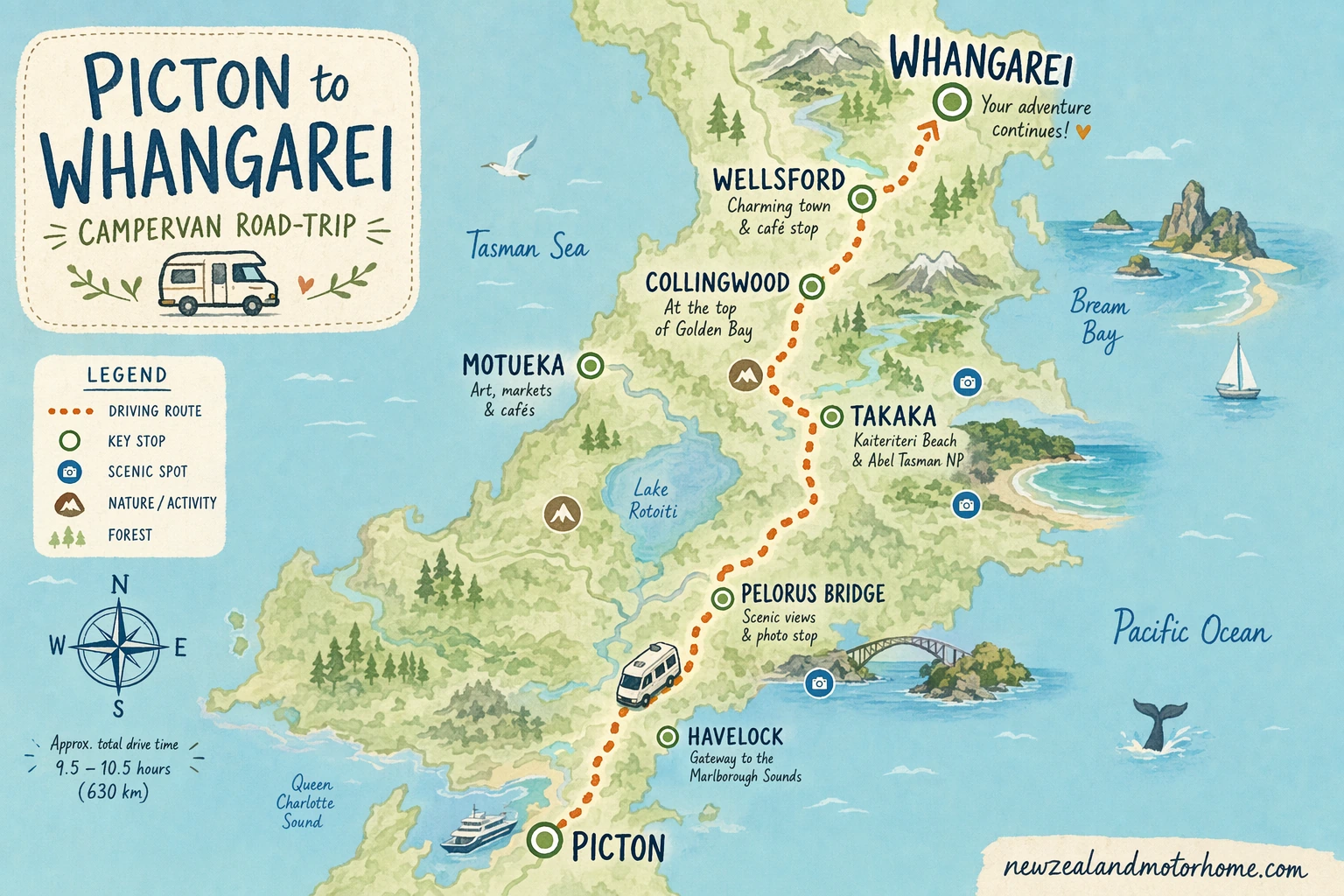
The direct Picton to Whangarei drive is long before you even count the ferry, Auckland traffic or the slower Northland roads. In a campervan, five days is a workable minimum if you are mostly moving; seven to ten days feels much better because you can stop for proper overnights, plug into power every few nights, and avoid arriving at campsites in the dark.
A sensible northbound rhythm is Picton or Blenheim, Wellington or Kāpiti, Taupō or Tongariro, Waikato or Auckland’s northern edge, then Whangārei. If the Cook Strait sailing is late or the Desert Road has weather issues, that extra night in the plan stops the trip becoming a stressful chase.
- Minimum: 5 days, with long driving legs and pre-booked ferry timing.
- Comfortable: 7–8 days, allowing powered-site nights and short detours.
- Slower pace: 10+ days, adding Marlborough, Kāpiti, Taupō and Northland beaches.
- Best overnight pattern: alternate freedom or unpowered nights with holiday parks for showers, laundry, charging and dumping.
Picton, the ferry, and getting the van across Cook Strait
Start by treating Picton as more than a ferry queue. Stock the fridge, fill fresh water, empty waste if needed, and check LPG before boarding. Picton has holiday park options if you want a powered night before an early sailing, and there are council-listed dump stations in the wider Marlborough area, including around Picton and Blenheim.
When booking the ferry, measure and declare your campervan’s full length and height, including bike racks, roof vents, aerials and rear storage boxes. LPG bottles usually need to be turned off for the crossing, and you will not be able to access the vehicle deck once underway, so take warm layers, chargers, medication and snacks with you.
Allow plenty of time to reach the ferry terminal. Picton’s streets are small and busy around sailing times, and turning a long motorhome around near the waterfront can be awkward. If you are nervous about tight reversing or queue lanes, arrive early and let staff direct you rather than making last-minute manoeuvres.
Wellington to Kāpiti or Manawatū: an easy first North Island night
After the ferry, avoid planning a big late-day haul unless your sailing arrives early and the weather is settled. Wellington’s waterfront parking is not motorhome-friendly for overnighting, and central city height barriers can catch out taller vans. For a simpler first North Island stop, head towards Lower Hutt, Porirua, Kāpiti or further north to Levin and Himatangi, depending on daylight.
This part of the Picton to Whangarei motorhome road trip is a good place to use a holiday park or designated motorhome site rather than gambling on freedom camping. Local bylaws vary street by street, and a certified self-contained sticker does not automatically mean you can stay anywhere.
- Van-friendly pause: Kāpiti Coast beaches have larger public car parks for daytime stops, but check signage carefully before leaving the van.
- Practical services: look for public dump stations around Porirua, Kāpiti, Levin and Palmerston North if you are not staying at a holiday park.
- Road note: Transmission Gully and SH1 make this section smoother than the old coastal crawl, but wind and wet weather still matter in a high-sided campervan.
Across the central North Island: Taupō, Tongariro and power top-ups
From Kāpiti or Manawatū, the route north usually follows SH1 through Taihape and the central plateau. It is one of the best scenic sections of the Picton to Whangarei drive, with big skies, volcano views and several places to break the day, but it is also exposed. In winter, check road conditions before using the Desert Road, and in strong winds keep both hands on the wheel in a taller motorhome.
Taupō makes a practical campervan stop because it has supermarkets, fuel, LPG bottle-swap points, dump stations, lakefront walks and a good spread of powered and unpowered accommodation. If you have been off-grid for a night or two, this is a sensible place to plug in, run the heater safely, refill water and reset the van before the Auckland push.
- Good overnight choices: Taupō holiday parks for powered sites; Tongariro area campgrounds for a cooler, more outdoorsy night.
- Driving caution: the Desert Road can close for snow, ice, crashes or high winds, so keep an alternative night in mind.
- Parking tip: use larger lakefront or reserve car parks for daytime stops, and avoid squeezing into small café forecourts with limited turning room.
Waikato and Auckland: timing the motorway in a campervan
North of Taupō, SH1 runs through Waikato farming country and onto the Auckland motorway network. Hamilton, Cambridge, Te Kauwhata and Pōkeno can work as staging points if you do not want to hit Auckland at the end of a long day. This is also a useful stretch for groceries, fuel, fresh water and waste disposal before Northland, where services become more spread out.
Try to cross Auckland outside the commuter peaks. The motorway is straightforward enough in a campervan, but lane changes, toll-road decisions, bridge wind and fast-moving local traffic can feel tiring after rural driving. Keep extra following distance, know your exit before you need it, and avoid central city parking unless you have confirmed height clearance.
If you want help matching ferry times, Auckland traffic windows and realistic overnight stops, use the plan-your-trip step before locking in campground dates. A little sequencing here can save a lot of backtracking in a larger van.
Auckland to Whangārei: beaches, hills and the Northland finish
Once you are north of Auckland, the road feels different: more curves, more rolling hills, and more tempting beach detours. Orewa, Warkworth, Matakana, Mangawhai and Waipū can all make good breaks before the final run into Whangārei, but check whether your overnight stop allows your vehicle length and whether freedom camping is permitted for certified self-contained vans only.
The main route continues on SH1 through the Brynderwyn area and on to Whangārei. This section has had slips and roadworks at times, so check current conditions before leaving Auckland’s northern edge. In a motorhome, take hill descents steadily, use pull-offs to let faster traffic pass, and do not rely on being able to turn around easily on narrow coastal side roads.
- Whangārei arrival: choose a holiday park or designated campervan site if you need showers, laundry, charging and a dump station after several road days.
- Day parking: use larger signed car parks for the Town Basin, waterfalls or beach visits; avoid low tree branches and tight residential streets.
- Freedom camping: Northland councils enforce local rules, so use only signed or officially listed sites and respect maximum-night limits.
Common questions
Can I drive from Picton to Whangarei in a campervan in three days?
It is possible only with very long days, perfect ferry timing and little room for delays. For most campervan travellers, five days is the realistic minimum, with seven or more days giving you time to manage power, water, dumping and rest.
Do I need a certified self-contained campervan for this route?
Yes, if you want to use freedom camping areas. Even with certification, you must follow local bylaws and site signs; many places allow only designated vehicles, specific spaces or limited nights.
Where should I dump waste and refill fresh water?
Plan to use dump stations in larger towns such as Picton or Blenheim, Wellington-region towns, Levin, Taupō, Hamilton, Auckland’s northern fringe and Whangārei. Holiday parks often provide dump and water facilities for guests, while public dump stations should be checked on current council or motorhome maps before you rely on them.
Is the road suitable for a large motorhome?
The main SH1 route is suitable for standard hired campervans and motorhomes, provided you drive to the conditions. The trickier parts are ferry loading, city parking, exposed central plateau winds, Auckland motorway traffic and narrower Northland side roads.
Should I pre-book campsites on a Picton to Whangarei campervan trip?
Pre-book the ferry and key powered-site nights, especially in summer, school holidays and long weekends. You can keep some flexibility between major stops, but do not leave Auckland-fringe or Northland summer overnights to chance.
What is the best season for this route?
Late spring, summer and early autumn offer the easiest driving and more daylight. Winter can still be rewarding, but allow extra time for wet weather, shorter days and possible central North Island road restrictions.
Have a planner shape this for your dates
Send a short outline — your dates, party size, and the kind of trip you want. A planner replies with a vehicle recommendation, a paced route, and the realistic budget.