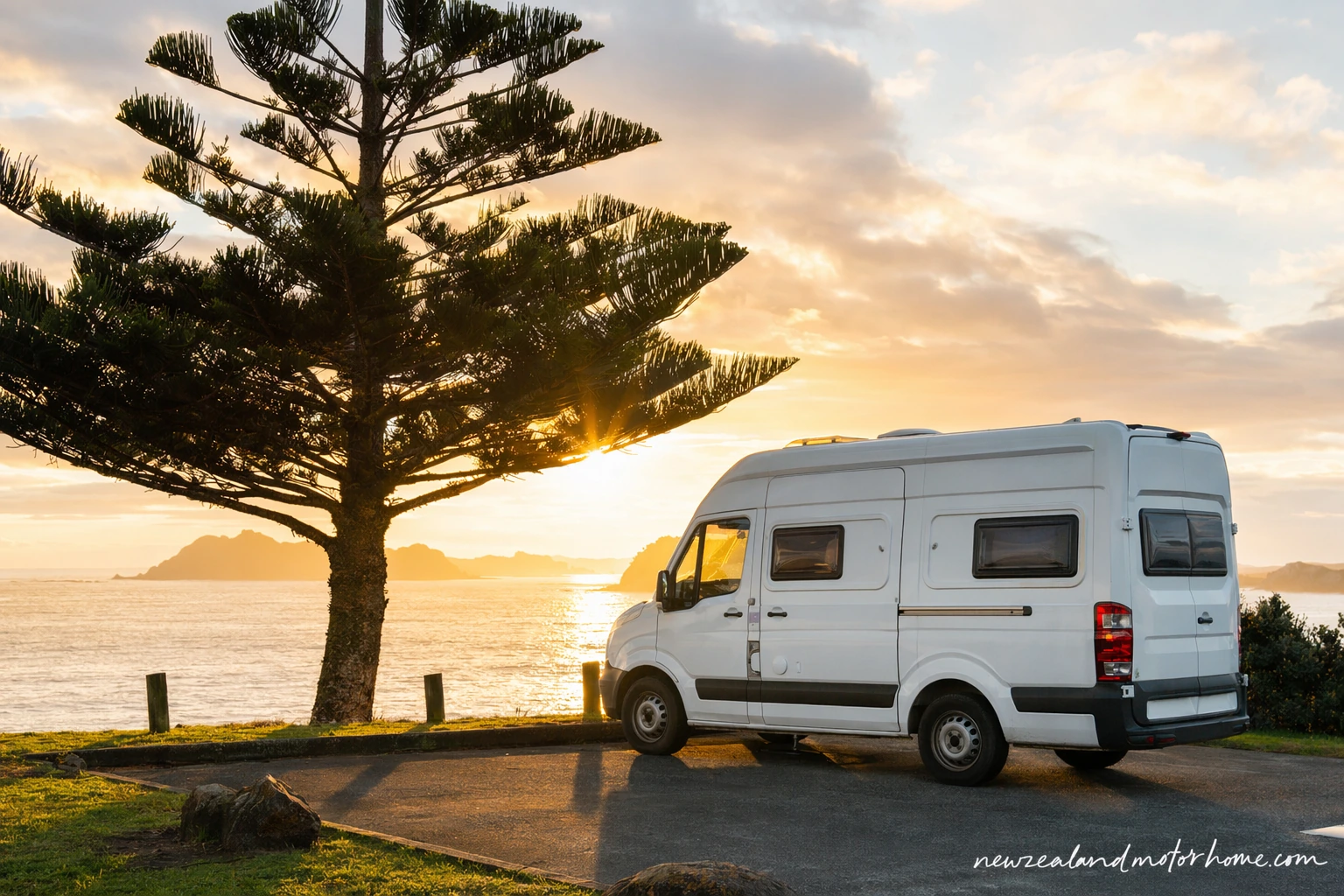
- Best start: 3–7 days in Northland
- Powered first night recommended
- Certified self-contained for freedom camping
- Watch narrow coastal roads
- Refill LPG and water in town
Picking up a van in Whangārei puts you straight into Northland driving: harbour roads, beach turn-offs, rolling dairy country and the first real taste of the winterless north. This page is for self-drive travellers hiring a campervan or motorhome and sleeping in it each night, not day-trippers or coach passengers.
Below you’ll find practical notes for campervan hire Whangarei: where pickups usually work, how to get the van out of town without stress, where to spend your first night, and how to choose between powered holiday parks, simple campgrounds and permitted freedom camping areas.
Where Whangārei campervan pickups usually happen
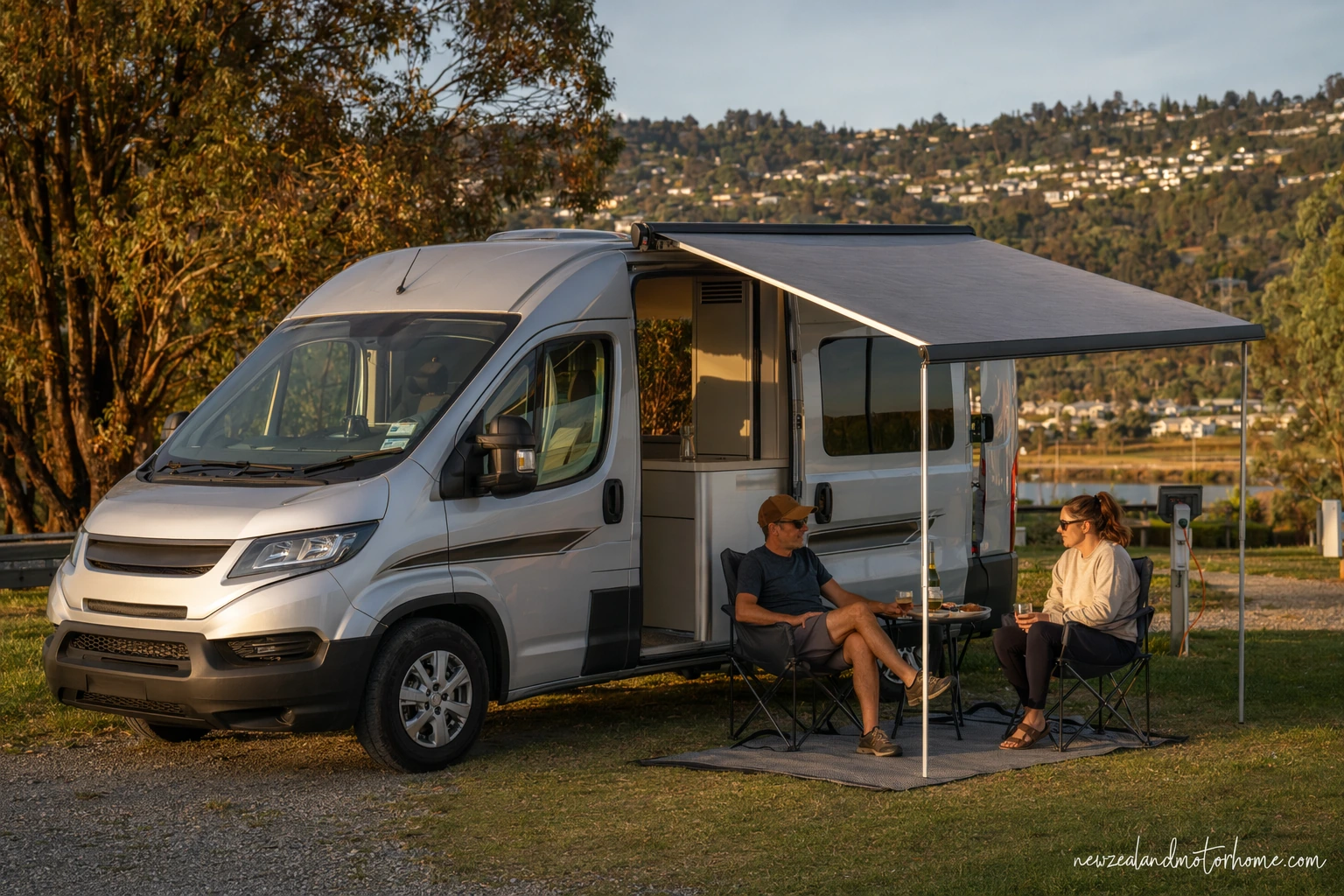
Whangārei is not laid out like a big airport rental precinct, so campervan rental Whangarei often involves a smaller local yard, an arranged handover, or a city-side pickup rather than a row of large branded depots. Allow time for the full van briefing: gas bottle location, grey-water valve, toilet cassette, battery monitor, fresh-water filler and how your self-containment certificate is displayed.
If you are comparing motorhome hire Whangarei options, ask before booking where you can safely leave luggage during the handover and whether the van is already stocked with fresh water and LPG. For taller motorhomes, also confirm the depot exit route so you are not immediately pushed through tight central streets or low tree cover around older suburbs.
- Best first stop after pickup: a supermarket with a roomy edge-of-carpark space, not a cramped central bay.
- Check before leaving: tyre condition, windscreen chips, power lead, hose fittings, levelling ramps and dump-station key if supplied.
- Ask about vehicle length: a 6-berth motorhome feels very different on the Tutukākā and Whangārei Heads roads than a compact 2-berth campervan.
Getting the van out of Whangārei on Northland roads
Whangārei’s centre is manageable in a campervan, but it is still worth taking the first half-hour gently. The Town Basin and Hātea area can be busy with pedestrians, angle parking and short-stay spaces, so do your sightseeing after you have settled the van rather than during the pickup rush.
State Highway 1 runs north-south through the city and is the simplest way to leave if you are heading for the Bay of Islands or Auckland. For the west coast, SH14 towards Dargaville is straightforward but can be slower behind trucks. The coastal roads to Tutukākā and Whangārei Heads are beautiful, narrow in places, and better driven in daylight while you are still learning the van’s width.
- Use lower gears on descents rather than riding the brakes, especially in a heavy motorhome.
- Watch for one-lane bridges, tight shoulders and sudden beach-access turn-offs on rural Northland roads.
- Park nose-out where you can; reversing a long van from a roadside viewpoint is rarely relaxing.
First-night stops close to the city
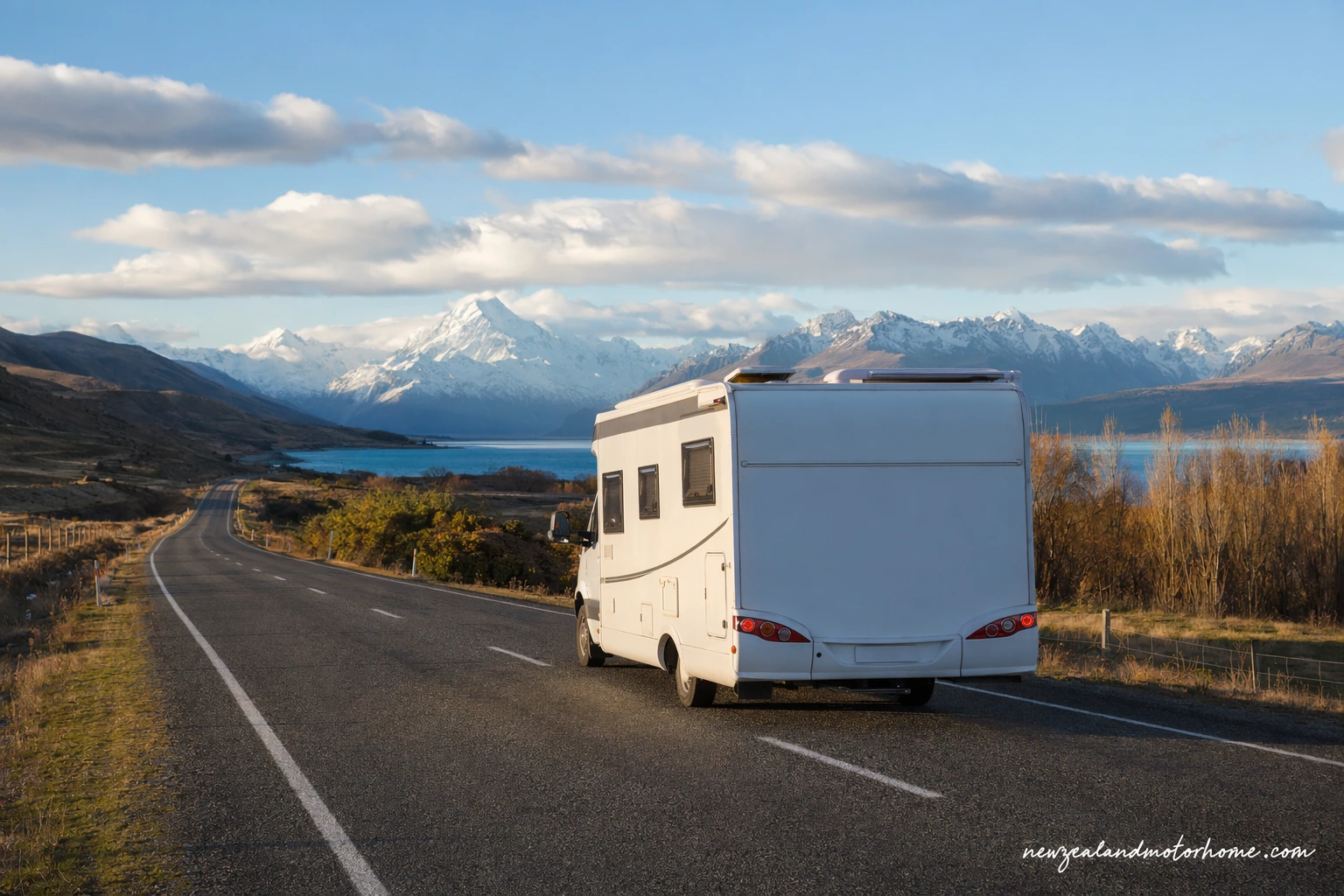
Your first overnight after pickup should be easy: a legal site, a flat pitch, toilets nearby and enough space to repack bags without blocking another camper. Whangārei holiday parks and campgrounds on the city edge or towards the coast are good choices because you can plug into power, top up water, test the fridge overnight and sort out any questions before you drive further north.
If you want to be closer to the sea, look towards Whangārei Heads, Ruakākā, Waipū or the Tutukākā Coast, depending on your route. These areas work well for a gentle first day, but book ahead in summer and on long weekends because powered sites can fill quickly.
- Powered site: useful for your first night, especially if you need to charge devices, run heating or cool the fridge properly.
- Unpowered site: fine once you understand your house battery and solar setup.
- Before bedtime: check the van is level enough for the fridge, the gas is turned on safely, and the grey-water tank is closed.
Freedom camping, dump stations and water near Whangārei
Freedom camping around Whangārei is controlled by local bylaws, and the rules can change by site and season. Do not assume a beach carpark is legal just because another van is there. You will usually need a certified self-contained vehicle, and some areas have night limits, marked bays or complete overnight bans.
For a relaxed first night, a paid campground is often worth it. You can use dump stations correctly, fill fresh water, plug into power and reset the van before heading to more remote Northland stops. Use official council, campground or app-listed dump points only; never empty grey water or a cassette toilet into roadside drains.
- Carry drinking water before leaving town, especially if you are heading up the east coast or across to the Hokianga.
- Refill LPG in Whangārei before going rural; not every coastal settlement has an easy bottle-swap option for hire vans.
- Keep proof of self-containment visible and follow any posted signs even if an app listing looks out of date.
Best routes from Whangārei in a hired campervan
Whangārei is a useful hinge point: you can turn east for surf and coves, north for the Bay of Islands, west for kauri forest and harbour country, or south for an easier return to Auckland. If you searched for caravan hire Whangarei, remember that many Northland side roads and beach approaches are simpler in a self-contained campervan than with a towed caravan, especially when parking at lookouts or small coastal reserves.
For a classic first leg, head to Tutukākā and Matapōuri, then continue north towards Russell, Paihia and Kerikeri. For a quieter loop, go west via Dargaville and the Kauri Coast, then up towards Hokianga before crossing back east. If you would like help matching van size, overnight stops and legal camping areas, you can send us your rough dates through Talk to us and we’ll help shape a self-drive plan.
- East coast route: best for beaches, snorkelling stops and shorter daily drives.
- West coast route: better for forest, big harbours and a less polished Northland feel.
- Northbound route: allow extra time; distances look short but winding roads slow a motorhome down.
Keep planning
Whangarei to timaru campervan
Read onWhangarei to gisborne campervan
Read onWellington to whangarei campervan
Read onRotorua to whangarei campervan
Read onPicton to whangarei campervan
Read onPalmerston north to whangarei campervan
Read onCommon questions
Is Whangārei a good place to start a campervan trip?
Yes, especially if your focus is Northland. You avoid starting in Auckland traffic and can reach Whangārei Heads, Tutukākā, Waipū, the Bay of Islands or the Kauri Coast without a long first day behind the wheel.
Are there big campervan depots in Whangārei?
Whangārei pickups are usually more local and arranged than the large airport-style depots found in Auckland or Christchurch. Confirm the exact handover address, parking space for the briefing, and whether fresh water, LPG and bedding are included before you arrive.
Can I freedom camp near Whangārei in a hired motorhome?
Only where local rules allow it, and generally only in a certified self-contained vehicle. Check current Whangārei District signage and official listings on the day, because beach carparks and town reserves often have restrictions or no-camping areas.
Should I book a powered site for the first night?
For most travellers, yes. A powered site gives you a calm first evening to test the fridge, charge devices, learn the heater and use campground water and dump facilities before heading into smaller coastal stops.
What van size works best for roads north of Whangārei?
A compact 2-berth or 4-berth campervan is easiest on coastal roads and small beach carparks. A larger motorhome is still workable, but drive in daylight, allow slower journey times and check campsite length limits before booking.
Have a planner shape this for your dates
Send a short outline — your dates, party size, and the kind of trip you want. A planner replies with a vehicle recommendation, a paced route, and the realistic budget.