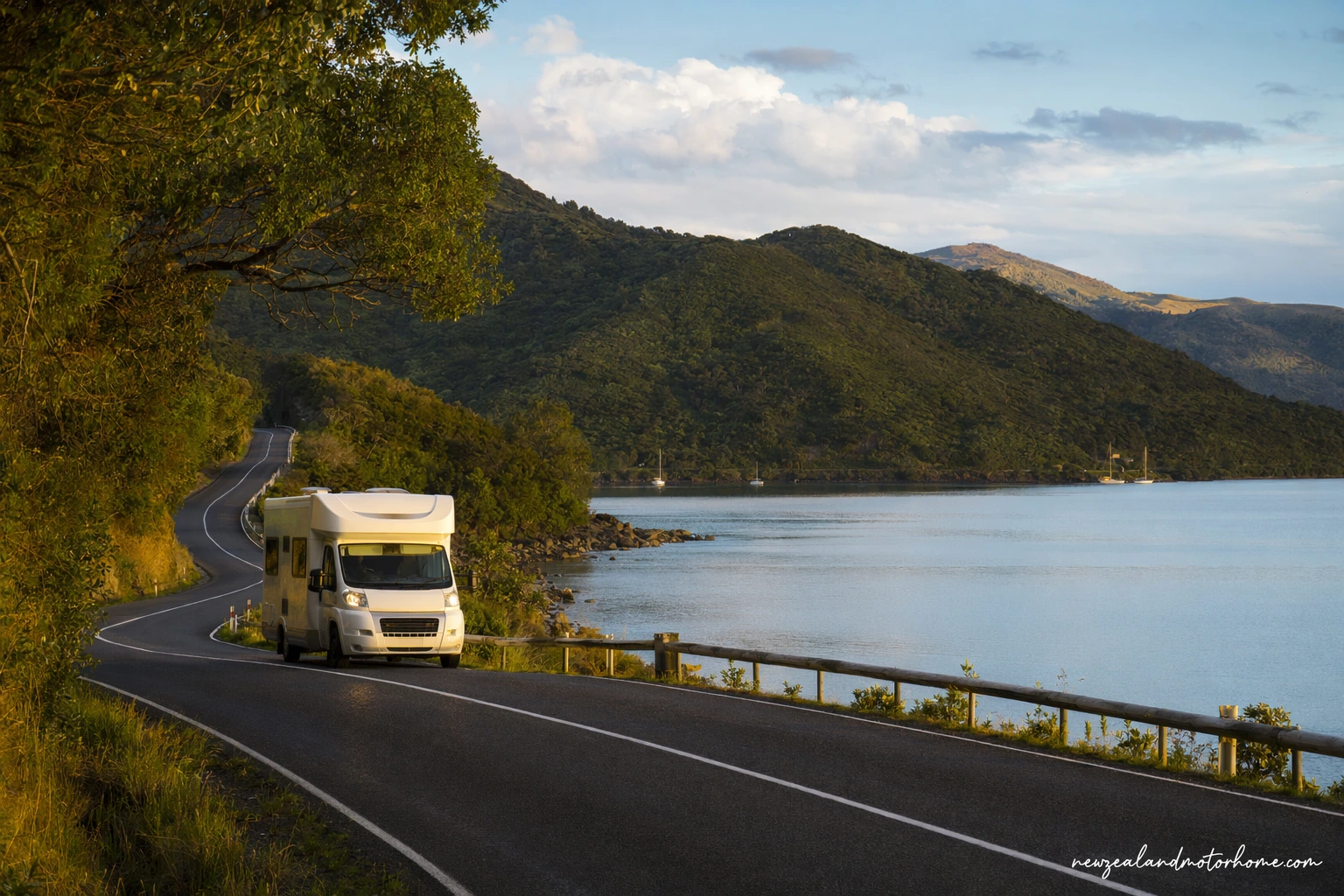
- Best as 3 days
- SH1 via Taupō and Auckland
- Powered sites recommended en route
- Check Desert Road and Brynderwyn conditions
- Certified self-contained for freedom camping
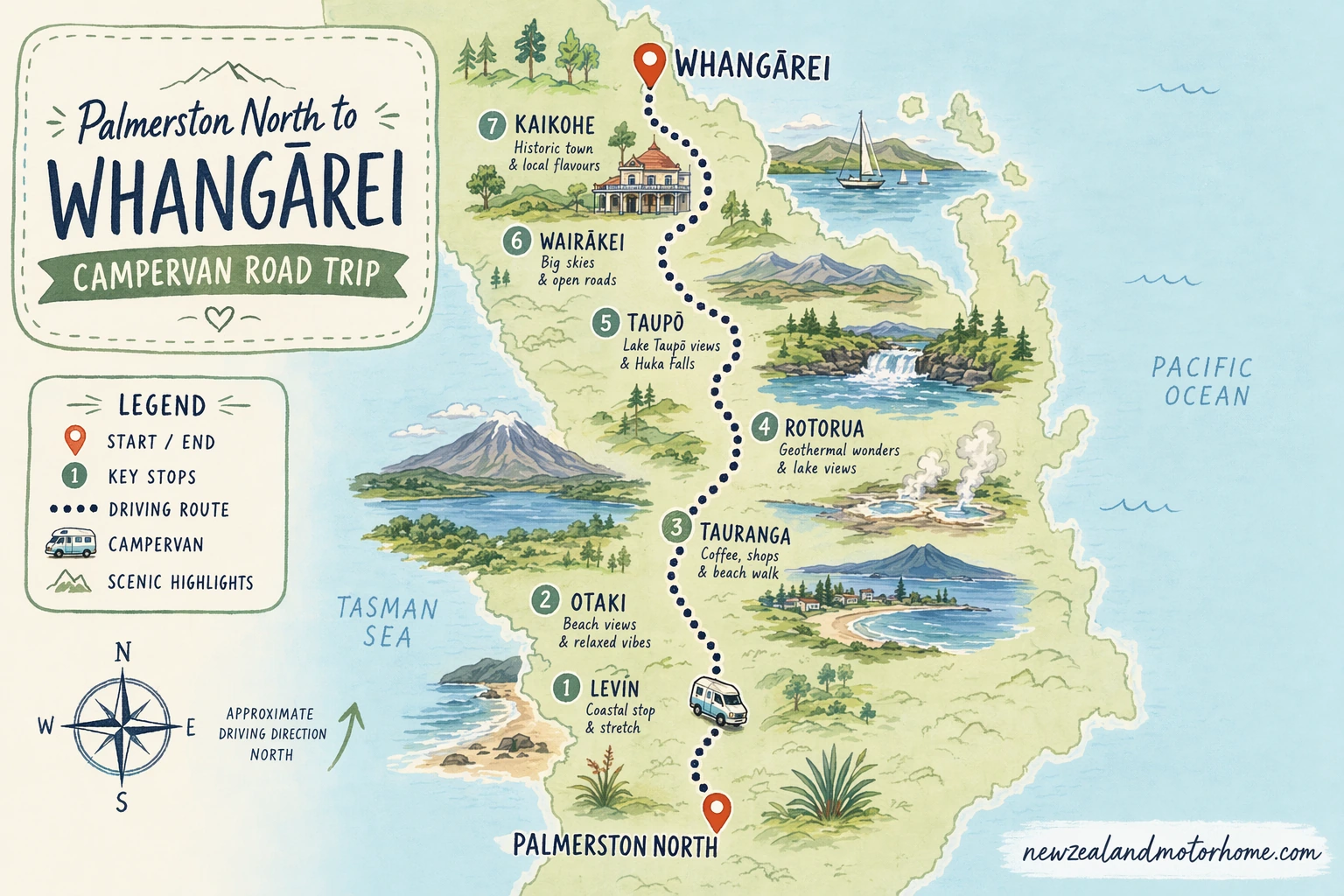
The Palmerston North to Whangarei campervan route is a proper North Island crossing: Manawatū farmland, the central plateau, Auckland’s motorway squeeze, then the warmer, hillier run into Northland. It is doable in a long day on paper, but in a motorhome it is far better as a two to four day trip with unhurried stops, fresh-water top-ups and a sensible overnight before the Auckland section.
This guide is written for self-drive campervan travellers, not people just ticking off kilometres. You will find practical legs, places where a van can pause without drama, notes on powered and unpowered camping, dump station planning, and the road details that matter when you are driving something taller, wider and slower than a car.
How many days to allow in a campervan
The palmerston north to whangarei drive is roughly 700-plus kilometres depending on the exact route and any detours around Auckland or Northland roadworks. A confident driver could push through, but that usually means arriving tired, hunting for a legal overnight spot in the dark, and missing the best parts of the journey.
For most hired motorhomes, three days feels right: one night around Taupō or Tūrangi, one night north of Auckland or around Warkworth/Wellsford, then a relaxed final run into Whangārei. If you have a larger six-berth van, add time for slower hill sections, fuel stops and easier parking.
- Fast but tiring: 2 days, with an overnight in the central North Island and an early Auckland crossing.
- Comfortable: 3 days, giving you time for dump stations, groceries and a beach or lake stop.
- Unhurried: 4 days or more, adding Rotorua, the Waikato, the Hibiscus Coast or the Mangawhai coast.
If you want help matching the route to your van size, travel month and self-containment set-up, you can talk to us before you lock in your overnight stops.
Leg 1: Palmerston North to Taupō or Tūrangi
Leave Palmerston North with full fuel, fresh water and an empty grey-water tank if you can. The early part of the route follows SH1 through the Rangitīkei and Taihape, with big rural views and enough small-town stops for coffee, toilets and a leg stretch, but not endless places to turn a long van around.
Taihāpe is a useful mid-leg pause for drivers, especially if the weather is building over the Desert Road. Park in signed public parking rather than squeezing into short main-street spaces, and keep an eye on rear overhang when pulling out near kerbs.
From Waiouru, SH1 over the Desert Road is one of the more memorable parts of a Palmerston North to Whangarei motorhome road trip. It is wide enough for motorhomes, but exposed to wind, ice, snow closures and sudden visibility changes. Check road conditions before committing, particularly in winter or during strong southerlies.
- Good overnight bases: Taupō for lakefront walks and serviced holiday parks; Tūrangi for a quieter stop before or after the plateau.
- Site style: holiday parks offer powered sites, showers, laundry and fresh-water fills; some lake and reserve areas are restricted or time-limited for certified self-contained vehicles only.
- Van services: plan dump station use around Taupō or Tūrangi rather than assuming every roadside stop has potable water.
Leg 2: Taupō or Tūrangi to the Auckland northern edge
This is the working middle of the route: lake country, Waikato expressways, then Auckland’s motorway network. The roads are generally motorhome-friendly, with plenty of service stops, but the traffic volume rises as you move north and lane changes take more planning in a tall van.
Hamilton, Cambridge and the wider Waikato are practical places for groceries, LPG bottle swaps or refills, and a dump station stop if your overnight site did not include one. Keep your fresh-water hose separate from waste gear and check whether any water tap is marked potable before filling.
For the Auckland section, avoid weekday peak times if possible. A good campervan tactic is to overnight south of the city, leave after the morning rush, and continue to the Hibiscus Coast, Orewa, Warkworth or Wellsford for the night. That gives you a cleaner final approach to Whangārei the next day.
- Motorway note: use the correct lane early; last-minute moves are harder in a motorhome.
- Toll note: parts of the northern motorway corridor include toll-road choices, so check the current NZTA toll information and pay online if required.
- Overnight note: Auckland freedom camping rules are strict and location-specific; do not assume a beach car park allows overnight stays.
Leg 3: Warkworth, Wellsford or Uretiti to Whangārei
North of Auckland, the drive starts to feel like Northland: rolling country, pockets of native bush, narrower shoulders and more undulating sections. SH1 is the main line to Whangārei, but it is worth checking current roadworks and closures before you leave, especially around the Brynderwyn Hills area where diversions can add time.
Warkworth and Wellsford are sensible service towns for a larger van. They give you space to refuel, buy groceries and take a driver break before the more twisting sections. If you are heading for an unpowered coastal night, top up fresh water first and confirm your house battery is charged.
Uretiti, south of Whangārei, is a popular unpowered DOC-style coastal stop for self-contained and camping vehicles, with beach access and a more open feel than urban camping. It is not a substitute for checking current rules, booking requirements and seasonal capacity, but it is a useful final-night option before rolling into town.
- Approaching Whangārei: take your time on hills and let faster traffic pass where safe.
- Parking the van: around the Town Basin and central attractions, look for council-signed longer vehicle spaces or outer-edge parking rather than tight angle parks.
- Arrival plan: decide before you enter town whether you are going to a powered site, a booked holiday park, or a legal self-contained overnight area.
Overnight stops, powered sites and freedom camping
A good overnight pattern for this route is serviced, then simple, then serviced again. Start with a powered site around Taupō or Tūrangi to recharge devices, refill water and reset the van. Then consider an unpowered coastal or rural stop north of Auckland if your batteries, fridge and water levels are in good shape.
Freedom camping is not a single national yes-or-no. Your vehicle generally needs current certified self-containment, and each council sets its own permitted places, stay limits and no-camping zones. Northland councils actively manage popular coastal spots, so read the local signs on arrival rather than relying on old forum posts.
When choosing a site, think beyond the view. A level bay, room to open the side door safely, no overhanging branches, and a clear exit in wet weather matter more in a motorhome than in a car. If wind is forecast, park with the nose or rear into the gusts where you can.
- Powered sites: best after long driving days, cold weather, heavy device use or if you need laundry and showers.
- Unpowered sites: fine for a night if your battery is healthy and you are conservative with lights, heating and fridge use.
- Freedom camping: use only signed or council-listed areas and follow the conditions for certified self-contained vehicles.
Dump stations, LPG, water and van-safe driving notes
Do not leave waste and water planning until the tanks are full. On this route, the easiest service rhythm is Palmerston North before departure, Taupō or Tūrangi on night one, Waikato or north Auckland if needed, then Whangārei on arrival. Holiday parks often make this simple for guests, while public dump stations vary in access, hose set-up and potable-water availability.
LPG is usually easiest to sort at larger fuel stops and towns rather than small rural settlements late in the day. If your van uses a swap bottle, check you are carrying the right bottle type before handing anything over. If it has a fixed tank or specific fittings, ask your hire operator how they expect you to refill it.
For driving, remember you are dealing with windage, weight and a higher centre of gravity. The Desert Road, Auckland motorway merging, the SH1 hills into Northland, and tight urban parking in Whangārei all ask for a calmer pace than a car trip.
- Height: know your van height before entering covered parking, service-station canopies or low-tree camp access roads.
- Length: allow extra room at fuel pumps, supermarket car parks and dump station turning areas.
- Weather: check NZTA Journey Planner for Desert Road conditions, Auckland incidents and Northland roadworks before each leg.
- Tyres and brakes: take downhill sections steadily and use lower gears where appropriate rather than riding the brakes.
Keep planning
Holiday parks palmerston north
Read onCampervan supplies palmerston north
Read onCampervan hire palmerston north
Read onWellington to palmerston north campervan
Read onRotorua to palmerston north campervan
Read onQueenstown to palmerston north campervan
Read onCommon questions
Can I drive from Palmerston North to Whangarei in one day in a campervan?
You can, but it is a long and tiring day in a motorhome, especially with Auckland traffic and Northland hills at the end. Most campervan travellers are better off breaking the journey with at least one overnight stop, and ideally two.
Where should I overnight between Palmerston North and Whangarei?
Taupō or Tūrangi work well for the first night, with powered holiday park sites and useful van services. For the second night, look around Orewa, Warkworth, Wellsford or Uretiti depending on your timing, booking needs and self-containment status.
Is the Desert Road suitable for a motorhome?
Yes, SH1 over the Desert Road is commonly driven by motorhomes, but it is exposed and can close in snow, ice, high wind or poor visibility. Check conditions before leaving Waiouru, Tūrangi or Taupō, and be ready to wait or reroute if warnings are in place.
Do I need a certified self-contained campervan for this route?
You need current certified self-containment if you want to use many freedom camping areas. If your van is not certified, plan on holiday parks, DOC camps where your set-up is allowed, or other formal campgrounds with toilets and facilities.
How hard is it to get through Auckland in a campervan?
The motorways are manageable, but timing matters. Avoid peak traffic where you can, choose lanes early, and consider staying north of the city so the final leg to Whangārei starts fresh rather than after a stressful urban crossing.
Are there dump stations on the Palmerston North to Whangarei route?
Yes, but do not rely on finding one at the last minute. Plan around larger stops such as Palmerston North, Taupō or Tūrangi, the Waikato, north Auckland or Warkworth/Wellsford, and Whangārei, checking current council or campground information before you arrive.
Have a planner shape this for your dates
Send a short outline — your dates, party size, and the kind of trip you want. A planner replies with a vehicle recommendation, a paced route, and the realistic budget.