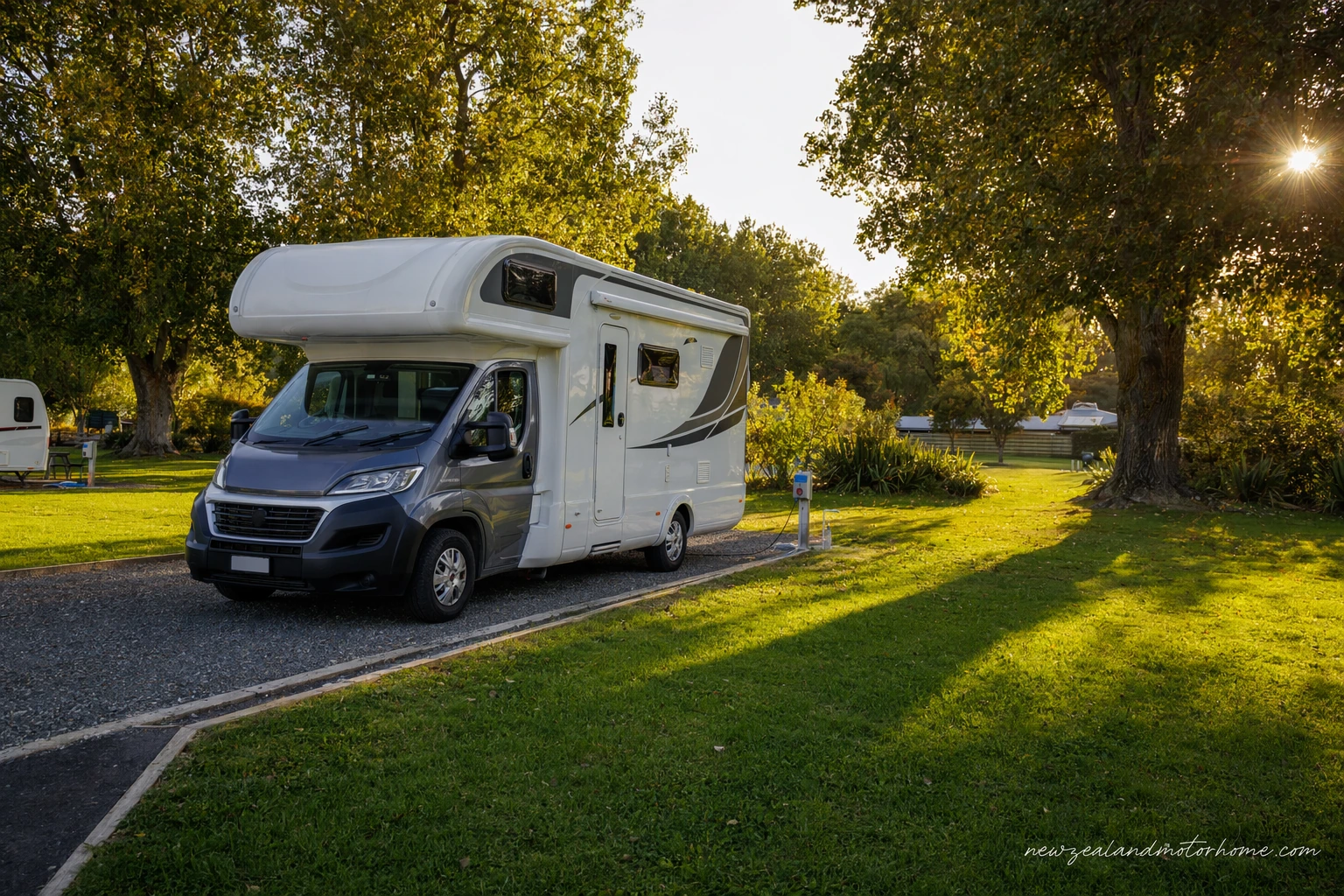
- Best as a 1–2 night reset stop
- Powered and unpowered sites available
- Useful river-path base for bikes
- Book ahead for events and holidays
- Check van length and hardstand options
Palmerston North is a practical campervan pause in the lower North Island: flat streets, easy supermarket runs, riverside walks, and a central position between Taranaki, Hawke’s Bay, Wellington and the Ruahine side roads. If you are driving and sleeping in your own hired van, it is the sort of place where a powered site, a proper shower and a dump-station stop can reset the whole trip.
This guide looks at holiday parks Palmerston North travellers can use as a base, plus nearby campsites Palmerston North drivers often consider when the city is full or you want a quieter edge. We focus on what matters in a motorhome: access by van, powered versus unpowered sites, where to park without fuss, and what you can walk or bike to once the handbrake is on.
Where campervan travellers usually base themselves
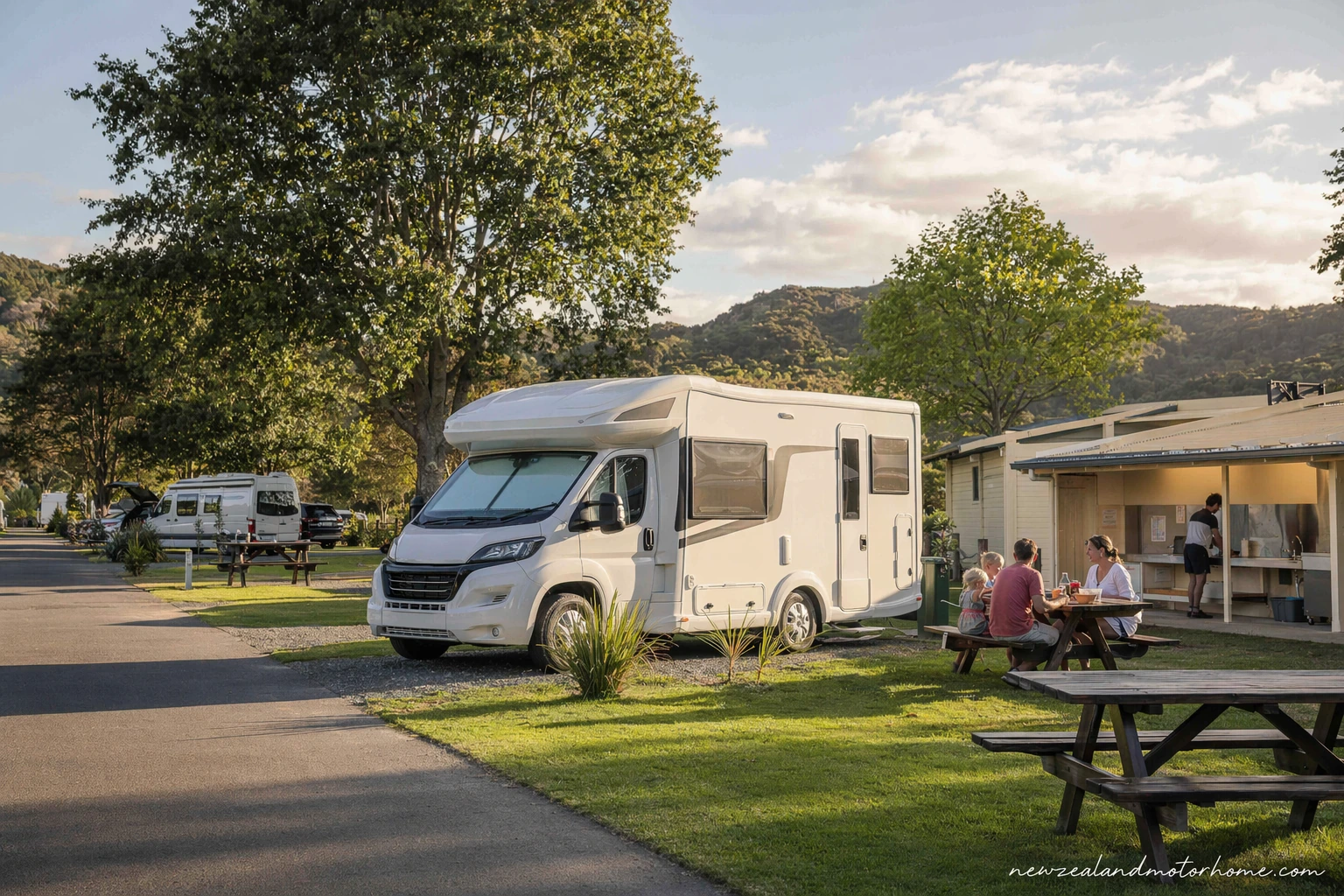
The handiest area for a first Palmerston North stop is the riverside and Esplanade side of town, south-west of the central grid. From here you can get to the Manawatū River paths, Victoria Esplanade, playgrounds and gardens without needing to drive the van back into the CBD for every small outing.
The Palmerston North TOP 10 Holiday Park name is commonly searched by motorhome travellers because it sits in this useful city-and-river zone. Whether you choose that style of full-service holiday park or another nearby campground, check current site length limits, dump-station access and after-hours arrival rules before you commit.
- Best for one night: a serviced holiday park close to the river, so you can plug in, dump waste and walk after a long drive.
- Best for town errands: a site with easy access to Fitzherbert Avenue or the central grid, avoiding tight CBD parking.
- Best for a quieter feel: look at campsites around Ashhurst, Feilding or the wider Manawatū, but allow extra driving time for city visits.
Powered sites, unpowered sites and what to ask before booking
Powered sites Palmerston North-wide are worth booking ahead in school holidays, long weekends and when university or sports events are on. A powered site is useful here in winter, when damp gear and short daylight hours make a warm van and charged house battery feel very welcome.
Unpowered sites can suit a certified self-contained campervan with solar, but ask whether you will be on grass or hardstand. Manawatū weather can turn soft ground soggy, and heavier motorhomes are happier on firm, level pads where you can chock the wheels and step out without sinking.
- Ask whether your van length is accepted, including bike racks or a rear-mounted storage box.
- Check if the site has a standard caravan power point and whether you need your own approved lead.
- Confirm whether the dump station is included for guests or only available at set times.
- If you are travelling with bikes, ask about secure storage or whether you can keep them beside the van.
Dump stations, fresh water and LPG top-ups
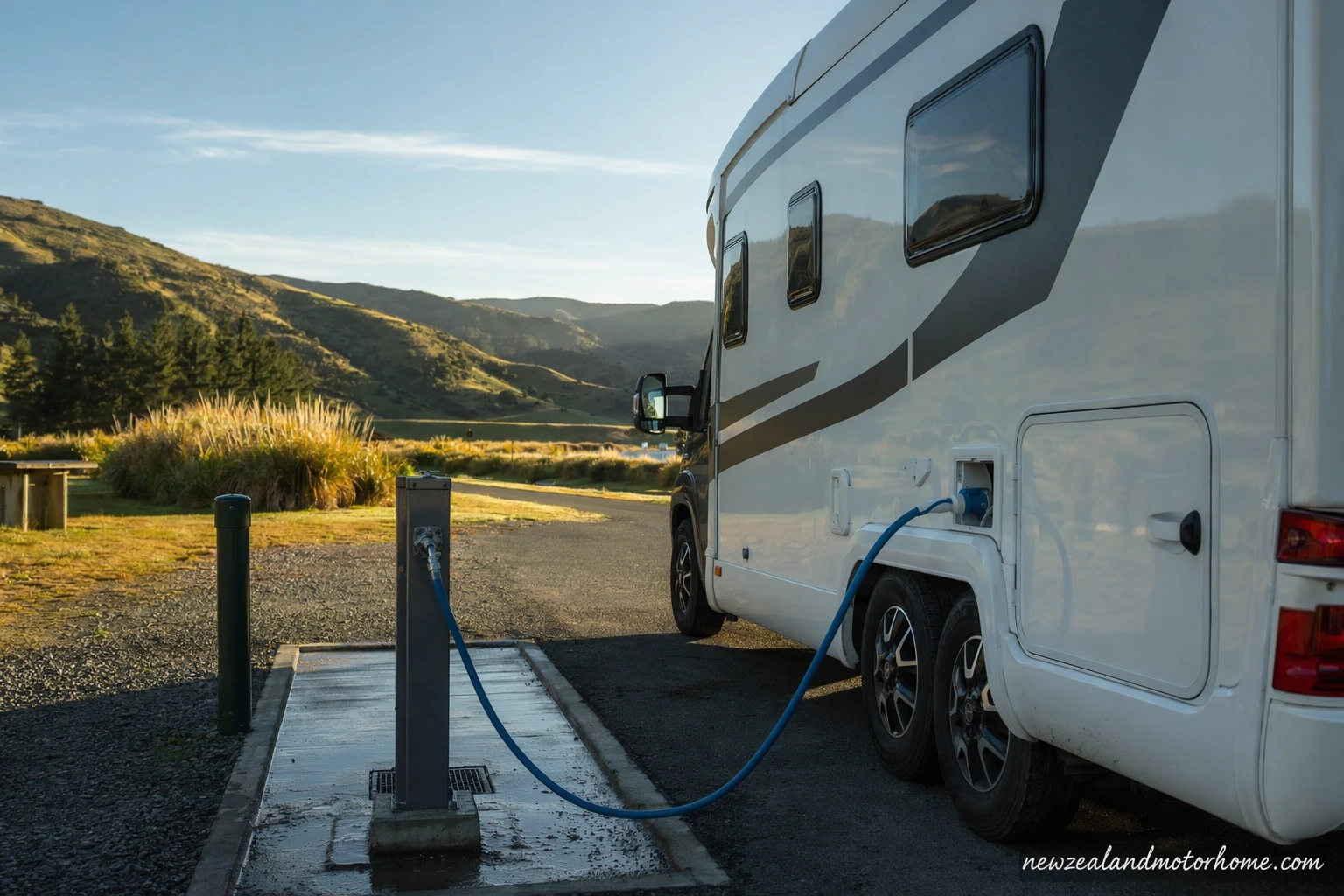
A full-service holiday park is usually the simplest place to empty grey and black water, refill fresh water and tidy the van before moving on. Do this before you leave the city rather than assuming the next small settlement will have a public dump point that suits your cassette or holding tank.
For LPG, plan around larger service-station or hardware-style outlets on the main approaches into Palmerston North rather than leaving it until late evening. Watch canopy heights, swing wide in forecourts, and avoid blocking truck lanes while you sort bottles or pay for fuel.
- Empty toilet cassette and grey water at an approved dump station only.
- Refill fresh water with your own food-grade hose if the park allows it.
- Top up before heading east towards rural Manawatū or north into smaller towns.
- Keep a separate rinse hose for cassette cleaning; do not use the fresh-water tap for waste jobs.
Driving into Palmerston North and parking the van
Palmerston North is easier to handle than many New Zealand cities because the central area is mostly flat and gridded, but a long motorhome still needs space. Use the main arterial roads, keep an eye on lane markings around The Square, and avoid hunting for a park in the tightest central blocks unless you know your van fits.
If you are arriving from Wellington, Whanganui, Hawke’s Bay or the Wairarapa, check current road conditions before you commit to the last leg, especially on wind-exposed rural highways and routes east of Ashhurst where roadworks or route changes can affect timing. In town, choose edge-of-centre parking and walk in.
- For city errands, look for open-air parking with no height barrier rather than multi-storey car parks.
- For Victoria Esplanade, arrive earlier in the day if you want easier room to turn and park.
- Do not overhang footpaths or cycle lanes; the city has plenty of pedestrians and students.
- When parking near supermarkets, treat it as shopping parking only, not a rest stop or overnight option.
What is walkable once the van is set up
One of the nicest parts of camping Palmerston North-style is that you can stop driving for a while. From the riverside holiday-park area, Victoria Esplanade, the Manawatū River shared path and shaded picnic spots are practical on foot, and bikes make the city feel even smaller.
The Square, Te Manawa and central cafés are a longer walk from the river but straightforward if you are comfortable with an urban stroll; otherwise, cycle in or move the van once and park on the edge of the centre. He Ara Kotahi bridge and the river trails are especially good for stretching legs after a day behind the wheel.
- Easy wander: Victoria Esplanade gardens, riverbank paths and playground areas.
- Bike-friendly outing: the Manawatū River shared paths and He Ara Kotahi connection.
- Town visit: The Square, galleries, eateries and supermarket errands.
- Bad-weather option: use the van for one well-planned town stop, then return to camp before peak traffic.
A simple one- or two-night campervan stopover
For one night, roll in during daylight, plug into a powered site, empty waste if needed, then walk the river or Esplanade before dinner back at the van. In the morning, refill water, do a supermarket run and head out with the boring jobs already handled.
With two nights, add a city morning, a bike ride, or a side trip toward Ashhurst, Feilding or the Manawatū countryside, leaving the awning and outdoor chairs packed away if you plan to move the van. If you want help fitting Palmerston North into a wider North Island motorhome route, use our soft planning step at talk to us and we can shape the stop around your driving days.
- Arrive: fuel, check in, level the van, connect power and note quiet hours.
- Reset: laundry, showers, rubbish, recycling, dump station and fresh water.
- Explore: river paths first, then town if you still feel like moving.
- Depart: leave before the day heats up in summer or before rural roads get dark in winter.
Keep planning
Wellington to palmerston north campervan
Read onRotorua to palmerston north campervan
Read onQueenstown to palmerston north campervan
Read onPicton to palmerston north campervan
Read onPalmerston north to whangarei campervan
Read onPalmerston north to timaru campervan
Read onCommon questions
Do I need to book powered sites in Palmerston North?
Can I freedom camp in Palmerston North in a campervan?
Is Palmerston North easy to drive through in a motorhome?
Where should I empty my toilet cassette or grey water?
How many nights should a campervan trip allow in Palmerston North?
Have a planner shape this for your dates
Send a short outline — your dates, party size, and the kind of trip you want. A planner replies with a vehicle recommendation, a paced route, and the realistic budget.