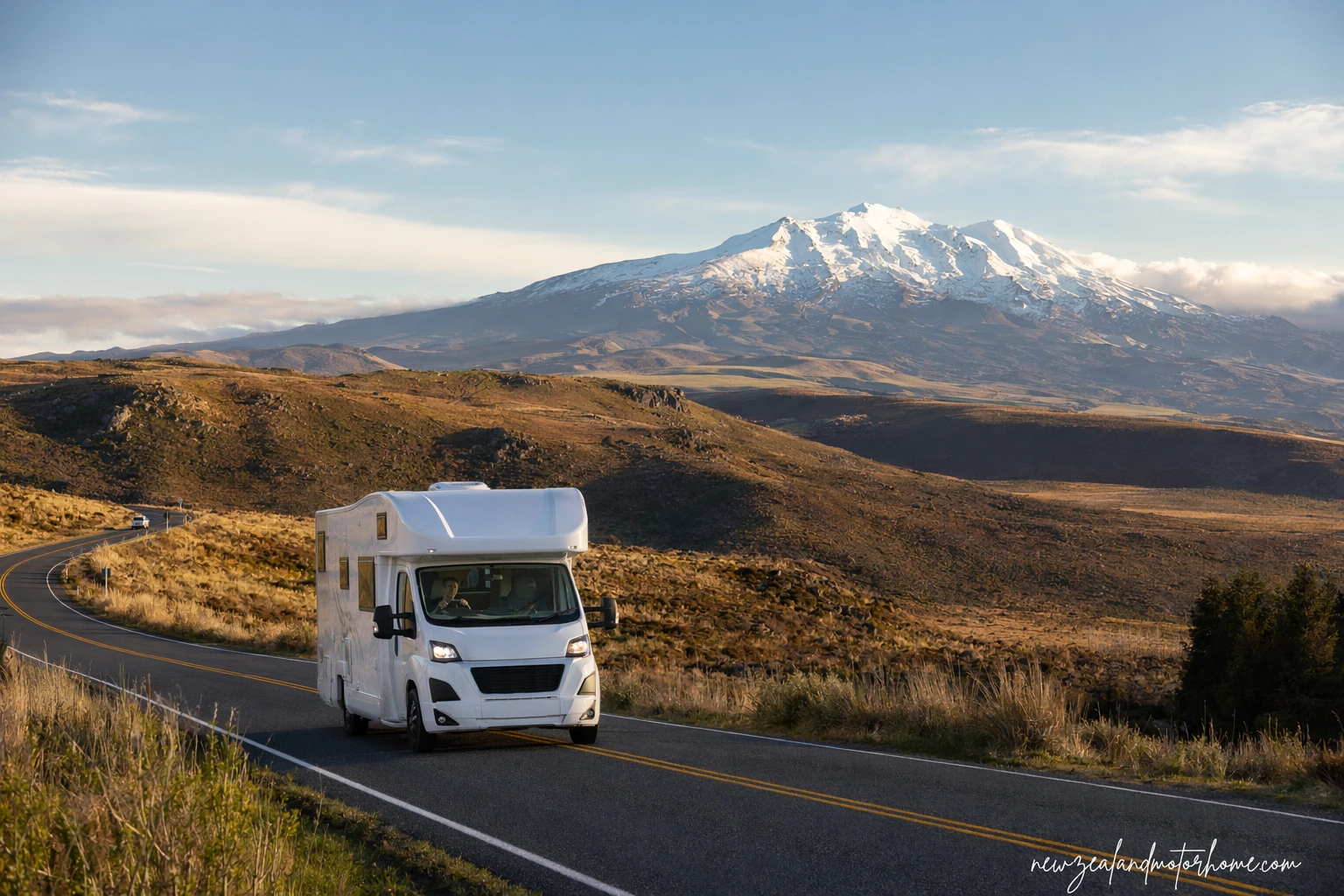
Rotorua to Palmerston North campervan route for self-drive vans
- Best over 2 days
- Main route via Taupō and SH1
- Desert Road weather check essential
- Powered sites in main towns
- Certified self-contained for freedom camping
The Rotorua to Palmerston North campervan route is a proper cross-island drive: geothermal valleys, Lake Taupō, the open tussock of the Central Plateau, then the green Rangitīkei country before you drop towards the Manawatū. It is a rewarding run in a motorhome, but it pays to treat it as more than a straight-line transfer.
This guide is written for travellers driving and sleeping in their own hired campervan or motorhome. You will find realistic driving legs, van-suitable stopping points, overnight ideas, dump station and water notes, and the road details that matter when you are carrying your bed, kitchen and fresh-water tank with you.
How long to allow for the Rotorua to Palmerston North drive
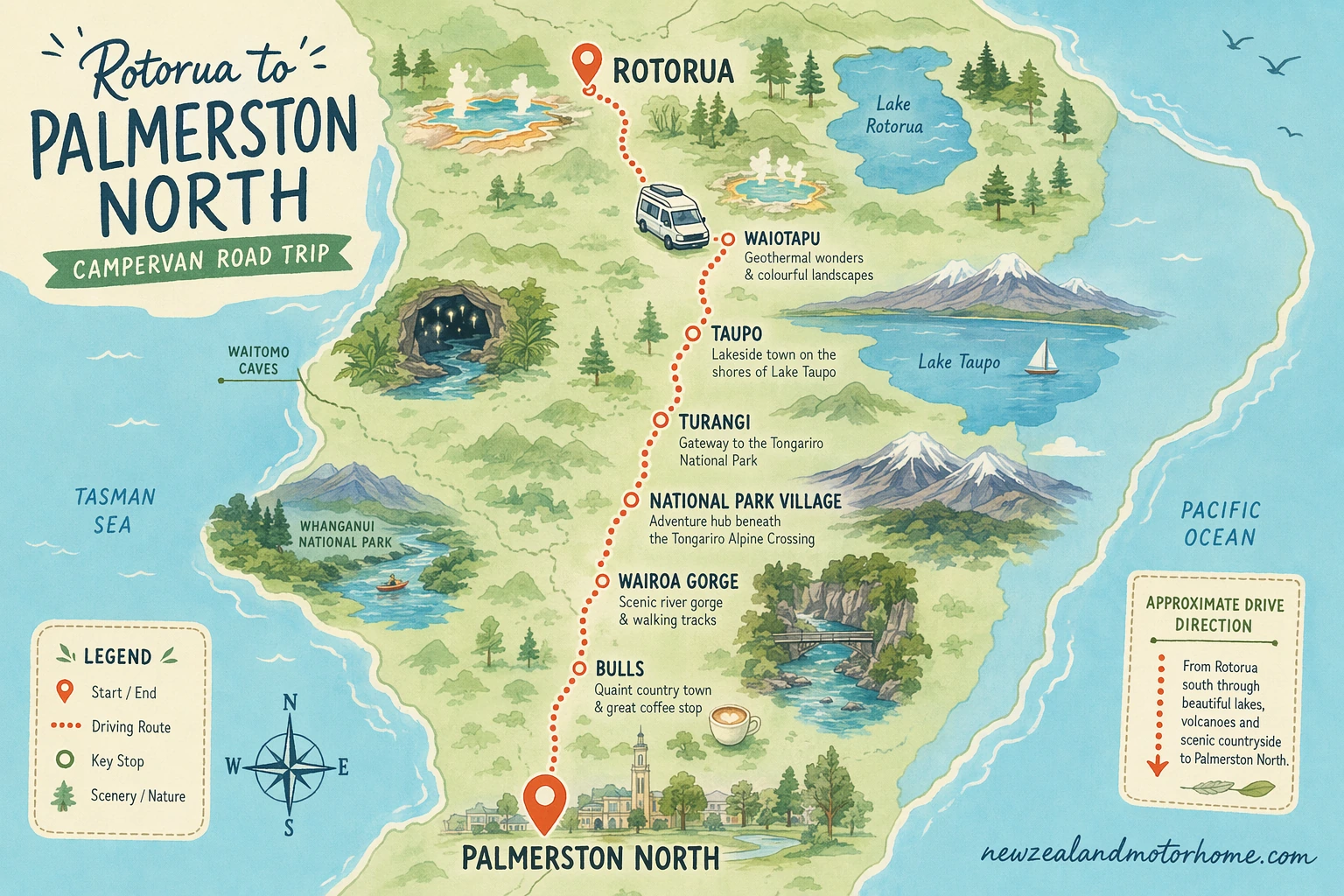
The direct Rotorua to Palmerston North drive via Taupō, Tūrangi, Waiouru, Taihape and Bulls is roughly a long half-day behind the wheel, but most campervan travellers will enjoy it more over two days. The route uses SH5, SH1 and SH3, so it is suitable for standard rental campervans and larger motorhomes, provided you drive to the conditions and leave room for slower hill sections.
A two-day plan gives you time to stop around Lake Taupō and avoid arriving in Palmerston North tired. A three-day Rotorua to Palmerston North motorhome road trip lets you add geothermal walks, a lakeside overnight, and a slower wander through the Rangitīkei.
- Fast but tiring: one full driving day, with short food and fuel stops only.
- Recommended: two days, overnighting around Taupō, Tūrangi or Taihape.
- Unhurried: three days, especially if you want hot pools, lake walks or Tongariro views.
- Winter note: check Desert Road conditions before committing to SH1 across the Central Plateau.
Leg 1: Rotorua to Taupō and Tūrangi
Leave Rotorua with a full fresh-water tank, empty grey-water if you can, and enough LPG for cooking and heating if you are travelling in the cooler months. SH5 south is a main road but has bends, forestry traffic and changing light through the trees, so let faster vehicles pass when safe rather than holding a queue in a heavy van.
Taupō is the natural first big stop. For a campervan, look for larger signed parking areas rather than squeezing into tight lakefront angle parks, especially in summer and school holidays. Huka Falls has room for vans but gets busy; arrive earlier in the day if you want an easier park and a calmer walk to the viewpoints.
If you are not staying in Taupō, continue around the eastern side of the lake towards Tūrangi. This stretch is scenic but exposed to wind in places, and lakefront pull-offs can be rough or narrow. Only overnight where signs and council rules allow it, and only freedom camp if your vehicle is certified self-contained and the site permits it.
- Good service points: Rotorua and Taupō both have supermarkets, fuel, LPG swap options and holiday parks with dump facilities.
- Overnight feel: Taupō suits powered sites and lake time; Tūrangi is quieter and handy before the Desert Road.
- Van parking tip: use the edge of larger car parks where you can drive through or reverse safely without overhanging a footpath.
Leg 2: Tūrangi to Waiouru, Taihape and Bulls
South of Tūrangi, SH1 climbs onto the Central Plateau. This is the most weather-sensitive part of the rotorua to palmerston north campervan journey. In fine weather it is a memorable drive, with big sky and views towards Tongariro National Park; in winter, strong wind, ice, snow or closures can make it unsuitable for a high-sided motorhome.
Fuel and food options thin out on the Desert Road, so do not leave Tūrangi running low. Keep both hands on the wheel in crosswinds, use lower gears on descents, and give trucks plenty of space. Waiouru is a practical stop for a break, and Taihape is a useful place to reset before the longer rolling country south.
From Taihape towards Bulls, the road follows open rural country with a mix of straights, dips and slower sections. It is comfortable in a campervan, but fatigue creeps in here because the scenery is wide and the driving is steady. If the weather has been hard across the plateau, Taihape or nearby campgrounds can be a sensible overnight rather than pushing on.
- Check before driving: NZTA road conditions for Desert Road, especially from late autumn to spring.
- Break stops: Waiouru for a leg stretch, Taihape for food and fuel, Bulls before turning towards Palmerston North.
- Driving note: allow extra braking distance; you are heavier than a car and often slower to accelerate out of passing lanes.
Where to overnight in a campervan
The easiest overnight pattern is Rotorua to Taupō or Tūrangi on day one, then on to Palmerston North on day two. If you prefer powered sites, holiday parks around Rotorua, Taupō, Tūrangi, Taihape and Palmerston North are the most straightforward choices because they usually combine plug-in power, showers, fresh-water taps and dump station access.
Unpowered sites work well if your house battery is healthy and you are not running a heater all night. The Central Plateau can be cold even when Rotorua feels mild, so check your gas bottle and bedding before deciding to save the powered-site stop. In summer, book ahead around Taupō; in winter, confirm late-arrival procedures if you are coming over the plateau in the afternoon.
Freedom camping rules vary by district along this route. Do not assume a lakeside pull-off or roadside reserve is legal just because another van is parked there. Look for council signage, use current camping apps or council maps, and remember that most legal freedom camping requires a certified self-contained vehicle with a valid warrant displayed.
- Best first night: Taupō for lake walks, food options and easy services.
- Quieter first night: Tūrangi, useful if you want an early start over the Desert Road.
- Bad-weather pause: Taihape, if the plateau has slowed you down.
- Arrival night: Palmerston North, with powered sites useful before cleaning and restocking the van.
Dump stations, water, LPG and restocking
Do your main servicing in the bigger towns rather than leaving it to the rural middle of the route. Rotorua, Taupō and Palmerston North are the most reliable places for supermarkets, fuel, LPG bottle swaps or fills, laundries and campervan-friendly holiday park facilities. Tūrangi, Waiouru, Taihape and Bulls are better treated as top-up points rather than full reset stops.
Public dump stations and holiday park dump points can change access rules, so check local council listings or your camping app on the day. Never empty grey water into roadside drains or toilets, and do not rely on finding potable water at every rest area. Carry a hose fitting that suits NZ taps, and fill when you know the water is marked as drinking water.
If you would rather have the overnight stops and service points matched to your van size and travel dates, you can use the talk-to-us planning step before you lock in the route. It is especially useful in winter, when the Desert Road can change the shape of the day.
- Start full: fresh water, fuel and LPG checked before leaving Rotorua.
- Empty early: use a proper dump station before the cassette or grey tank becomes urgent.
- Restock smart: Taupō or Palmerston North for the widest supermarket choice.
- Cold-night check: LPG, battery charge and warm bedding before staying unpowered near the plateau.
Arriving in Palmerston North with a motorhome
From Bulls, SH3 takes you towards Palmerston North across flatter Manawatū country. Traffic builds as you near the city, and a larger motorhome is easier to manage if you avoid peak commuting times. Follow the main routes rather than shortcutting through narrow residential streets, particularly if your van is long or you are still getting used to the rear swing.
For daytime exploring, choose larger public parking areas and check height signs before entering any covered or barrier-controlled car park. The city is a useful end point for laundry, groceries, fuel and a proper powered night after the drive. If you are continuing south towards Wellington, it is worth emptying waste and topping up fresh water before leaving town.
Nearby walks and gardens are better tackled after the van is parked for the night, rather than trying to move between small car parks in a long vehicle. Treat Palmerston North as a practical reset: plug in, tidy the galley, charge devices, and give yourself a calm start for the next leg.
Keep planning
Holiday parks palmerston north
Read onCampervan supplies palmerston north
Read onCampervan hire palmerston north
Read onWellington to palmerston north campervan
Read onQueenstown to palmerston north campervan
Read onPicton to palmerston north campervan
Read onCommon questions
Can I drive Rotorua to Palmerston North in one day in a campervan?
Yes, it is possible, but it makes for a long driving day once you add food, fuel, toilet and viewpoint stops. Most campervan travellers are better off overnighting around Taupō, Tūrangi or Taihape so they are not arriving tired in city traffic.
Is the Desert Road suitable for a motorhome?
In settled weather, SH1 across the Desert Road is suitable for rental campervans and motorhomes. In winter or strong wind, check road conditions before leaving Tūrangi or Waiouru, as closures, ice and crosswinds can be a real issue for high-sided vehicles.
Where should I stop overnight between Rotorua and Palmerston North?
Taupō is the easiest all-round stop, with services, powered sites and lake walks. Tūrangi is quieter and well placed before the plateau, while Taihape works well if you need to break the journey after slow weather or a late start.
Can I freedom camp on this route?
Only in places where local council rules and signs allow it, and usually only if your campervan is certified self-contained. Do not assume lakefront reserves, rest areas or rural pull-offs are legal overnight spots; check current local rules before settling in.
Where can I empty the toilet cassette and fill fresh water?
Plan to use proper dump stations or holiday park facilities in larger towns such as Rotorua, Taupō and Palmerston North. Access can change, so confirm locations on the day through council information or a reliable camping app, and only fill from taps marked as potable water.
What is the best season for this Rotorua to Palmerston North motorhome road trip?
Spring, summer and autumn are the simplest seasons for driving, with longer daylight and fewer plateau weather problems. Winter can be beautiful, but you need warmer bedding, reliable LPG, and a flexible plan in case the Desert Road is icy or closed.
Have a planner shape this for your dates
Send a short outline — your dates, party size, and the kind of trip you want. A planner replies with a vehicle recommendation, a paced route, and the realistic budget.