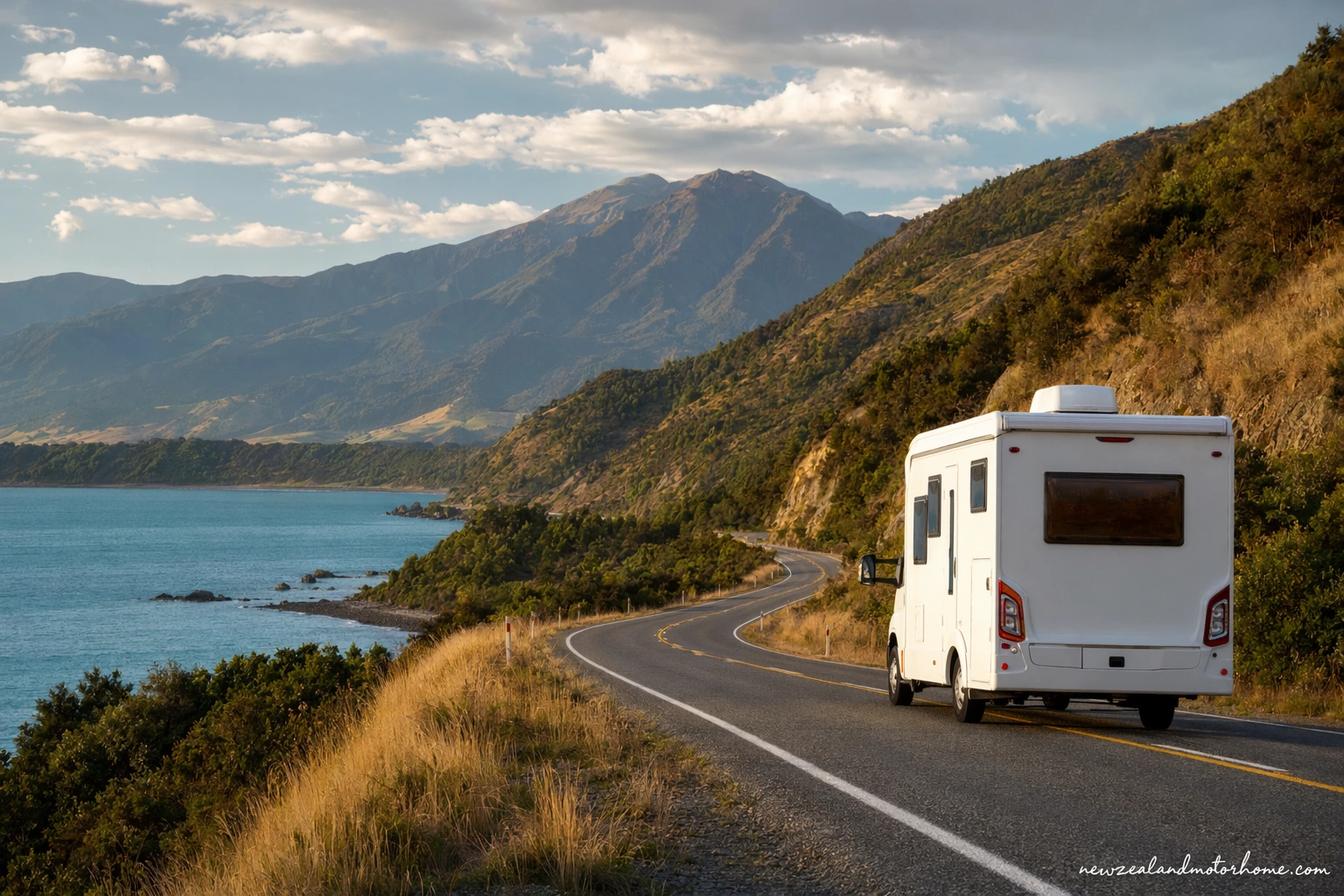
- Allow 1-2 days
- Cook Strait ferry required
- Best with certified self-contained van
- Powered stops in Picton or Kāpiti
- Watch wind on high-sided vans
The Picton to Palmerston North campervan route is less about a long highway slog and more about joining the dots well: a tidy Marlborough start, the Cook Strait ferry, Wellington traffic, then the Kāpiti and Horowhenua run into the Manawatū. If you are driving and sleeping in your own hired van, the timing matters more than the kilometres.
This guide is written for self-drive campervan and motorhome travellers: where to park the van before the ferry, how to think about powered and unpowered overnights, where dump stations and fresh-water stops fit into the day, and which roads feel comfortable in a larger vehicle. Treat the Picton to Palmerston North drive as a one-day transfer if your ferry lines up, or a relaxed two-day hop if you would rather avoid arriving tired.
If your ferry time, van height, or overnight plan is still uncertain, you can talk to us before you lock it in.
How long to allow for the route
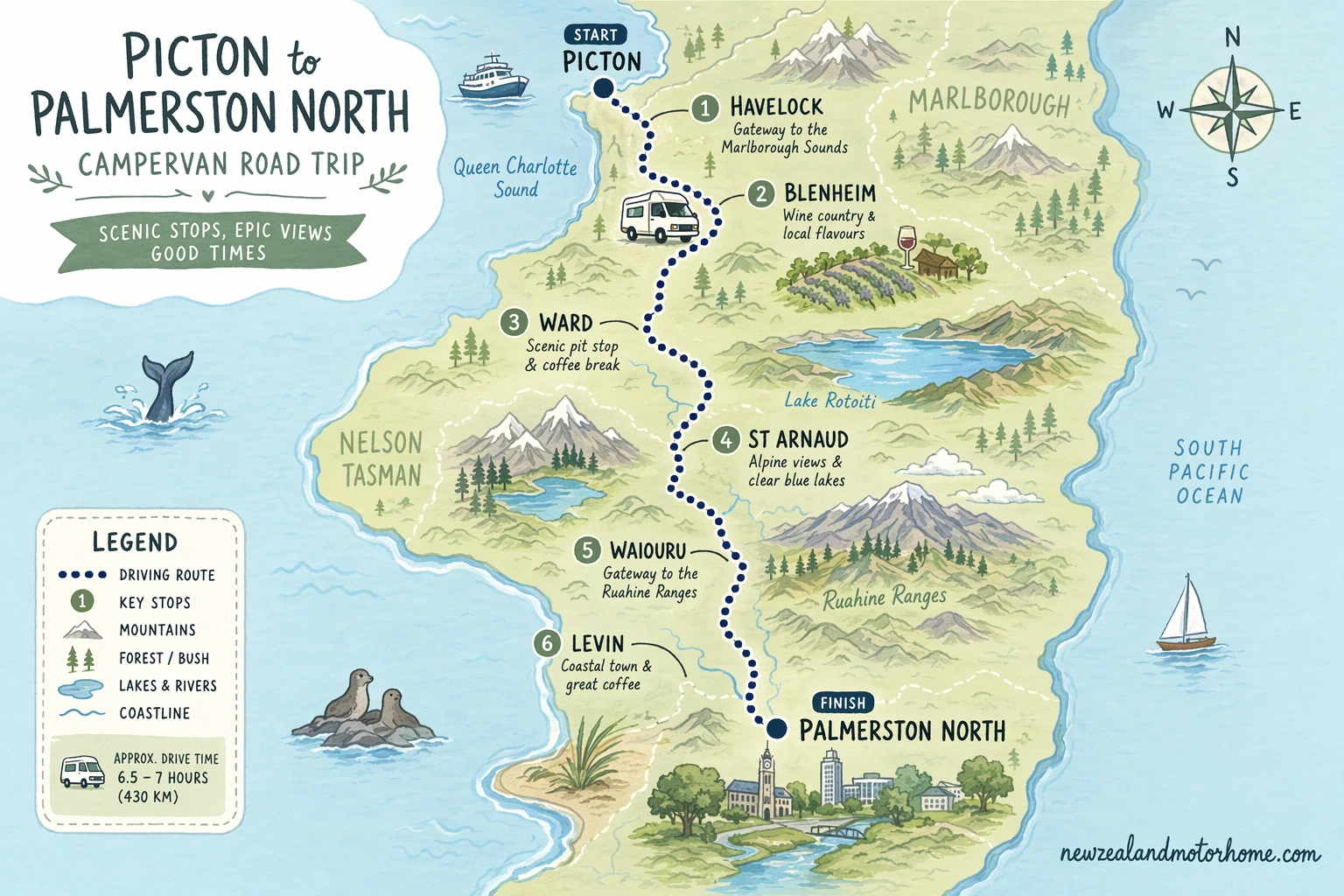
On paper, the road distance is short: Picton to the ferry terminal, then Wellington to Palmerston North is roughly a half-day of driving once you are off the boat. In real campervan terms, the Cook Strait crossing, check-in time, urban Wellington traffic, and a food-and-fuel stop can easily turn it into a full travel day.
If you arrive in Picton the night before, you can empty grey water, fill fresh water, organise the fridge, and roll to the ferry without rushing. If your crossing lands in Wellington late afternoon, consider staying on the Kāpiti Coast rather than pushing on to Palmerston North in the dark.
- Fastest sensible plan: Picton overnight, early ferry, Wellington to Palmerston North the same day.
- Most relaxed plan: Picton, ferry to Wellington, overnight on the Kāpiti Coast or around Levin/Foxton, then a short run to Palmerston North.
- Best for larger motorhomes: avoid peak commuter times through Wellington and the Kāpiti Expressway merge zones.
Picton start: ferry check-in, parking and services
Picton is a good place to get the van sorted before the North Island leg. The ferry terminal is close to town, but do not treat it like a last-minute carpark dash in a motorhome. Allow extra time for vehicle lanes, measuring questions, LPG rules, and the slower pace of loading tall or long vehicles.
Book the ferry using the van's full length and height, including bike racks, roof boxes, satellite domes or anything fitted to the rear. Gas bottles usually need to be turned off for the crossing, and fridges should be set up to stay cold without relying on LPG while you are on board.
- Overnight before sailing: Picton has holiday park-style options with powered and unpowered sites; book ahead in summer and around ferry disruptions.
- Water and waste: use a council-listed dump station or holiday park facilities before boarding, so you are not hunting for one in Wellington traffic.
- Food stop: Picton is easier than central Wellington for a calm supermarket top-up if you have a big van.
- Parking note: town parking can be tight for long motorhomes; look for signed longer bays rather than squeezing over kerbs.
Wellington arrival to the Kāpiti Coast
Once the ferry lands, the Picton to Palmerston North motorhome road trip becomes a North Island motorway run. From the ferry area, follow signs carefully through Wellington and onto SH1. The city section can feel busy after a calm ferry crossing, so it pays to have your passenger watching lanes and exits.
SH1 north through Transmission Gully and the Kāpiti Expressway is generally comfortable for campervans, with modern gradients and good lane width. Wind can still buffet high-sided vans, especially after the ferry and on exposed motorway sections, so keep both hands on the wheel and give trucks room.
- Good break points: use larger service areas or signed town parking around Plimmerton, Paekākāriki, Paraparaumu, Waikanae or Ōtaki rather than narrow beach-end streets.
- Overnight idea: the Kāpiti Coast has holiday parks and some council-controlled freedom camping areas; check current signs and only stay where certified self-contained vehicles are allowed.
- Dump and water: look for council-listed dump stations around Kāpiti or Horowhenua if you did not service the van in Picton.
Levin, Foxton and the final run into Palmerston North
North of Ōtaki, the drive flattens out through market gardens, small towns and open plains. Levin is the main service stop before you turn towards Palmerston North, with easier access for supermarket, fuel, LPG swap or general van supplies than trying to do everything in the city centre.
From Levin you can continue via SH57 or loop towards Foxton and SH56 depending on road conditions, your overnight plan and how much time you have. Both are manageable in a campervan, but they are rural routes with intersections, farm traffic and occasional narrow shoulders, so drive them like working local roads rather than sightseeing lanes.
- Foxton option: good if you want a coastal or river-town pause before Palmerston North, with holiday park-style stays nearby.
- SH57 option: a direct rural approach, useful when you simply want to reach your booked site.
- Arrival tip: Palmerston North has low bridges in some local streets and tight urban parking; follow your campground or overnight site's recommended access route.
Where to stay: powered, unpowered and freedom camping
This route works best when you choose overnight stops around your ferry timing, not just the map. A powered site in Picton the night before an early sailing is a practical choice if you need to charge devices, run heating, or start with full batteries. After the ferry, an unpowered site can be fine if your house battery is healthy and you have not been parked in shade for days.
Freedom camping rules change by district. Marlborough, Wellington, Kāpiti, Horowhenua and Palmerston North each have their own bylaws and signage, and many places restrict overnight stays to certified self-contained vehicles in designated areas only. Do not assume a beach carpark, reserve, or riverside pull-off is legal just because another van is there.
- Picton: useful for pre-ferry powered sites and a tidy morning departure.
- Kāpiti Coast: handy halfway feel after an afternoon ferry, with coastal walks and town services.
- Levin or Foxton area: practical if you want a short final drive into Palmerston North.
- Palmerston North: choose a proper motorhome site if you need laundry, dump station access, fresh water and a quiet reset.
Road, season and van-size notes
The main hazards on this route are not alpine passes; they are timing, wind and fatigue. Cook Strait can be rough, Wellington can be busy, and the lower North Island is known for strong westerlies. If the forecast is gusty, slow down, leave more space, and avoid stopping where a long door can be caught by the wind.
Winter brings shorter daylight and wetter roads, while summer brings full campsites and heavier ferry demand. For motorhomes over about seven metres, it is worth being conservative with town parking and choosing fuel stops with easy forecourt access. Always check your rental vehicle's height before entering covered parking, motel-style courtyards or older service lanes.
- Ferry: book for accurate vehicle length and height, not the base model dimensions.
- LPG: confirm bottle requirements before sailing and restock in larger towns if you are low.
- Fresh water: top up at your overnight site or an official potable-water point, not random taps.
- Dump stations: use official dump points only and check current locations through council or reputable camping apps.
Keep planning
Holiday parks palmerston north
Read onCampervan supplies palmerston north
Read onCampervan hire palmerston north
Read onWellington to palmerston north campervan
Read onRotorua to palmerston north campervan
Read onQueenstown to palmerston north campervan
Read onCommon questions
Can I drive from Picton to Palmerston North in one day in a campervan?
Yes, if you have an early or midday ferry and conditions are running smoothly. Build in ferry check-in, loading, the crossing, Wellington traffic and at least one proper rest stop; it is not just a road-distance calculation.
Where should I stay the night before the ferry in Picton?
A powered or unpowered campsite in or near Picton is the easiest option for most campervan travellers. It lets you fill fresh water, empty waste, charge batteries and reach the ferry lanes without a long early-morning drive.
Is freedom camping easy between Wellington and Palmerston North?
It is possible in some designated places, but it is not a free-for-all. You need a certified self-contained vehicle and must follow the local council signs for Wellington, Kāpiti, Horowhenua and Palmerston North districts.
Which route should I take from Wellington to Palmerston North?
Most campervans follow SH1 north through Transmission Gully and the Kāpiti Expressway, then continue via Levin and the Manawatū approach roads. Check live road conditions before you leave the ferry, especially after storms or holiday traffic.
Do I need to book the Cook Strait ferry differently for a motorhome?
Yes. Enter the full length and height of the vehicle, including bike racks or rear storage, and follow the ferry operator's instructions for LPG and alarms. Arrive early enough that staff can place your van in the correct vehicle lane.
Where can I empty grey water on this route?
Use official dump stations only, either before you leave Picton, at a holiday park, or at council-listed dump points in the Wellington, Kāpiti, Levin/Foxton or Palmerston North areas. Check current locations on the day, as access and maintenance closures can change.
Have a planner shape this for your dates
Send a short outline — your dates, party size, and the kind of trip you want. A planner replies with a vehicle recommendation, a paced route, and the realistic budget.