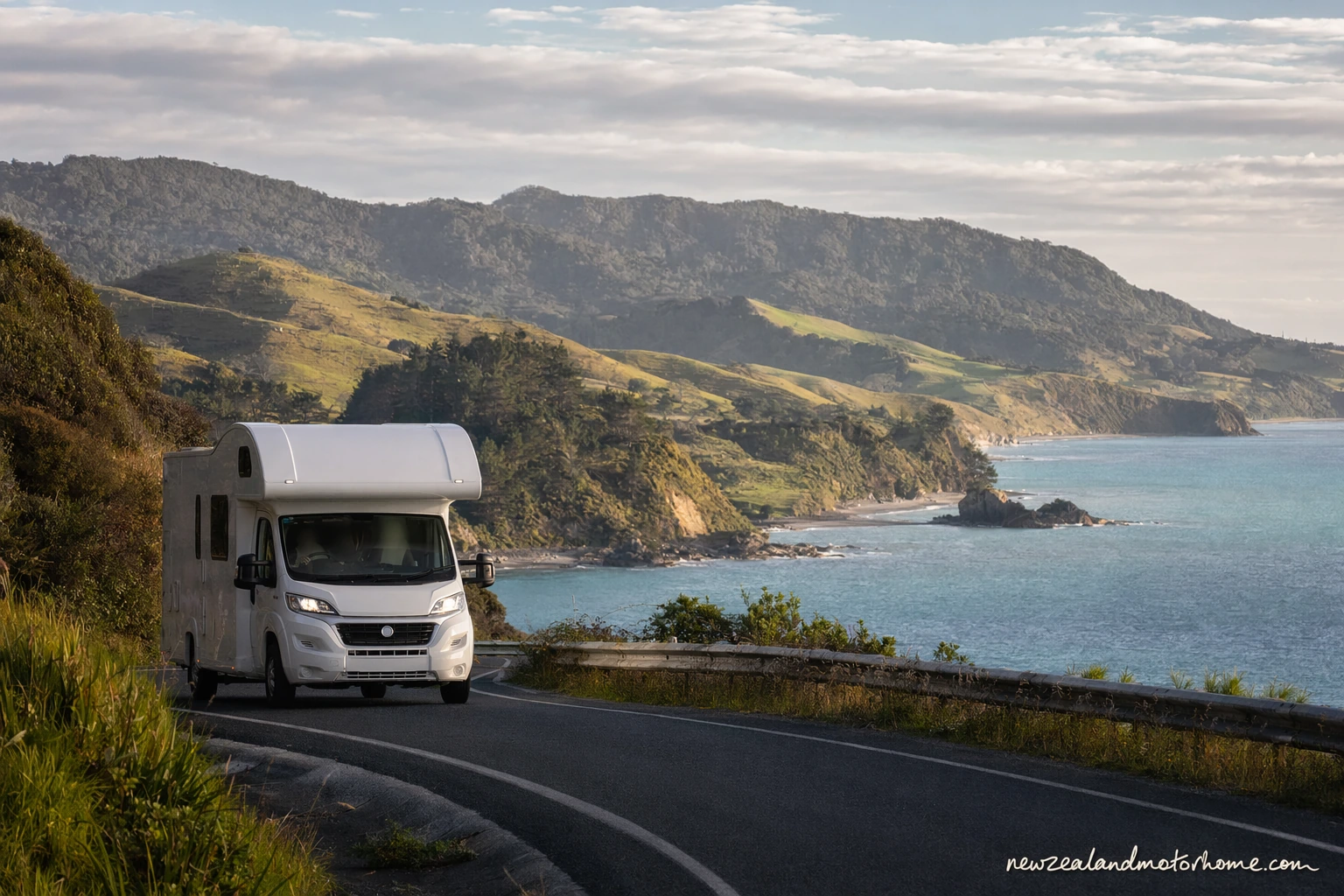
Whangarei to Gisborne campervan route: east across the North Island
- Best in spring to autumn
- Allow 4–6 days if touring
- Sealed roads on main route
- Powered sites recommended every 2–3 nights
- Check freedom-camping rules by district
The Whangarei to Gisborne campervan route is not a quick dash across the map; it is a proper North Island crossing with motorway stretches, harbour towns, beach-side holiday parks, the Bay of Plenty coast and one of the island’s great winding gorge roads. In a hired campervan or motorhome, the trick is to break the distance into sensible legs so you are not hunting for a dump station, fresh water or a legal overnight stop at the end of a long driving day.
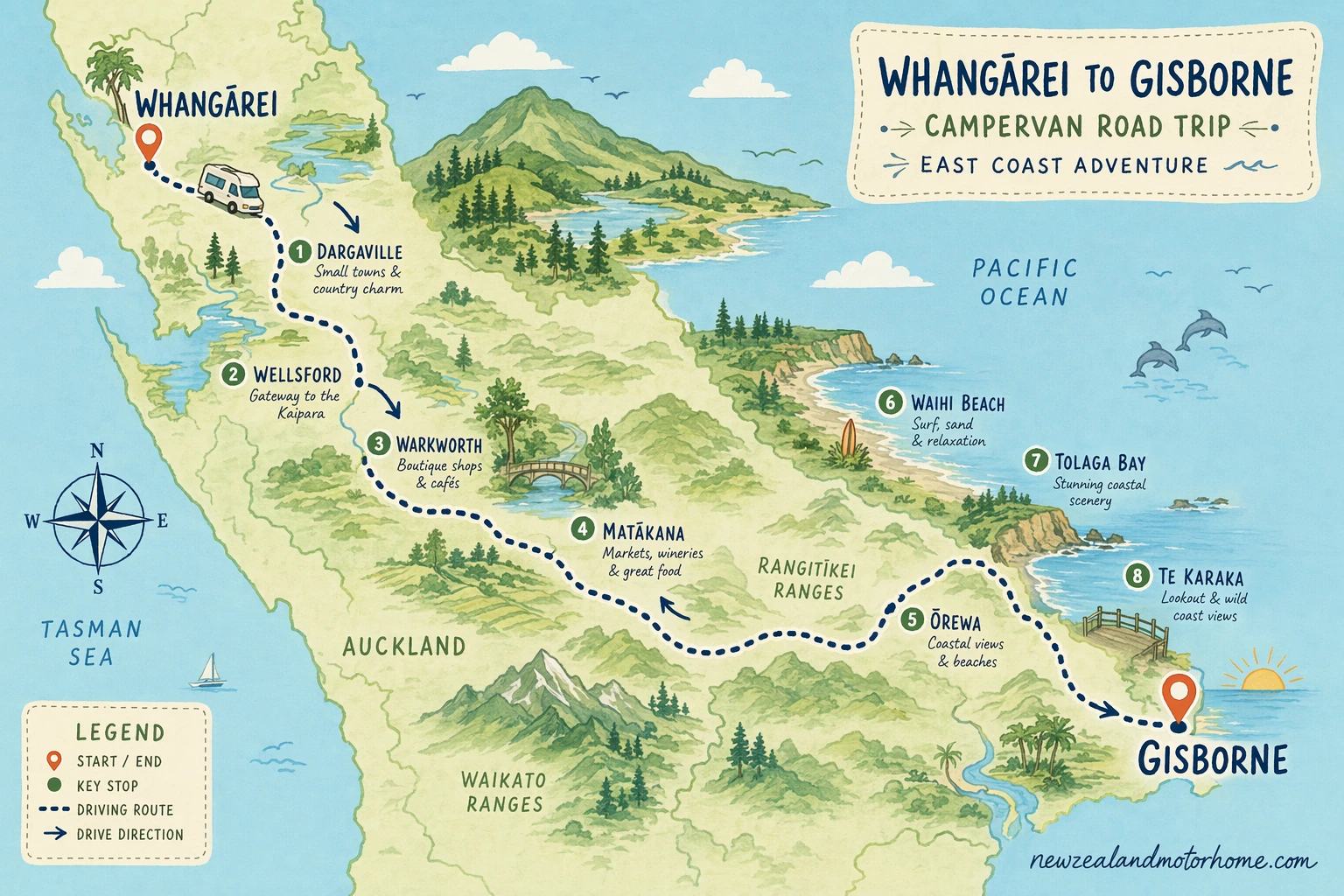
This guide follows the practical sealed-road route from Whangārei down SH1, through or around Auckland, across the Coromandel/Bay of Plenty side, then on to Ōpōtiki and Gisborne via the Waioeka Gorge. You will find van-suitable road notes, overnight stop ideas, powered and unpowered site considerations, and where to think about LPG, water and waste before the quieter eastern stretch.
How many days to allow in a campervan
The full Whangarei to Gisborne drive is a long one for a campervan, especially once you include Auckland traffic, food stops, dump-station visits and slower winding sections east of the Bay of Plenty. It can be done in two very full driving days, but that leaves almost no margin for weather, road works or actually enjoying the coast.
For most self-drive travellers, four to six days feels much better. That gives you time to keep driving legs to a comfortable length, arrive at camp before dark, and choose powered sites every couple of nights if your house battery, fridge or devices need a top-up.
- 2 days: only if you are repositioning the van and are confident with long NZ driving days.
- 4 days: a practical pace with overnight stops around Auckland/Thames, the Bay of Plenty and Ōpōtiki or Whakatāne.
- 6+ days: best if you want beaches, walks, a slower Waioeka Gorge day, or an East Cape detour.
If you are still weighing up dates, campsite spacing or whether to add the East Cape, you can talk to us before locking in your plan.
Best main route: Whangārei, Auckland, Bay of Plenty, Gisborne
The most straightforward whangarei to gisborne motorhome road trip uses state highways all the way: SH1 south from Whangārei, the Auckland motorway network, then east and south-east via SH2 towards Tauranga, Whakatāne, Ōpōtiki and Gisborne. It is sealed throughout, suitable for standard hired campervans and larger motorhomes, but it still asks for patience in traffic and on bends.
Leaving Whangārei, top up groceries and fill fresh water before you get into the busier Auckland approach. South of Auckland, the driving becomes more varied: rolling Waikato farmland, gorge sections near the Karangahake area if you take that line, and then the open Bay of Plenty coast where holiday parks are more common but summer sites can book out early.
- Whangārei to Auckland fringe: allow extra time for SH1 traffic and avoid arriving at a new camp after dark.
- Auckland to Tauranga/Western Bay: choose your route before you hit the motorway lanes; large vans are easier when the navigator is ready.
- Tauranga to Ōpōtiki: a good place to reset with fuel, food, LPG and dump-station tasks before the quieter road to Gisborne.
- Ōpōtiki to Gisborne: SH2 through the Waioeka Gorge is beautiful, sealed and winding, with limited services between towns.
Campervan road notes and driving cautions
Nothing on the main route requires a gravel-road set-up, but this is still New Zealand driving: narrower lanes than many visitors expect, frequent road works, speed changes through small towns, and weather that can make gorge roads feel different from one day to the next. In a motorhome, use pull-outs to let faster traffic pass rather than trying to hold the open-road speed on every climb.
Auckland is the most stressful part for many van drivers. Stay out of low-clearance city car parks, keep to marked motorway lanes, and check your route before entering tight urban streets. If your vehicle is long, choose supermarkets and fuel stops with open forecourts rather than small inner-city sites.
- Waioeka Gorge: sealed but twisting, with bush, river views and some tighter bends; avoid fatigue and do not use scenic pull-offs as overnight stops unless signage specifically permits it.
- Karangahake and coastal sections: watch for cyclists, pedestrians, narrow shoulders and slower tourist traffic.
- Wind and rain: high-sided campervans can feel exposed on bridges, open farmland and coastal stretches.
- Large motorhomes: check your hire agreement for any road restrictions before choosing detours or remote coastal roads.
If there has been heavy rain, check official road-condition updates before committing to the gorge or any East Cape alternative. Slips and temporary traffic lights can add time even when the highway remains open.
Overnight stops that work for vans
Plan this route as a chain of legal overnight stops rather than hoping to find a beach pull-off at sunset. Northland, Auckland, Bay of Plenty and Gisborne councils all have their own freedom-camping rules, and many coastal reserves are restricted even for certified self-contained vehicles. A blue self-containment certificate helps, but it is not a licence to sleep anywhere.
Holiday parks are the easiest option for first-night and recharge nights, especially around Whangārei, Warkworth or Orewa, the Thames/Waihi Beach/Tauranga area, Whakatāne or Ōhope, Ōpōtiki and Gisborne. Powered sites are useful every second or third night; unpowered sites can be fine if you have been driving enough to charge batteries and are careful with lights, heating and fridge use.
- North of Auckland: choose a proper campground or a signed self-contained site so you are not entering Auckland tired.
- Western Bay of Plenty: book ahead in summer, school holidays and long weekends; beach-side powered sites go first.
- Whakatāne, Ōhope or Ōpōtiki: a sensible final night before the Waioeka Gorge, with services close by.
- Gisborne arrival: aim to arrive early enough to dump, refill and settle the van before exploring the waterfront or town beaches.
For freedom camping, read the sign at the actual parking area, not just a map pin. Conditions can change by season, vehicle certification, maximum stay and whether toilets are available.
Dump stations, fresh water, LPG and supplies
The best habit on this whangarei to gisborne campervan route is to service the van before the tank gauges force the issue. Public dump stations and fresh-water points are generally easier to find in larger towns and at many holiday parks, while smaller coastal settlements may have limited facilities or taps that are not for filling motorhome tanks.
Whangārei, the Auckland region, Tauranga, Whakatāne, Ōpōtiki and Gisborne are the key places to think about waste, water, groceries and LPG. If you are relying on LPG for cooking, hot water or heating, do not leave it until the gorge or a late evening arrival; sort it in a bigger town with a proper forecourt or exchange point.
- Before leaving Whangārei: fill fresh water, empty grey/black water if needed, and check toilet chemical levels.
- Before Auckland: plan fuel stops with room to swing the van; avoid tight urban service stations if you are in a longer motorhome.
- Before Ōpōtiki: stock food, LPG and drinking water for the quieter eastern leg.
- On arrival in Gisborne: use a legal dump station before parking up for multiple nights.
Worthwhile stops without overloading the day
The route has plenty of places where a campervan stop feels natural, but parking size matters. In towns, look for larger public car parks, marina or reserve parking where permitted, and signed long-vehicle spaces rather than squeezing into angle parks. Avoid blocking boat ramps, beach access and residential driveways, even for a quick photo.
Good low-stress stops include Whangārei’s Town Basin area before departure, the Hauraki/Thames side if you route that way, Tauranga or Mount Maunganui for a beach walk, Whakatāne for supplies and riverfront time, and Ōpōtiki as the last easy service town before the gorge. The Waioeka Gorge itself is best treated as a scenic driving leg with short rest stops rather than a place to improvise an overnight stay.
- Beach time: choose established beach car parks with room to turn around; check height barriers before committing.
- Walks: lock the van, take valuables with you, and avoid leaving the habitation door visible and open.
- Food stops: park on the edge of town centres where spaces are longer and traffic is calmer.
- Photo stops: pull fully off the lane; NZ shoulders can be soft after rain.
If you add the East Cape via SH35 instead of the direct Waioeka Gorge route, allow at least two extra nights. It is a memorable coastal drive, but services are more spread out, roads are slower, and you need to be more deliberate about fuel, water and legal camping.
Common questions
Can I drive from Whangārei to Gisborne in one day in a campervan?
It is technically possible only as a very long relocation-style day, but it is not a good plan for most campervan travellers. Auckland traffic, slower van handling and the Waioeka Gorge make it tiring; two days is the bare minimum, while four or more is much more comfortable.
Is the Waioeka Gorge suitable for motorhomes?
Yes, SH2 through the Waioeka Gorge is sealed and commonly used by vans and motorhomes. It is winding with limited services, so drive to the conditions, use pull-outs, and complete fuel, water and dump-station tasks before leaving Ōpōtiki or Gisborne.
Where should I overnight between Whangārei and Gisborne?
Useful overnight areas include north or south of Auckland, the Thames/Waihi Beach/Tauranga area, and Whakatāne, Ōhope or Ōpōtiki before the final leg. Use holiday parks for powered sites and showers, or only use freedom-camping areas where signs and council rules allow your certified self-contained vehicle.
Do I need to book campsites in advance?
In summer, school holidays and long weekends, book powered sites in the Bay of Plenty and Gisborne ahead of time. Outside peak periods you may have more flexibility, but it is still wise to ring or book online before driving late in the day.
Is freedom camping easy on this route?
Freedom camping is possible in some places, but it is not something to assume. Rules vary by district, many beachfront areas are restricted, and you generally need current self-containment certification plus compliance with the exact sign at the site.
Should I take the East Cape instead of the Waioeka Gorge?
The East Cape route is slower and more remote, but it can be a brilliant campervan detour if you have extra days. Choose it only if you are comfortable with winding coastal roads, fewer services and more careful planning for fuel, water, rubbish and overnight stops.
Have a planner shape this for your dates
Send a short outline — your dates, party size, and the kind of trip you want. A planner replies with a vehicle recommendation, a paced route, and the realistic budget.